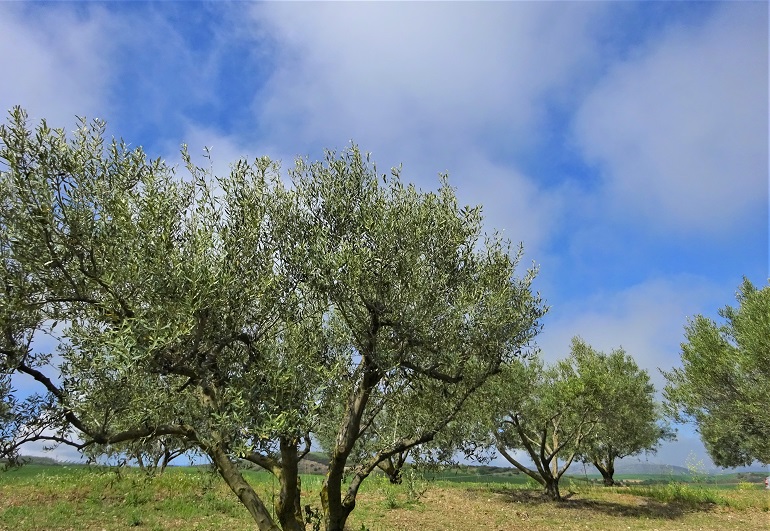
Every new olive grower, and every experienced one planning a new grove, faces the same basic question of which cultivar to plant. The subject has been discussed at length, and it remains a regular point of debate between growers and agronomists.
Greece has more than 43 olive cultivars, and naming is the first obstacle. A single identified cultivar usually carries two main names and four or five secondary ones, some of which closely resemble the names of other cultivars. Growers are therefore often unsure which cultivar they actually grow, and which cultivar's table olives and oil they are selling.
Two factors decide the choice of cultivar
A grower has two things to weigh before deciding what to plant. The first is location, meaning both the region of Greece where the grove sits and the microclimate that forms within the grove over the course of the year. A cultivar can have a reputation for performing well across a whole prefecture and still succeed only in groves with a particular microclimate. Koroneiki, the leading Greek oil cultivar, is the clearest example. In Laconia it gives excellent yields of high-quality oil, but only where frost is not a problem, and from roughly 400 metres upwards its sensitivity to frost means growers plant more cold-hardy cultivars instead.
The second factor is the product the grower wants. Oil cultivars are grown for olive oil, table cultivars mainly for cured olives, and dual-purpose cultivars perform well enough in both, so the grower can decide at harvest whether the fruit goes to the mill or is processed for the table.
That decision should rest on market research done before planting, because changing direction later often ends badly. A familiar case is the Kalamon grower who finds the table olive market flooded or prices too low and starts looking at sending the crop to the mill instead, a move that rarely pays with a cultivar grown for the table. Pollination matters as well. If the main cultivar has self-pollination problems, a second cultivar is needed in the grove for cross-pollination, and in most cases, that polliniser is Koroneiki.
The main oil cultivars
Koroneiki
Koroneiki is by far the most widely planted oil cultivar in Greece. It is small-fruited and yields large quantities of high-quality oil relatively early in the tree's life, provided it finds suitable conditions and avoids frost. It tolerates drought and strong winds but is susceptible to olive fruit fly. It is self-fertile and serves as a polliniser for many other cultivars.
It is grown at low altitudes from Fthiotida down to Crete, and attempts to grow it farther north often fail due to frost. A group of growers who planted it near Trikala saw vigorous trees come into bearing early, until a severe frost caused heavy cankers on the trunks and almost halted further growth. Against Verticillium wilt, by contrast, Koroneiki was the most resistant of ten cultivars evaluated by ELGO-DIMITRA.
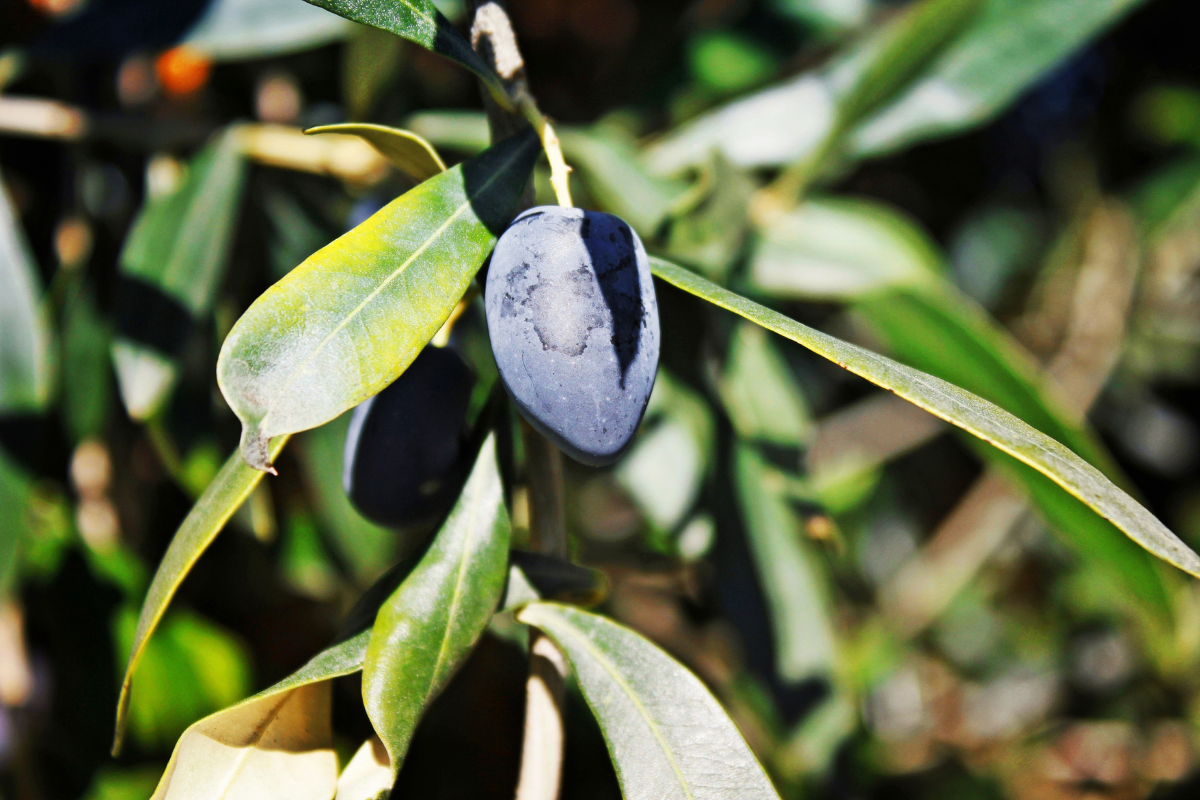
Koroneiki, a small-fruited cultivar, is by far the most widely planted oil cultivar in Greece.
Tsounati or Mastoidis
Where Laconian groves are too cold for Koroneiki, growers usually plant Tsounati or a cultivar called Mourtolia. Tsounati is small-fruited and yields moderate quantities of excellent-quality oil. It is grown in the Peloponnese, in Laconia and Messinia, but mainly in Crete, and can be found as high as 900 metres above sea level. It tolerates low temperatures but is susceptible to olive fruit fly and Verticillium wilt, bears very irregularly from year to year, and is ideal for early-harvest oil.
Lianolia Kerkyras
Lianolia Kerkyras is small-fruited and gives moderate quantities of very good oil, and it grows into a very tall tree of up to fifteen metres. It is grown on almost all the Ionian Islands and in Epirus, and is more cold-tolerant than Koroneiki but needs soil moisture.
Adramytini or Mytilinia
Adramytini is a medium-fruited cultivar giving moderate quantities of oil of excellent quality, the light, golden and aromatic oil of Lesbos. The tree reaches 8 metres in height, and the cultivar is grown on Lesbos and Chios.
The main table cultivars
Kalamon
Kalamon is known worldwide for its large black table olives, and the tree does best in soil with a pH around 7. It needs soil moisture, although in the Peloponnese it is often grown without irrigation.
Growers should know that Kalamon prices are set by the size of each fruit rather than by the weight of the whole load, so larger olives fetch better prices, with the 100-fruit-per-kilogram class paid almost four times as much as the 350-fruit class. Growers, therefore, often use heavy irrigation and foliar feeding to push fruit size, frequently at the expense of quality. The cultivar is widely grown in the Peloponnese, Crete and Aetolia-Acarnania, and Messinia produces the PDO Kalamata olive.
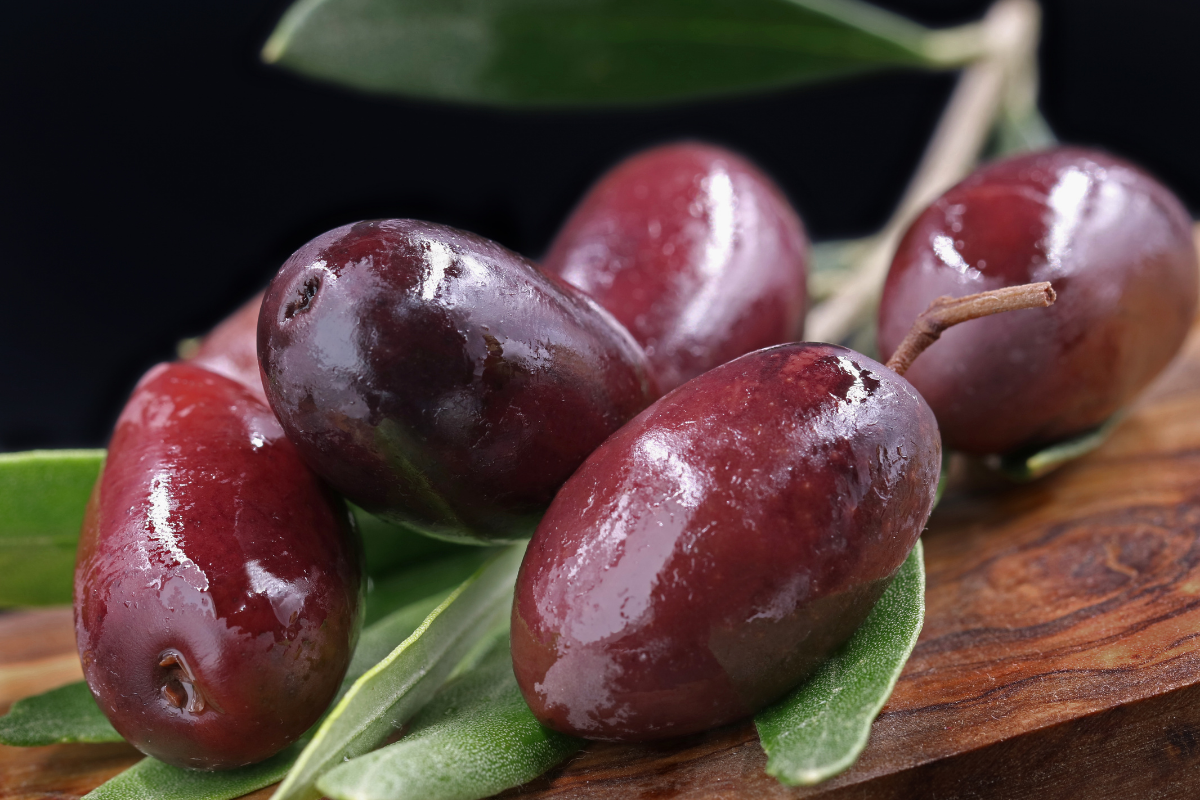
Kalamon olives are priced by fruit size, so larger fruit fetches a better price.
Amfissis or Konservolia
Amfissis is large-fruited, with fruit of up to 10 grams, and gives very good black and green table olives and, as a secondary product, good-quality oil. As the name suggests, it is grown in Central Greece, Aetolia-Acarnania, Epirus, and, to a lesser extent, Chalkidiki. It is highly susceptible to Verticillium wilt, and its fruit carries five PDOs and one PGI for table olives, from Konservolia Amfissis to Konservolia Piliou Volou.
Chalkidikis
Chalkidikis is a large-fruited cultivar grown in Macedonia, with fruit of up to 13 grams, and it needs substantial winter chilling to flower. It mainly produces green table olives, since the fruit does not turn fully black even at full maturity, and can also yield good-quality oil. Its fruit is the basis of the PDO Green Olives of Chalkidiki.
The main dual-purpose cultivars
Megaritiki or Megaron
Megaritiki is a medium-fruited cultivar grown in the Peloponnese and Central Greece. It tolerates cold but is susceptible to olive fruit fly. It is often grown without irrigation and gives excellent cracked and canned olives as well as oil.
Kothreiki or Manaki
Kothreiki is medium-fruited, tolerates cold and strong winds, and is often found at high altitudes, frequently above 700 metres. It yields oil as well as table olives of real commercial value, and it is the base cultivar for three PDO oils: Lygourio Asklipiiou, Troizinia, and Kranidi Argolidas.
Throumbolia or Thasitiki
Throumbolia is grown on the Aegean islands, including Thassos, Samos, Crete and Rhodes, and gives large table olives or a good quantity of quality oil. The tree is upright and reaches ten metres. It needs winter chilling for good flowering and requires soil moisture and fertile ground. Its fruit carries three PDOs, Throumba Thassou, Throumba Chiou and Throumba Ambadias Rethymnis.
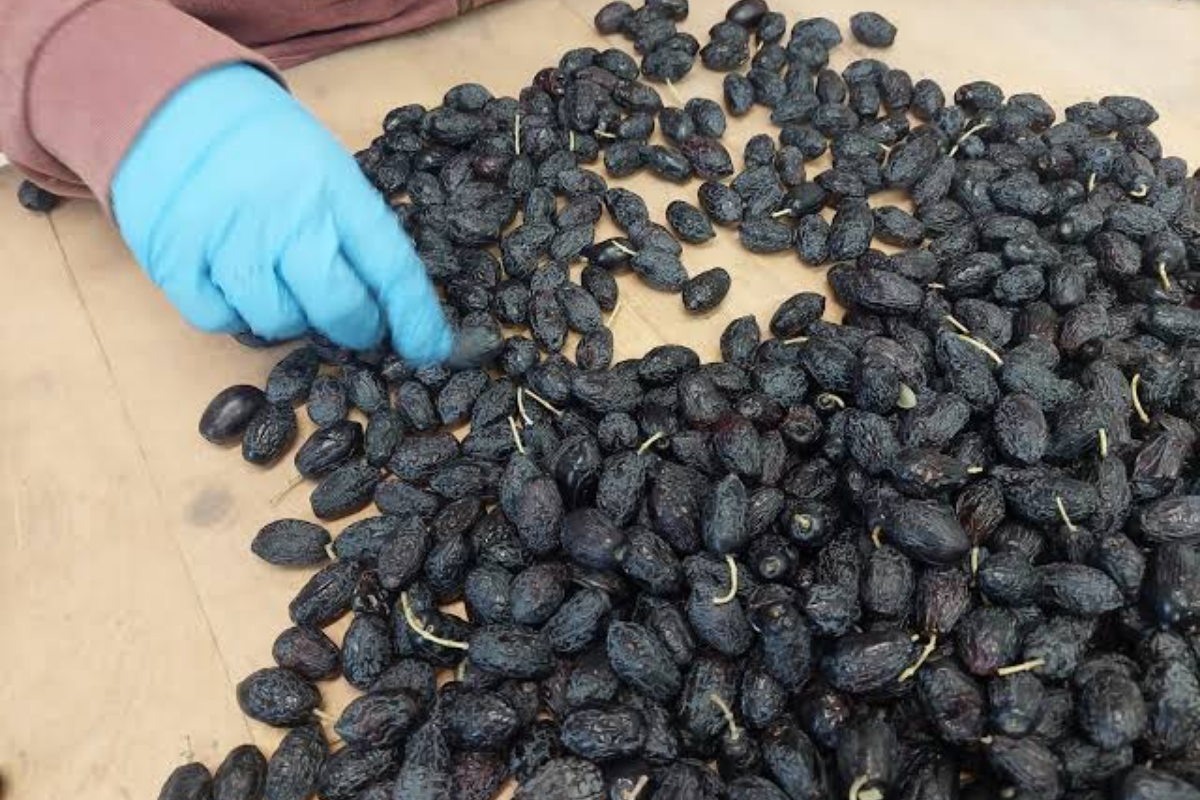
Throumbolia loses its bitterness on the tree, and dry salting completes the processing of throumba olives.
How the main cultivars compare
| Cultivar | Group | Oil content | Flesh to pit | Verticillium mortality |
| Koroneiki | Oil | 27% | 6.6 to 1 | 0% |
| Tsounati | Oil | 20% | 6 to 1 | 88% |
| Lianolia Kerkyras | Oil | 19% | 7.5 to 1 | Not tested |
| Kalamon | Table | 17% | 8.3 to 1 | Not tested |
| Amfissis | Table | 16% | 10.1 to 1 | 84% |
| Chalkidikis | Table | 14% | 6.6 to 1 | 96% |
| Megaritiki | Dual-purpose | 21% | 9 to 1 | 80% |
| Manaki | Dual-purpose | 20% | 5.7 to 1 | 100% |
| Throumbolia | Dual-purpose | 28% | 5.2 to 1 | Not tested |
Sources: Agricultural University of Athens, olive cultivar laboratory notes, for oil content and flesh-to-pit ratio. Markakis et al. (2022) for the mortality of young plants 140 days after artificial inoculation.
All oil content figures come from the Agricultural University of Athens laboratory notes, so they can be compared with each other, and they are often lower than figures quoted in the trade, because oil content changes with ripeness, irrigation and season. Verticillium mortality comes from the ELGO-DIMITRA evaluation of young plants inoculated at high inoculum pressure and shows the relative susceptibility of cultivars, not what will happen in a given field.
Cultivar names are a frequent source of confusion
The naming problem is clearly shown by the name Ladolia, which the same laboratory notes assign to three different cultivars: Megaritiki, Koroneiki, and Lianolia Kerkyras. Koroneiki is also sold as Lianolia, although Lianolia Kerkyras is an entirely different tree. Agouromanako grows alongside Manaki but is a separate cultivar, and the name Chondrolia is used locally for both Amfissis and Chalkidikis. When ordering young trees, the cultivar should be confirmed by its reference name and by the source of the nursery's propagation material.
The final decision rests on local research
With this framework in mind, every grower should research which cultivars perform well locally and which suffer from local hazards, such as frequent spring frosts. After talking it through with the local agronomist, the grower will be in a position to settle on the cultivar or cultivars that will secure good yields in the years ahead. Departing from the path taken by other growers in the area only makes sense when scientific evidence shows superior performance to the popular local cultivars.
A small share of Greek growers has in recent years turned to foreign cultivars, such as Arbequina, used in very high-density plantings. Opinions differ, and no one can yet say whether these growers will come out ahead in the long run by choosing imported cultivars with a planting system foreign to Greek conditions. What is certain is that Greek cultivars have a worldwide reputation. Koroneiki is widely planted in Spain and Portugal, and its I-38 clone gave about 15% more oil than Arbequina in super-high-density hedgerow plantings. Hence, a move to a foreign cultivar calls for careful study first.
Sources
- International Olive Council. Chalkidikis, World Catalogue of Olive Varieties.
- Markakis, E. A., Krasagakis, N., Manolikaki, I., Papadaki, A. A., Kostelenos, G., Koubouris, G. (2022). Evaluation of olive varieties resistance for sustainable management of Verticillium wilt. Sustainability, 14(15), 9342.
- Roussos, P. Classification of olive cultivars by fruit size. Laboratory notes, Agricultural University of Athens (in Greek).
- Greek Ministry of Rural Development and Food. Olive oil and table olive PDO and PGI names and specifications (in Greek).