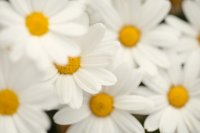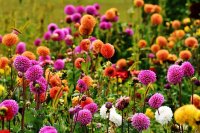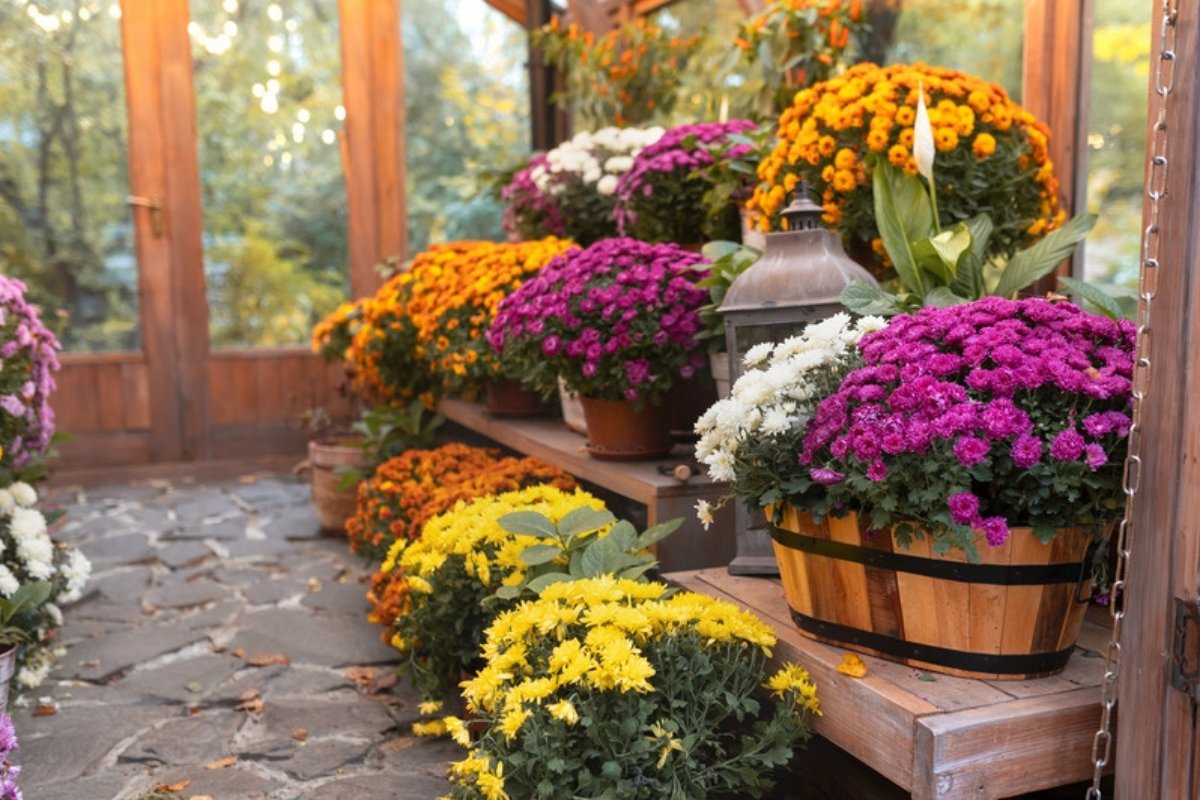
The most popular fall flowers are chrysanthemums (mums), asters, cyclamen and pansies, while rudbeckia, dahlias and snapdragons keep flowering from summer until the first cold weather. For colour that lasts into spring, hellebores, cyclamen, pansies and English daisies flower through winter in mild climates, and bulbs planted now flower from late winter into spring. The right choice depends on three things: how much sun the spot gets, whether the plant goes in a bed or a pot, and how long you want the colour to last. This guide covers which flower suits which spot, how to put together a fall container, which flowers carry on through winter, and which feed bees late in the year. All the season's jobs, from September to November, are gathered in the autumn garden jobs checklist.
Which fall flower for which spot
| Flower | Flowering | Position | Bed or pot |
| Chrysanthemum | Late summer to late fall | Sun | Both |
| Aster | Late summer to fall | Sun | Both |
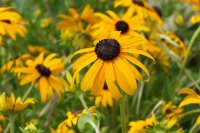
| Rudbeckia | Summer to fall | Sun | Both |
| Dahlia | Summer to first frosts | Sun | Both |
| Snapdragon | Spring to fall, depending on sowing | Sun | Both |
| Cyclamen | Fall to spring | Partial shade, cool | Mainly pots |
| Pansy | Fall to spring | Sun or partial shade | Both |
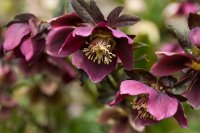
| Hellebore | Winter to early spring | Partial shade | Mainly beds |
| English daisy | Early spring to summer | Sun or partial shade | Both |
| Ornamental cabbage and kale | Coloured foliage all winter | Sun | Mainly pots |
Fall flowers for sunny pots and beds
Most fall flowers need sun. Chrysanthemums are the classic fall flower, and a practical tip is to buy them with plenty of buds and few open flowers, so the display lasts longer.
Asters fill beds with lilac, purple, pink and white, and rudbeckia with golden yellow and orange, just as summer flowers fade. Dahlias carry on until the first frost, while snapdragons planted now in mild climates flower early in spring. Ornamental cabbage and kale do not flower, but their pink, white and purple leaves grow more intense as temperatures fall, keeping window boxes colourful all winter.
Fall flowers for shade and partial shade
For shady balconies and corners, cyclamen is the first choice, because it likes cool conditions and flowers from fall to spring. Hellebores flower in winter in partial shade, ideally under deciduous trees, and English daisies also tolerate partial shade. Pansies and violas do well even where the sun reaches for only a few hours a day.
How to put together a fall container
A large pot or window box looks fuller when it combines three types of plant:
- A tall plant at the centre or back, such as a chrysanthemum, an aster or a tall snapdragon
- Plants that fill the space around it, such as pansies, ornamental cabbage or cyclamen
- A plant that trails over the edge, such as ivy or a trailing variety
Plants that share a pot need similar conditions, sun with sun and shade with shade, and the same watering rhythm. A combination for sun is chrysanthemums with ornamental cabbage and pansies, and for shade cyclamen with violas. The pot needs drainage holes and good compost, because with fall rain, standing water rots the roots.
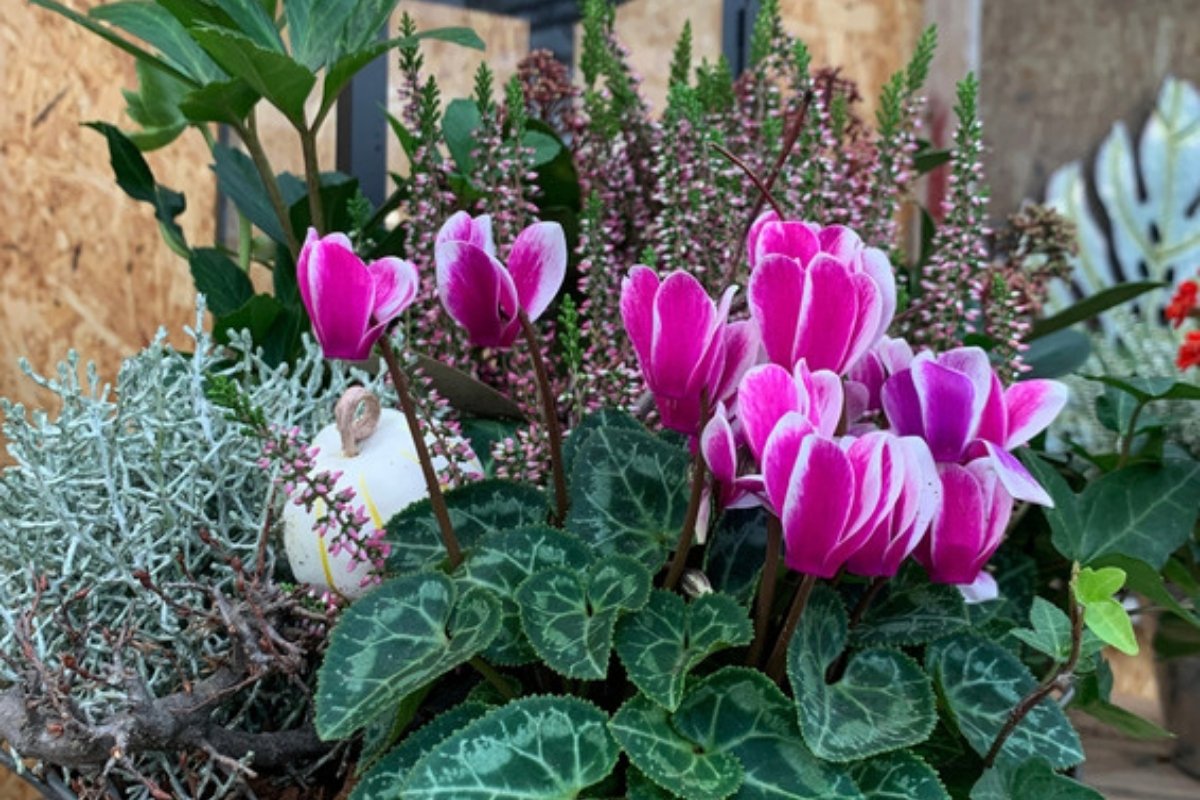
Plants that share a fall container need similar conditions, here cyclamen with heather and silver foliage
Flowers that carry on through winter
For colour from fall into spring, the most reliable choices are cyclamen, pansies, hellebores and English daisies, plus ornamental cabbage for foliage, while primroses join from late winter. In cold-winter climates, cyclamen and many pansies need shelter from hard frost. Dahlias, rudbeckia and asters, by contrast, stop with the first cold. The perennials among them die back and return in spring, and their dead stems can be left standing until late winter for birds.
Bulbs to plant now for spring flowers
Fall is also the season for autumn bulbs, planted from September to November to flower from late winter into spring. Daffodils, hyacinths, crocus, iris and freesia go in now, while tulips wait until the soil has cooled. In a pot, bulbs can be planted beneath pansies, so the same pot flowers through winter and then fills with spring flowers. For the rest of this month's planting, see what to plant in October.
Fall flowers for bees
In fall, bees find less and less food. Asters, rudbeckia, single-flowered dahlias and single-flowered daisies offer nectar until late fall, and hellebores carry on through winter. Double-flowered varieties, by contrast, offer pollinators little or no food.
Frequently asked questions
What flowers bloom in the fall
Chrysanthemums, asters, cyclamen, pansies, rudbeckia, dahlias and snapdragons, as well as ornamental cabbage and kale for coloured foliage.
What are the best fall flowers for pots
Chrysanthemums, cyclamen, pansies, asters, snapdragons and ornamental cabbage, in pots with good drainage.
What fall flowers last the longest
Cyclamen, pansies and hellebores can flower for months, from fall or winter into spring, and ornamental cabbage keeps its colour all winter. Chrysanthemums last longest when bought in bud.
What flowers bloom in shade in the fall
Cyclamen and hellebores in shade or partial shade, while pansies, violas and English daisies also manage with a few hours of sun.
What flowers should I plant in September and October
Pansies, cyclamen, chrysanthemums, snapdragons, English daisies and calendula, as well as most spring bulbs.
How do I make potted mums last longer
Buy them with plenty of buds and few open flowers, place them in a sunny spot, and water regularly without letting water stand.
References
- Royal Horticultural Society, How to grow asters.
- Royal Horticultural Society, How to grow Rudbeckia.
- Royal Horticultural Society, How to grow hellebores.
- Royal Horticultural Society, Antirrhinum majus 'Madame Butterfly'.
- Royal Horticultural Society, Bellis perennis.