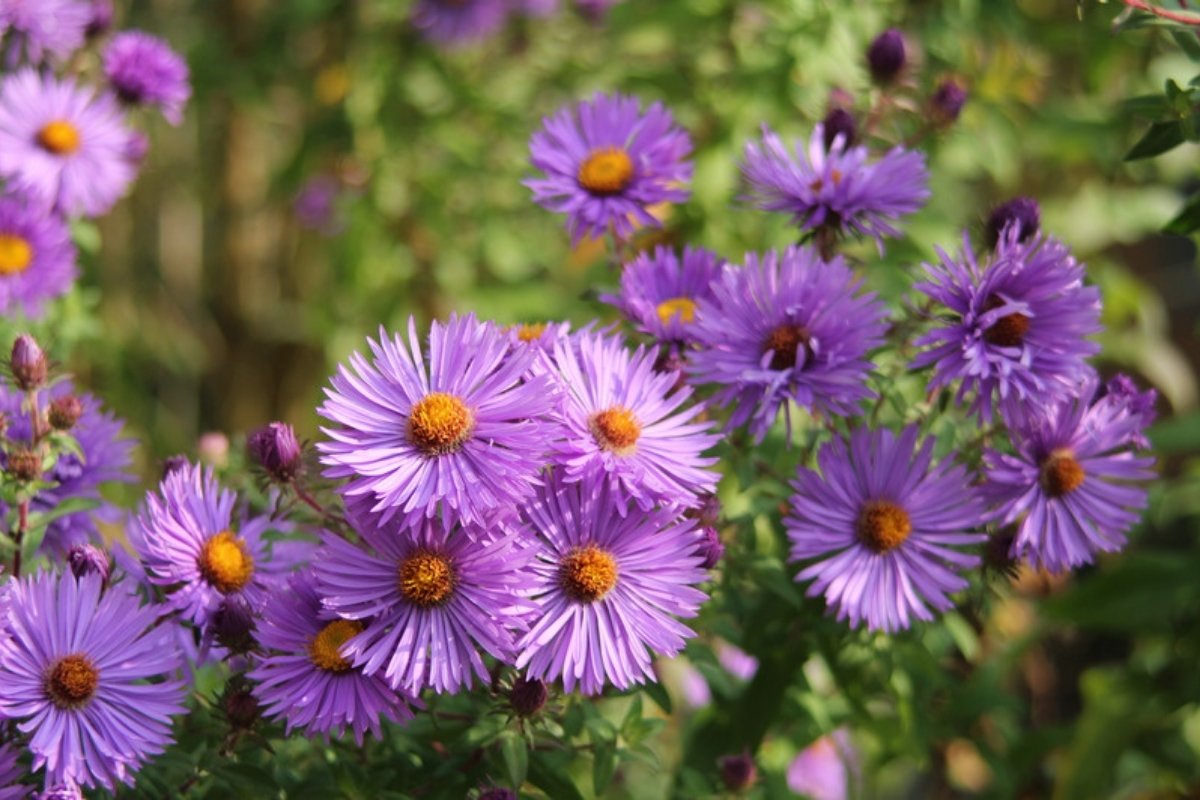
The name aster covers two different groups of daisy-flowered plants that bloom from late summer into autumn. The China aster (Callistephus chinensis), usually sold as seed, is an annual, so it is sown in spring, flowers and dies within the year. Perennial asters, often called Michaelmas daisies and sold in flower in pots in autumn, live for many years, die back in winter and return in spring. Both need sun and fertile soil that holds moisture without becoming waterlogged, deep but occasional watering, and little or no feeding. Perennial asters are divided every 3 to 5 years, and their main problem is powdery mildew. This guide covers how to tell the types apart, where and when to plant, how to sow China asters, watering and feeding, pinching and staking, winter care, division and cuttings, growing in pots, and common problems.
Which aster do you have
All these plants once belonged to the genus Aster. According to the Royal Horticultural Society, DNA studies led botanists to move many of them to other genera, such as Symphyotrichum, Eurybia and Callistephus, although they are all still sold and known as asters.
| Group | Botanical name | Life cycle | What sets it apart |
| China aster | Callistephus chinensis | Annual | Grown from seed in spring, for bedding, containers and cut flowers, often with double flowers |
| European asters | Aster amellus, Aster × frikartii | Perennial | Need free-draining soil, especially in winter, and resist powdery mildew |
| New York aster | Symphyotrichum novi-belgii | Perennial | Shallow roots, needs moisture-retentive soil, the most prone to powdery mildew |
| New England aster | Symphyotrichum novae-angliae | Perennial | One of the tallest, often needs staking |
According to the RHS, asters range from 20 cm to 2 m tall, so always check the label before planting.
How tall do asters grow
Dwarf and alpine asters usually stay around 20 to 45 cm, medium types such as Italian and New York asters reach roughly 45 to 90 cm, and tall types such as New England asters can exceed 1 m. Height also varies from year to year with rain and watering, and plants in rich, moist soil grow taller than those in lean, dry soil. Container-grown plants bought from a nursery are unlikely to have reached their full height, so they may be much taller after a full season in the garden.
Do asters like full sun or shade
Most asters flower best in full sun. They will flower in light shade, but the shadier the spot, the fewer the flowers, and too much shade makes the stems tall and weak. In very hot climates, a little afternoon shade and a mulch help keep the soil from drying out.
The right soil for asters
Asters do best in fertile soil that holds moisture in spring and summer, and struggle on very heavy clay or on soils that dry out in summer. Neutral to alkaline soil is ideal, although most cope with slightly acid soil. European asters such as Aster amellus need particularly free-draining soil in winter, because winter wet harms them more than cold. On light, sandy soils, a 5 cm mulch after planting and each spring helps hold moisture around the roots.
When and how to plant asters
According to the RHS, early spring is the best time to plant perennial asters, giving them a season to establish before flowering. Container-grown plants can be planted at any time, as long as the ground is not frozen or waterlogged. Asters bought in flower in autumn are very thirsty, so they need extra watering after planting to settle in.
How to grow China asters from seed
China asters are grown from seed in spring. Sow in trays with only a very thin covering of compost, in a warm, bright place, and expect seedlings in about one to two weeks. Plant out once all risk of frost has passed, spacing plants so air can move freely between them. Plants bought in bedding packs also go out after the frosts. Regular deadheading keeps China asters flowering into autumn, and once they finish, they are pulled out and composted.
Watering and feeding
Water asters well after planting. On free-draining soils and in long dry spells they need extra water to keep the soil around the roots slightly moist, but never soggy. The RHS recommends watering well and occasionally rather than little and often, at the base of the plant, since wet leaves encourage powdery mildew.
Most garden soils need no regular feeding. A mulch of well-rotted manure or garden compost each spring is enough, while on light, sandy soils a light feed as growth starts in spring helps.
Keeping asters compact and upright
Some asters, especially New York asters, respond well to having their stems cut back by about a third in late spring, a technique known as the Chelsea chop. It reduces the final height and often removes the need for staking. Asters taller than 1 m need supports, put in place before mid-summer. Perennial asters flower so freely that deadheading is not essential, while China asters benefit from regular deadheading.
Do asters bloom more than once a year
Most asters flower once a year, from late summer into autumn, over a long period. Annual China asters keep flowering longer when deadheaded regularly.
What happens to asters in winter
Perennial asters die back to the ground in winter, while their roots survive and send up new shoots in spring. Most Symphyotrichum species and cultivars survive temperatures down to -20°C, so winter wet is more of a threat than cold. The dead stems and seed heads can be left standing through winter, where they provide food for birds and shelter for wildlife, and cut down near the base in late winter before new growth appears. Asters in pots are more exposed to cold and wet, so they are moved to a sheltered spot over winter. Annual China asters die completely at the end of the season.
Do asters spread
Perennial asters form clumps that grow wider year by year. Most benefit from being lifted and divided every 3 to 5 years in early spring, which keeps them healthy and vigorous and stops them becoming woody in the centre.
Propagating asters by division and cuttings
Division in early spring is the easiest way to propagate perennial asters, and the best way to keep a named cultivar true, because each new clump is identical to the parent. Asters can also be grown from cuttings between spring and late summer, from young shoots at the base of the plant in spring or from non-flowering shoot tips in summer, rooted in moist, free-draining compost. Seed collected from your own plants gives very variable seedlings, so for named varieties it is better to buy plants or named seed.
Growing asters in pots
According to the RHS, a container for asters should be at least 20 to 23 cm in diameter, filled with multipurpose compost and placed in a warm, sunny spot. Tall varieties need larger, heavier pots and a stake. Asters in pots need much more frequent watering than those in the ground, sometimes daily in hot weather, but the compost should not stay waterlogged for more than a day or two. A liquid feed, diluted as directed, is enough for flowering.
Pests and problems
- Powdery mildew: a white, floury coating on the leaves, especially on New York asters. It is less likely on moisture-retentive soil and with good air circulation, while European asters such as Aster amellus and Aster × frikartii resist it
- Fusarium wilt: especially on Aster amellus
- Grey mould: in damp weather
- Slugs and snails: attack young growth
Asters in the autumn garden
Asters fill borders with white, pink, lilac, purple, blue and red flowers just as most summer flowers fade, and combine well with chrysanthemums. Their single flowers are valuable to pollinators, offering nectar late in the year when few other plants flower.
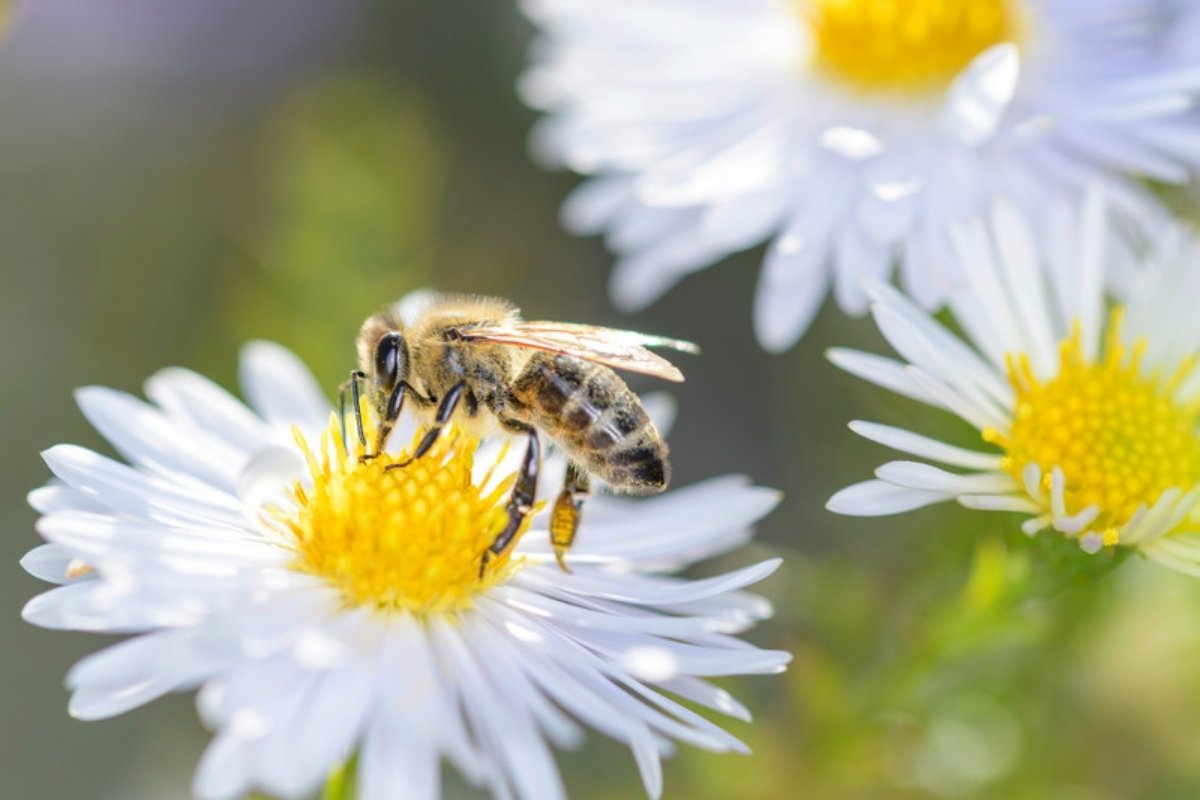
A honeybee on a white aster. Single aster flowers offer nectar late in the year, when few other plants bloom
Frequently asked questions
Are asters annuals or perennials
China asters (Callistephus chinensis), usually sold as seed, are annuals, while the asters sold in pots in autumn are usually perennials that live for many years.
Do asters come back every year
Perennial asters die back in winter but their roots survive and regrow in spring. Annual China asters complete their life cycle in one season and are sown again.
How often should asters be watered
Water well after planting, then deeply and occasionally rather than little and often, whenever the soil starts to dry. Asters in pots need much more frequent watering, sometimes daily in hot weather.
When should asters be cut back
Dead stems can be left through winter for birds and wildlife and cut down near the base in late winter, before new growth starts.
Why are my aster leaves turning white
Usually because of powdery mildew, a fungal disease that mainly affects New York asters. Moisture-retentive soil, good air circulation and resistant varieties help.
Can asters grow in pots
Yes. Use a pot at least 20 to 23 cm in diameter, multipurpose compost and a warm, sunny spot, and water often. Choose compact varieties for small pots.
Important notes
For persistent disease problems, a local agronomist can help with an accurate diagnosis, and any treatment should use only registered products, following the label.
References
- Royal Horticultural Society, How to grow asters.
- Royal Horticultural Society, Aster, genus guide.
- BBC Gardeners' World, How to grow asters.