Hellebores (Helleborus), also known as Christmas or Lenten roses, are perennials, usually evergreen, in the family Ranunculaceae, that flower in winter and early spring, when very few garden plants are in bloom. They need partial shade, such as under deciduous trees, and neutral to alkaline soil rich in organic matter, which drains well but does not dry out in summer. They are planted from autumn to spring, at exactly the same depth as in their pot, and need little care once established. Old leaves are cut back in mid to late winter, to show off the flowers and limit leaf spot. All parts of the plant are poisonous. Several species grow wild in the mountains of Greece and the Balkans. This guide covers hellebore species, where and when to plant, watering and feeding, cutting back, propagation, pots, problems and safety.
Hellebores in the wild
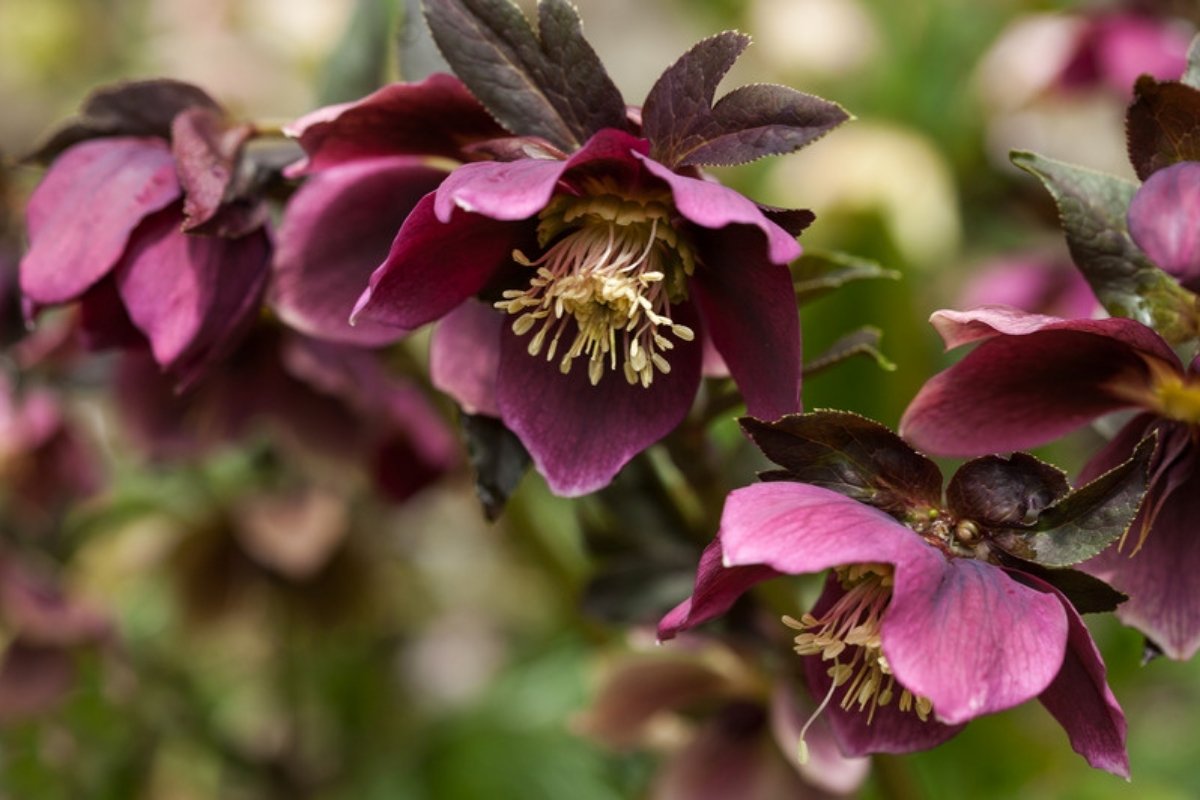
Hellebores are native to Europe and western Asia. In the mountains of Greece, Helleborus cyclophyllus grows wild, while Helleborus orientalis, a parent of most garden hybrids, is native to Greece, Turkey and the Caucasus. Because they are poisonous, grazing animals avoid them, so they are common in pastures. In ancient Greece, the town of Anticyra was famous for its hellebore, used as a remedy for "madness". Today gardens mainly grow hybrids, with flowers in white, pink, cream, green, purple and almost black.
Popular hellebore species
| Species | Approximate height | What sets it apart |
| Helleborus × hybridus, Lenten rose hybrids | 40 to 45 cm | The most widely grown, in a huge range of colours, flowering from late winter into spring |
| Helleborus niger, Christmas rose | 20 to 30 cm | White flowers, one of the earliest, often sold in pots at Christmas |
| Helleborus argutifolius, Corsican hellebore | 60 to 90 cm | Grey-green leaves with spiny edges and greenish flowers |
| Helleborus foetidus, stinking hellebore | 45 to 60 cm | Tolerates deeper shade |
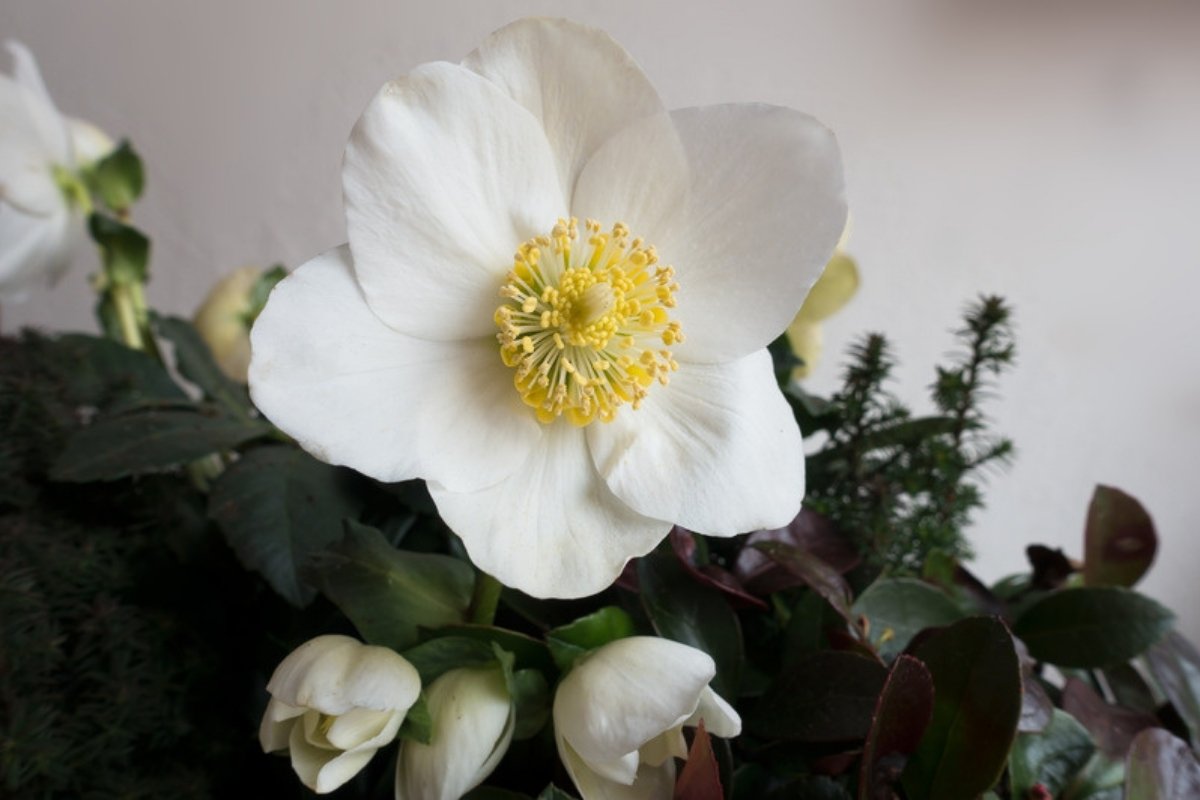
White-flowered hellebores bloom in winter, when very few garden plants are in flower
Do hellebores like sun or shade
Hellebores are plants of woodland edges, so they do best in dappled or partial shade, such as under deciduous trees and shrubs, which give summer shade and winter light. Some species tolerate more sun and others deeper shade, but most flower less in deep shade. In hot summers, strong midday sun scorches the leaves, so a spot with shade in the hottest hours is essential. They also need shelter from strong, cold winds.
The right soil for hellebores
According to the Royal Horticultural Society, hellebores need neutral to alkaline soil that holds moisture, is rich in organic matter, and neither stays wet nor dries out in summer. Chalky soils suit them well. Improve light soils with garden compost or well-rotted manure before planting.
When and how to plant hellebores
Hellebores are usually sold in flower in winter and spring, ready for immediate planting. They can be planted from autumn to spring, whenever the ground is not frozen or waterlogged, and in a Mediterranean climate autumn is best, so they root before their first summer.
- Hole: twice as wide as the root ball and just as deep
- Depth: set the plant at exactly the level it was growing in its pot, because deep planting rots the crown
- Spacing: about 35 to 45 cm apart, more for large species such as Helleborus argutifolius
- After planting: water well and mulch with compost or leaf mould, keeping it clear of the crown
Watering and feeding
According to the RHS, newly planted hellebores need regular watering in their first growing season, from spring into summer. Once established they are fairly drought tolerant, but in hot, dry summers, when they go semi-dormant, a deep watering in long dry spells stops them drying out completely. Too much water, especially in winter and in heavy soils, rots the roots.
Feeding is light. A mulch of leaf mould, compost or chipped bark every autumn feeds the soil, and a gentle feed in early spring, as new growth starts, is enough. Avoid heavy feeding at planting time.
When to cut back hellebores
Hellebores do not need pruning in the usual sense. According to the RHS, cut the old leaves of Helleborus × hybridus back to their base in mid to late winter, before the flowers appear. This displays the nodding flowers better and limits hellebore leaf spot, which spreads from old leaves to new.
Once the flowers fade in late spring, remove the old flower stems and ageing leaves to encourage new growth from the base. If you want seed, leave a few flowers to set seed.
Do hellebores spread
Hellebores form slowly widening clumps and often self-seed around the parent plant. Seedlings may differ in colour from the parent, and according to the RHS they can grow to smother the original plant, so thin them or move them while small.
Propagating hellebores by division and seed
Hellebores cannot be grown from cuttings. Large clumps are divided in early spring or early autumn, making sure each piece has roots and buds, then replanted at the same depth and watered well until established. Because hellebores dislike root disturbance, divide them only when needed.
Seed is sown fresh, as soon as it ripens, and seedlings usually take two to three years to flower.
Growing hellebores in pots and indoors
Hellebores have deep roots, so they do best in the ground. In a pot they need a deep container at least twice the size of the root ball, with good drainage, rich compost and a spot in partial shade. The compost should never dry out completely, especially in summer.
A hellebore bought in flower at Christmas is not a houseplant. It can stay for a few weeks in a cool, bright room away from radiators, watered when the surface of the compost dries, and should then go outside to a shady spot or be planted in the garden.
Pests and diseases
- Hellebore leaf spot: brown to black blotches on the leaves, encouraged by damp. Remove affected leaves immediately and keep them out of the compost
- Hellebore black death: a serious virus that causes black streaks along the leaf veins and stems. It cannot be cured, so the plant is dug up and destroyed
- Grey mould: grey fuzz in damp weather
- Aphids, leaf miners, slugs and snails: mainly on new spring growth
Hellebores are valuable for bees but poisonous
Hellebores flower when bees find very little food, and the RHS lists many cultivars as plants for pollinators.
All parts of the hellebore are poisonous if eaten, and the sap can irritate the skin. Wear gloves when handling them, especially when cutting back the leaves, and take care where young children or pets use the garden.
Frequently asked questions
When do hellebores bloom
In winter and early spring, from late autumn for early species such as Helleborus niger to spring for the hybrids.
When should hellebores be cut back
On Helleborus × hybridus, cut old leaves back to the base in mid to late winter, before the flowers appear, and remove flower stems after flowering.
Why are my hellebore leaves turning black
Usually because of hellebore leaf spot, a fungal disease that causes brown to black blotches. Black streaks that follow the leaf veins point instead to hellebore black death, a virus, and the plant should be destroyed.
Do hellebores come back every year
Yes. They are long-lived perennials that can grow for many years in the same spot, and they often self-seed.
Are hellebores poisonous
Yes. All parts are poisonous if eaten, and the sap irritates the skin. Handle them with gloves and take care around children and pets.
Can hellebores grow in pots
Yes, in a deep pot with good drainage and rich compost, in partial shade, but they do better in the ground because of their deep roots.
Important notes
For persistent disease problems, a local agronomist can help with an accurate diagnosis, and any treatment should use only registered products, following the label.
References
- Royal Horticultural Society, How to grow hellebores.
- Royal Horticultural Society, Helleborus × hybridus 'Harvington Black'.
- Royal Horticultural Society, Helleborus × hybridus 'Black Swan'.
- Sarah Raven, How to plant, grow and care for hellebores.
- Gardens Illustrated, Hellebores, what to know and which to grow.