
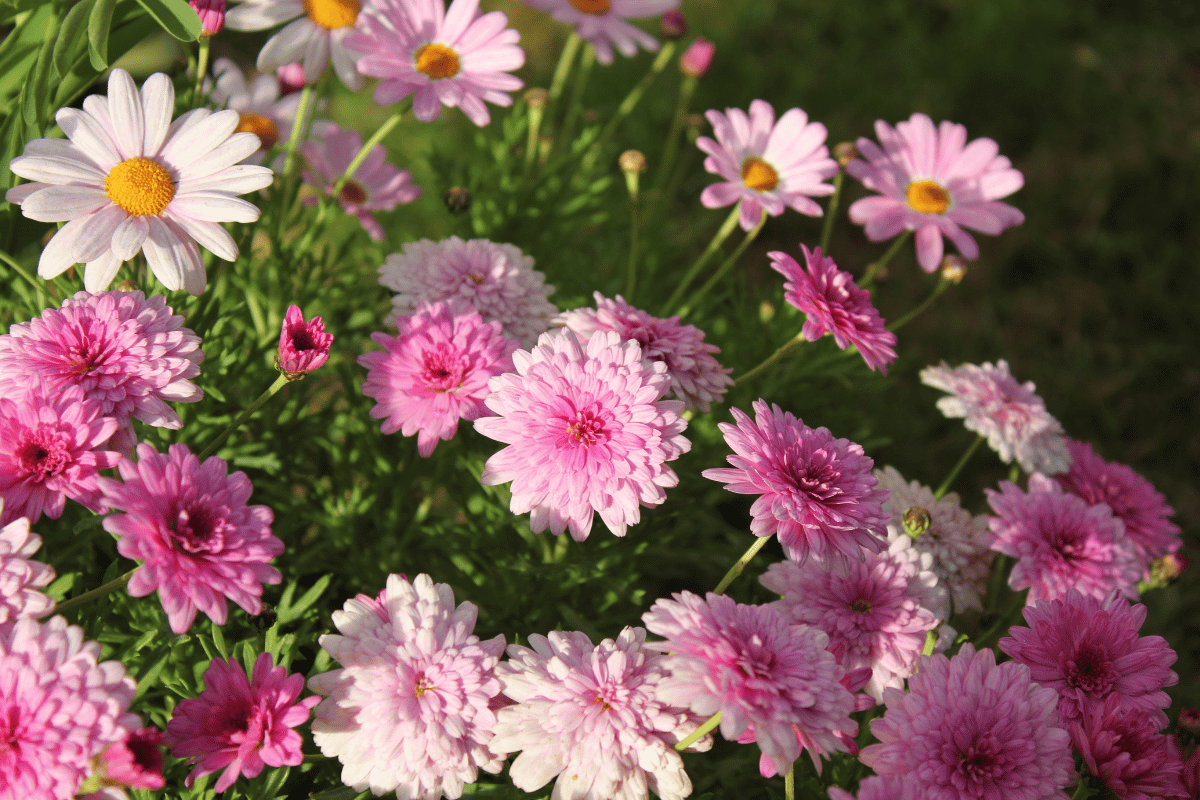
Pink is the most adaptable colour in the garden, ranging from the palest blush to hot magenta, and it flatters almost everything planted beside it. Soft pinks calm a border and make small spaces feel larger, while the strong pinks bring the heat that a summer bed needs. This guide runs through the best pink flowers to grow, grouped by when and how they flower, along with the pink flowering trees and what pink flowers have long been taken to mean.
What makes a flower pink
Pink flowers get their colour from anthocyanins, the same pigments that produce red and purple, in lower concentrations or at a different cell acidity. This is why so many plants have both pink and red forms, and why the hydrangea shifts between pink and blue depending on soil chemistry, staying pink in alkaline soil where aluminium is unavailable. Pink is also the easiest flower colour to find, which is why it spans practically every plant group, from spring bulbs to summer annuals to flowering trees.
Pink spring flowers
Spring brings the softest pinks, mostly from bulbs, early perennials and blossoms.
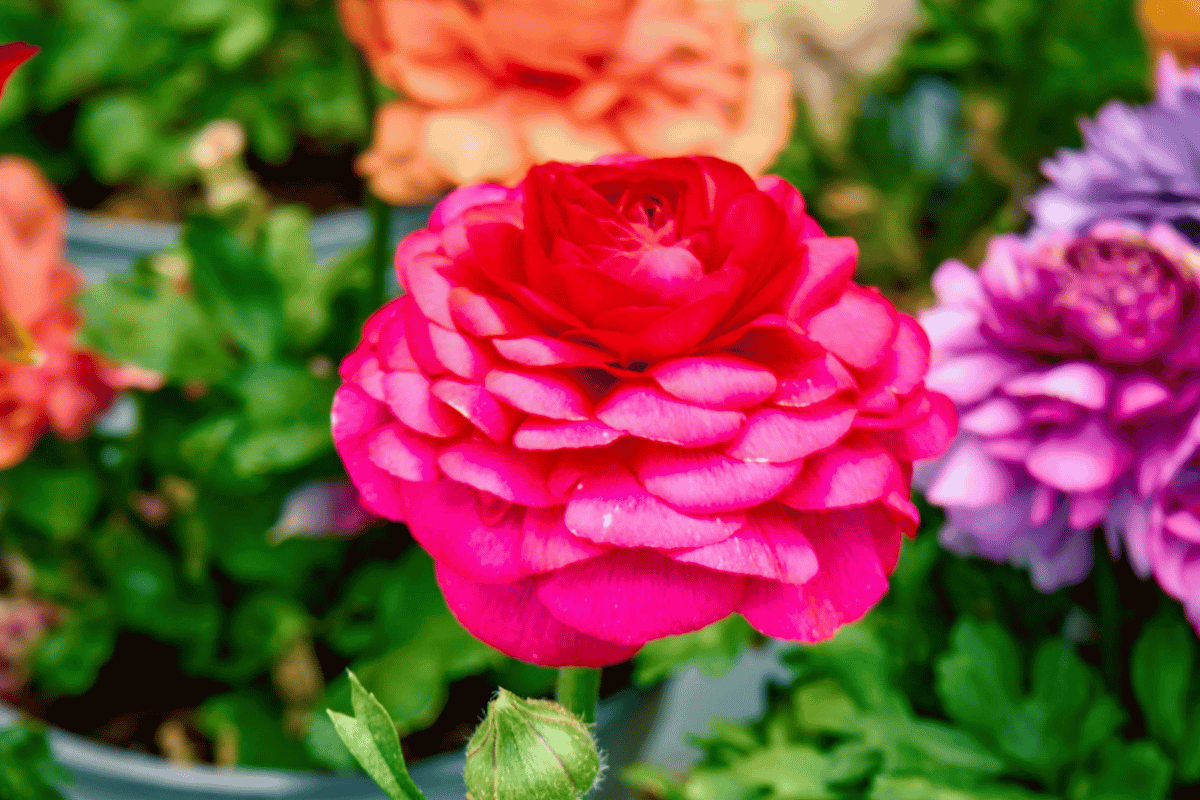
Ranunculus produces tightly layered, rose-like blooms in shades from blush to deep rose, and it is one of the finest cut flowers of late spring, as our ranunculus growing guide explains.
Tulips cover the full pink range, from pale pink singles to fringed and double forms, and they are the simplest way to fill a spring bed or pot with colour.
Lilac carries its scented plumes in pink as well as the familiar mauve, on a large shrub that flowers in late spring, covered in the lilac growing guide.
Camellias open waxy, rose-like pink flowers from late winter into spring on glossy evergreen shrubs, needing acidic soil and shelter from cold morning sun.
Rhododendrons and azaleas give some of the biggest spring displays of all, with trusses of pink flowers on evergreen shrubs for acidic soil and partial shade, as set out in the rhododendron growing guide.
Pink perennials
Perennials give pink its backbone in the garden, returning each year and carrying the border through summer.
Peonies are the classic pink perennial, with huge, often scented blooms in every shade from palest shell to deep rose, on long-lived plants that flower for decades once established. The peony growing guide covers planting depth, which is the one thing that decides whether they flower.
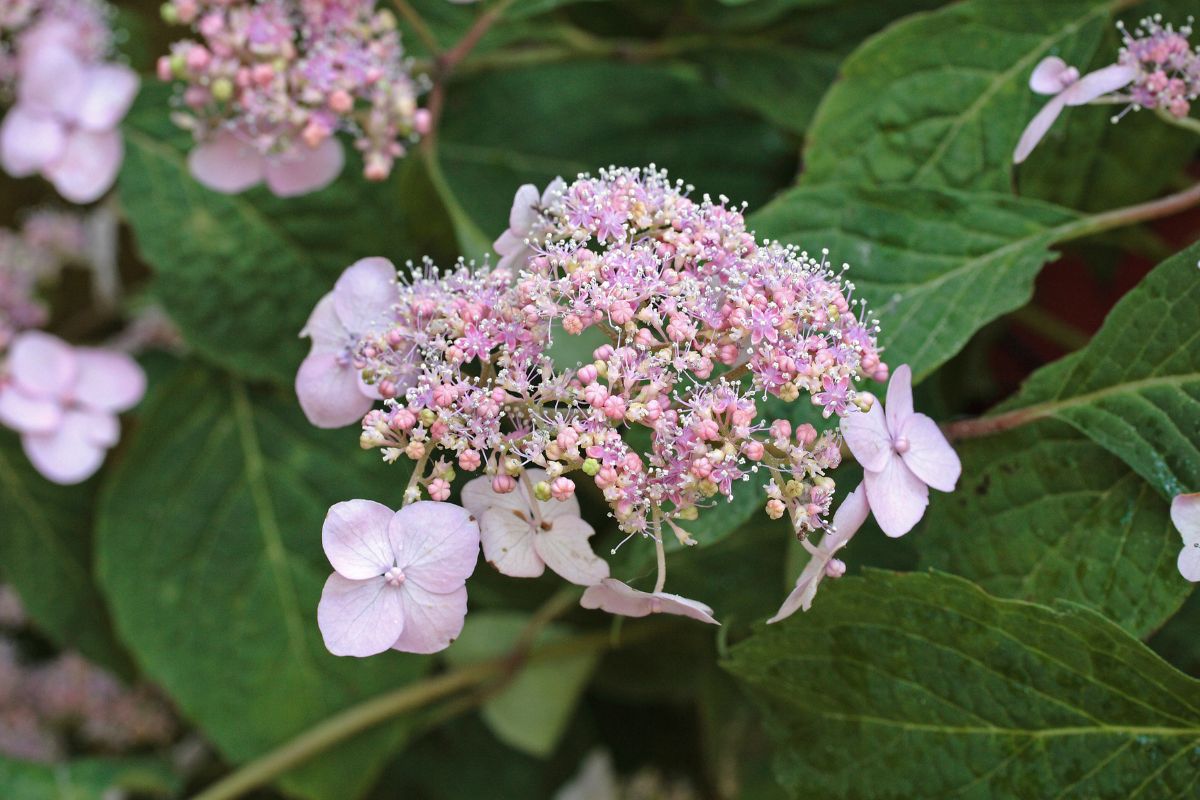
Hydrangeas produce large mophead or lacecap heads that read pink in alkaline soil and blue in acidic soil, so pink is the default in most limey gardens. To hold a hydrangea pink, aim for a soil pH of about 6.0 to 7.0 and add garden lime or dolomite in spring to lock the aluminium away, as the hydrangea growing guide explains.
Astilbe sends up feathery pink plumes in shade and damp soil, which makes it one of the few reliable pink perennials for a border that never sees full sun.
Dahlias flower from midsummer until the frosts in every pink from pale blush to magenta, on tubers that are lifted or mulched over winter in cold areas.
Dianthus, the pinks and carnations, gave the colour its name in English, and their fringed, clove-scented flowers sit above neat blue-grey foliage in sun and free-draining soil.
Bee balm in cultivars such as 'Marshall's Delight' brings shaggy rose-pink flowerheads that hummingbirds and bees work all day, described in the bee balm growing guide.
Yarrow in forms such as 'Cerise Queen' gives flat, cherry-pink heads on a plant that thrives in poor, dry soil, as the yarrow growing guide sets out.
Pink annuals for summer colour
Annuals give the longest run of pink, flowering from early summer until the frosts.
Cosmos carries wide, saucer-shaped pink flowers on airy stems, self-seeds freely and flowers all the more when cut, as covered in the cosmos growing guide.
Zinnias come in every pink from soft coral to hot magenta, thrive in heat and are among the best cut-and-come-again flowers, described in the zinnia growing guide.
Begonias are the mainstay of pink in shade, flowering steadily in beds, pots and hanging baskets where most flowers refuse to perform.
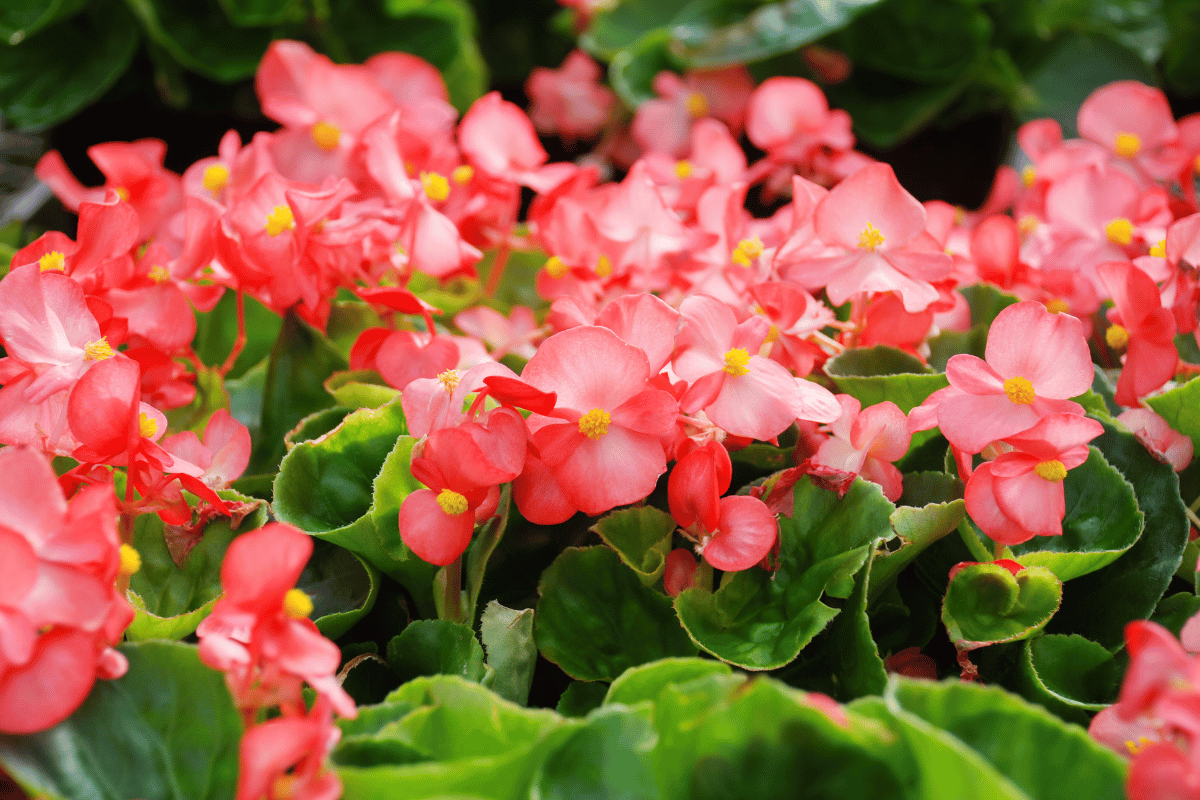
Impatiens flowers nonstop in pink through the summer in shade and part shade, alongside begonias, in the spots where sun-lovers fail.
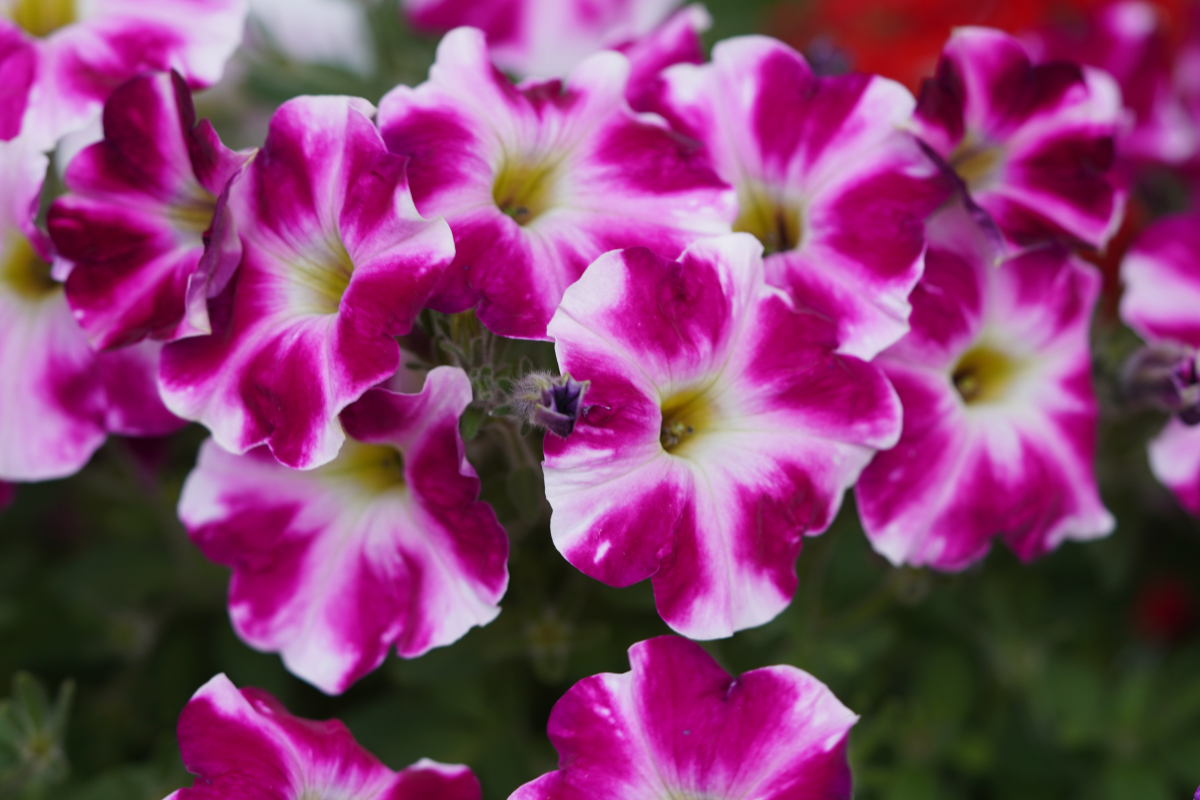
Petunias and their trailing forms fill baskets and window boxes with pink throughout the whole summer, needing only regular watering and deadheading.
Pink flowering shrubs and climbers
Oleander is the pink flower of the Mediterranean, flowering for months on a tough, drought-proof evergreen shrub used for hedges and screens. It is highly toxic in every part, a point the oleander growing guide covers in full.
Roses need little introduction, and pink is their heartland colour, from wild single roses to heavily petalled old varieties, with the bonus of scent and repeat flowering.
Hibiscus produces huge, tropical-looking pink trumpets, grown outdoors in warm climates and as a houseplant elsewhere, and it is easy to increase from cuttings, as our guide to propagating hibiscus explains.
Mandevilla climbs a trellis or obelisk with large, trumpet-shaped pink flowers all summer, grown as a perennial in frost-free areas and as a container plant elsewhere.
Bougainvillaea covers walls and pergolas in warm regions with sheets of magenta-pink bracts, thriving on heat, sun and very little water.
What tree has pink flowers
Several trees flower pink, and they give the biggest display of any garden plant for the least work.
- Cherry blossom (Prunus species): the most famous pink-flowering tree, smothered in single or double blossom for a few weeks in spring
- Magnolia: large, goblet-shaped pink and white flowers on bare branches in early spring, before the leaves appear
- Judas tree (Cercis siliquastrum): a Mediterranean tree whose bare branches are lined with deep pink pea-flowers in spring
- Crape myrtle (Lagerstroemia indica): frilled pink flowerheads through the hottest part of summer, when little else is in bloom
- Almond and peach: fruiting trees whose early pink blossom arrives before almost anything else
Crops with pink flowers
Pink is not only a garden colour. Several field crops flower pink, and in some regions those flowers cover whole landscapes.
- Sainfoin (Onobrychis viciifolia): a high-quality forage legume with cone-shaped spikes of bright pink flowers that bees work heavily
- Clover: red and alsike clovers carry rounded pinkish-purple heads, grown as cover crops and for grazing
- Field peas: soft pink to purple flowers before the pods set, used for forage and as a cover crop
- Buckwheat: white to pink-tinged flowers on a fast cover crop valued for pollinators
- Potato: many varieties flower in pink to purple before the tubers bulk up
- Almond and peach orchards: the largest pink display of all, with whole valleys turning pink for a few weeks in early spring
Designing with pink
Pink is easy to place but repays a little thought. Pale pinks read as soft and recede visually, which makes them useful for making a small garden feel deeper, and they combine beautifully with white, silver foliage and pale blue. Strong pinks and magentas do the opposite and come forward, holding their own against bold oranges and purples in a hot border. Mixing the two shades in the same bed can look muddled, so it usually works better to pick one register and repeat it, then let foliage do the rest. If you want a cooler counterpart, the plants in our guide to blue flowers to grow in your garden pair particularly well with soft pink.
What pink flowers mean
Pink flowers have long stood for grace, gratitude, admiration and gentle affection, a softer sentiment than the passion attached to red. Pink roses in particular carry meanings of appreciation and quiet love rather than romance, which is why they suit thank-you bouquets and family occasions, and pink carnations are traditionally associated with a mother's love. Pale pink suggests youth and innocence, while deeper pink leans towards thankfulness and recognition. In Japan, cherry blossom carries a different weight altogether, standing for the brief, fleeting nature of beauty and life. Pink flowers and the pink ribbon have also become a widely recognised symbol of breast cancer awareness.
Frequently asked questions
What flowers are pink? Pink spans nearly every plant group, including peonies, hydrangeas, roses, cosmos, zinnias, begonias, tulips, dianthus, oleander and cherry blossom.
What are the best pink perennials? Peonies, hydrangeas, dianthus, bee balm, and yarrow all return each year and provide reliable pink throughout summer.
Which trees have pink flowers? Cherry, magnolia, Judas tree, crape myrtle, almond, and peach are the main pink-flowering trees, most of which bloom in spring.
Do pinks come back every year? Perennial dianthus, the plants known as pinks, return each year and often flower for several seasons, while some annual and biennial types are grown fresh from seed.
Why did my pink hydrangea turn blue? Soil chemistry. Hydrangeas flower pink in alkaline soil and blue in acidic soil where aluminium is available, so the colour shifts with the ground they grow in.
What do pink flowers symbolise? Grace, gratitude, admiration and gentle affection, with pale pink linked to innocence and deeper pink to thankfulness.
Important notes
Every garden is different, and which pink flowers succeed depends on your climate, soil and how much sun the site gets. Treat the plants above as a starting point and match them to your conditions.
Some of the plants here are toxic if eaten, oleander in particular, so check before planting where children or pets have access. If a plant shows persistent problems, consult a horticulturist or your local nursery, and try non-chemical methods first.