











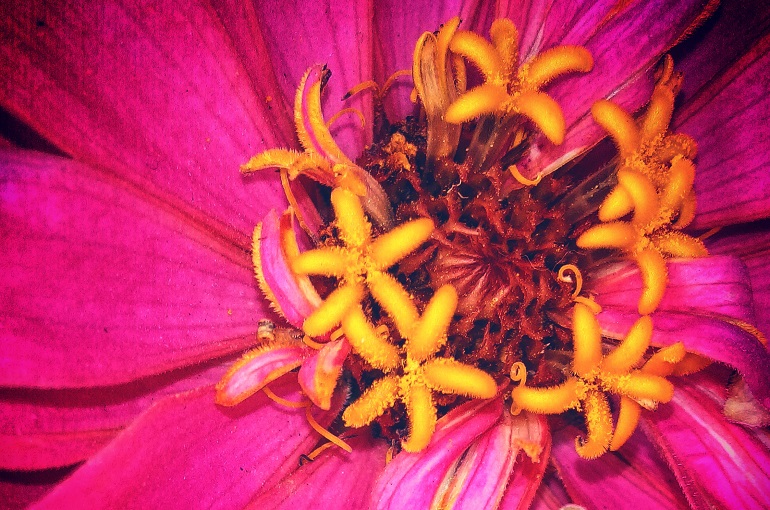
Zinnias are among the easiest and most rewarding flowers to grow from seed, providing bold colour from early summer through to the first frost. They are one of the best cut flowers for the garden, the more you cut them the more they bloom, and they draw in butterflies and bees, which makes them a natural fit for a pollinator-friendly garden. This guide covers how to grow and care for zinnias, from sowing seed at the right time to keeping powdery mildew at bay.
Zinnias (Zinnia elegans and related species) belong to the daisy family (Asteraceae) and are native to the warm highlands of Mexico and Central America, which is why they thrive in heat and full sun. They are annuals, quick from seed to flower, and come in almost every colour except true blue, on plants that range from 15 cm dwarfs to giants well over a metre tall.
Types of zinnias
Most garden zinnias are cultivars of Zinnia elegans, but a few groups are worth knowing when choosing seed.
Common zinnia (Zinnia elegans): the classic garden zinnia, endlessly hybridised into every colour and flower form, from single daisy shapes to dense doubles
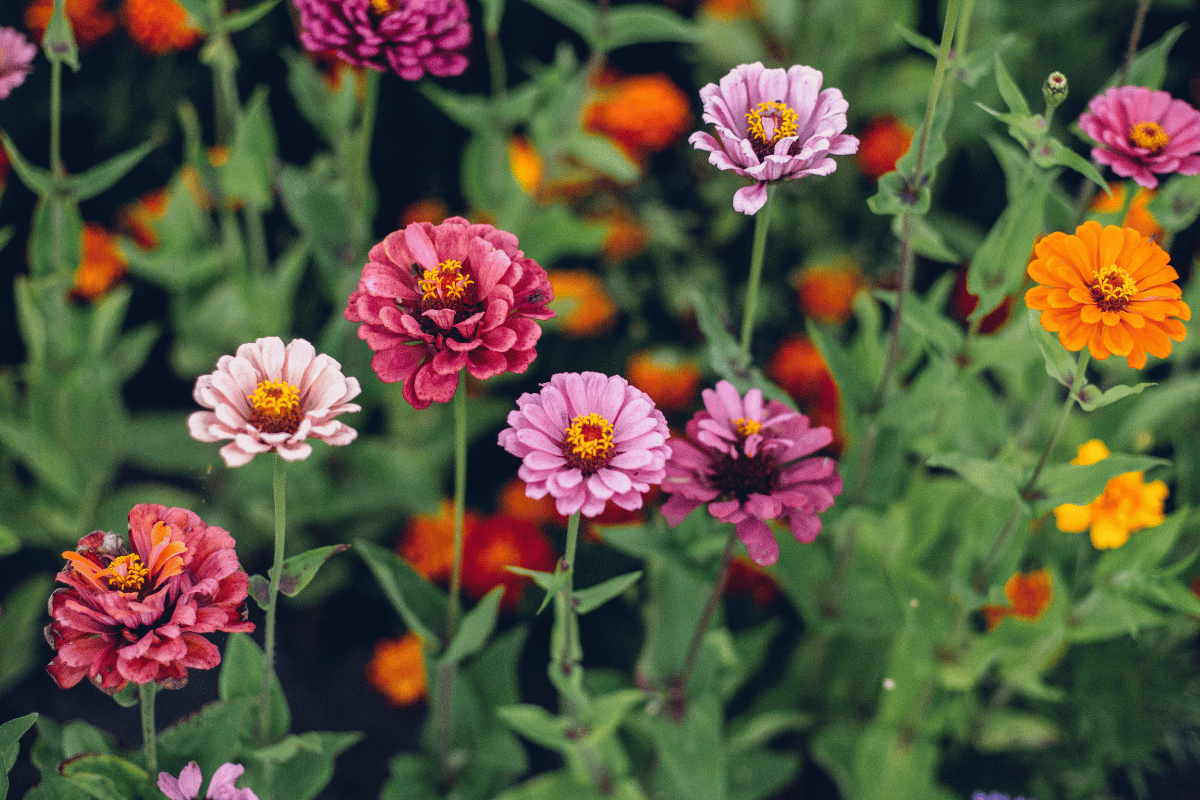
Tall types such as 'State Fair' and 'Benary's Giant': strong, long-stemmed plants with large blooms, the first choice for cutting
Powdery-mildew-resistant hybrids, the Profusion and Zahara series: crosses with the tougher narrow-leaf zinnia, giving compact, disease-resistant plants that flower well in humid summers
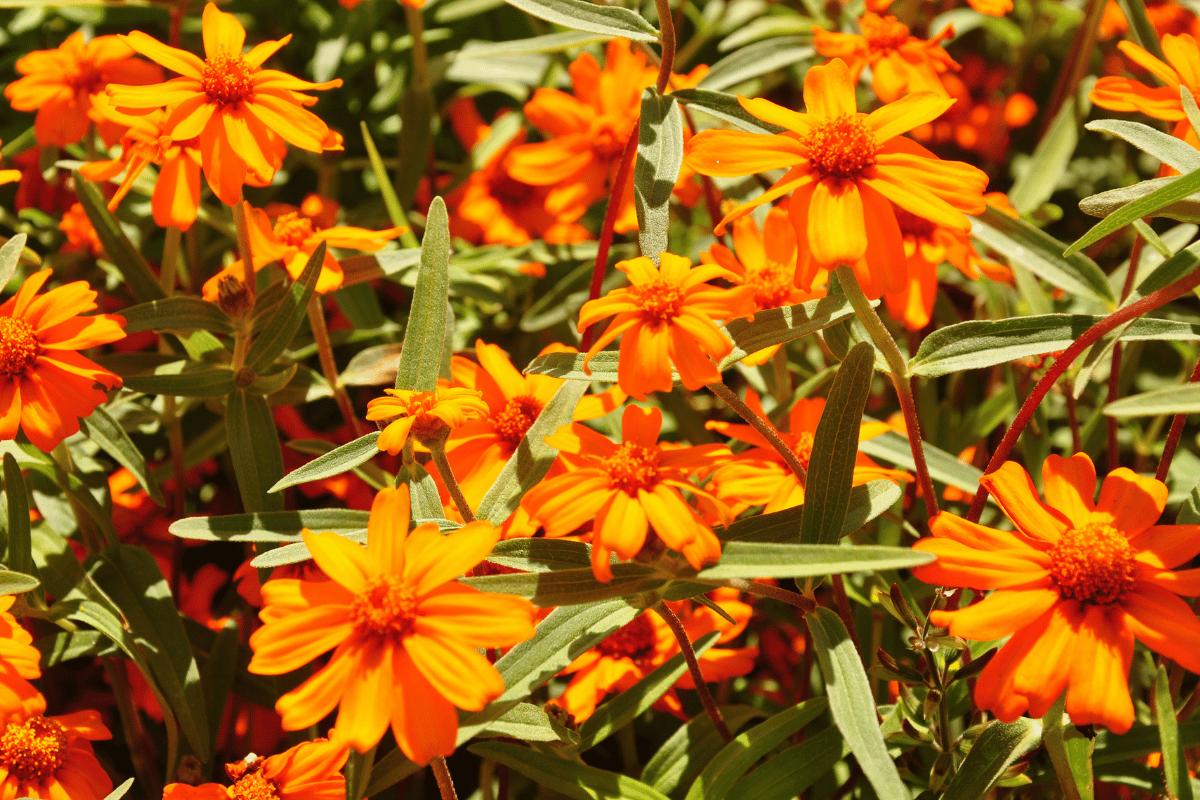
Narrow-leaf zinnia (Zinnia angustifolia): a low, bushy species with small single flowers and good natural resistance to powdery mildew
When to plant zinnia seeds
Zinnias are true heat lovers and will not tolerate cold or frost, so timing matters. Sow outdoors only after the last frost has passed and the soil has warmed to around 21°C, which in most temperate gardens means late spring. Sowing into cold, damp soil leads to poor germination and sulking plants.
Zinnias resent having their roots disturbed and do not transplant well once established, so direct sowing where they are to flower is the most reliable method. For a head start in short-summer areas, sow indoors 4 to 6 weeks before the last frost in individual pots, so the rootball stays intact at planting.
How to grow zinnias from seed
Zinnias are quick and forgiving from seed. Sow the seeds on warm, moist soil and cover them with just a thin layer, about 5 mm, since they need a little darkness to germinate. In warm soil they sprout in about 5 to 10 days and flower roughly 6 to 8 weeks after sowing.
- Choose a sunny, open spot with free-draining soil and rake it level
- Sow the seeds about 5 mm deep, or sow indoors in pots for later transplanting
- Once the seedlings have their first true leaves, thin them to the right spacing
- Water in gently and keep the soil lightly moist until they are growing away
Where to grow zinnias
Zinnias need full sun, at least six hours a day and ideally more, to grow sturdy and flower heavily. In shade they stretch, flop and produce fewer blooms. They are not fussy about soil as long as it drains freely, and digging in some compost before planting improves growth, though overly rich soil is not needed.
Space plants about 20 to 30 cm apart. Good spacing is not just about room to grow, it keeps air moving between the plants, which is the single best defence against the powdery mildew zinnias are prone to.
Are zinnias annuals or perennials?
Zinnias are annuals. They complete their whole life cycle in one season, from seed to flower to seed, and do not survive frost, so they are grown fresh from seed each year in every climate. They are not perennials and will not reliably come back from the roots. They can self-seed if you leave some flowers to mature and drop seed, but most gardeners simply sow fresh each spring, which also lets them choose new colours.
Watering
Zinnias are fairly drought-tolerant once established, but they flower best with steady moisture. Water deeply when the top few centimetres of soil are dry, rather than little and often. Always water at the base of the plants and keep the foliage dry, since wet leaves invite fungal disease. Morning watering is best, so any splashes dry quickly through the day. Once the plants are 15 to 20 cm tall, a layer of mulch helps conserve moisture and suppress weeds.
Pinching and deadheading
Two simple jobs keep zinnias bushy and blooming. Pinching means snipping out the top few centimetres of a young plant, just above a pair of leaves, once it is 15 to 20 cm tall. This pushes the plant to branch and produce many more stems and flowers instead of one tall central bloom.
Deadheading is the removal of spent flowers before they set seed. Left to seed, a zinnia slows or stops flowering as it puts its energy into seed production, so removing faded blooms keeps new buds coming right through to frost. Cut back to just above a set of healthy leaves rather than snapping off only the flower head.
Zinnias as cut flowers
Zinnias are classic cut-and-come-again flowers, and regular cutting is the best thing you can do for a long display, since every stem you take prompts the plant to send up more. Tall varieties such as 'Benary's Giant' and 'Oklahoma' give the longest, strongest stems for the vase, and they pair well with other easy annuals such as marigolds in a cutting bed.
Cut in the cool of the morning, taking stems that pass the wiggle test, where the stem stays firm and upright rather than flopping when gently shaken, which shows the bloom is mature enough to last. Cut just above a leaf node, strip the lower leaves, and put the stems straight into water for a vase life of about a week or more.
Pests and diseases
Zinnias are largely trouble-free, but a few problems can appear. Aphids, thrips and whiteflies sometimes gather on the plants, often on the undersides of leaves. The best approach is prevention through healthy growing conditions, good spacing and airflow. If pests do take hold, dislodge them with a strong jet of water, and treat persistent infestations with insecticidal soap or neem oil, applied in the evening when fewer pollinators are active.
Fungal diseases are the more common issue. Powdery mildew, a white dusty coating on the leaves, is almost inevitable on susceptible varieties in humid, still weather, and although it rarely kills the plant it spoils its looks. Prevent it with full sun, generous spacing, watering at the base rather than overhead, and by choosing resistant varieties such as the Profusion, Zahara or narrow-leaf types. Alternaria leaf spot causes reddish-brown blotches on the foliage. Remove affected leaves, water at the soil, and keep the bed free of dead material to reduce both diseases.
Do deer eat zinnias?
Zinnias are generally left alone by deer and rabbits, which tend to avoid them because of their slightly coarse, scented foliage. That makes zinnias a useful choice in gardens troubled by browsing animals, though no plant is completely deer-proof and hungry deer may still sample young growth.
Are zinnias toxic to cats and dogs?
Zinnias are non-toxic. According to the ASPCA, they are safe for cats, dogs and horses, so they are a sound choice for a pet-friendly garden. A pet that chews on a zinnia may get a mild stomach upset from the roughage, but the plant contains no harmful toxins.
Saving zinnia seed
Saving your own seed is easy. Stop deadheading towards the end of the season and let a few flower heads dry fully on the plant until they turn brown and papery. Pull the dried heads apart to find the arrowhead-shaped seeds attached at the base of each petal, then spread them out indoors for a couple of weeks to dry completely before storing them in a labelled paper envelope somewhere cool and dry. Note that seed saved from F1 hybrids will not come true, so the plants may differ from the parent.
Frequently asked questions
When should I plant zinnia seeds? After the last frost, once the soil has warmed to about 21°C, usually in late spring. Zinnias will not tolerate cold, so there is no benefit to sowing early.
Are zinnias annuals or perennials? They are annuals in every climate, grown fresh from seed each year. They do not survive frost or come back from the roots, though they can self-seed.
How long do zinnias take to grow? They germinate in about 5 to 10 days in warm soil and flower roughly 6 to 8 weeks after sowing.
Do deer eat zinnias? Zinnias are generally deer and rabbit resistant thanks to their coarse, scented foliage, though no plant is entirely deer-proof.
Are zinnias poisonous to cats and dogs? No. The ASPCA lists zinnias as non-toxic to cats, dogs and horses.
Important notes
Every garden and every plant is unique. Conditions vary significantly with your region, climate, sun exposure and soil. The guidance above is general and a starting point rather than a strict rule.
If your plants show persistent problems that don't respond to the basic practices, it's worth consulting an agronomist or your local nursery. For pest and disease control, try non-chemical methods first, such as improving airflow and choosing resistant varieties. When a product is needed, use only approved ones and follow the label instructions.
References
- Royal Horticultural Society. How to grow zinnia.
- The Old Farmer's Almanac. Planting and growing zinnias.
- NC State Extension. Zinnia elegans.
- ASPCA Animal Poison Control. Toxic and Non-Toxic Plants: Zinnia.