
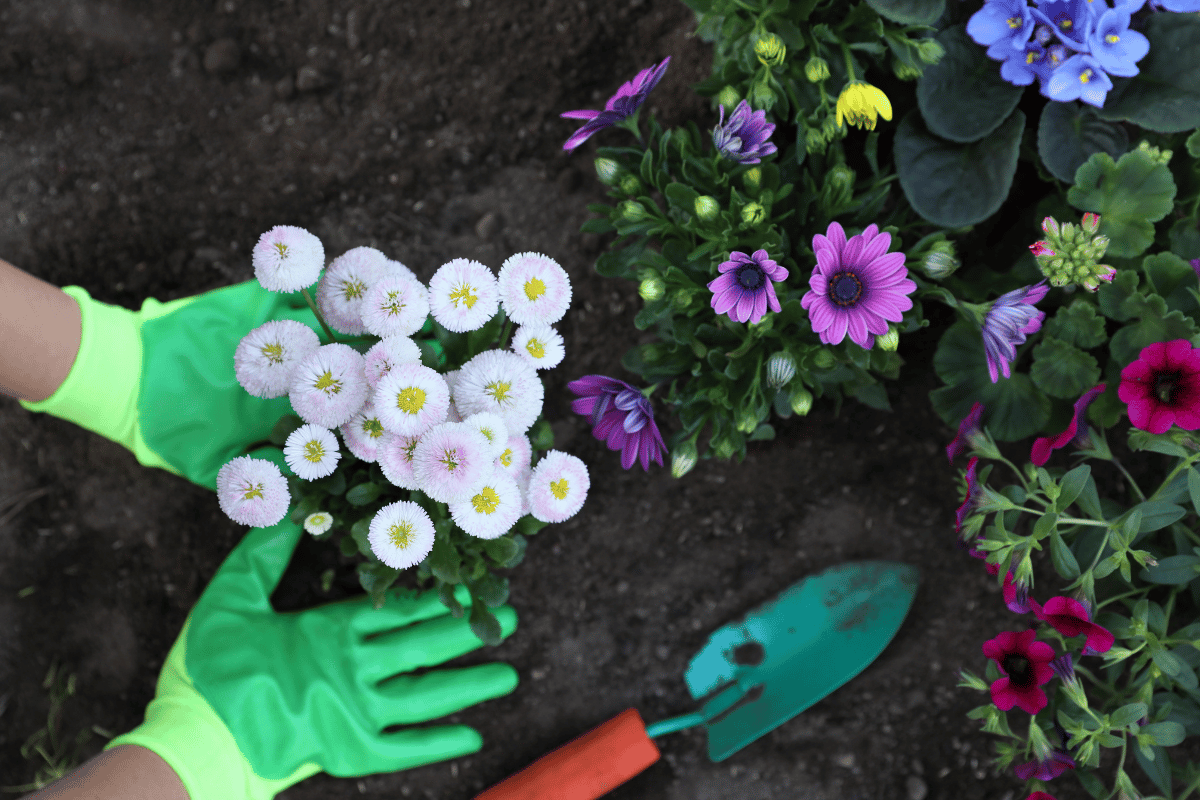
No single outdoor plant flowers 365 days a year in a temperate climate, whatever a plant label promises. What is genuinely possible is a garden that always has something in bloom, and in mild and Mediterranean climates, a handful of tender perennials come close to flowering non-stop for eight to ten months. The trick is not one miracle plant but succession, meaning a set of plants whose flowering seasons overlap so the display never stops. This guide covers the longest-flowering plants worth growing, what to have in bloom in each season, and the three jobs that keep flowers coming.
What year-round flowering really means
Most herbaceous perennials need a dormant period, so they flower for a few weeks or a couple of months and then go dormant again. Annuals flower for far longer, often from early summer until frost, because their whole purpose is to set seed before they die, and the more you stop them from seeding, the longer they carry on. Tender perennials such as lantana and pelargoniums behave differently again, flowering for most of the year wherever winters stay frost-free and being grown as annuals where they do not.
Indoors is where continuous flowering is genuinely achievable. Anthuriums, African violets and tropical hibiscus can bloom in every month of the year, because they never meet frost or short cold days.
The longest-flowering plants for the garden
- Lantana (Lantana camara): flowers non-stop through heat and poor soil, and keeps going through mild winters in frost-free areas
- Pelargoniums, often sold as geraniums: bloom from spring to early winter with little water and plenty of sun, and flower nearly all year in mild climates
- Bougainvillaea: covers walls and pergolas with colour from spring to autumn on almost no water, and flowers year-round in warm regions
- Verbena: an easy trailing or ground-cover plant that reblooms all season, especially after a light trim
- Hardy geranium 'Rozanne': one of the longest-flowering hardy perennials, in bloom from late spring until the first frosts
- Mexican fleabane (Erigeron karvinskianus): small daisies almost continuously from spring to late autumn, self-seeding into walls and paving
- Salvias: nectar-rich spikes over months, and the shrubby types flower even longer in mild areas
- Repeat-flowering roses: modern varieties give waves of bloom from late spring to autumn rather than a single flush
- Perennial wallflower (Erysimum 'Bowles's Mauve'): among the longest-flowering plants of all, capable of nearly ten months of bloom in a mild climate
- Lavender: evergreen, aromatic and drought-proof, flowering through midsummer with silvery foliage that holds interest all year
- Periwinkle (Catharanthus roseus): flowers non-stop through heat and humidity with very little water, grown as an annual where winters are cold
- Oleander: months of flowers on a drought-proof evergreen shrub, as the oleander growing guide explains, though every part is toxic
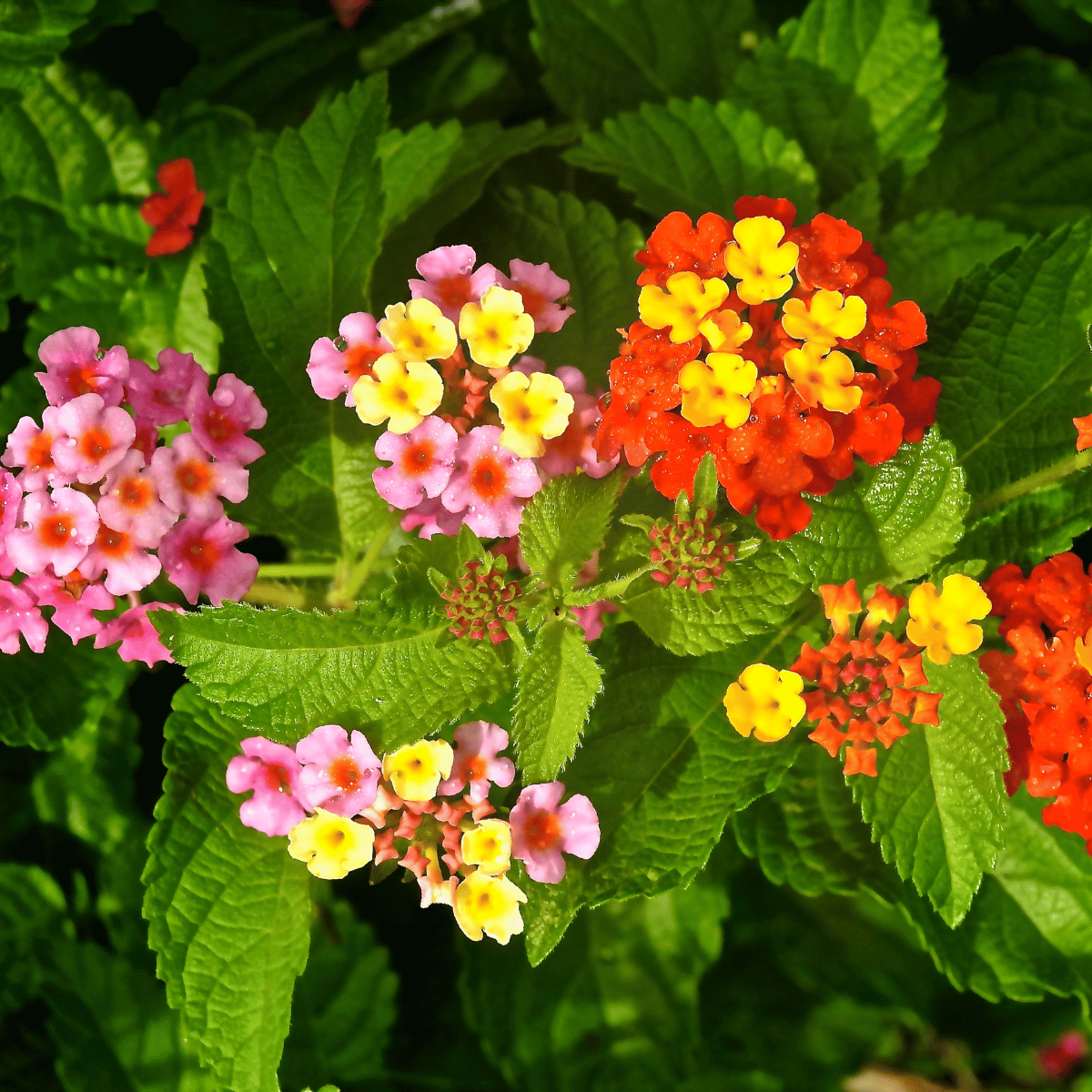
Lantana
Perennials that flower for months
Most perennials bloom for a few weeks, but a handful keep going far longer and are worth building a border around. Rudbeckia carries golden daisies from early summer well into autumn.
Echinacea flowers for months and leaves seedheads that feed birds afterwards.
Coreopsis and gaillardia shrug off heat and drought and flower across the whole warm half of the year.
Catmint reflowers after a light shear, and yarrow holds its flat heads for weeks and dries well, as the yarrow growing guide describes. Gaura and sedum extend the display into autumn.
Long-blooming annuals
Annuals are the fastest way to fill a gap and provide flowers for months rather than weeks.
Zinnias bloom from early summer to frost and produce more the more you cut them, as the zinnia growing guide sets out.
Cosmos flowers are just as long and thrive in poor soil, as covered in the cosmos growing guide.
Petunias and calibrachoa can be grown in pots and baskets from spring through late autumn with regular watering.
Portulaca flowers through the fiercest heat on almost no water, and sweet alyssum produces scented sheets of flower that bees work from spring to autumn.
Begonias flower steadily from spring to autumn in both sun and shade, which makes them one of the few long-bloomers for a shady spot, alongside impatiens and the sun-tolerant sunpatiens.
Pentas flowers through heat and draws butterflies for months.
Marigolds and nasturtiums add months of colour and are useful in the vegetable garden too, as covered in the marigold and nasturtium guides.
What to have in bloom in each season
A garden in flower all year is a matter of planning rather than luck. Two or three reliable plants per season are enough.
| Season | Plants in bloom | What they need |
|---|---|---|
| Winter | Pansies and violas, cyclamen, primula, hellebore, winter jasmine | Little water, shelter from hard frost |
| Spring | Tulips, ranunculus, pelargoniums, dianthus, azalea, lilac | Feeding as growth starts, planting out annuals |
| Summer | Zinnia, cosmos, lantana, portulaca, hydrangea, bougainvillaea, yarrow | Steady moisture, mulch, and some afternoon shade in hot climates |
| Autumn | Lantana, verbena, chrysanthemum, sedum, repeat roses, zinnia | Deadheading, a light cut back |
Evergreen structure for the winter months
A garden that never looks empty does not rely on flowers alone. Evergreen shrubs hold their shape and greenery while the flowering plants rest, and abelia, viburnum, holly, box, and lavender keep a garden furnished through winter. Two or three evergreens combined with seasonal flowering plants make the difference between a garden that peaks for a month and one that looks cared for in January.
Houseplants that flower nearly year-round
Indoors, without frost, a few plants really do flower in most months. Anthurium holds its waxy spathes for weeks and reflushes continuously in bright, indirect light. African violet (Saintpaulia) blooms in waves all year on a windowsill. Tropical hibiscus produces large flowers whenever it has warmth and light. Kalanchoe flowers heavily in winter, exactly when the garden has least to offer, and Arabian jasmine repeats its scented white flowers across the seasons. Moth orchids (Phalaenopsis) hold their flowers for two or three months and rebloom with the right care, and bromeliads such as guzmania keep their coloured bracts for months. All of them want bright, but indirect, light and to be watered only once the compost surface is dry.
The three jobs that keep flowers coming
Deadheading matters most. Once a flower sets seed, the plant reads its work as done and slows down, so removing faded flowers before they seed pushes it to produce new buds instead. On petunias, zinnias, roses and verbena the difference is dramatic.
Cutting back comes second. Many annuals and ground-cover plants go leggy and bare by midsummer, and shearing them back by about a third brings fresh growth and a second flush of flower within two or three weeks.
Feeding completes the picture. Plants that flower for months exhaust their soil, especially in containers, so they need regular feeding with a fertiliser higher in phosphorus and potassium than nitrogen. Too much nitrogen is the classic mistake, giving lush leaves and few flowers, which is exactly what happens to cosmos, nasturtiums and yarrow in rich ground.
Common mistakes
Buying only what is in flower on the day you visit the nursery leaves you with a garden that peaks for one month and sits empty for the rest, so choose deliberately across the seasons instead. Watering to the same schedule all year is the second trap, since needs in July and January are not remotely comparable. Overfeeding with nitrogen produces tall, soft, flowerless plants. Skipping deadheading is the quickest way to end a display early. For more ideas built around a single colour, see the guides to pink flowers and blue flowers.
Frequently asked questions
Is there a flower that blooms all year long
Not reliably outdoors in a temperate climate. In frost-free and Mediterranean areas lantana, pelargoniums and bougainvillea flower for eight to ten months, and indoors anthurium and African violet come close to blooming continuously.
Which perennial flowers the longest
Hardy geranium 'Rozanne', Mexican fleabane, salvias, coreopsis and gaillardia all flower for several months, far longer than most perennials.
What is the longest blooming perennial
Perennial wallflower 'Bowles's Mauve' can flower for up to ten months in mild areas, and hardy geranium 'Rozanne', Mexican fleabane, rudbeckia, coreopsis and gaillardia all bloom for several months.
What is the lowest maintenance flowering plant
Lantana, portulaca, gazania and lavender need almost no water or attention once established, and they flower for months in full sun and poor soil.
What are the easiest annual flowers to grow
Zinnia, cosmos, nasturtium, marigold, calendula and sweet alyssum can all be sown straight into the ground and flower within two to three months.
What flowers bloom in winter
Pansies and violas, cyclamen, primula, hellebore and winter jasmine carry colour through the coldest months, with kalanchoe doing the same indoors.
How do I make my flowers bloom longer
Deadhead regularly, cut leggy plants back by a third in midsummer, feed with a fertiliser higher in phosphorus and potassium than nitrogen, and water according to the season rather than a fixed routine.
Why does my plant produce leaves but no flowers
Usually too much nitrogen or too little light. Cut back on feeding, switch to a fertiliser aimed at flowering, and move the plant somewhere brighter.
Important notes
Every garden is different, and which plants flower longest depends on your climate, soil and exposure. In colder regions treat the tender long-bloomers as annuals or overwinter them under cover.
Some of the plants above are toxic if eaten, oleander in particular, so check before planting where children or pets have access, and where any treatment is needed try non-chemical methods first.
References
- Royal Horticultural Society, Plants for specific places and purposes.
- Missouri Botanical Garden, Plant Finder.