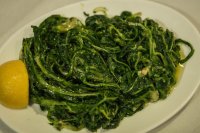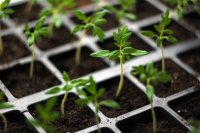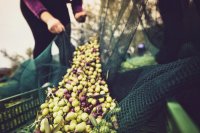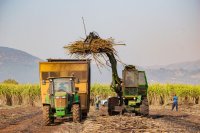

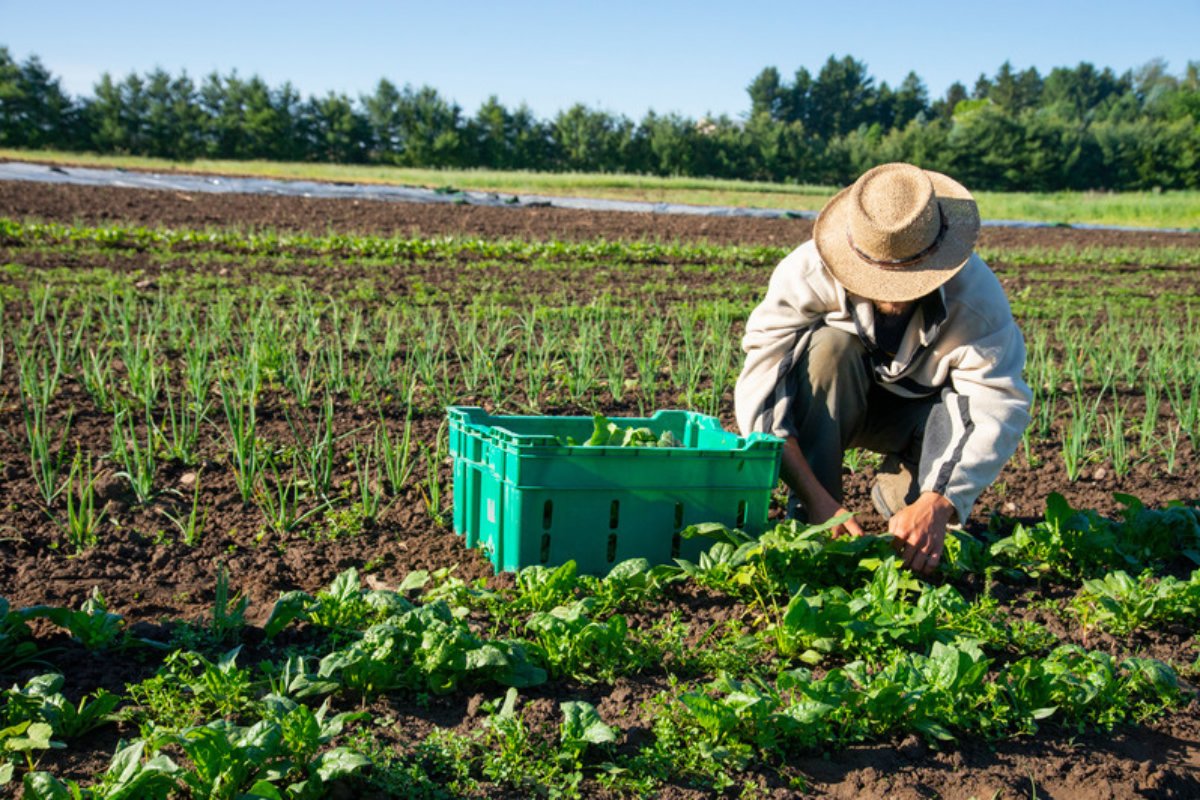
Stamnagathi (Cichorium spinosum), or spiny chicory, is grown commercially mainly in Crete for its leaf rosettes, which are sold fresh, washed and packed. According to the Vegetable Crops Laboratory of the University of the Peloponnese, the first harvest comes 2.5 to 4 months after sowing, cuts follow every 30 to 40 days until late spring, and yields reach 8 to 15 tonnes per hectare, that is 800 to 1,500 kg per Greek stremma, depending on technique and conditions. The seed is expensive and takes more than 20 days to germinate, so weeds are the main problem in the field. The crop needs little nitrogen and tolerates moderate salinity in the irrigation water, which suits it to the coastal fields of Crete.
Stamnagathi as a commercial crop
Gathering stamnagathi from the wild is difficult, so in recent years it has been cultivated systematically. The University of the Peloponnese describes it as a high value-added product with export prospects, and the research groups studying it note the very high prices it fetches on the fresh vegetable market.
The most organised production is at Gramvousa, west of Kissamos in Chania, where stamnagathi was first grown on a large scale. According to the Gramvousa Agricultural Cooperative, as reported by the local newspaper Chaniotika Nea in March 2025, 45 to 60 hectares are grown in the area every year, with 2 or 3 cuts per season, and most of the crop is sold to mainland Greece. The producer price was about €3 per kg, and the cooperative notes that the product reaches consumers at a high price, of which growers keep only a part. The cooperative's agronomists attribute the area's suitability to the sea air and the mild winter, and the cooperative is pursuing a Protected Designation of Origin for "Stamnagathi Gramvousas", held back by the cost of the required study.
Climate and growing season
Stamnagathi grows while temperatures are relatively low, prefers sunny areas and tolerates cold down to 17 degrees below zero. In summer growth stops, and high temperatures quickly lead to the spiny flower stem and flowering, at which point the rosette is no longer marketable. The plant's cycle is the same in the field and in the home garden, with the rosette from autumn to spring and the spines in summer.
The sowing date decides how many cuts the crop will give. In a University of Thessaly trial in an unheated greenhouse, sowing on 2 September gave two harvests, while sowing in mid-December gave only one, because spring conditions triggered early flowering. The plant is a perennial, resprouting after summer with the first irrigation or the first rains, and its productive life lasts 2 to 3 years.
Soil and crop rotation
Stamnagathi grows best in sandy and sandy loam soils with a reasonable organic matter content and good drainage, and adapts to a pH of 6 to 8. Organic matter can be worked in during soil preparation, but manure must be well rotted and free of weed seed, as the Greek crop protection resource Plant Protection points out, because weed seed in the manure germinates ahead of the slow stamnagathi seedlings. The same source describes the crop as similar to chicory and recommends crop rotation and summer soil solarisation against nematodes, soil insects and weeds.
How much salinity stamnagathi tolerates
The University of the Peloponnese reports high tolerance of salinity and sea spray. In a hydroponic trial at the Mediterranean Agronomic Institute of Chania, plant dry weight did not fall significantly with a nutrient solution containing 20 mmol/L sodium chloride, an electrical conductivity of 4.1 dS/m, but did fall at 40 mmol/L, or 6.1 dS/m. In a trial at the Cyprus University of Technology, 40 and 120 mmol/L reduced fresh weight by up to 39% in perlite, 34% in pumice and 31% in rockwool, while in sand the reduction appeared only at 120 mmol/L. In the same trial, high salinity made the leaves more bitter and less acceptable in tasting.
In the Chania trial, plants grown from seed collected at Stavros, beside the sea, produced more fresh weight under saline water than plants from Omalos, at about 1,200 m. The mountain plants, however, had dry matter of 12% against 8.3% in the coastal plants and more phenolic compounds, carotenoids and flavonoids. For fields with brackish water, the coastal population is the safer choice.
Sowing rate and plant density
Stamnagathi seed is hard to separate from the seed heads, which is why the University of the Peloponnese points to its high cost. The crop is mostly direct-sown, and less often transplanted.
- Seed rate: 0.6 to 1.1 kg per hectare, or 60 to 110 g per stremma, for direct sowing, according to Plant Protection
- Method: the seed is very small, so it is mixed with slightly damp river sand for even distribution and sown in two passes in opposite directions
- Watering until germination: regular, careful watering with surface sprinklers for more than 20 days, until the seed germinates
- Spacing: 15 to 22 cm between rows and within the row, which on a square layout comes to roughly 210,000 to 440,000 plants per hectare
- Transplanting: in the Chania trial, seedlings raised in peat and perlite trays were transplanted two months after a December sowing, while under artificial lighting they went out after 27 days
Transplanting costs more, but the plants enter the field already established, which avoids both the slow germination and the competition from weeds.
Feeding with little nitrogen
Fertilisation is based on soil analysis, because every field differs in organic matter, cropping history and available nutrients. Plant Protection advises care with nitrogen, because excess nitrogen gives thin, long leaves that are not wanted in the rosette, and recommends base fertilisation with low-nitrogen compound fertilisers such as 12-12-17 or 14-7-14. During the season, nutrients can be supplied by fertigation, mainly nitrogen and potassium in small doses through the drip system. In very cold spells, when uptake from the soil is slow, organic and humic fertilisers help.
Hydroponic trials show that stamnagathi yields well with little nitrogen. In Chania, a nutrient solution with 4 mmol/L total nitrogen gave 27.7 g per plant, against 26.8 g at 16 mmol/L, with no statistical difference. In a vertical farming trial under artificial light, restricted nitrogen did not significantly reduce yield, and leaf nitrate stayed below the safety threshold in all treatments.
Irrigation
Drip irrigation suits the crop best, because it keeps the foliage dry. Plant Protection recommends drippers rather than overhead sprinklers, since wet leaves favour downy mildew and grey mould, with sprinklers used only until germination. The soil needs good drainage, so water volumes are set so that water does not stand in the root zone. In summer irrigation is reduced, and the first autumn watering starts regrowth. Before planting, well water is tested for salinity.
Weed control
Weeds are the main problem of the crop, because the seed germinates slowly and the young rosette grows flat, close to the ground. In the open field, growers use black plastic mulch and plant seedlings through holes in the film, as the University of the Peloponnese material shows. In direct-sown crops, weeds are controlled by hoeing and hand weeding, while summer solarisation before sowing reduces the weed seed bank in the soil. Any chemical control uses only herbicides registered for stamnagathi.
Crop protection
- Slugs and snails: eat the leaves, mainly of young plants and in damp weather
- Soil caterpillars and nematodes: kept down by crop rotation and solarisation
- Whitefly and thrips: listed among the pests of the open-field crop
- Downy mildew: causes leaf scorch and is favoured by wet foliage
- Grey mould, Sclerotinia and powdery mildew: the other diseases Plant Protection records in the crop
Prevention rests on reduced nitrogen, drip irrigation, crop rotation and solarisation, and Plant Protection also suggests fertilisers that strengthen plant resistance, such as potassium fertilisers with trace elements and seaweed extracts. For a minor crop like stamnagathi, every product is checked for registration on the crop in the national plant protection product database, in Greece that of the Ministry of Rural Development and Food. With cuts every 30 to 40 days, the pre-harvest interval also sets the spray schedule.
Greenhouse and hydroponic production
The trials were run in unheated greenhouses in Chania and Velestino, for winter and spring production, and according to the Chania team hydroponics allows year-round production. In that trial, plants grew in 1-metre perlite bags, 4 plants per bag and 20 cm apart in the row, with drip irrigation and about 30% drainage. Stamnagathi adapts to various hydroponic systems. In the Cyprus trial it grew in perlite, pumice, rockwool and sand, and the University of the Peloponnese also shows vertical hydroponic production.
In a vertical farm under LED lighting, plants transplanted at 100 plants per square metre with a 15-hour photoperiod were harvested 24 days after transplanting, 51 days after sowing, and yielded 1.8 kg per square metre. The nutrient solution had an electrical conductivity of 1.5 to 2 dS/m and a pH of around 5.6.
Harvest and marketing
Harvest takes place at the rosette stage, once the rosette has reached a good size and before the spine appears. In the Chania trial, rosettes were judged marketable at 20 to 27 cm across with more than 30 leaves, 60 days after transplanting, and the second cut was made 108 days after transplanting. Plants are cut with a knife just below the rosette, so the leaves stay joined, and the root with the base of the stem stays in the soil to regrow. Because plants do not grow evenly, harvesting is done in several passes.
After cutting, rosettes are sorted, washed in clean water and packed in plastic bags, which extend their shelf life, and they are sold within 4 to 5 days. The University of the Peloponnese gives 3 cuts from winter to late spring, while Plant Protection reports a production period of 9 to 10 months, so the number of cuts depends on the weather and the sowing date.
Yields per hectare and per plant
| Source | System | Yield |
| University of the Peloponnese | Open field | 8 to 15 t per hectare (800 to 1,500 kg per stremma) |
| University of Thessaly, 2018 | Pots in an unheated greenhouse, September sowing | 50 to 66 g per plant over two cuts |
| University of Thessaly, 2018 | Pots in an unheated greenhouse, December sowing | 15 to 20 g per plant from one cut |
| Voutsinos-Frantzis et al., 2024 | Vertical farm, 100 plants per square metre | 1.8 kg per square metre in a 51-day cycle |
Sources: University of the Peloponnese; Petropoulos et al., 2018; Voutsinos-Frantzis et al., 2024
The per-plant figures come from pots and do not convert to hectares, but they show that yield is decided by the sowing date and the number of cuts. In a 2017 trial with successive harvests, total yield and leaf number were higher than with a single cut, while more than two cuts reduced leaf quality in the first growing period.
Frequently asked questions
What is the yield of stamnagathi per hectare
According to the University of the Peloponnese, 8 to 15 tonnes per hectare, or 800 to 1,500 kg per stremma. It depends mainly on how many cuts the crop manages before flowering.
How much stamnagathi seed is needed per hectare
For direct sowing, 0.6 to 1.1 kg per hectare, or 60 to 110 g per stremma, mixed with damp river sand for even distribution.
How many cuts does stamnagathi give
Usually 2 or 3 per season, every 30 to 40 days, from winter to late spring. With a December sowing the number of cuts drops, because warm spring weather brings flowering forward.
Where is stamnagathi grown in Greece
Mainly in Crete, with the largest organised production at Gramvousa near Kissamos, where 45 to 60 hectares are grown each year.
Can stamnagathi be grown hydroponically
Yes. It has been grown experimentally in perlite, pumice, rockwool and sand, and in a vertical farm under LED lighting it yielded 1.8 kg per square metre in 51 days from sowing.
Does stamnagathi tolerate salty water
Up to 4.1 dS/m in the nutrient solution, the drop in weight was not significant, while at higher salinity yield fell by up to 39% and the leaves turned more bitter. The crop tolerates moderate salinity, and coastal populations cope better.
Important notes
Results from hydroponic trials do not transfer directly to the open field.
Every plant and every growing environment is different. Conditions vary considerably with region, exposure, water quality, soil pH and the overall health of the plant. The guidance above is general and is a starting point.
If you suspect a serious nutrient deficiency or a disease that does not respond to basic practices, contact an agronomist for an accurate diagnosis.
Plant protection products should be used with care and responsibility. Always try non-chemical methods first. When chemical control is needed, use only registered products and follow the label instructions.
References
- University of the Peloponnese, Vegetable Crops Laboratory. Stamnagathi (Cichorium spinosum L.), lecture notes. In Greek.
- Chatzigianni, M., Ntatsi, G., Theodorou, M., Stamatakis, A., Livieratos, I., Rouphael, Y. and Savvas, D. (2019). Functional quality, mineral composition and biomass production in hydroponic spiny chicory (Cichorium spinosum L.) are modulated interactively by ecotype, salinity and nitrogen supply. Frontiers in Plant Science, 10, 1040.
- Klados, E. and Tzortzakis, N. (2014). Effects of substrate and salinity in hydroponically grown Cichorium spinosum. Journal of Soil Science and Plant Nutrition, 14(1), 211-222.
- Petropoulos, S.A., Fernandes, Â., Karkanis, A., Ntatsi, G., Barros, L. and Ferreira, I.C.F.R. (2017). Successive harvesting affects yield, chemical composition and antioxidant activity of Cichorium spinosum L. Food Chemistry, 237, 83-90.
- Petropoulos, S., Fernandes, Â., Karkanis, A., Antoniadis, V., Barros, L. and Ferreira, I.C.F.R. (2018). Nutrient solution composition and growing season affect yield and chemical composition of Cichorium spinosum plants. Scientia Horticulturae, 231, 97-107.
- Voutsinos-Frantzis, O., Savvas, D., Liakopoulos, G., Karavidas, I., Ntanasi, T., Sabatino, L., Marcelis, L.F.M. and Ntatsi, G. (2024). Optimizing vertical farm cultivation of Cichorium spinosum L.: White light's influence and nutrition management. Heliyon, 10(17), e37146.
- Chaniotika Nea (2025). The Gramvousa Cooperative aims for recognition of its stamnagathi. In Greek.
- Plant Protection. Stamnagathi and its cultivation. In Greek.
- Hellenic Ministry of Rural Development and Food. Plant protection products. In Greek.