
100 g of raw stamnagathi provides 15 kcal, 0.7 g of protein and just 0.1 g of fat, according to the analyses by Zeghichi, Kallithraka and Simopoulos published in 2003, figures also used by the University of the Peloponnese. The same analyses give 36.6 mg of vitamin C, 9.8 mg of vitamin E and 2.7 mg of beta-carotene per 100 g, but more recent measurements in cultivated plants find far less vitamin E, so the figures do not apply to every bunch on sale. Stamnagathi contains omega-3 fats, in amounts too small for a claim in the EU, and a fair amount of oxalates, which matter for people with kidney stones. Part of the oxalate goes into the cooking water.
Nutrients per 100 g
The table brings together values for fresh, raw stamnagathi. Stamnagathi is not listed in the US Department of Agriculture's FoodData Central database, so the values come from published analyses. The percentage refers to the reference intake in Regulation (EU) 1169/2011, where one is set.
| Nutrient | Per 100 g | % reference intake | Source |
| Energy | 15 kcal | 1% | Zeghichi et al., 2003 |
| Carbohydrates | 3.1 g | 1% | Zeghichi et al., 2003 |
| Protein | 0.7 g | 1% | Zeghichi et al., 2003 |
| Fat | 0.1 g | under 1% | Zeghichi et al., 2003 |
| Vitamin C | 36.6 mg | 46% | Zeghichi et al., 2003 |
| Vitamin E | 9.8 mg | 82% | Zeghichi et al., 2003 |
| Vitamin E in cultivated plants (alpha-tocopherol) | 0.07 to 1.2 mg | 1 to 10% | Petropoulos et al., 2018 |
| Beta-carotene | 2.7 mg | - | Zeghichi et al., 2003 |
| Glutathione | 13.8 mg | - | Zeghichi, 2000 |
| Alpha-linolenic acid (omega-3) | 44.4 mg | - | Zeghichi, 2000 |
| Oxalic acid in cultivated plants | 430 to 740 mg | - | Petropoulos et al., 2018 |
Sources: Zeghichi, Kallithraka and Simopoulos, 2003; Zeghichi, 2000, MAICh; Petropoulos et al., 2018
The vitamin C and vitamin E values in the table are among the few figures per 100 g of fresh product published for stamnagathi. The plant also contains potassium, calcium, magnesium and iron, but recent studies measure them on a dry weight basis, so they cannot be reliably converted into an amount per serving.
Why the figures differ between studies
The more recent measurements concern plants grown in the greenhouse or in the field, and they used different analytical methods from those of 2003. The gap in vitamin E is large. In a University of Thessaly trial, leaf alpha-tocopherol ranged from 0.07 to 1.2 mg per 100 g of fresh weight, far below the 9.8 mg of 2003. In a 2025 study of cultivated plants, ascorbic acid, which is vitamin C, was found only in trace amounts among the organic acids of the leaves, according to Paschoalinotto et al.
Composition is also affected by season, salinity, nitrogen and successive cutting. In a 2017 trial, more than two cuts reduced leaf quality in the first growing period, while in the second period plants had more phenolic compounds and higher antioxidant activity. The figures in the table therefore show what stamnagathi can contain, not what every bunch on sale contains.
What holds for omega-3 fats
Alpha-linolenic acid, the plant omega-3 fatty acid, is the main fatty acid of stamnagathi, at 37 to 74% of its fats depending on the study and growing conditions. The plant's fat content is tiny, however, so the amount is small, about 44 mg per 100 g according to the analysis at the Mediterranean Agronomic Institute of Chania. Regulation (EU) 116/2010 allows the claim "source of omega-3 fatty acids" only when a food contains at least 0.3 g of alpha-linolenic acid per 100 g and per 100 kcal. At 44 mg per 100 g and about 296 mg per 100 kcal, stamnagathi meets neither threshold, so describing it as "rich in omega-3" does not hold. Oily fish, nuts and seeds are the sources of omega-3 that supply meaningful amounts.
Glutathione and polyphenols
The analysis at the Mediterranean Agronomic Institute of Chania measured 13.8 mg of glutathione per 100 g, while more recent University of Thessaly studies identify chicoric acid and 5-O-caffeoylquinic acid as the main phenolic compounds, both among the natural antioxidants found in plants. Antioxidant activity has been measured in extracts in the laboratory, and a 2018 study tested an extract in neuronal cell cultures. These results come from laboratory experiments and do not establish a benefit to people from eating the green.
Nutrition and health claims
Under Regulation (EC) 1924/2006, a food is low in energy when it provides no more than 40 kcal per 100 g, and "fat-free" when it contains no more than 0.5 g of fat. It is a source of a vitamin when it provides at least 15% of the reference intake per 100 g, and high in that vitamin at twice that amount. On the 2003 figures, stamnagathi meets the conditions for low energy, for fat-free and for high vitamin C and vitamin E content. For vitamin E, though, the condition does not hold on the figures for cultivated plants, which reach 10% of the reference intake at most. The rules on nutrition claims apply to labelling, and for packed stamnagathi they rest on the composition of that product.
Health claims are a separate matter. In the EU, every health claim for a food must be authorised and included in the Union register. The properties tradition attributes to stamnagathi, which the University of the Peloponnese lists as antiseptic, digestive, tonic and fever-reducing, and claims such as "liver detox", are not authorised health claims.
Precautions
Oxalates and kidney stones
In the University of Thessaly trial, leaf oxalic acid ranged from 430 to 740 mg per 100 g of fresh weight, the same order as other oxalate-rich leafy greens such as Swiss chard and spinach. For most people this is not a problem. People who have formed calcium oxalate stones, or who have high urinary oxalate, may need to limit it on their doctor's advice.
Boiling, the usual way stamnagathi is eaten, helps. In a 2005 study of nine vegetables, boiling reduced soluble oxalates by 30 to 87%, and almost all of the lost amount was recovered in the cooking water. People watching their oxalate intake therefore drain the water rather than drinking it or using it in cooking. According to Alberta Health Services in Canada, calcium-rich foods in the same meal, such as yoghurt or cheese, reduce oxalate absorption.
Vitamin K and blood thinners
The vitamin K content of stamnagathi is not listed in FoodData Central. For its relative chicory (Cichorium intybus), FoodData Central gives 298 μg per 100 g, a value the database derives from a similar food, while the literature cited by Paschoalinotto et al. reports increased vitamin K1 content in stamnagathi. According to the US National Institutes of Health Office of Dietary Supplements, people taking warfarin or similar blood thinners keep their vitamin K intake steady, because sudden changes affect how the drug works. Stamnagathi is not off limits. The amount stays roughly the same from day to day, and any big change in diet is discussed with a doctor first.
Frequently asked questions
How many calories does stamnagathi have
100 g of raw stamnagathi provides 15 kcal, with 3.1 g of carbohydrate, 0.7 g of protein and 0.1 g of fat. It meets the EU condition for low energy, which is up to 40 kcal.
Which vitamins does stamnagathi contain
According to the 2003 analyses, 36.6 mg of vitamin C, 9.8 mg of vitamin E and 2.7 mg of beta-carotene per 100 g. In cultivated plants, recent measurements find much less vitamin E, so values vary from sample to sample.
Does stamnagathi contain omega-3
Yes, because its main fatty acid is the plant omega-3 alpha-linolenic acid. Its fat content is tiny, though, so the amount is about 44 mg per 100 g, far below the 0.3 g threshold for a "source of omega-3" claim in the EU.
Does stamnagathi have side effects
For most people, no. People with a history of calcium oxalate stones may need to limit it because of its oxalates, and people on blood thinners keep their intake steady because of vitamin K, always on their doctor's advice.
Can I drink the water stamnagathi was boiled in
A large share of the soluble oxalates in vegetables passes into the cooking water, so people with a history of kidney stones avoid it. For everyone else there is no specific reason to avoid it, but the properties attributed to it are not authorised health claims.
How is stamnagathi cleaned and eaten
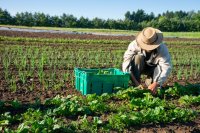
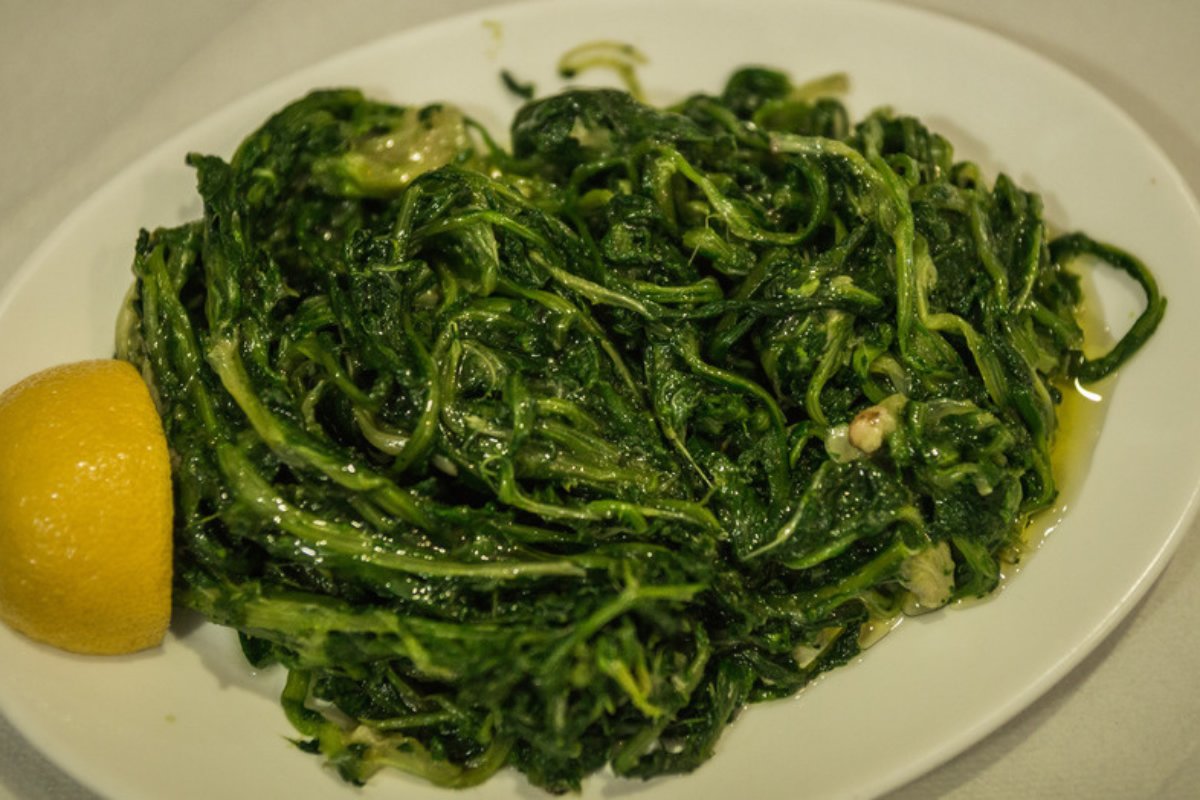
The rosette holds soil at its base, so it is cleaned by trimming the hard root end and any yellowed leaves, then washed in plenty of water. It is eaten raw in salads, boiled with olive oil and lemon, or cooked with meat.
Important notes
Health information is provided for general information and does not replace medical advice. Nutrient values come from published analyses and vary with the origin, season and growing conditions of the plant.
References
- Zeghichi, S., Kallithraka, S. and Simopoulos, A.P. (2003). Nutritional composition of molokhia (Corchorus olitorius) and stamnagathi (Cichorium spinosum). World Review of Nutrition and Dietetics, 91, 1-21.
- Zeghichi, S. (2000). Nutritional composition of Cichorium spinosum and Corchorus olitorius. MSc thesis, CIHEAM, Mediterranean Agronomic Institute of Chania.
- University of the Peloponnese, Vegetable Crops Laboratory. Stamnagathi (Cichorium spinosum L.), lecture notes. In Greek.
- Petropoulos, S., Fernandes, Â., Karkanis, A., Antoniadis, V., Barros, L. and Ferreira, I.C.F.R. (2018). Nutrient solution composition and growing season affect yield and chemical composition of Cichorium spinosum plants. Scientia Horticulturae, 231, 97-107.
- Petropoulos, S.A., Fernandes, Â., Karkanis, A., Ntatsi, G., Barros, L. and Ferreira, I.C.F.R. (2017). Successive harvesting affects yield, chemical composition and antioxidant activity of Cichorium spinosum L. Food Chemistry, 237, 83-90.
- Petropoulos, S.A., Levizou, E., Ntatsi, G. et al. (2017). Salinity effect on nutritional value, chemical composition and bioactive compounds content of Cichorium spinosum L. Food Chemistry, 214, 129-136.
- Paschoalinotto, B.H., Polyzos, N., Liava, V. et al. (2025). The effect of cropping system and irrigation regime on the plant growth and biochemical profile of Cichorium spinosum. Horticulturae, 11(3), 306.
- Chai, W. and Liebman, M. (2005). Effect of different cooking methods on vegetable oxalate content. Journal of Agricultural and Food Chemistry, 53(8), 3027-3030.
- Beneficial effects of Sideritis scardica and Cichorium spinosum against amyloidogenic pathway and tau misprocessing in Alzheimer's disease neuronal cell culture models (2018). Journal of Alzheimer's Disease, 64(3), 787-800.
- Regulation (EC) No 1924/2006 on nutrition and health claims made on foods, consolidated text.
- Regulation (EU) No 116/2010 amending Regulation 1924/2006 with regard to the list of nutrition claims.
- Food Safety Authority of Ireland. Regulation (EU) 1169/2011, Annex XIII, reference intakes.
- USDA FoodData Central. Chicory greens, raw.
- NIH Office of Dietary Supplements. Vitamin K, fact sheet for health professionals.
- Alberta Health Services. Limit foods high in oxalates.