










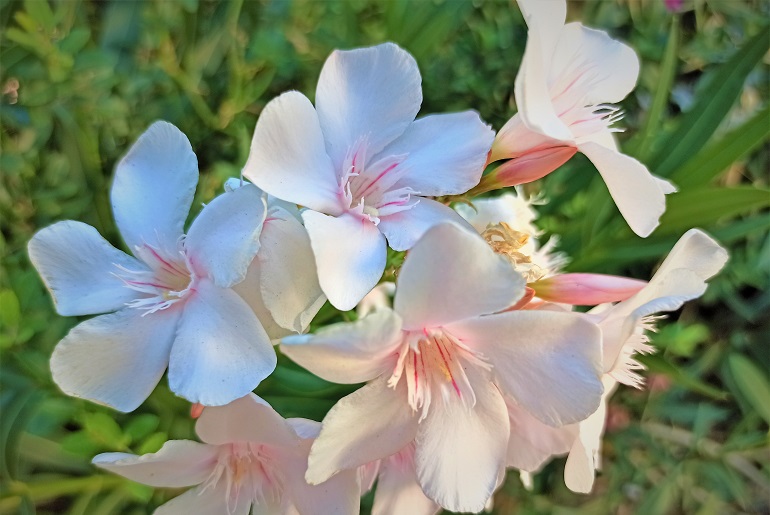
Oleander is one of the toughest and most colourful ornamental shrubs for warm gardens, lining roads, screening balconies and forming dense flowering hedges across the Mediterranean with very little care once established. It grows fast, tolerates heat, drought, poor soil and coastal salt, and flowers for months. It is also highly toxic in every part, which shapes how it should be handled. This guide covers how to grow, plant, prune and care for oleander, along with a clear account of its toxicity.
What is oleander
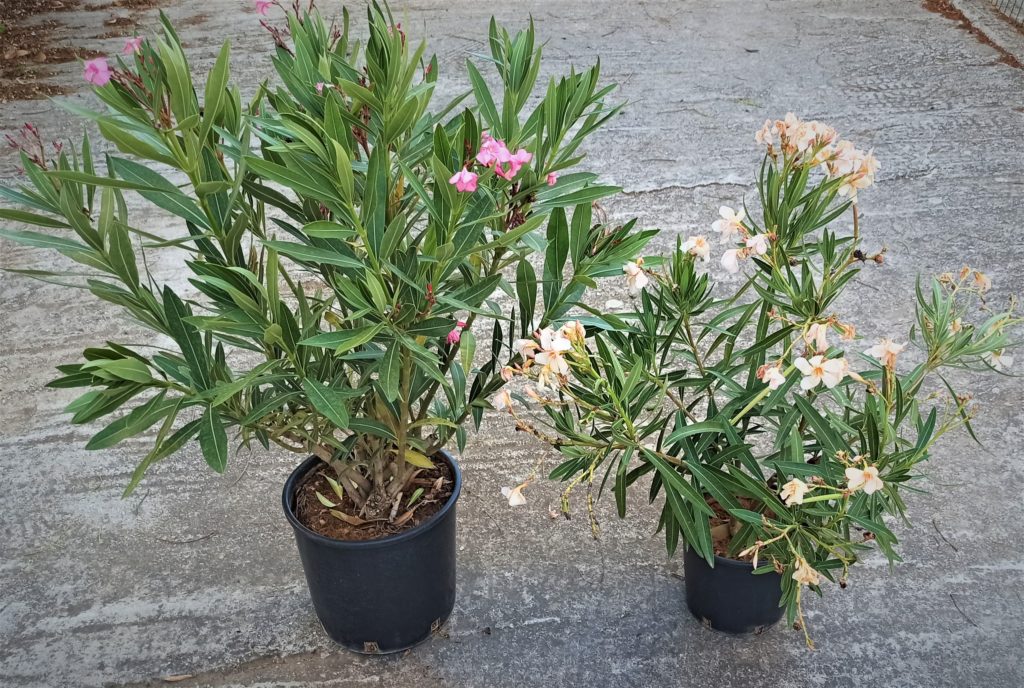
Oleander (Nerium oleander) is a perennial, evergreen shrub in the family Apocynaceae, native to the Mediterranean, that can exceed 5 metres in height with dense foliage and abundant flowers. It is also known as rosebay or rose laurel. The blooms come in a range of colours, most commonly pink, white, red and cream. It should not be confused with bay laurel (Laurus nobilis), the culinary herb, because unlike bay laurel every part of oleander is toxic to people and pets, and contact with the foliage and sap can cause skin irritation. Always wear gloves when handling it.
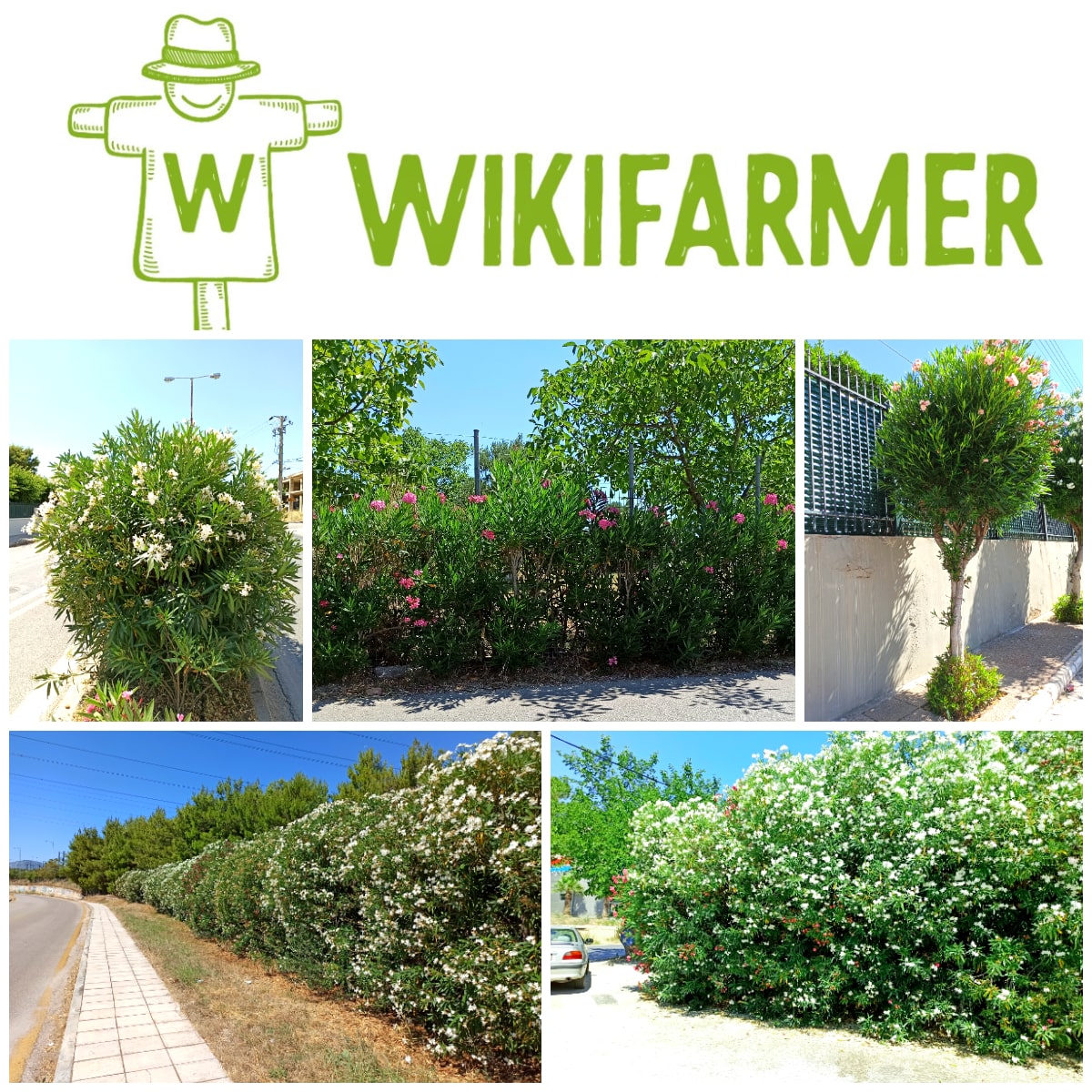
Its combination of fast growth, dense evergreen foliage and long flowering makes oleander a standard choice for hedges, privacy screens, roadside plantings and containers in Mediterranean and warm-temperate climates.
Oleander varieties and growth rate
Like many ornamental shrubs, oleander comes in both dwarf and full-sized forms, and the right choice depends on your space and purpose.
Dwarf varieties usually reach 1.2 to 1.4 metres within two to three years and then stop, which suits containers, balconies and smaller beds. Popular ones include 'Petite Pink' and 'White Sands'.
Full-sized varieties grow fast, gaining 50 to 70 cm or more in height a year in good conditions. A row of 1.5-metre plants can form a dense hedge of 2.5 to 3 metres within one to two years, which is why oleander is so widely used for quick privacy screening.
Sunlight, water and soil
Oleander needs full sun, at least six hours of direct light a day. In shade it becomes weak and leggy, with thin shoots, sparse foliage and few flowers, so always give it the sunniest spot you have.
It is very drought-tolerant once established, and many roadside plants over three years old receive no watering at all beyond rainfall. During the first, and possibly the second, summer after planting, though, regular watering is essential to help the roots establish, and drip irrigation is an efficient option for new plantings.
Oleander is not fussy about soil. It grows in poor, barren ground and tolerates a wide range of pH and salinity, including soils slightly above pH 8. Its salt tolerance makes it one of the most reliable ornamentals for coastal gardens.
How to plant oleander in the ground
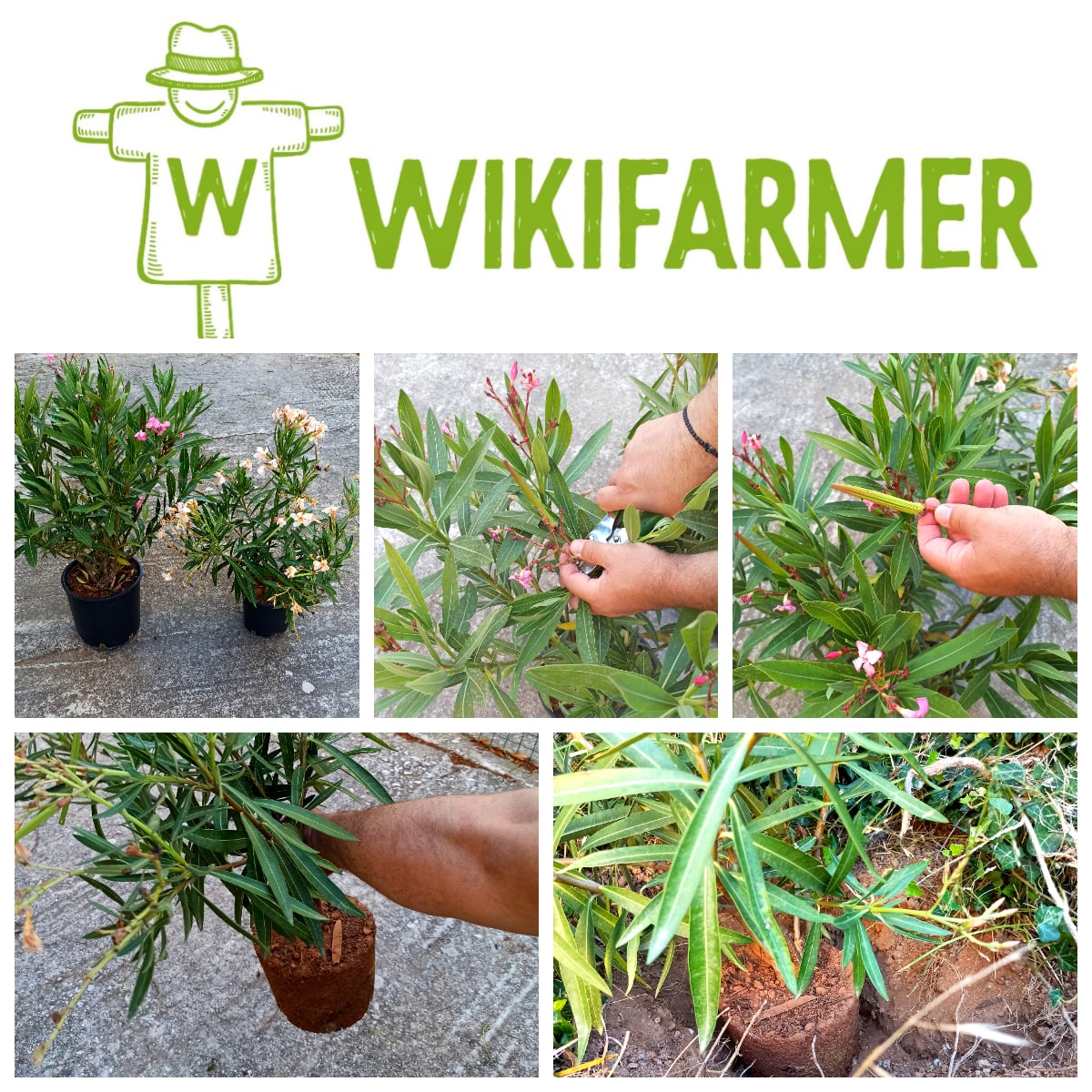
Spring and autumn are the best times to plant. Before planting, clean up each plant with sharp, clean pruning shears, removing dried growth and cutting shoots that held faded flowers back to the previous node, which channels the plant's energy into strong new growth. Dig a hole wider than the pot, set the root ball in place and firm the soil. For a hedge, space full-sized plants at least 1.5 metres apart to allow for mature growth.
Pruning oleander
Pruning is not strictly necessary, but it is a useful way to promote flowering, thicken a hedge and control shape and size, which matters with such a fast grower. Decide first what form you want, whether a compact bush, a tall hedge or a tree.
Remove dry or frost-damaged shoots in spring, but do the main pruning in early autumn, well before any frost. Oleander flowers on old wood, meaning last year's growth, so cutting the whole plant back at once costs a full year of bloom. Instead, prune about one-third of the branches each year, renewing the whole shrub over a three-year cycle. As a rule, cutting old wood produces long, vigorous new shoots, while trimming flowering stems gives shorter shoots that bloom sooner. Avoid shearing oleander flat like a formal hedge, which spoils its natural shape and removes much of the flowering wood.
To train an oleander as a tree, choose the strongest shoot as the central trunk, remove branches below your chosen trunk height, and repeat over time while removing any suckers.
Oleander sap is a strong irritant, so wear sturdy gloves and long sleeves when pruning, and wash your tools and hands afterwards. Never burn the clippings, since the smoke is toxic, a point covered in the safety section below.
Fertilising oleander
Mature oleanders need little or no feeding. Young plants, though, grow faster and fill in as a hedge sooner with some fertiliser, applied up to three times a year, in early spring as new growth appears, again in late spring, and once in summer. A balanced general fertiliser such as N-P-K 10-10-10 is fine. Avoid overdoing the nitrogen, since excess feeding drives soft growth that attracts aphids.
Propagating oleander
Oleander is easy to propagate from cuttings, which is a simple way to raise new plants for a hedge. In summer, take a semi-hardwood cutting about 15 to 20 cm long, remove the lower leaves, and root it either in a glass of water or in a gritty, free-draining potting mix kept warm and moist. Roots usually form within a few weeks, after which the young plant can be potted on. Wear gloves when taking and handling cuttings, since the sap is an irritant.
Growing oleander in a pot
Oleander does well in a container on a sunny balcony or patio, which is a good way to enjoy it in a small space. Choose a dwarf variety that stays under 1.5 metres, such as 'Petite Pink' or 'White Sands', and keep these points in mind.
- Place the pot where it gets at least six hours of direct sun, and out of reach of children and pets, since the plant is toxic
- Water more often than a ground-grown plant, as pots dry out fast; in summer, water once the compost has dried out
- Feed a balanced fertiliser twice a year, in spring and summer, during the first year or two
- Prune after flowering, cutting about half the length of one-third of the branches each year over a three-year cycle to keep a compact shape
- Protect from hard frost; temperatures below −10°C can cause serious damage, so move the pot to a sheltered spot or cover it
- Always wear gloves when handling the plant
Pests and diseases
Oleander is largely trouble-free, but a few problems appear. The most common is the oleander aphid (Aphis nerii), a bright yellow aphid that clusters on new growth and flower buds. Over-feeding with nitrogen makes infestations far worse, so the first step is to go easy on fertiliser. Light infestations can be hosed off or left to the ladybirds, lacewings and parasitic wasps that feed on them, and only heavy attacks need treatment. Scale insects, spider mites and whitefly can also appear, especially on stressed or sheltered plants.
On the disease side, overwatering and poorly drained soil cause root rot, while chronic underwatering shows up as leaf scorch, browning along the leaf margins. In some warm regions oleander is also affected by oleander leaf scorch, a bacterial disease spread by sap-feeding insects, for which there is no cure beyond removing affected plants.
Is oleander poisonous
Oleander is highly toxic. Every part of the plant, including the leaves, stems, flowers, roots, sap, and even dried material and the smoke from burning clippings, contains cardiac glycosides such as oleandrin. These compounds are not destroyed by drying or heat, and they act on the heart, so ingestion can cause vomiting, abdominal pain, irregular heartbeat and, in serious cases, fatal cardiac arrest in both people and animals.
According to the ASPCA, oleander is toxic to dogs, cats, horses, rabbits, birds and livestock, and there are documented cases of cattle and other animals dying after eating clippings or even inhaling smoke from burning oleander. For this reason, never burn oleander prunings, keep the plant and its cuttings well away from children, pets and grazing animals, and always wear gloves when handling it. If a person or animal swallows any part, seek medical or veterinary help immediately.
Frequently asked questions
How fast does oleander grow? Full-sized varieties gain 50 to 70 cm or more in height a year in good conditions, forming a dense 2.5 to 3 metre hedge within one to two years. Dwarf types stop at around 1.2 to 1.4 metres.
When should I prune oleander? Do the main pruning in early autumn, and only remove about a third of the branches each year, since oleander flowers on old wood and hard pruning costs a season of bloom.
Is oleander poisonous to dogs and cats? Yes. All parts are highly toxic to cats, dogs, horses and other animals, as well as to people. Keep the plant and its clippings out of reach and never burn them.
Why is my oleander not flowering? Most often too little sun. Oleander needs at least six hours of direct light a day to flower well, and it also blooms on old wood, so cutting it back hard removes the following season's flowers.
Can I grow oleander in a pot? Yes. Choose a dwarf variety under 1.5 metres, give it full sun, water more often than a ground-grown plant, and protect it from hard frost below −10°C.
Important notes
Every garden is different, and conditions vary with your climate, soil, sun and exposure. The guidance above is a general starting point.
Because oleander is highly toxic to people, pets and livestock, keep it and its clippings away from children and animals, never burn the prunings, and always wear gloves and long sleeves when handling it. If your plant shows persistent problems, consult a horticulturist or your local nursery, and try non-chemical pest control first.
References
- ASPCA Animal Poison Control. Oleander.
- Royal Horticultural Society. Nerium oleander.
- UC Statewide Integrated Pest Management Program. Oleander aphid.