
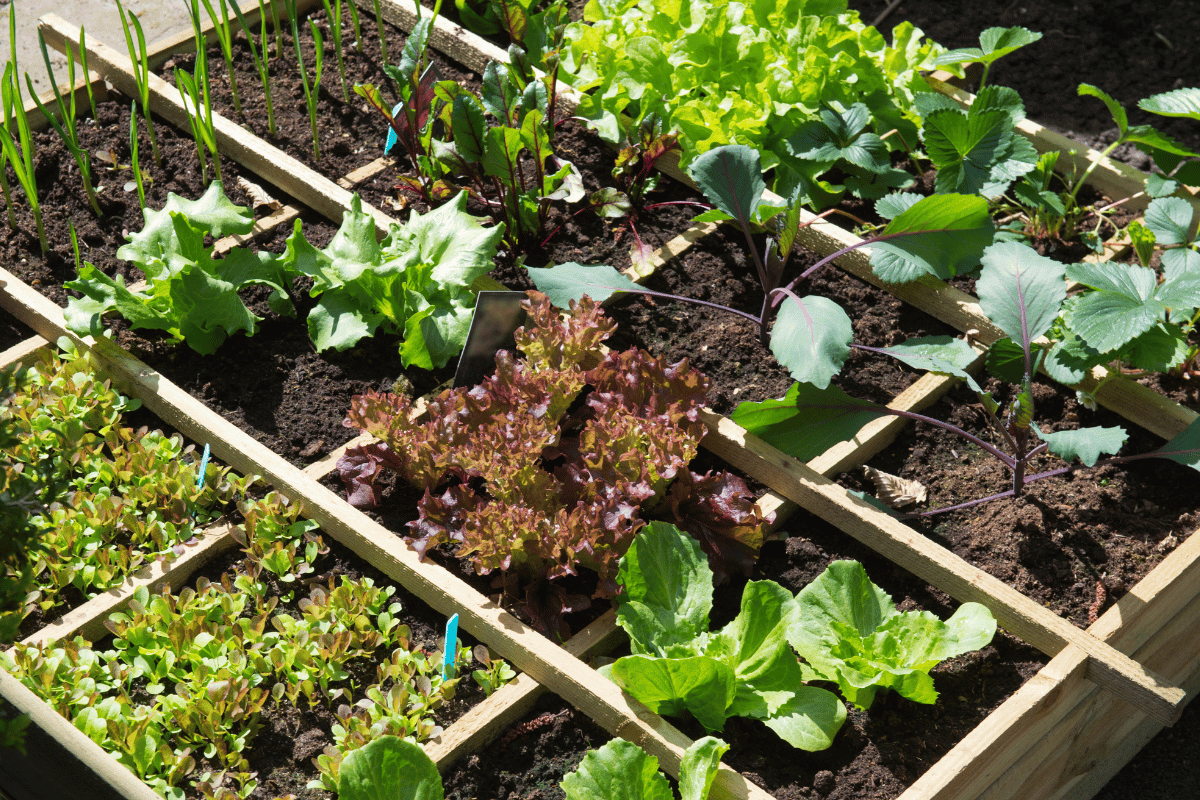
August has a reputation as a dead month in the garden, and it is undeserved. It is the hottest part of the year in the northern hemisphere, which limits what can be planted, but it is also when the autumn and winter vegetable garden genuinely begins. Sow cabbages, salad leaves and roots now and you will be harvesting from October through to February. The warm soil gives fast, even germination, provided watering stays consistent and seedbeds sit in some shade. This guide covers what to sow and plant in August, what to harvest, the jobs the heat demands and how to set the garden up for autumn.
If you are gardening in the southern hemisphere, August is late winter rather than late summer, so treat the timings here as the equivalent of your February.
Vegetables to sow in August
August is when the cool-season crops go in. Sown now, they establish while the soil is warm and mature as the weather cools, which is exactly when they taste best.
| Group | What to sow | When you harvest |
|---|---|---|
| Salad and leaves | Lettuce, rocket, spinach, chard, mizuna, pak choi, lamb's lettuce | October to January |
| Brassicas | Spring cabbage, kale, turnips, and transplants of broccoli and cauliflower | November to March |
| Roots | Carrots, beetroot, radish, kohlrabi | October to December |
| Herbs | Parsley, coriander, dill, chervil | Autumn and winter |
| Others | Spring onions, overwintering onion sets, land cress, winter purslane | Autumn to spring |
Radishes are the quickest return of all, ready in about four weeks, and a row sown now fills the gap left by a finished summer crop. Perennial leafy greens are also worth establishing in late summer, and sorrel planted now will crop for several years from early each spring.
Fruit and perennials to plant in August
Late summer is the traditional time to plant strawberry runners, which gives the plants time to establish and produce a full crop the following summer rather than a partial one. It is also the point to divide overcrowded clumps of bearded iris and daylilies, since both prefer being lifted while the soil is still warm.
Towards the end of the month, as soil temperatures begin to ease, container-grown perennials and shrubs can go in with much less risk than in midsummer, and they root away before winter.
Take cuttings while the wood is right
August is prime time for semi-ripe cuttings, taken from this year's growth once it has begun to firm at the base but is not yet hard. Lavender, rosemary, sage, hydrangea, oleander and many other shrubs root readily now, which makes this the cheapest way to increase a garden. Take 10 to 15 cm cuttings in the morning, strip the lower leaves, insert them in a gritty, free-draining mix and keep them shaded and humid until they root. Both the hydrangea growing guide and the oleander growing guide cover propagation in more detail, and oleander cuttings should always be handled with gloves.
Flowers to sow in August
The classic bedding plants are out of the question in this heat, but August is exactly right for biennials, the plants sown one year to flower the next. Wallflowers, foxgloves, sweet william, honesty, forget-me-nots, pansies and violas all go in now, in seed trays kept in a shaded spot, and are planted out in September and October for a display from late winter onwards.
This is also the month to order spring bulbs. Tulips, daffodils, crocuses and hyacinths are planted from September to November, but the best varieties sell out early, so choosing now is the difference between planting what you wanted and planting what was left. For ideas on filling seasonal gaps, the guide to flowers that bloom all year sets out which plants cover which months.
Sowing a new lawn
Late August into early September is the best window of the year for sowing grass seed. The soil is still warm enough for quick germination, the nights are cooling, and autumn rain does much of the watering, while weed competition is far weaker than in spring. Clear and level the ground, firm it, sow evenly and keep the surface damp until the grass is established.
What to plant in containers
In pots the compost heats up and dries out far faster than open ground, so August plantings should be quick and shallow-rooted. Radishes need a pot only 15 to 25 cm deep and crop within a month. Lettuce, rocket and spinach do well in troughs without much depth. Herbs such as basil, parsley and chives take almost no space and produce immediately.
Two things decide the outcome. First, position, since a container needs sun but also protection from the fiercest afternoon heat in August, which shade netting or simply moving the pot provides. Second, the compost, because a mix that holds moisture between waterings makes the difference between steady growth and a check the plants never recover from.
What to harvest in August
August brings the heaviest harvest of the year.
- Vegetables: tomatoes, courgettes, beans, cucumbers, peppers, aubergines, sweetcorn, onions, garlic, early potatoes
- Fruit: plums, early apples and pears, figs, blackberries, melons, late raspberries
- Herbs for drying: oregano, thyme, rosemary, sage, bay, lavender, mint, marjoram
Picking regularly is not just about freshness. The more you harvest, the longer plants keep setting fruit, while overripe fruit left on the plant slows production down. Onions and garlic should be lifted once the tops yellow and then cured in a dry, airy place before storing. Herbs are cut in the morning before the heat builds and dried in a shaded, well-ventilated spot.
August garden jobs
Planting is only half the work. The other half is getting everything through the month undamaged.
| Job | What to watch for |
|---|---|
| Watering | Early morning or evening, deeply rather than often, ideally by drip |
| Shading | Shade netting over seedbeds, young plants and south-facing containers |
| Feeding | Phosphorus and potassium rather than nitrogen, and always on a watered plant |
| Mulching | A layer of compost or straw that cuts evaporation and keeps roots cooler |
| Deadheading | Keeps annuals and roses flowering into autumn instead of setting seed |
| Pest and disease checks | Heat favours spider mite, whitefly and aphids, so check leaf undersides |
Feeding needs particular care in a heatwave. High-nitrogen fertiliser in hot weather scorches foliage and promotes soft growth that pests find easily, so use a feed higher in phosphorus and potassium; water first, then feed; never feed onto dry soil or in the hottest hours. Irregular watering is behind two of the most common August complaints: blossom-end rot on tomatoes and split fruit, and both are prevented by steady moisture rather than alternating between drought and flood.
Among pests, aphids and spider mite multiply quickly in the heat, so regular inspection is worth more than any treatment applied late. Powdery mildew appears on courgettes, squash and zinnias in humid, still conditions, and spacing and airflow do more to prevent it than spraying.
Preparing for autumn
What happens in August is paid back in October. Clear away crops that have finished and the weeds that follow them, then loosen the surface and work in compost or well-rotted manure so it has time to break down before autumn planting. Where a bed will stand empty for weeks, sowing a green manure such as phacelia, mustard or field beans protects the soil from rain, suppresses weeds and adds organic matter when it is dug in.
August is also the month for honest planning. Note which positions stood empty, which plants suffered in the heat, and what should be replaced with something tougher next year. Saving seed from the best plants of the season costs nothing and takes ten minutes, and cosmos, marigolds and nasturtiums are among the easiest to collect from.
Frequently asked questions
What vegetables can I plant in August
Lettuce, rocket, spinach, chard, pak choi, spring cabbage, kale, turnips, carrots, beetroot, radish, spring onions and herbs such as parsley, coriander and dill. Broccoli and cauliflower go in as transplants rather than seed.
Is it too late to plant anything in August
No. August is the start of the autumn and winter vegetable garden, and it is also the best month for semi-ripe cuttings, strawberry runners and sowing a new lawn.
What flowers can I sow in August
Biennials such as wallflowers, foxgloves, sweet william, honesty, forget-me-nots, pansies and violas, sown in shaded seed trays and planted out in early autumn to flower from late winter.
Should I fertilise during a heatwave
Only with care. Use a feed higher in phosphorus and potassium than nitrogen, water the plant thoroughly first, and never feed dry soil or apply in the hottest part of the day.
When should I plant spring bulbs
From September to November, depending on the bulb, but order in August while the best varieties are still available.
What should I do in the garden before going on holiday
Set up automatic watering or a tap timer, mulch to hold moisture, move containers into partial shade, and pick everything ripe before you leave so plants keep producing.
References
- Royal Horticultural Society, Garden jobs for August.
- University of Maryland Extension, Planting dates for vegetable crops.