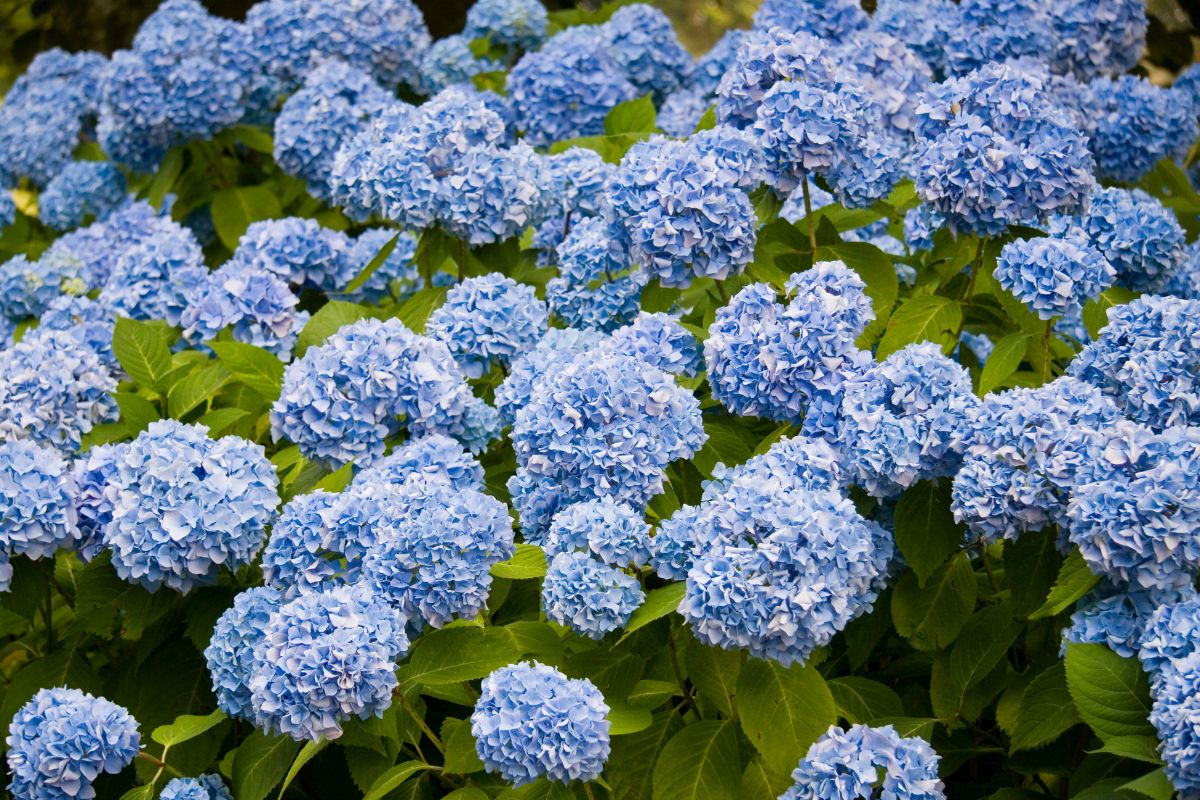
Hydrangeas are some of the most rewarding shrubs you can grow. From midsummer into autumn, they cover themselves in big, generous flowerheads in shades of blue, pink, white, purple, and red, and many keep their structure into winter for extra interest. They are also one of the few garden plants whose flower color can be changed by the gardener, with the same shrub turning blue in acid soil and pink in alkaline soil.
This guide covers everything you need to grow hydrangeas successfully in a garden or in a container, including a proper explanation of how flower color actually works and the most common reason hydrangeas fail to bloom.
Types of hydrangea
Not all hydrangeas are the same, and the type you have changes how you should prune it. Identifying yours is the most important thing you can do for healthy flowering.
Bigleaf hydrangea (Hydrangea macrophylla). The classic hydrangea most people picture, and the only group whose flower color changes with soil chemistry. Two main forms.
- Mophead: the familiar round, full flowerheads packed with showy florets
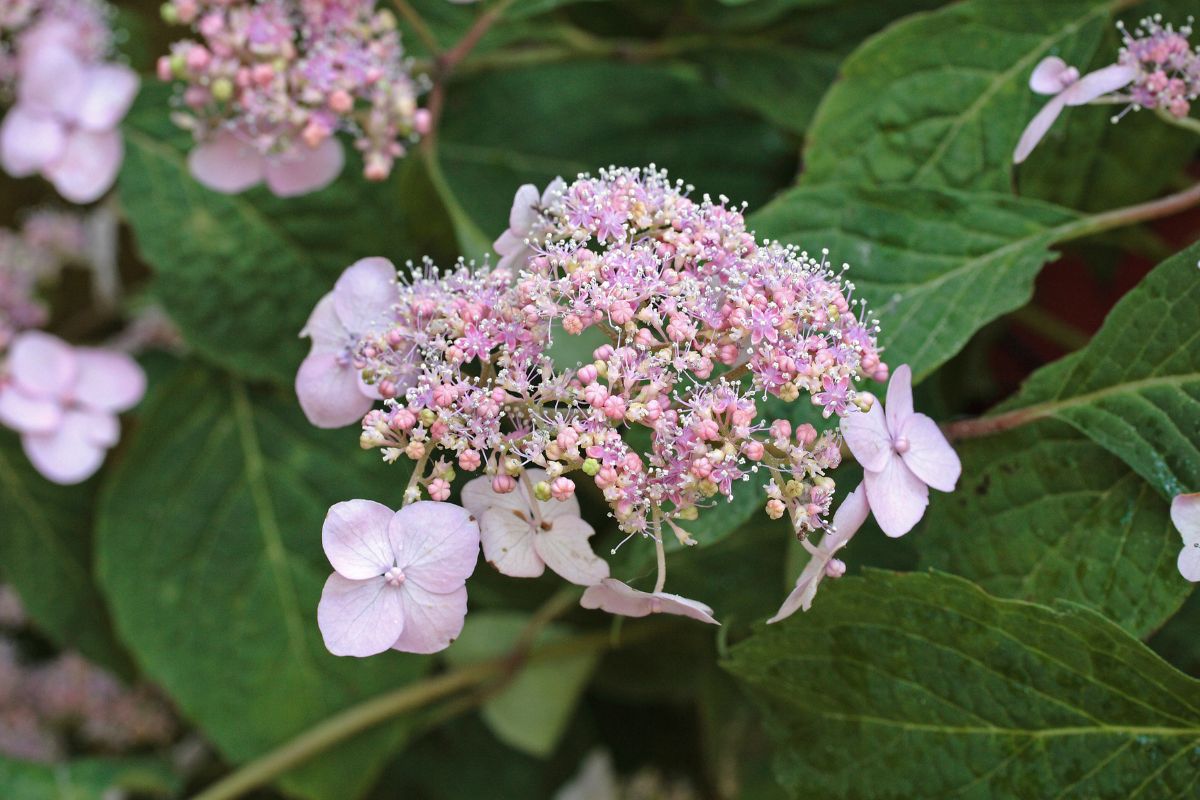
- Lacecap: flatter, more delicate heads with tiny fertile flowers in the center ringed by larger sterile ones
Flowers on old wood (stems from the previous season).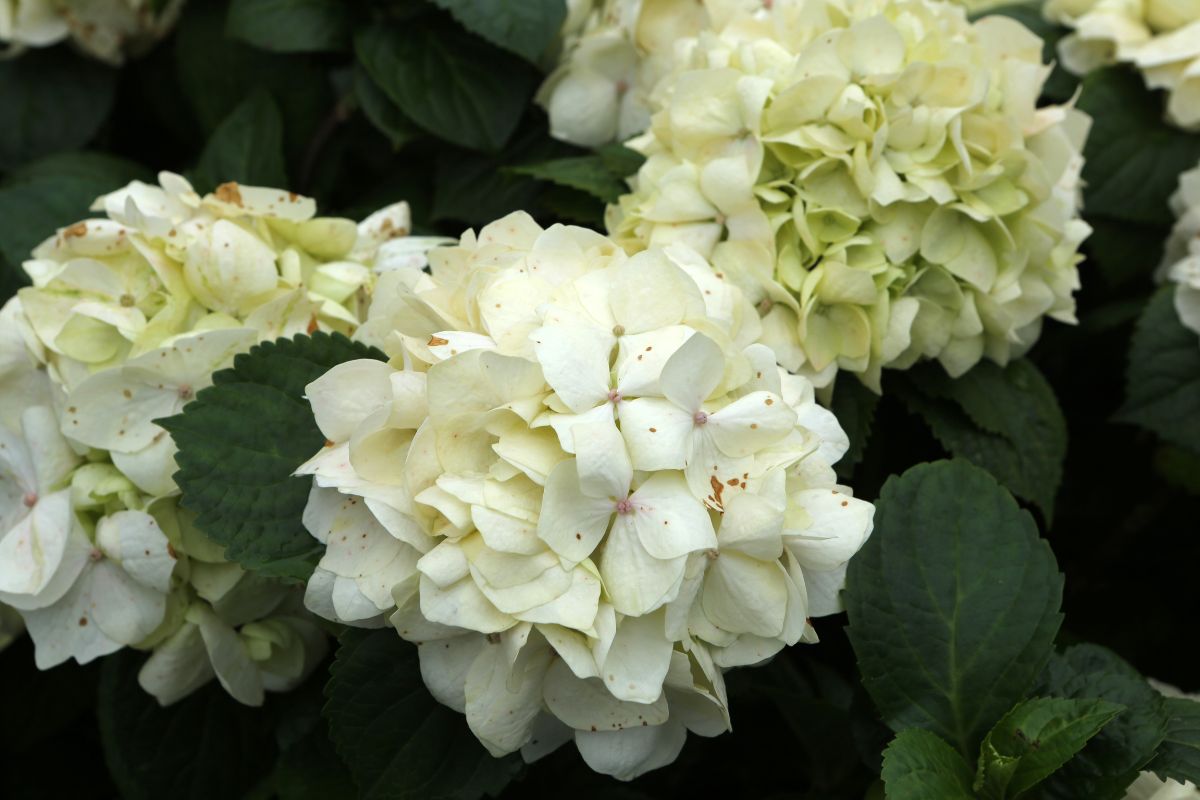
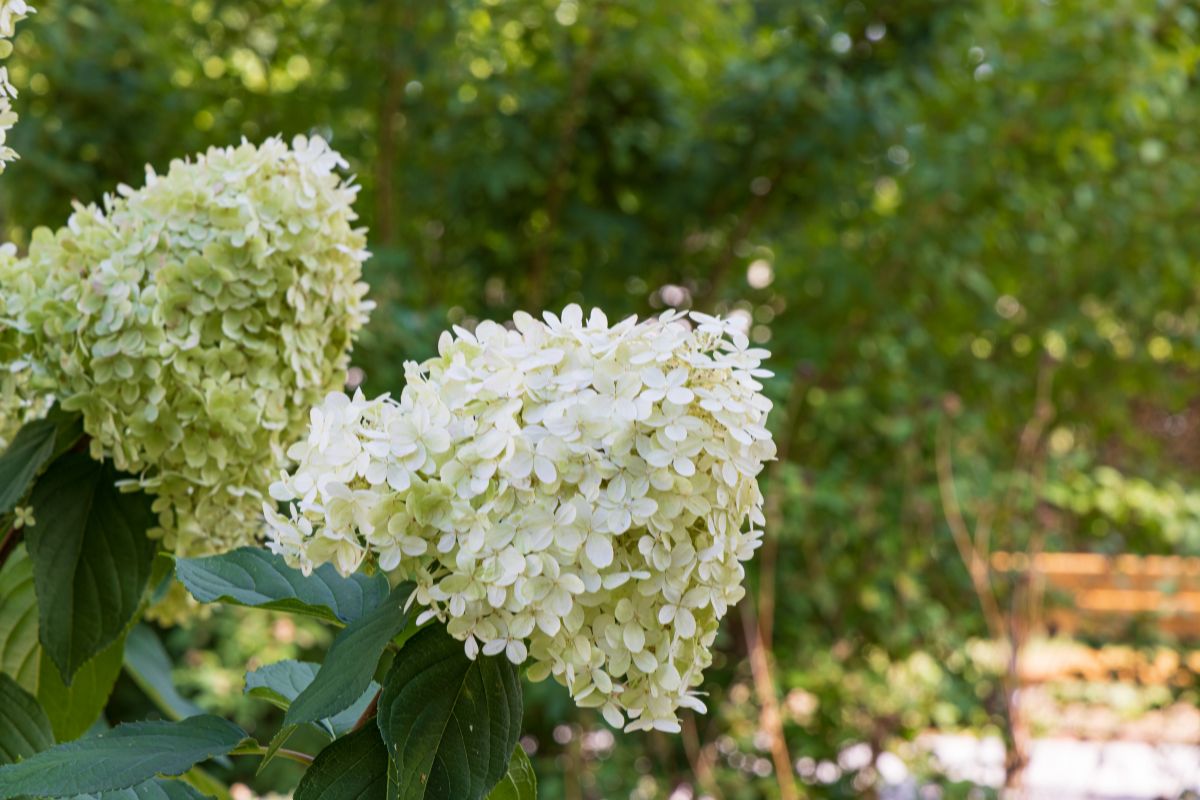
Panicle hydrangea (Hydrangea paniculata). Cone-shaped flowerheads that start white and gradually fade through pink to russet. Much more cold-hardy than bigleaf, which makes it the workhorse of colder regions. Flowers on new wood (the current season's growth).
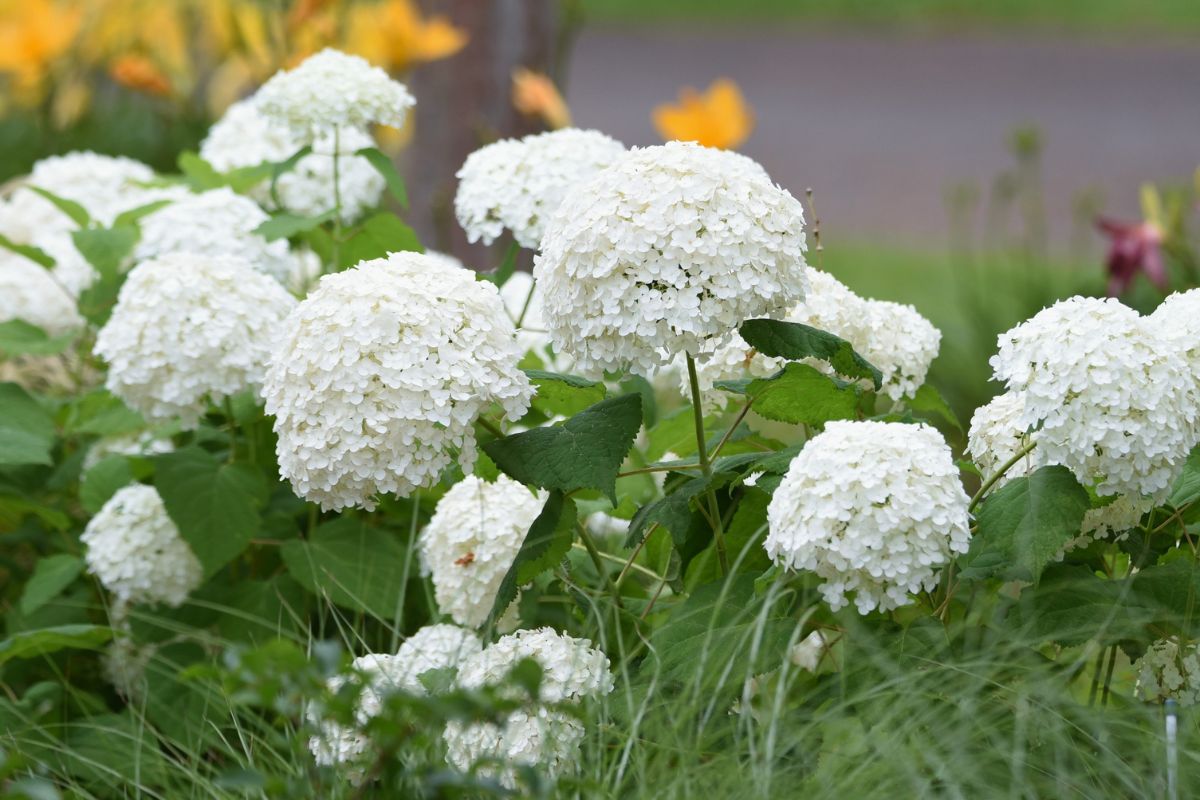
Smooth hydrangea (Hydrangea arborescens). Big, rounded, white flowerheads. 'Annabelle' is the famous variety. Also, flowers on new wood.
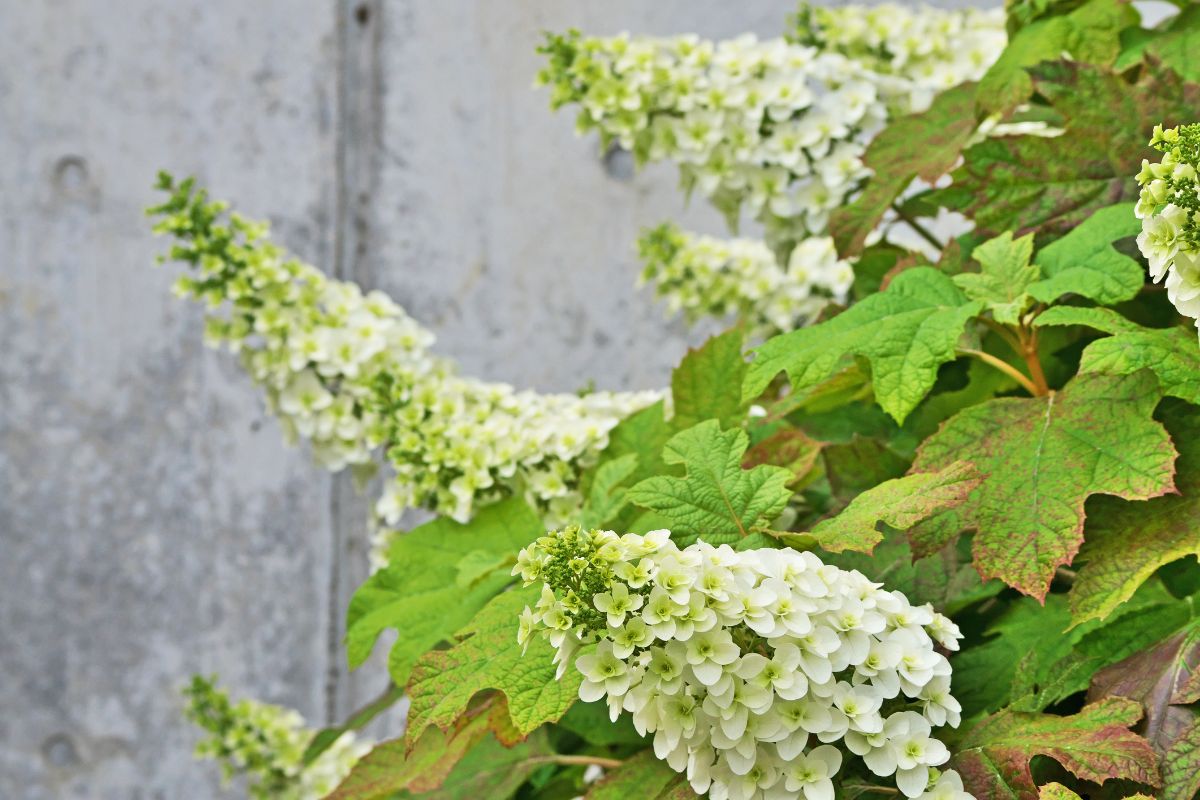
Oakleaf hydrangea (Hydrangea quercifolia). Named for its oak-shaped leaves, which color dramatically red and purple in autumn. Cone-shaped flowerheads. Flowers on old wood.
Mountain hydrangea (Hydrangea serrata). Closely related to bigleaf, slightly smaller and tougher. Flowers on old wood and change color with pH, just like macrophylla.
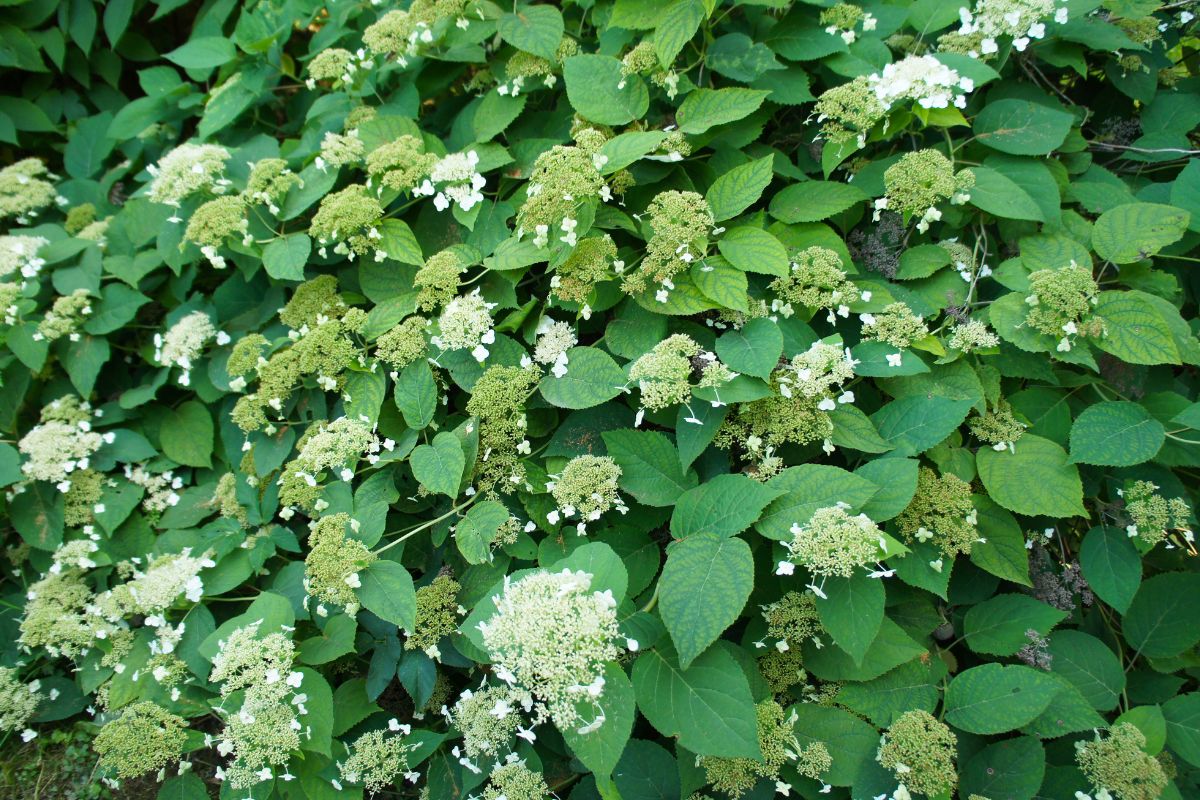
Climbing hydrangea (Hydrangea anomala subsp. petiolaris). A self-clinging climber, perfect for north- or east-facing walls.
Where hydrangeas grow best
Hydrangeas prefer cool, moist climates to hot, dry ones. They thrive across USDA zones 4 to 9, though specific tolerance varies by species.
The ideal spot has morning sun and afternoon shade. A few practical notes on climate.
- Cool temperate climates: most positions work, though sheltered from cold, drying winds
- Warmer climates: dappled or partial shade is essential. Full sun in dry soil leads to scorched leaves and disappointing flowers
- Mediterranean climates: containers in a shaded patio often outperform garden plantings, with morning sun and reliable watering
- Coastal areas: protect from salt-laden winds
Avoid frost pockets. The fresh spring growth and developing flower buds are very sensitive to late frosts, which is the second most common reason a hydrangea fails to flower (the first being wrong-time pruning).
Soil
Hydrangeas want fertile, moisture-retentive but well-drained soil, rich in organic matter. They are thirsty plants. The name hydrangea comes from the Greek hydor (water) and angeion (vessel), and it's a fair description of their needs.
Before planting, dig in plenty of well-rotted compost or manure. On heavy clay soils, add horticultural grit alongside the organic matter to improve drainage. On thin chalky soils, work in extra compost or leaf mould; chalky soils also tend to be alkaline, which limits your ability to keep bigleaf hydrangeas blue.
For container growing, use a peat-free John Innes No. 3 mix, or an ericaceous (acidic) potting mix if you want to encourage blue blooms.
Planting
The best time to plant is autumn or early spring, when soil is moist and the plant has time to settle in before the demands of summer.
Steps for planting in the ground
- Dig a hole twice the diameter of the rootball and the same depth
- Loosen the soil at the bottom of the hole and mix in plenty of well-rotted compost
- On alkaline soils, work in extra ericaceous compost or leaf mould if you want blue flowers
- Position the plant so the top of the rootball sits level with the surrounding soil
- Backfill, firm gently, and water thoroughly
- Apply a thick mulch of compost or composted bark around the base to lock in moisture
Growing hydrangeas in a container
Hydrangeas do well in large pots provided you keep up with watering.
- Choose a pot at least 40-50 cm across with plenty of drainage holes
- Use a peat-free John Innes No. 3 mix, or ericaceous compost for blue flowers
- Water daily during hot weather. Container hydrangeas wilt very quickly when dry
- Repot into a slightly larger container every 2-3 years in spring
Watering
Watering is the single most important thing you do for a hydrangea. The clue is in the name.
In the garden, water newly planted shrubs regularly through their first growing season. Even mature plants benefit from a deep soak during dry spells of 7-10 days or more. Better to give one thorough watering once or twice a week than a little water every day.
In containers, check the compost daily during summer and water as soon as the top 2-3 cm feels dry. Container plants can need watering every single day in hot weather.
Signs you're getting watering wrong
- Wilting in the afternoon heat: often a temporary response to midday warmth rather than thirst. If leaves perk up overnight without being watered, the plant is fine. If they still look limp the next morning, water properly
- Wilting in shade or cool weather: this is usually root rot from waterlogging or poor drainage, not thirst
- Crispy brown leaf edges: scorch from too much sun combined with dry soil
A thick mulch of composted bark or garden compost around the base is one of the best things you can do for hydrangeas. It keeps moisture in, suppresses weeds and slowly feeds the soil.
Feeding
In the garden, an annual mulch of well-rotted compost or manure in spring usually covers a hydrangea's needs. For heavier flowering, add a balanced fertiliser for flowering shrubs in spring, and a second light feed in early summer.
For container plants, or to encourage blue flowers, use a fertiliser formulated for ericaceous plants (the same one you would use for rhododendrons and azaleas).
Avoid high-phosphorus fertilisers if you want blue flowers. Phosphorus binds aluminium in the soil and stops the plant taking it up, which means even acid soil won't give you blue blooms.
How hydrangea flower colour works
This is the most famous quirk of the plant and also the most misunderstood. Here is what is actually going on.
Flower colour depends on two things together, soil acidity (pH) and the availability of aluminium in the soil.
In acid soil (pH below about 5.5), the aluminum that naturally exists in most soils stays in a soluble form that the roots can absorb. It travels up to the flowers and reacts with the natural pigments (anthocyanins), producing blue color.
In alkaline soil (pH above about 6.5), aluminum locks up in an insoluble form and can't be absorbed. Without aluminum, the same pigment shows up as pink.
In between (pH 5.5-6.5), you get purple, lavender, or mauve, and sometimes both colors on the same plant.
Important caveats
- Only Hydrangea macrophylla and Hydrangea serrata change color with soil chemistry. Panicle and smooth hydrangeas do not
- White hydrangeas stay white regardless of soil
- Color change is not immediate. It usually takes a full growing season to show
- On heavily alkaline soils (chalky areas), keeping a hydrangea reliably blue is difficult without continual amendment, and even then, results can be patchy
- Aluminium-free potting mixes (common in container-grown nursery plants) explain why a pink supermarket hydrangea sometimes turns blue once planted in your garden
For blue flowers
Target soil pH 5.2-5.5 and available aluminium.
- Plant in naturally acidic soil, or grow in a container with ericaceous compost
- Apply aluminium sulfate around the plant according to product directions. A common rate is one tablespoon per gallon (around 4 litres) of water, applied monthly during the growing season
- For slower, longer-lasting acidification, use elemental sulfur instead
- Natural soil acidifiers include pine bark mulch, pine needles and used coffee grounds worked into the soil
- Avoid high-phosphorus fertilisers
- If your tap water is hard, switch to rainwater for watering
For pink flowers
Target soil pH 6.0-7.0 with reduced aluminum availability.
- Apply garden lime or dolomitic lime in early spring to raise pH
- Use a fertilizer with a higher phosphorus content
- If your garden is naturally alkaline (chalky), pink usually happens on its own with no intervention
Why your hydrangea changed color after you planted it
Nurseries grow hydrangeas in carefully controlled conditions with specific pH and nutrients to produce a chosen display colour at the point of sale. Once you move the plant into your garden, it adjusts to your soil chemistry. Pink nursery plants often turn blue or mauve in acid garden soil, and vice versa. This is normal and not a sign of anything wrong with the plant.
Pruning hydrangeas
This is where most people lose flowers. The critical thing to know is whether your hydrangea blooms on old wood or new wood, because the two groups are pruned at completely different times.
Pruning at the wrong time is the single most common reason a hydrangea fails to flower.
Hydrangeas that flower on old wood
This group includes macrophylla (mophead and lacecap), serrata (mountain), and quercifolia (oakleaf). They set their flower buds in late summer and autumn on the current season's stems. Those buds overwinter and produce next year's flowers.
If you prune in spring or late winter, you are cutting off exactly the buds that were going to flower this year.
The best time to prune is immediately after flowering, in mid to late summer. Cut spent flowerheads back to the first pair of healthy buds below the bloom. On established plants, also remove about a third of the oldest, weakest stems at the base each year to renew the plant.
In cold areas, leave the dried flowerheads on the plant through winter. They offer some natural frost protection to the buds below them. Remove them in spring, cutting back to the first pair of plump, healthy buds.
Hydrangeas that flower on new wood
This group includes paniculata and arborescens. They produce flower buds on stems that grow from the base during the current season. These are far more forgiving and can be pruned hard without losing the year's flowers.
The best time to prune is late winter or early spring, before new growth starts. Cut last year's stems back to a pair of healthy buds to keep a permanent framework. For larger flowerheads on strong upright stems, hard prune down to the lowest pair of buds, creating a low framework no more than 25 cm high.
Reblooming varieties
Newer cultivars such as the Endless Summer® series flower on both old and new wood, and are more forgiving of pruning timing. If in doubt about which type you have, follow the old-wood rule and prune just after flowering.
How to propagate hydrangeas
The most reliable method is softwood or semi-ripe cuttings.
From softwood cuttings
- In late spring or early summer, take 10-15 cm cuttings from the tips of non-flowering shoots
- Strip the lower leaves and leave two pairs at the top. Cut the remaining large leaves in half to reduce moisture loss
- Dip the cut end in rooting hormone
- Insert into a free-draining mix of peat-free compost and perlite
- Cover with a clear plastic bag or place in a propagator to keep humidity high
- Keep in a bright but shaded position
Roots usually appear in 3-4 weeks. Pot on into individual containers once well rooted.
From hardwood cuttings
In late winter, take hardwood cuttings from the previous year's stems and insert them directly into a shaded part of the garden. Slower than softwood cuttings, but easy and reliable for paniculata and arborescens.
From layering
Bend a low, flexible stem down to the ground, nick the bark lightly where it touches the soil, cover with soil and weigh it down with a stone. It will root in a few months, after which you can sever it from the parent plant.
Pests and problems
Hydrangeas are generally tough, but there are a few common issues.
Powdery mildew. A whitish, flour-like coating on leaves, usually in crowded plantings with poor air circulation or in humid weather. Thin congested growth, and if necessary spray with potassium soap (insecticidal soap) or a sulfur- or copper-based fungicide.
Leaf spot (Cercospora). Brown circular spots that appear after wet weather, usually on lower leaves. Rarely serious. Pick off affected leaves and avoid overhead watering.
Grey mould (Botrytis). Fuzzy grey growth on damaged blooms and leaves in damp weather. Remove affected parts promptly and improve air circulation.
Aphids. Small green or black insects on new shoots. Blast off with a strong jet of water or treat with insecticidal soap.
Scale insects. Small brown or yellowish bumps along stems. Hydrangea scale became established in the UK during the 1980s and is now widespread. Remove badly affected stems and treat with horticultural oil.
Spider mites. In hot, dry weather. Leaves develop fine yellow stippling and you may spot tiny webs on the undersides. Mist regularly to raise humidity and spray off with water.
Honey fungus. A serious soil-borne disease that can attack stressed hydrangeas, though they are not particularly susceptible. If suspected, dig out and destroy affected plants.
Spring frost damage. Common in cold regions. If late frosts hit the fresh new growth, cut affected shoots back to the first undamaged pair of buds and the plant will recover.
Frequently asked questions
Why isn't my hydrangea flowering? The most common reasons are pruning at the wrong time (if it's a bigleaf and you cut it back in spring, you removed all this year's flower buds), late frost damage to the buds, too much shade, or excessive nitrogen fertiliser producing leaves at the expense of flowers.
How do I turn my hydrangea blue? You need soil pH below 5.5 and available aluminium. Plant in naturally acidic soil or grow in a container with ericaceous compost. Apply aluminum sulfate following the product instructions, avoid high-phosphorus fertilizers, and use rainwater rather than hard tap water. On chalky soils, container growing is by far the easiest route to reliable blue flowers.
How do I turn my hydrangea pink? On alkaline soil this happens naturally. On acid soil, apply garden lime in early spring to raise the pH above 6.5. The change takes several months to show in the flowers.
My hydrangea was blue at the nursery and turned pink in my garden. Why? Nurseries control soil pH and nutrients tightly to produce a chosen display colour. Once in your garden, the plant adjusts to your soil. If your garden soil is alkaline, blue blooms gradually fade to pink. The plant is fine, it's just showing you the chemistry of your soil.
Why does my hydrangea wilt every afternoon? Hydrangeas often wilt temporarily in the midday heat as a way of reducing water loss, even when the soil is moist. If the leaves perk back up overnight, the plant is fine. If they still look limp in the morning, you genuinely need to water more deeply, and add mulch to lock in moisture.
Are hydrangeas poisonous? All parts of hydrangeas contain cyanogenic glycosides and are mildly toxic if eaten. Keep children and pets from chewing leaves or flowers. There is no problem from normal garden handling, but wash your hands afterwards. Sap can irritate sensitive skin, so wearing gloves when pruning is a good idea.
Can I keep a potted hydrangea indoors? The hydrangeas sold in spring as flowering pot plants can be kept in a cool, bright spot indoors for a few weeks while they are in bloom. After flowering, they are much happier transplanted into a larger outdoor container or directly into the garden. Hydrangeas are not true houseplants and need a winter dormancy outdoors to bloom reliably the following year.
Can I dry hydrangea flowerheads? Yes. Cut stems in late summer or early autumn when the petals start to feel papery, strip the leaves, and hang them upside down in a cool, dry place. Or stand the stems in a vase with about 5 cm of water and let the water evaporate slowly; the flowers dry in place. They last for years as indoor decoration.
References
- Royal Horticultural Society. Hydrangea growing guide.
- Royal Horticultural Society. Hydrangea pruning guide.
- Clemson Cooperative Extension. Pruning Hydrangeas.
- University of Georgia Extension. Hydrangea blooms turn colors based on soil pH levels.
- University of Minnesota Extension. Pruning Hydrangeas.
- University of New Hampshire Extension. Pruning Hydrangeas Fact Sheet.
- Schreiber, H. D. (2014). Curious Chemistry Guides Hydrangea Colors. American Scientist.
- Yoshida, K., Mori, M., & Kondo, T. (2009). Blue flower color development by anthocyanins: from chemical structure to cell physiology. Natural Product Reports, 26(7), 884-915.
- Chen, S. et al. (2022). Comparative Transcriptome Analysis Unveils the Molecular Mechanism Underlying Sepal Colour Changes under Acidic pH Substratum in Hydrangea macrophylla. International Journal of Molecular Sciences, 23(23), 15428.