

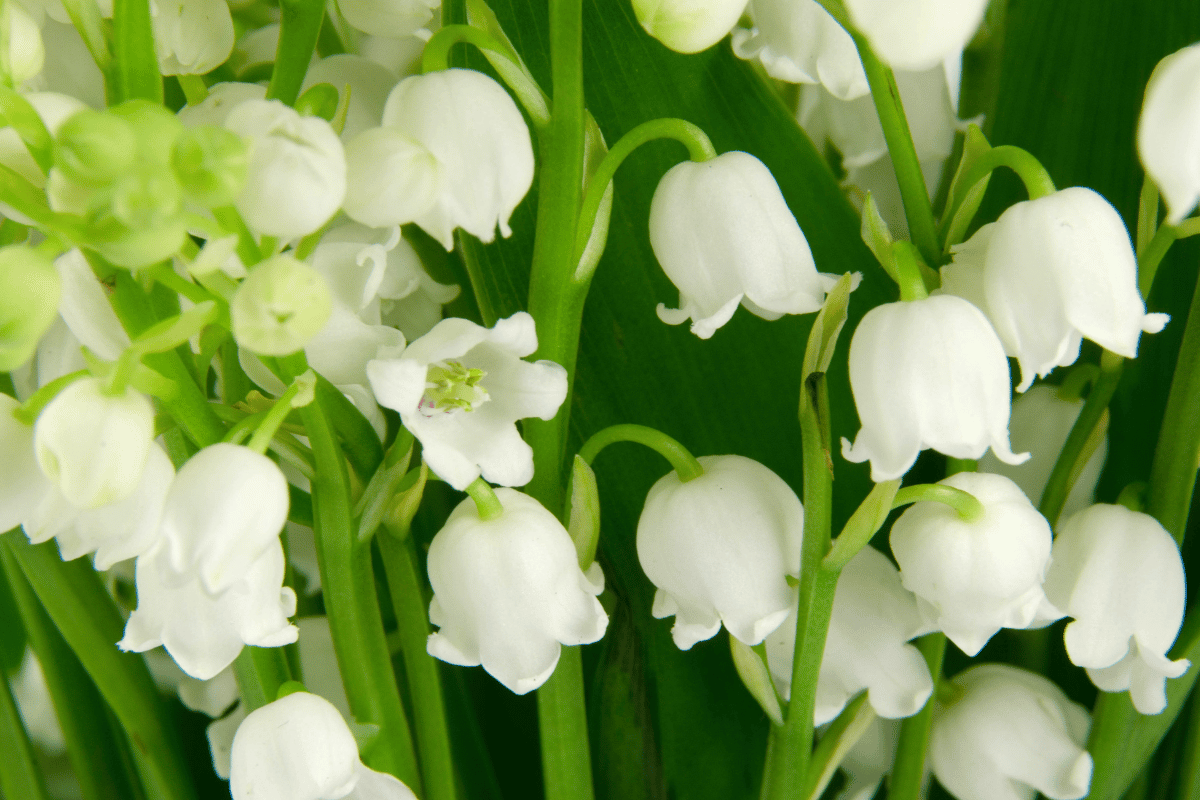
Lily of the valley is a shade-loving woodland perennial grown for its sprays of small, nodding white bells and their strong, sweet fragrance in late spring. It spreads into a dense, weed-suppressing groundcover under trees and along shady edges, and it needs almost no care once settled in the right spot. It is also one of the most poisonous garden plants, so it comes with real cautions. This guide covers how to grow and care for lily of the valley, from planting the bulbs to keeping its spread in check, along with a full account of its toxicity.
Lily of the valley thrives where many plants struggle, in cool, moist shade, but it resents heat and dry soil, so matching it to the right position is the whole game.
What is lily of the valley
Lily of the valley (Convallaria majalis) is a rhizomatous perennial in the asparagus family (Asparagaceae), native to the cool temperate woodlands of Europe and Asia. It grows 15 to 30 cm tall, with two or three broad, glossy green leaves and one-sided sprays of fragrant, bell-shaped white flowers in mid to late spring, sometimes followed by toxic red-orange berries. It goes by several old names, including muguet, May bells and Our Lady's tears, and it holds the RHS Award of Garden Merit for reliability. Gardeners grow it from sections of rhizome known as pips.
Where and when to plant lily of the valley
Lily of the valley is a shade plant. It grows best in partial to full shade, in the dappled light beneath trees and shrubs, and in cool, moist, humus-rich soil. It tolerates morning sun but needs protection from hot afternoon sun, and it performs poorly in hot, dry and humid summers, which is the single most common reason it fails. In warm climates, it needs a genuinely shaded, cool and moist spot, and it is far happier in cooler or higher-altitude gardens.
Plant the pips in autumn or early spring, setting them 1 to 4 cm deep with the growing buds pointing up, spaced about 8 to 15 cm apart, then water well. Soaking bare-root pips for half an hour before planting helps them start. Growth is slow in the first year, after which the plant settles in and begins to spread.
Watering and ongoing care
Keep the soil consistently moist, especially while plants are establishing and during dry spells, since drought is what causes the foliage to brown and collapse early. An annual mulch of leaf mould or compost in autumn feeds the plants, holds moisture and mimics their natural woodland floor. It is very cold-hardy, surviving hard frosts down to around-25°C, and it needs no pruning. Beyond that, lily of the valley is genuinely low-maintenance, dying back over winter and returning each spring.
How lily of the valley spreads and how to contain it
Given cool, moist shade, lily of the valley spreads vigorously by underground rhizomes and can form dense colonies that crowd out smaller neighbours, to the point of being considered invasive in some regions. Plant it where that spread is welcome, such as difficult dry shade under trees, or contain it with a physical barrier or by growing it in a sunken container. If flowering thins out after some years in a crowded clump, lifting and dividing it restores vigour.
Propagation and forcing
The easy way to make more plants is by division. In autumn, lift a clump, pull the rhizomes apart into individual pips, each with a growing bud, and replant them straight away. Pips can also be potted and brought indoors in winter to force early, fragrant flowers, a traditional way to enjoy the scent out of season.
Growing lily of the valley in containers
A container is a good way to enjoy lily of the valley in a small, shady space and to keep its spreading rhizomes under control. Use a pot of moisture-retentive compost, keep it in shade, never let it dry out, and top-dress with fresh compost each autumn. Containers also make it easy to move a few pips indoors for winter forcing.
Pests and problems
Lily of the valley is largely trouble-free and is left alone by deer and rabbits. Aphids and spider mites occasionally appear, and in damp, crowded conditions, leaf spot and leaf blotch can develop on the foliage. The most common problem is not a pest at all but heat, which scorches and browns the leaves in hot summers, and the fix is cooler, shadier, moister conditions rather than any treatment.
Is lily of the valley poisonous
Lily of the valley is highly poisonous. Every part of the plant, including the leaves, flowers, roots and the red berries, and even the water from a vase of cut stems, contains cardiac glycosides such as convallatoxin. These act on the heart in the same way as those in foxglove and oleander, and swallowing any part can cause nausea, vomiting, a slow or irregular heartbeat and, in serious cases, dangerous heart rhythm problems.
According to the ASPCA, lily of the valley is toxic to cats, dogs and horses as well as to people. The bright red berries are especially dangerous because they attract children, so grow this plant only where children and pets cannot reach it. Wear gloves when handling or dividing it, wash your hands afterwards, and never leave cut stems or their vase water within reach. If anyone swallows any part, seek medical or veterinary help at once.
What lily of the valley symbolises
Lily of the valley has long stood for purity, humility and the return of happiness, and it is a traditional flower of May and of spring weddings. One of its old names, Our Lady's tears, derives from the legend that the flowers sprang from the Virgin Mary's tears, and the plant carries strong associations with renewal and good luck.
Frequently asked questions
Does lily of the valley grow in shade? Yes. It is a shade plant that grows best in partial to full shade in cool, moist soil, and it struggles in hot, dry, sunny positions.
Is it safe to touch lily of the valley? Handling the plant is generally fine, since the toxicity comes from eating it. Wash your hands after touching or cutting it, and wear gloves if your skin is sensitive, as the sap can cause irritation.
Is lily of the valley invasive? It can be. In cool, moist shade it spreads vigorously by rhizomes and can crowd out other plants, so contain it with a barrier or grow it in a pot.
How do I propagate lily of the valley? By division in autumn, pulling the rhizome into individual pips each with a bud and replanting them straight away.
Is lily of the valley poisonous to dogs and cats? Yes, highly. All parts, including the berries and even the vase water, are toxic to pets and people, so keep it well out of reach.
Why are my lily of the valley leaves turning brown? Usually heat and dry soil. The foliage scorches in hot summers, so move plants to cooler, shadier, moister conditions.
Important notes
Every garden is different, and conditions vary with your climate, soil and how much shade and moisture the spot holds. The guidance above is a general starting point.
Because lily of the valley is highly poisonous in every part, including the berries and vase water, grow it only out of reach of children and pets, wear gloves when handling it, and wash your hands afterwards. If your plants show persistent problems, consult a horticulturist or your local nursery.
References
- Royal Horticultural Society. Lily of the valley.
- Missouri Botanical Garden. Convallaria majalis.
- ASPCA Animal Poison Control. Lily of the Valley.