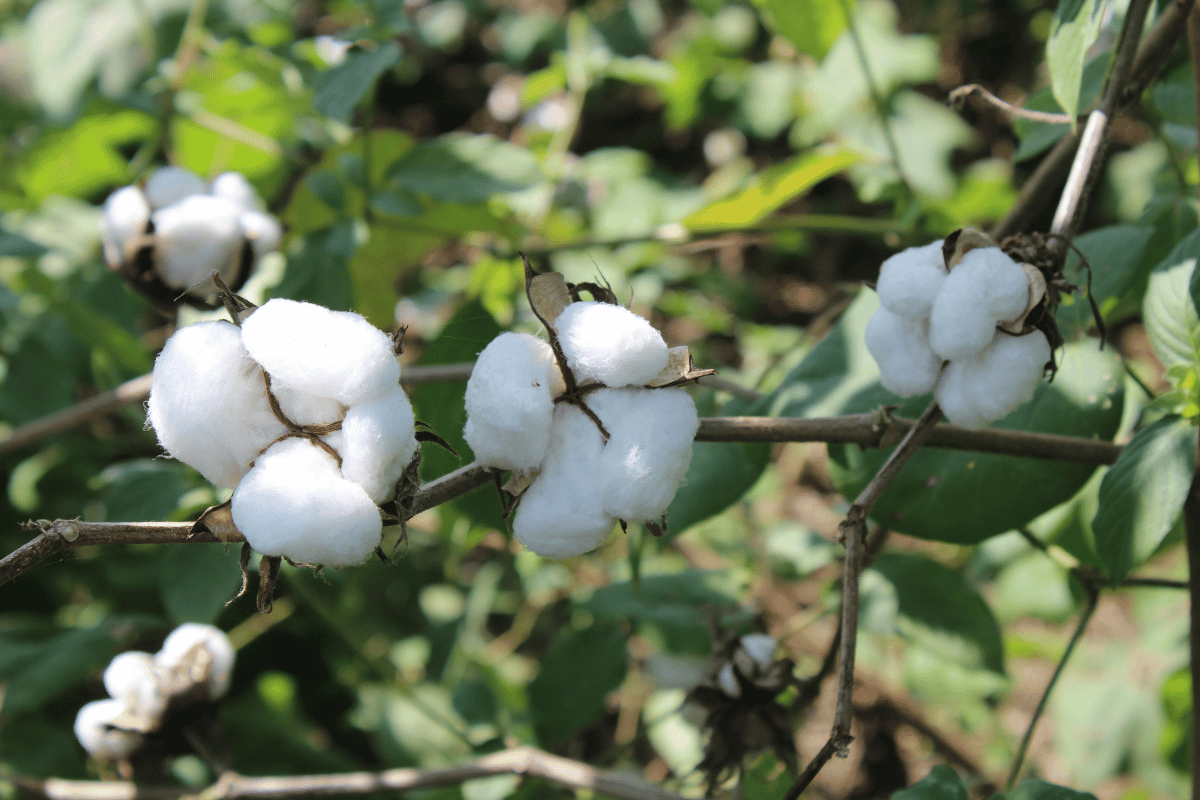
Three plant-protection bulletins for the cotton crop, from Serres (2 September), Imathia (31 August) and Aitoloakarnania (27 August 2026), draw the same basic picture. Cotton bollworm catches in the pheromone traps run at very low levels in all areas, while the pink bollworm shows a rising trend in specific locations, with the most significant catches in Imathia. The fields stand between advanced boll set and the opening of the first 10% of the bolls, the stage that decides both the quantity and the quality of the crop.
What the traps show in each region
| Region | Crop stage | Cotton bollworm | Pink bollworm |
| Serres bulletin of 2 September |
From 80% boll set in late fields to 10% boll opening in early ones | Very low catches everywhere | Rising trend in some areas, no infestations found in boll sampling |
| Imathia bulletin of 31 August |
Boll development and ripening | Very limited catches, no larvae found in field checks | Significant catches in the former municipalities of Plateos, Meliki and Antigonides |
| Aitoloakarnania bulletin of 27 August |
End of flowering, 70 to 80% boll set, 5 to 8% boll opening | Very low catches | Low catches, no infestation above threshold in the field checks |
In Imathia, the regional agricultural authority calls the cotton growers of the 3 former municipalities to inspect their fields immediately and, if infestations exceed the action threshold, to spray with suitable approved insecticides. In the other 2 regions the official checks found no infestations above the thresholds, so the recommendation stays with systematic scouting.
How scouting is done properly
Scouting is repeated every 3 to 4 days, in the morning or the afternoon. The grower walks the field along its diagonal and examines 100 plants at 10 stops, that is 10 plants per stop, together with the sample opening of young bolls.
For the cotton bollworm (Helicoverpa armigera), the action threshold at the boll development stage is 4 live young larvae of the 1st and 2nd instar, up to 1 cm long, on average per 100 plants, or in practice one young larva per 1.5 m of row. The criterion is the age and the number of live larvae found on the bolls, not the moth catches in the traps.
For the pink bollworm (Pectinophora gossypiella), the action threshold is 5 to 8 larvae on average inside 100 young bolls of 2 weeks of age, in a sample taken along the diagonal of the field.
Unjustified preventive sprays cost money
All three bulletins insist on the same point. Spraying without a confirmed exceedance of the action threshold adds cost, destroys the beneficial insects and adds no protection. When a treatment does become necessary, it is applied at night, because that is when the adults of both bollworms are active and the bees are protected.
Only products approved for cotton in the official database of the Greek Ministry of Rural Development and Food are used, as Greek law 4036/2012 sets strict criminal and administrative penalties for the use of non-approved products. Professional users notify the beekeepers before every spray, keep the prescriptions for 3 years and record every application in the spray log.
Irrigation of late fields decides the risk
The Serres bulletin adds a purely cultural recommendation. The frequency of irrigation in late cotton fields needs attention in this period, because excess water triggers regrowth and tender plant tissue. Tender growth attracts the harmful organisms and above all the pink bollworm, at the very moment the field should be moving towards maturity.
On Farmclick, Greek growers find approved plant protection products for cotton from suppliers across the country.
|
Cotton plant protection on Farmclick
Browse approved insecticides and biological plant protection products from suppliers across Greece. |
The findings and recommendations above come from the bulletins of each region and apply as a general trend. Conditions vary from field to field, depending on earliness, variety and infestation history, so final decisions rest on your own field checks and on the latest local bulletin.
For severe or unclear infestations, consult an agronomist. Prefer cultural measures and low-impact solutions where possible, and use only approved products, according to the label instructions and the operator protection measures.
Sources
All figures come from the cotton plant-protection bulletins:
- Regional Directorate of Rural Economy of Serres and Kavala Regional Centre of Plant Protection, 5th cotton plant-protection bulletin, 2 September 2026, Greek Ministry of Rural Development and Food.
- Regional Directorate of Rural Economy of Imathia, 3rd cotton plant-protection bulletin, 31 August 2026, Greek Ministry of Rural Development and Food.
- Regional Directorate of Rural Economy of Aitoloakarnania and Achaia Regional Centre of Plant Protection, 2nd cotton plant-protection bulletin, 27 August 2026, Greek Ministry of Rural Development and Food.