Sex pheromone traps on the Lasithi Plateau, at Livadi Krousonas and at Damasta keep recording codling moth catches. Bulletin No 8 of the Heraklion Regional Centre of Plant Protection (1 September 2026) covers the mountain pome-fruit areas of Crete and recommends fruit protection on 2 to 4 September, only in late-harvest orchards.
Which orchards does the treatment concern
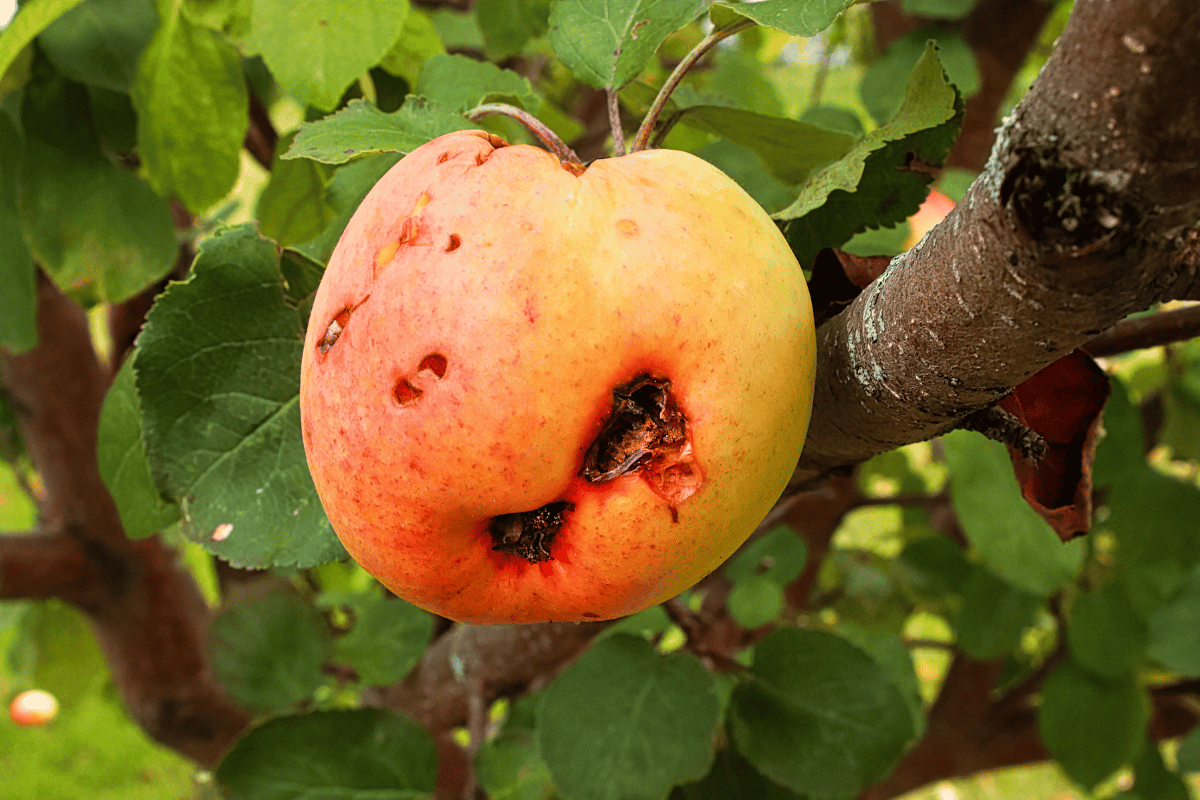
The codling moth (Cydia pomonella) attacks the fruit of apple and pear, with the larva tunnelling to the seed cavity and making the fruit unmarketable. The continuing catches in the monitoring network show that the insect remains active in the mountain zones, where harvest comes later than in the lowlands.
Protection is recommended in late-harvest apple and pear orchards, where tolerance to the infestation is low to zero, with indicative dates of 2 to 4 September for the late mountain areas. Orchards that have already been picked, or stand a few days before picking, need no new application. Late in the season, the codling moth often overlaps with other pome-fruit pests such as pear psylla and wood-boring moths, so a walk through the orchard before spraying pays off.
Sprays are cut back as harvest approaches
The bulletin is explicit on this point. Treatments are limited to the strictly necessary ones as picking approaches, and the pre-harvest interval from the last application is followed to the letter. Close to harvest, products with short residual activity are preferred, so that the fruit reaches the consumer without residues above the legal limits.
Approved products per crop and pest are listed in the official database of the Greek Ministry of Rural Development and Food. Before every application, the hazard labelling and the precautionary statements are checked, and the operator wears the required protective equipment.
On Farmclick, Greek growers find approved plant protection products for pome fruit from suppliers across the country.
|
Pome-fruit plant protection on Farmclick
Browse approved insecticides and all plant protection categories from suppliers across Greece. |
The bulletin dates are indicative and refer to the mountain areas of Crete. Every orchard differs by altitude, variety and infestation history, so the final decision rests on the picture of the specific block and on the latest local bulletin.
For severe or unclear infestations, consult an agronomist. Prefer cultural measures and low-impact solutions where possible, and use only approved products, according to the label instructions and the operator protection measures.
Sources
- Heraklion Regional Centre of Plant Protection, Quality and Phytosanitary Control, apple and pear bulletin No 8, 1 September 2026, Greek Ministry of Rural Development and Food.