Pear psylla and the wood-boring moths call for attention this period, while the risk from codling moth remains high. How the codling moth develops and when treatment is justified is covered in our guide on the codling moth in pome fruit and walnut.
Pear psylla builds up on tender growth
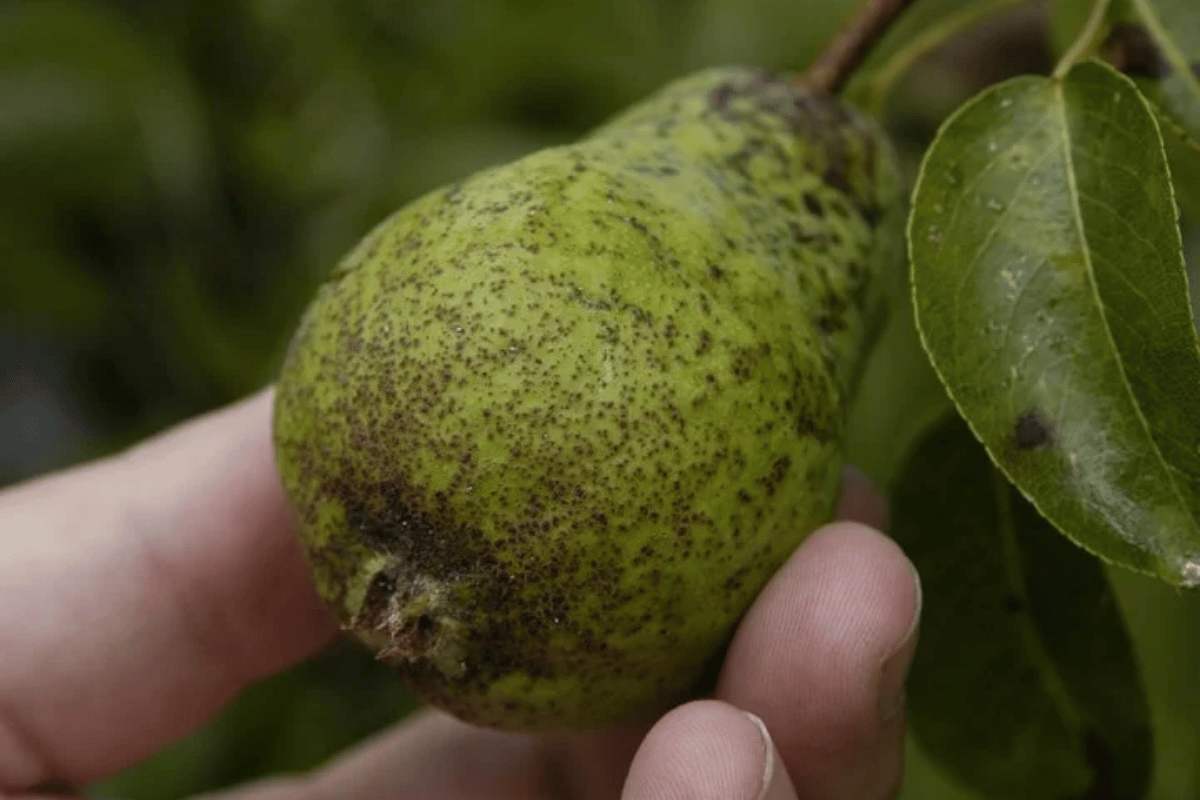
Pear psylla (Cacopsylla pyri) overwinters as an adult and produces several generations a year, with populations peaking when the tree keeps putting out soft, tender growth. The adults lay eggs on the young shoots, and the nymphs suck sap from leaves and shoots. As they feed they excrete abundant honeydew, on which sooty mould develops and blackens leaves and fruit. The result is reduced photosynthesis, downgraded fruit quality, and, in heavy infestations, a weakened tree.
The spray for psylla needs a high water volume
In orchards with an infestation, an immediate spray with an approved insecticide is advised, alternating active ingredients from different chemical groups, since the insect develops resistance easily. In dry weather, increasing the volume of spray water helps the product penetrate the honeydew that protects the nymphs. Removing water sprouts by hand and avoiding excessive nitrogen fertilization and irrigation limit the tender growth that feeds the insect, while natural enemies such as Anthocoris predatory bugs help keep the population in check.
 is one of the most important pear.png)
Psylla pyri (pear psylla, European pear sucker) is one of the most important pear
Wood-boring moths tunnel inside the wood
Pheromone traps show local catches of adult goat moth, leopard moth, and clearwing. The adults fly in summer and lay eggs on the bark, in branch crotches, and on wounds. The larvae that hatch bore into the wood and develop over months, opening galleries inside the trunk and scaffolds. These galleries interrupt the flow of sap, weaken the tree mechanically, and cause dieback of branches or whole trees, with frass at the entry holes as the telltale sign. Infestations are found mainly on old and weakened trees, where the wood is more vulnerable.
Control of wood-borers depends on coverage and tree health
Because the larvae are protected inside the wood, control is difficult and targets the adults before they lay eggs and the young larvae before they enter the trunk. The spray with an approved insecticide must fully cover the neck, the trunk, and the scaffolds, the points where egg-laying and larval entry take place. The best long-term protection is keeping the trees, especially the older ones, in good health with balanced fertilization and irrigation, so that they become less attractive to the insects.
Sources
- Regional Plant Protection Centre of Volos, technical bulletin on pome fruit pests No 10 (6 July 2026).