
Blue is the rarest colour in the garden, which is exactly why blue flowers are so prized. True sky-blue and deep-blue blooms bring a cool, calming note that sets off every other colour around them, and a handful of genuinely blue plants can change the whole feel of a border, a balcony or a cutting patch. This guide explains why real blue is so uncommon in flowers, then runs through the best blue-flowering plants to grow and what each one needs.
What makes a flower truly blue
Plants have no true blue pigment. The blues we see are built from the same red and purple pigments, the anthocyanins, that colour so many other flowers, shifted towards blue by soil chemistry, cell acidity and metal ions. The best-known example is the hydrangea, whose flowers turn blue only when aluminium is available in acidic soil and pink in alkaline soil. Because real blue takes this extra chemistry to produce, many flowers sold as blue are closer to violet or purple, and a clear, true blue stays genuinely special.
That rarity is worth keeping in mind when you choose plants. Some of the flowers below are pure sky-blue, others lean towards violet, and a few change shade with the soil, so it helps to picture the exact blue you want before you plant.
The best blue flowers to grow
Hydrangea (Hydrangea macrophylla) is the classic colour-changing shrub, producing large mophead or lacecap flowers that turn blue in acidic soil. If you want blue rather than pink blooms, you need to keep the soil acidic and aluminium available, which our hydrangea growing guide covers in detail. It suits partial shade and moist, well-drained soil.
 .png)
Plumbago (Plumbago auriculata), the sky flower, is one of the easiest ways to bring soft sky-blue to a warm garden, terrace or balcony. This vigorous, near-evergreen climber flowers for months in full sun and shrugs off heat and drought, which makes it ideal for a Mediterranean climate. The plumbago growing guide explains how to grow and prune it.
.png)
Delphinium (Delphinium species), also known as larkspur, gives the garden its tallest true blue, with dramatic flower spikes rising well over a metre at the back of a border. It prefers cool, moist conditions, neutral to slightly alkaline soil and shelter from wind, and often needs staking. See the delphinium and larkspur guide for growing from seed.
.png)
Morning glory (Ipomoea species) is a fast climber whose 'Heavenly Blue' variety opens pure blue trumpets each morning through summer. It is easy from seed in a warm, sunny spot and quickly covers a fence or trellis, as the morning glory guide describes.
.png)
Cornflower (Centaurea cyanus), the bachelor's button, is one of the truest blues in the plant world and one of the simplest annuals to grow. Sow it directly in a sunny spot for informal, meadow-style colour that bees adore, and it makes an excellent cut flower.
.png)
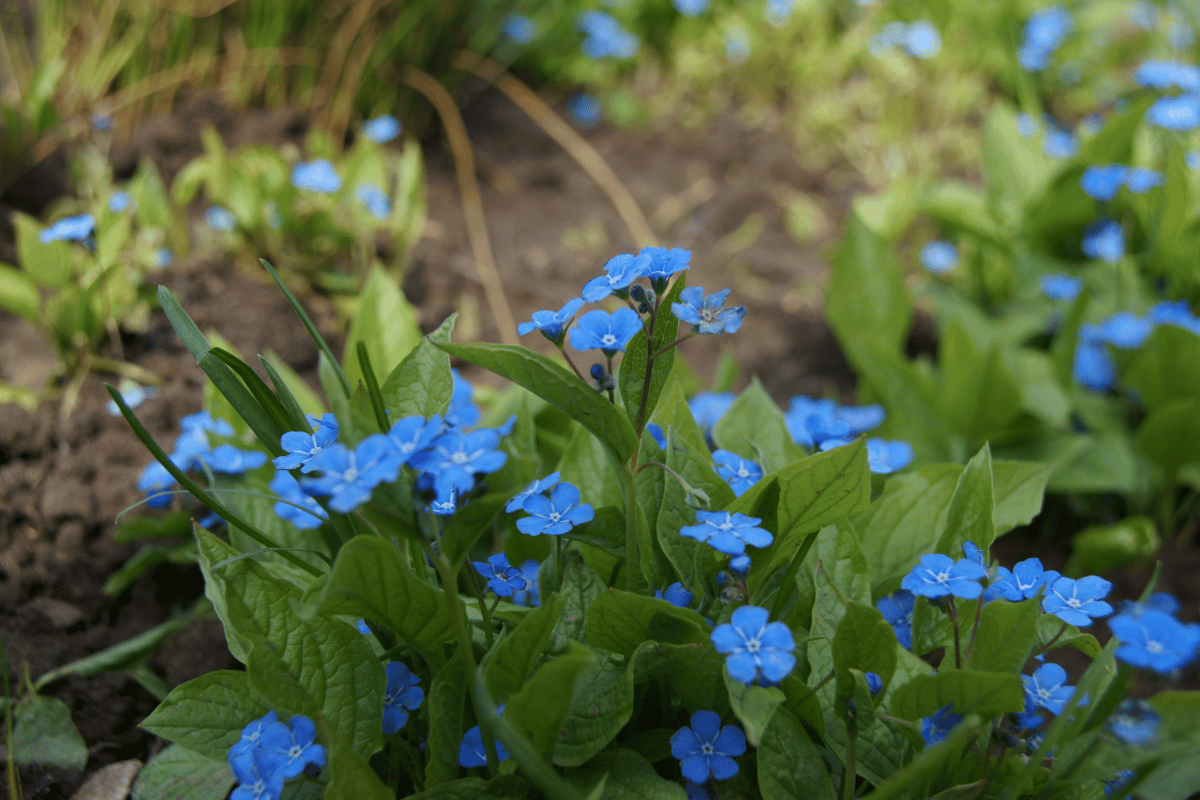
Forget-me-not (Myosotis species) carries clouds of tiny sky-blue flowers in spring, thriving in cool, damp, partly shaded ground. It self-seeds freely and is perfect for naturalising under shrubs or between spring bulbs.
 .png)
Grape hyacinth (Muscari species) produces short spikes of deep blue, bead-like flowers in early spring from small bulbs. Planted in drifts under trees or along a path, it gives one of the earliest and most intense blues of the year.
.png)
Love-in-a-mist (Nigella damascena) sets sky-blue flowers among feathery foliage, followed by decorative seed pods that dry well for arrangements. It is a hardy annual, easily direct-sown, that self-seeds around the garden.
.png)
Borage (Borago officinalis) is a vigorous herb with star-shaped, vivid blue flowers that are edible and much loved by bees. It grows quickly from seed in full sun and earns a place in both the vegetable garden and the border.
.png)
Agapanthus (Agapanthus species), the African lily, sends up tall stems topped with rounded heads of blue trumpet flowers through summer. It is drought-tolerant once established, flowers well in pots, and suits a hot, sunny position, which makes it a strong choice for warm gardens.
Lobelia (Lobelia erinus) is the go-to for intense blue in containers and hanging baskets, forming trailing cushions smothered in tiny flowers all summer. It prefers moist soil and does best with some relief from the fiercest afternoon heat.
 .png)
Other reliable blues worth seeking out include the woodland bluebell for spring drifts in shade, and blue-flowered salvias such as 'Black and Blue' for long summer colour that pollinators work all day.
Growing blue flowers from seed
Many of the best blues are quick and cheap from seed, which is the easiest way to fill a garden with blue on a budget. Cornflower, love-in-a-mist and morning glory can all be sown directly where they are to flower, once the frost has passed and the soil has warmed. Forget-me-not and grape hyacinth do the rest of the work themselves, self-seeding and spreading year after year once established. For shrubs and perennials such as hydrangea, plumbago and agapanthus, it is usually faster to start from young plants than from seed.
What do blue flowers mean
Blue flowers have long carried a sense of calm, trust and serenity, and because true blue is so rare in nature they are also associated with the unattainable and with longing. The forget-me-not stands for remembrance and faithful love, which is why it appears so often in memorial planting, while cornflowers have symbolised hope and, in several countries, remembrance as well. In the garden, blue reads as a cool, restful colour that makes spaces feel larger and calmer, and it pairs beautifully with white, silver and soft yellow.
Bringing blue into the garden
Most blue flowers share a preference for full sun, though a few, such as hydrangea and forget-me-not, do well in partial shade. Combining several of the plants above extends the blue through the seasons, from grape hyacinth and forget-me-not in spring, to cornflower, delphinium and plumbago in summer. Because a true blue can look cool on its own, gardeners often lift it with warm companions or soften it with white and grey foliage.
If a plant shows persistent problems that don't respond to the basic care, it's worth consulting a horticulturist or your local nursery. For pest and disease control, try non-chemical methods first, and when a product is needed, use only approved ones and follow the label instructions.