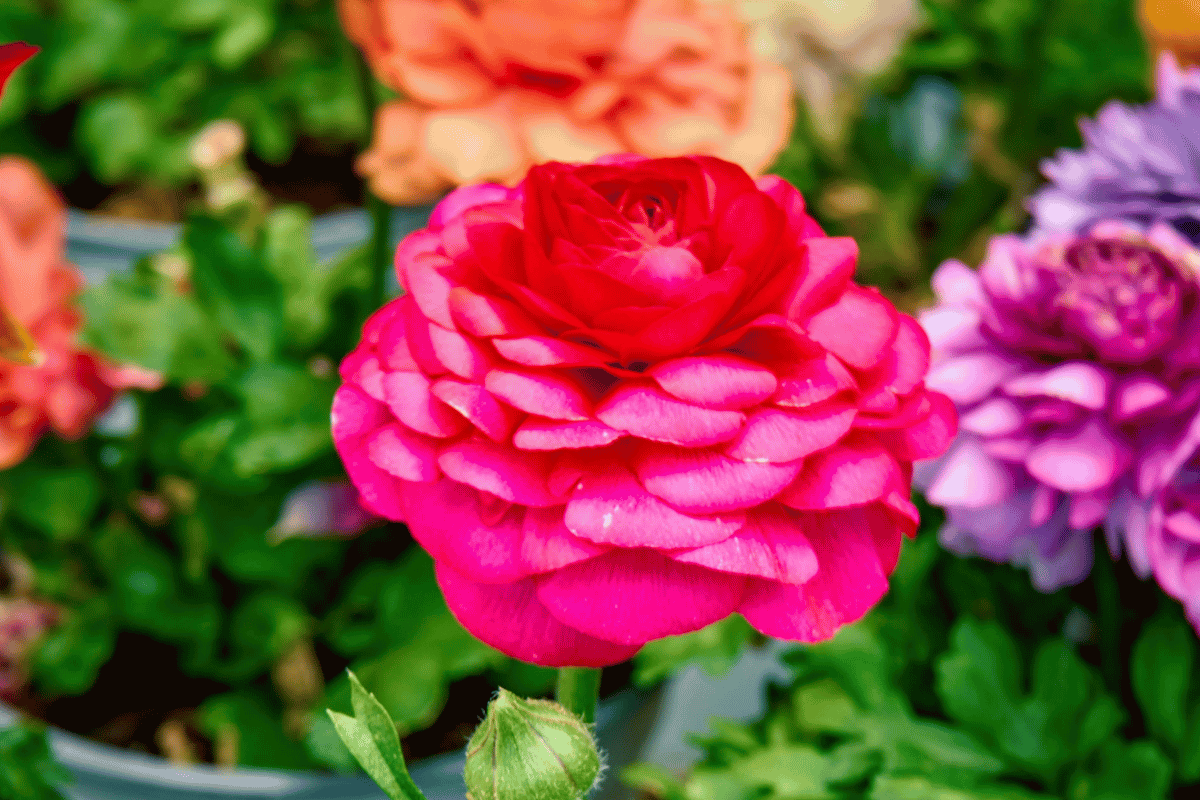
Ranunculus, also known as the Persian buttercup, produces some of the most spectacular flowers you can grow from a corm. Each rose-like bloom is packed with dozens of tissue-thin, ruffled petals, in almost every colour from white and pale yellow to orange, pink, red and deep burgundy. A single plant can carry up to 35 flowers over its season, on sturdy stems above fern-like foliage, and they last a long time in the vase.
Ranunculus (Ranunculus asiaticus) belongs to the buttercup family (Ranunculaceae) and is native to the Mediterranean, southeastern Europe and southwestern Asia, so it's well suited to a Greek climate. This guide covers how to grow it from corms, from the all-important soaking before planting to lifting and storing the corms after the flowers fade.
What are ranunculus corms
Ranunculus grows from small, claw-like corms rather than true bulbs. Dry and unpromising when you buy them, they look like tiny bunches of brown fingers or a small octopus. Those "claws" are what you plant, pointing downward, and from them the roots and shoots develop.
Because the corms are sold dry and dormant, they need rehydrating before they go in the ground. This step makes a real difference to how reliably they sprout.
How to plant ranunculus corms
The best time to plant depends on your climate. Ranunculus is a cool-weather plant that grows and flowers best in the mild temperatures of autumn through spring, and prolonged heat above about 21°C pushes it into dormancy and stops the flowers. In the mild winters of most of Greece and other warm regions (roughly USDA zones 8 and above), plant the corms in autumn for flowers in spring. In colder areas, where hard frosts are common, plant in late winter or early spring, once the worst of the frost has passed, for flowers in early summer.
Before planting, soak the corms in a bowl of lukewarm water for three to four hours, until they plump up and roughly double in size. Don't soak them longer than about half a day, as too much water encourages rot. Drain them and plant straight away.
- Choose a spot in full sun with light, well-drained soil, and dig in some compost. Avoid heavy clay, which holds water and rots the corms
- Plant the corms with the claws pointing downward
- Set them about 5 cm deep and 10 to 15 cm apart
- Water once, lightly, to settle the soil
In cold or wet regions, many growers pre-sprout the corms first to get a head start and reduce rot. After soaking, nestle them in a tray of just-moist compost, keep them somewhere cool at around 5 to 10°C for a week or two until small white roots appear, then plant them out. Sprouts usually appear two to three weeks after planting.
Growing ranunculus in pots
Ranunculus grows very well in containers, which also lets you control the drainage.
- Choose a pot with plenty of drainage holes and a free-draining, loam-based mix with added grit
- Plant the corms claws-down, about 5 cm deep
- Place the pot in full sun
- Watch the watering closely, as corms in pots are especially prone to rot
Watering
After the first watering at planting, hold off until you see new growth appear, usually within two to three weeks. Watering the bare soil before then keeps the corms sitting wet and is the quickest way to rot them.
Once the plants are growing, keep the soil evenly moist but never waterlogged, watering more in dry spells and as the flower buds form. Good drainage matters more than frequent watering.
Are ranunculus perennials?
Technically ranunculus is a tender perennial, but in practice it rarely flowers reliably a second year, so most gardeners treat it as an annual and grow it for a single spectacular season.
If you want to try keeping the corms, wait until the flowers finish and the foliage yellows and dies back, which signals the corms have gone dormant. Lift them carefully, brush off the soil, and dry them in a shaded, airy spot for five to seven days. Store them somewhere cool and dry, around 5 to 10°C, in a paper bag or dry peat, until the next planting season. Many growers find it simpler and more reliable to buy fresh corms each year.
Bloom season and cutting for the vase
Ranunculus flowers from late spring into early summer, roughly 90 days after planting, with each plant blooming for around four to seven weeks. The rose-like flowers, similar in look to a peony, make it one of the best cut flowers you can grow.
For the longest vase life, cut the stems when the buds are showing colour and just beginning to open, rather than fully open. Cut in the cool of the morning and put the stems straight into water. Harvested this way, ranunculus lasts around 7 to 10 days in the vase, and cutting flowers regularly encourages the plant to produce more.
Common problems
- Yellow leaves and rotting corms: almost always from waterlogged soil. Ease off the watering, improve the drainage, and remove any yellowed foliage
- Grey mould (botrytis): grey-brown fuzzy mould on leaves, buds or flowers in damp, still conditions. Remove affected parts and improve airflow, especially under cover
- No flowers: usually corms planted the wrong way up, too deep, or in too much shade. Plant claws-down, shallowly, in full sun
Is ranunculus toxic?
Ranunculus is toxic to pets. According to the ASPCA, the whole genus contains ranunculin, which turns into an acrid compound called protoanemonin when the plant is chewed or crushed. In dogs and cats this causes drooling, vomiting, diarrhoea, mouth ulcers and an unsteady gait, with the flowers holding the highest concentration.
The same compound is a skin irritant, so it's worth wearing gloves when handling the plants and washing your hands afterward. The bitter taste usually stops animals from eating much, and serious poisoning is rare, but it's best to keep pets away from the plants. This same toxicity is what makes ranunculus naturally resistant to deer and rabbits. If a pet ingests part of the plant, contact your veterinarian.
Frequently asked questions
Which way up do you plant ranunculus corms? With the claw-like points facing downward. Planted upside down, they sprout poorly or not at all.
Do you have to soak ranunculus corms before planting? It's strongly recommended. Soaking in lukewarm water for three to four hours rehydrates the dry corms and helps them sprout reliably. Don't soak longer than about half a day.
Do ranunculus come back every year? Rarely and unreliably. They're tender perennials usually grown as annuals. You can lift and store the corms over summer, but many gardeners simply buy fresh ones each season.
When do ranunculus bloom? From late spring into early summer, about 90 days after planting, flowering for four to seven weeks.
Are ranunculus poisonous to cats and dogs? Yes. All parts are toxic, the flowers most of all, causing drooling, vomiting and mouth irritation. Keep pets away and wear gloves when handling.
Important notes
Every garden and every plant is unique. Conditions vary significantly with your region, climate, sun exposure and soil drainage. The guidance above is general and a starting point rather than a strict rule.
Given the plant's toxicity to pets and its irritating sap, wear gloves when handling the corms and plants, and in case a pet ingests part of the plant, contact a vet.
If your plants show persistent problems that don't respond to the basic practices, it's worth consulting a horticulturist or your local nursery. For pest and disease control, try non-chemical methods first. When a product is needed, use only approved ones and follow the label instructions.
References
- Royal Horticultural Society. How to grow ranunculus.
- BBC Gardeners' World. How to grow ranunculus.
- ASPCA Animal Poison Control. Toxic and Non-Toxic Plants: Buttercup.