
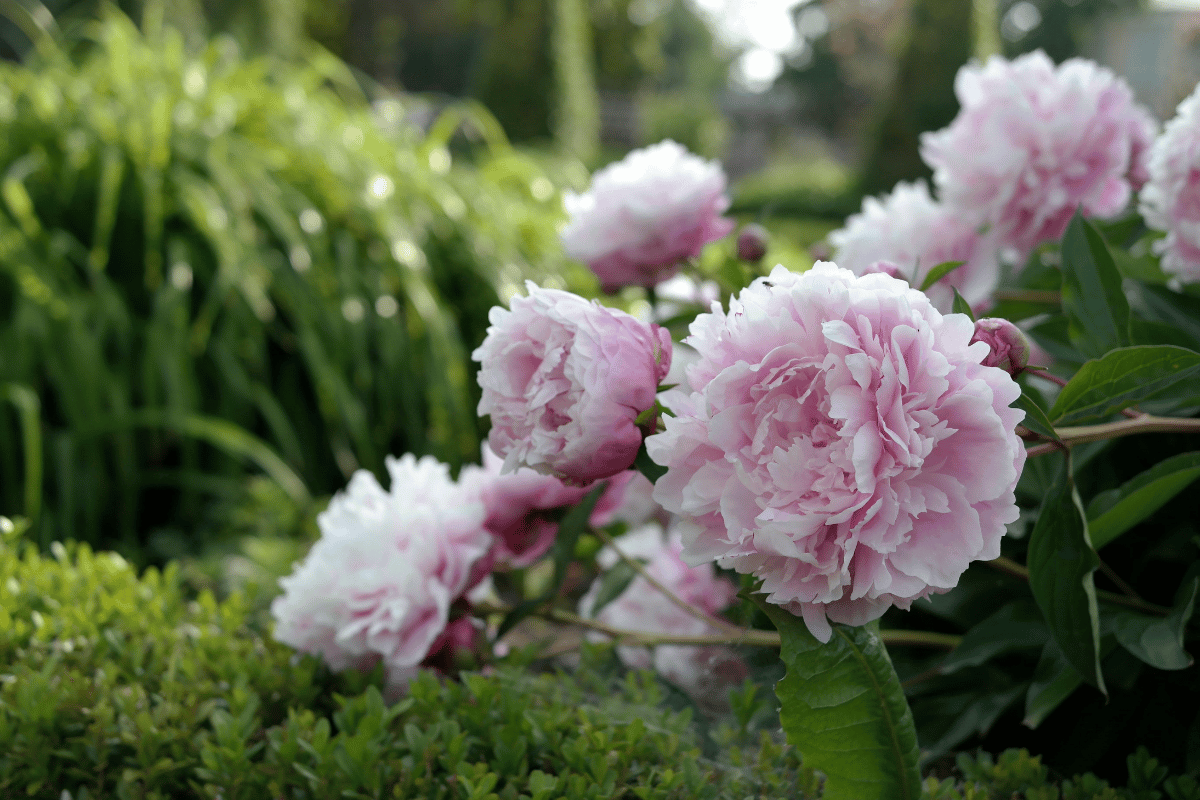
The peony (Paeonia) is one of the most spectacular perennial flowering plants, with large, velvety blooms reminiscent of roses and a rich, sweet fragrance. It flowers from spring into early summer and lives for decades in the same spot, its display growing more generous year on year as the plant establishes.
The name has ancient roots. It comes from Paean, the physician of the gods in Greek mythology, since the plant was regarded as healing. A rare wild species even grows in the Greek mountains, the Greek peony (Paeonia parnassica), with dark, almost black-red flowers, endemic to central Greece and now protected.
This guide covers how to plant and care for peonies, with particular emphasis on the correct planting depth, which is the most common reason a peony produces foliage but never flowers.
The types of peony
Before planting, it's worth knowing which type of peony you have, since planting depth and pruning differ between them.
Herbaceous peony (Paeonia lactiflora and hybrids): the most widely grown. Its top growth dies back each autumn and re-emerges in spring from the rootstock. Most classic cultivars belong here, including the popular 'Sarah Bernhardt'.
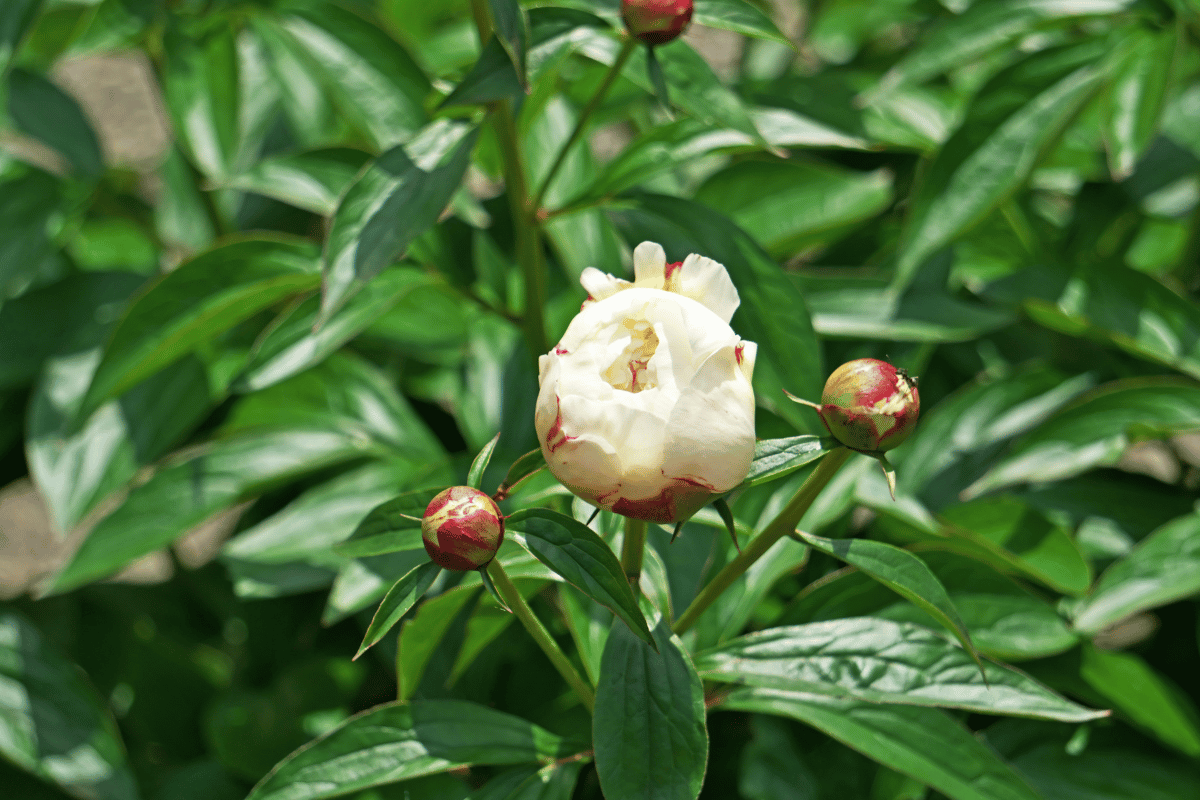
Tree peony (Paeonia suffruticosa): a woody shrub with permanent stems that persist through winter. It grows slowly, lives for many decades, and produces enormous flowers.
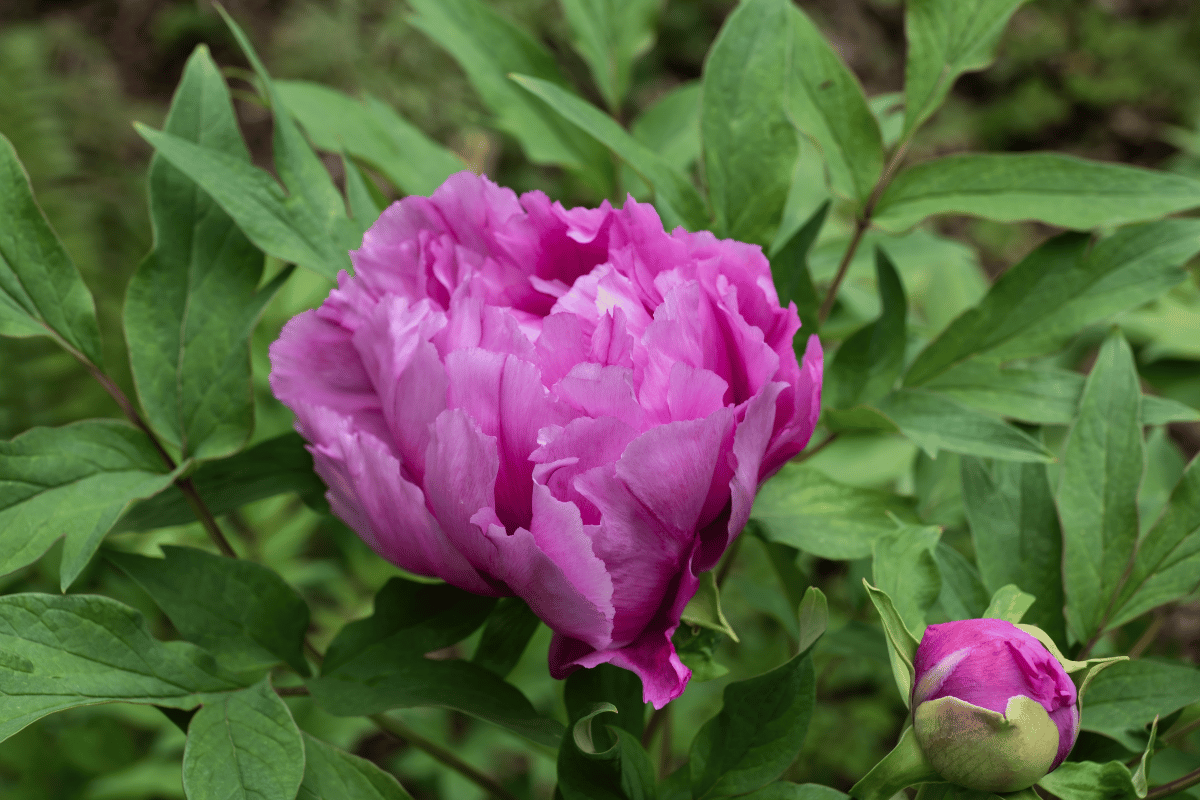
Intersectional peony (Itoh type): a hybrid of herbaceous and tree peonies, combining the strong flowers of the tree peony with the manageable habit of the herbaceous type. A good choice for containers.
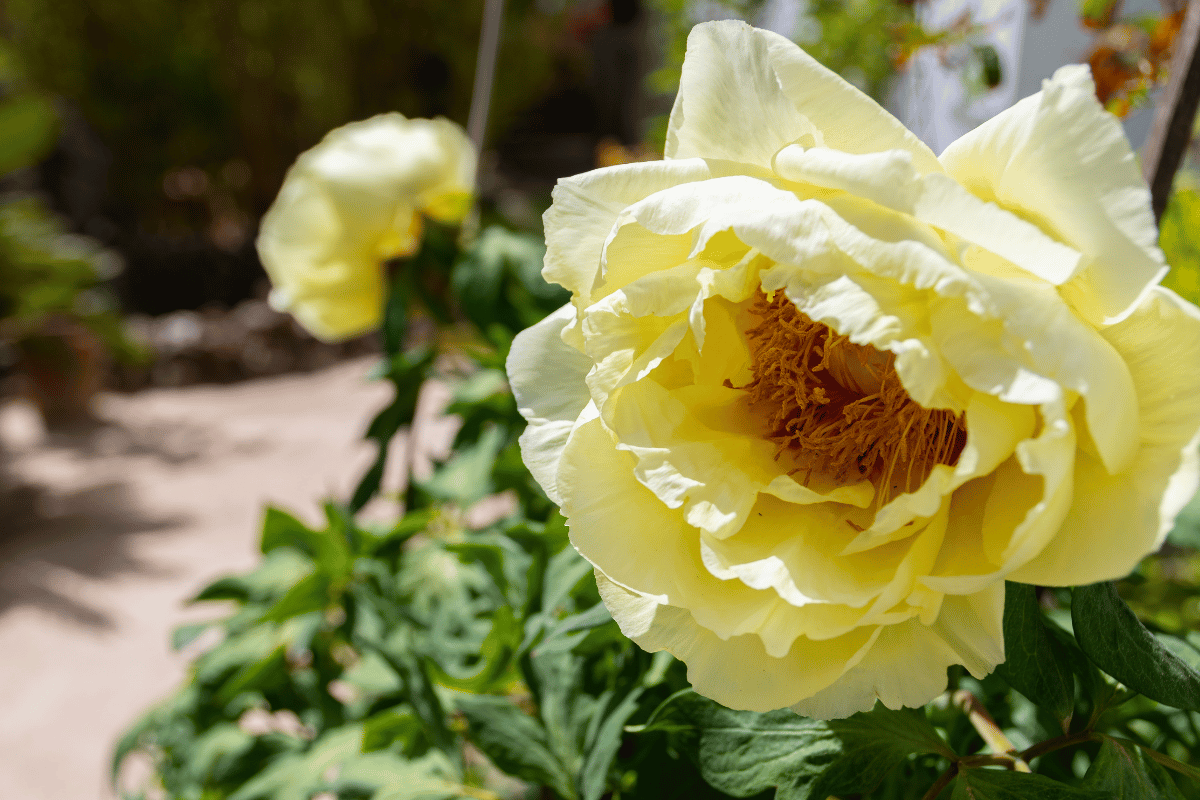
Among herbaceous peonies, the classic is 'Sarah Bernhardt', with large, double, pale pink blooms. Other popular cultivars include the deep red 'Karl Rosenfield', the pure white 'Festiva Maxima', and 'Bowl of Beauty', with pink outer petals around a creamy centre. Among the Itoh hybrids, the yellow 'Bartzella' is one of the most sought after.
Where to plant a peony
The peony needs a sunny position, with at least five to six hours of direct sun a day. It tolerates light shade, which in hotter regions actually protects the flowers from the fading caused by strong midday sun.
Choose the position carefully from the outset, since the peony resents being moved. It has long, brittle roots, and after transplanting it often fails to flower for one or two seasons until it re-establishes. Avoid planting close to large trees, which compete with the plant for water and nutrients.
The tree peony needs additional shelter from strong winds, which break the stems and damage the large flowers.
Soil
The peony thrives in fertile soil that is rich in organic matter and drains very well. It will not tolerate waterlogging at the roots, which leads to rot. On heavy clay, work in coarse sand and well-rotted compost to improve drainage.
It prefers neutral to slightly alkaline soil. On very acidic soils, adding a little lime at planting time is beneficial.
Planting and the critical depth
The best time to plant is autumn, so the plant can root before winter. Rootstocks can also be planted in late winter or early spring.
Planting depth is the single most critical point in growing peonies, and the reason so many gardens have peonies that never flower.
With the herbaceous peony, the red buds on the rootstock (the so-called eyes) should sit no more than 2-3 cm below the soil surface. Planted any deeper, the plant develops lush foliage but never flowers. In the warm regions of Greece, set the eyes even more shallowly, so the rootstock receives the winter chill it needs to flower.
The tree peony is planted the opposite way, deep. Most are sold grafted onto herbaceous peony rootstock, and the graft union should sit around 10-15 cm below the surface, so the grafted top develops its own root system.
Steps for planting a herbaceous peony
- Dig a hole twice as wide as the rootstock and work compost into the soil
- Position the rootstock with the eyes facing upward
- Cover so the eyes sit just 2-3 cm below the surface
- Firm the soil gently and water in well
- If planting several, leave about 1 metre between them
Growing peonies in containers
If you don't have a garden, peonies can be grown in containers, especially the Itoh types and smaller cultivars.
- Choose a deep, roomy pot with good drainage, since the peony has a large root system
- Use a quality potting mix amended with pumice or perlite for drainage
- Place the container in a sunny spot
- In a pot the soil dries faster, so water more regularly, without letting it waterlog
Watering
In the first year after planting, water regularly so the root system establishes, especially during dry spells. Once established, the peony is fairly drought-tolerant and mainly needs water during the heat of summer.
Water at the base of the plant and avoid constantly wetting the foliage, since moisture on the leaves encourages fungal disease.
Feeding
The peony is not a demanding feeder. A dressing of well-rotted compost around the base each spring, as growth begins, is usually enough. For more generous flowering, you can add a balanced, low-nitrogen fertiliser in spring.
Avoid fertilisers high in nitrogen, which favour foliage at the expense of flowers. Fertiliser should not come into direct contact with the eyes on the rootstock.
When do peonies bloom?
Peonies flower from mid-spring into early summer, depending on the type and the region. Tree peonies open first, herbaceous peonies follow in late spring, and Itoh hybrids bridge and extend the season. In a warm Greek spring the display comes earlier than in cooler northern gardens.
Each plant flowers for only about one to two weeks, so the peony season feels short for any single variety. Planting early, mid and late cultivars together stretches the flowering across several weeks. As cut flowers, peonies are in season through late spring and early summer, the same window when they bloom in the garden. For the longest vase life, cut the buds while they still feel firm like a soft marshmallow and are just showing colour, much as you would with ranunculus.
Deadheading and cutting back peonies
Once the flowers fade, remove them so the plant doesn't waste energy setting seed. Leave the foliage green until autumn, however, since it feeds the rootstock with energy for next year's flowering.
With the herbaceous peony, in autumn when the foliage yellows and withers, cut the stems back low, almost to ground level. This also reduces the risk of fungal disease the following year.
With the tree peony, never make this cut to the ground, since its stems are permanent and woody. Remove only dead or broken stems, and lightly shape after flowering if needed.
Propagation
Peonies are propagated mainly by division of the rootstock, in late autumn. Carefully dig up a mature plant and divide the rootstock into sections, each of which should carry three to five healthy eyes and roots. The new sections are planted immediately, at the correct shallow depth.
Division is carried out only on established plants and not often, since the peony resents disturbance to its root system. Young plants need a few years before they flower freely.
Why your peony won't flower
A failure to flower is the most common problem in growing peonies, and it almost always comes down to one of the following causes.
- Deep planting: the most frequent cause. If the eyes sit deeper than 2-3 cm, the plant won't flower. Lift the rootstock carefully and replant it more shallowly
- A young or recently moved plant: the peony is slow to establish. It often takes three to five years for reliable flowering, and longer for tree peonies
- Too much shade: without enough sun, it produces few or no flowers
- Excess nitrogen: this drives foliage instead of flowers
Pests and diseases
The peony is generally a tough plant, but it can show the following.
- Peony wilt (botrytis): the most common disease, a fungal infection that blackens and withers stems and buds in damp conditions. Remove affected parts, improve airflow, and cut herbaceous foliage back low each autumn
- Powdery mildew: a white dust on the leaves in humid conditions. Manage it with better airflow and by avoiding wetting the foliage
- Root rot: from overwatering or poor drainage. Prevent it with well-drained soil
Many people worry when they see ants on peony buds. There's no cause for concern. The ants simply feed on the sweet nectar the buds secrete and do no harm at all to the plant. They leave of their own accord once the flowers open.
Are peonies poisonous to cats and dogs?
The peony is toxic to pets. According to the ASPCA, it contains a compound called paeonol, concentrated mainly in the bark and roots but present throughout the plant, which causes vomiting, diarrhoea and lethargy in dogs and cats if eaten in quantity.
Poisoning is rarely serious, but it's best to keep pets away from the plant, especially dogs that may dig and reach the roots. If ingestion occurs, contact your veterinarian.
Frequently asked questions
Why won't my peony flower? The most common cause is planting too deep. The eyes on the rootstock should sit just 2-3 cm below the surface. Other causes are a young or recently transplanted plant, a shady position, and too much nitrogen fertiliser.
When do peonies flower? From mid-spring into early summer, depending on the cultivar and the region. Each plant flowers for a few weeks.
Should I worry about ants on the buds? No. The ants feed on the sweet nectar of the buds and do no harm to the plant. They leave once the flowers open.
Can I move my peony? Better not to, unless necessary, since it dislikes root disturbance and often won't flower for one or two seasons afterward. If you must, do it in late autumn.
Can peonies grow in pots? Yes, especially the Itoh types and smaller cultivars. They need a deep, roomy container with very good drainage and a sunny position.
Important notes
Every garden and every plant is unique. Conditions vary significantly with the type of peony, the region, sun exposure and soil drainage. The guidance above is general and a starting point rather than a strict rule.
Given the peony's toxicity to pets, if you have a dog or cat, plant it somewhere out of easy reach, and in case of ingestion contact a vet.
If you suspect a serious disease that doesn't respond to the basic practices, consider consulting a horticulturist for accurate diagnosis. Use plant protection products with care. Try non-chemical methods first. When chemical intervention is needed, use only approved products, follow the dosage on the label, and avoid spraying when bees are active.
References
- Royal Horticultural Society. Herbaceous and intersectional peonies growing guide.
- Royal Horticultural Society. How to grow tree peonies.
- Royal Horticultural Society. Planting peonies for beautiful blooms.
- ASPCA Animal Poison Control. Toxic and Non-Toxic Plants: Peony.