
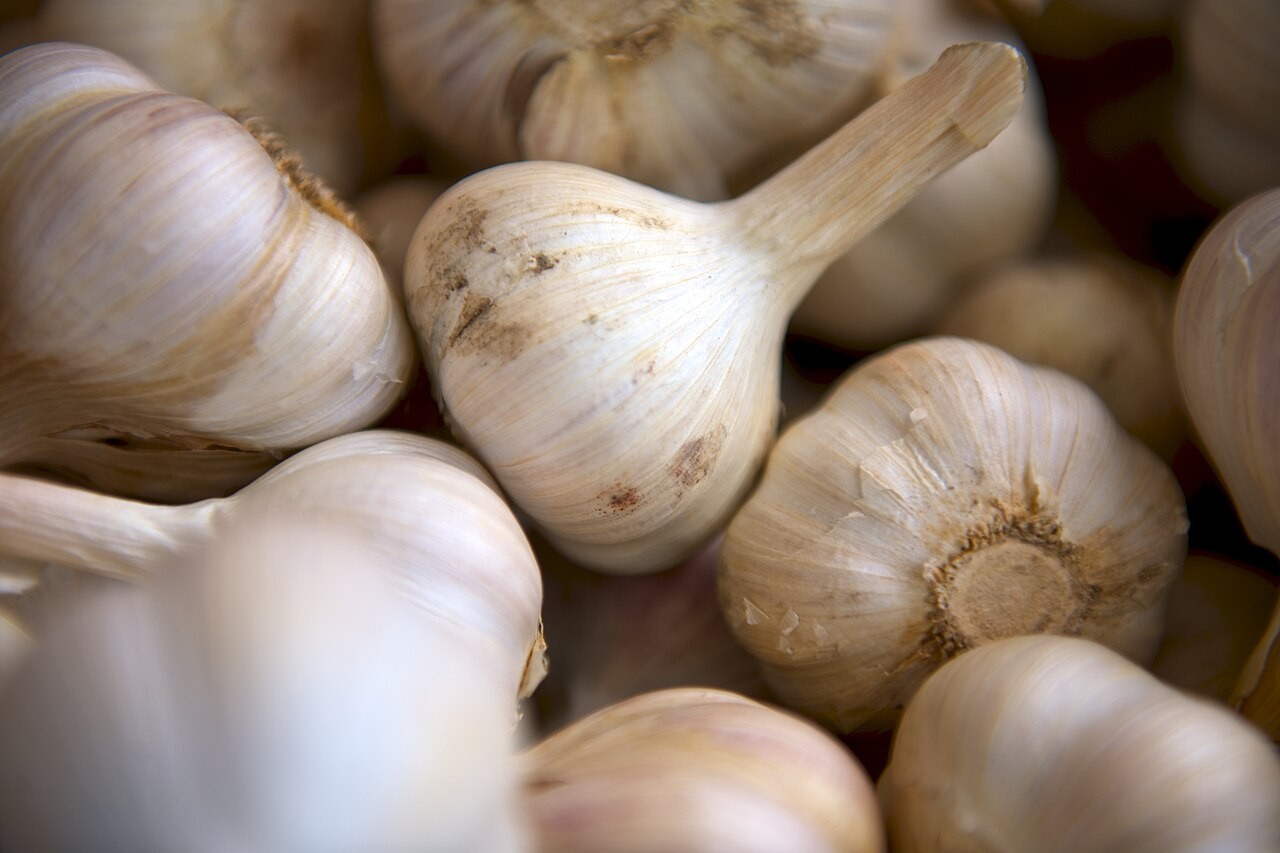
100 grams of raw garlic provide 149 kcal, 33 grams of carbohydrate and 6.4 grams of protein, and are rich in vitamin B6, vitamin C and manganese. Because garlic is eaten in small amounts, however, its contribution to daily vitamin and mineral needs is small. Garlic stands out mainly for its sulphur compounds, above all allicin, which forms when a clove is cut or crushed. Research on its health effects shows small effects in a few areas, and no health claim for garlic is authorised in the European Union. This article covers its nutrients, what they mean in practice, what the research says, what applies to claims in the EU, and which precautions are needed.
Garlic at a glance
Garlic (Allium sativum) belongs to the family Amaryllidaceae and is related to onion, leek and chives. It has been grown in Greece since antiquity and is mentioned by Herodotus, Theophrastus and Dioscorides. According to FAOSTAT figures, world production reached 29.1 million tonnes in 2022, with China producing 73%. Greek garlic varieties, such as Vyssa garlic from Evros, are known for their strong flavour.
Nutrients per 100 grams
Values are for raw garlic, from the USDA FoodData Central database. The percentage refers to the nutrient reference value of EU Regulation 1169/2011, where one is defined.
| Nutrient | Per 100 g | % of reference value |
|---|---|---|
| Energy | 149 kcal | 7% |
| Water | 58.58 g | – |
| Carbohydrate | 33.06 g | 13% |
| Sugars | 1 g | 1% |
| Fibre | 2.1 g | – |
| Protein | 6.36 g | 13% |
| Fat | 0.5 g | 1% |
| Vitamin B6 | 1.235 mg | 88% |
| Vitamin C | 31.2 mg | 39% |
| Manganese | about 1.7 mg | about 84% |
| Selenium | about 14 µg | about 26% |
| Calcium | 181 mg | 23% |
| Phosphorus | 153 mg | 22% |
| Potassium | 401 mg | 20% |
| Iron | 1.7 mg | 12% |
| Zinc | 1.16 mg | 12% |
| Magnesium | 25 mg | 7% |
| Sodium | 17 mg | – |
What a typical serving provides
The percentages per 100 grams look impressive, but nobody eats 100 grams of garlic in one meal. In a 5 gram serving, one or two cloves, vitamin B6 comes to about 0.06 mg, around 4% of the reference value, and vitamin C to 1.6 mg, less than 2%. Garlic is therefore a flavouring, not a significant source of vitamins and minerals in the diet.
Under EU Regulation 1924/2006, a food may be described as a source of a vitamin or mineral when it provides at least 15% of the reference value per 100 grams, and as high in it when it provides at least twice that. Based on values per 100 grams, raw garlic meets the high condition for vitamin B6, vitamin C and manganese, and the source condition for selenium, calcium, phosphorus and potassium. These claims, however, relate to content per 100 grams, not to the amount actually eaten.
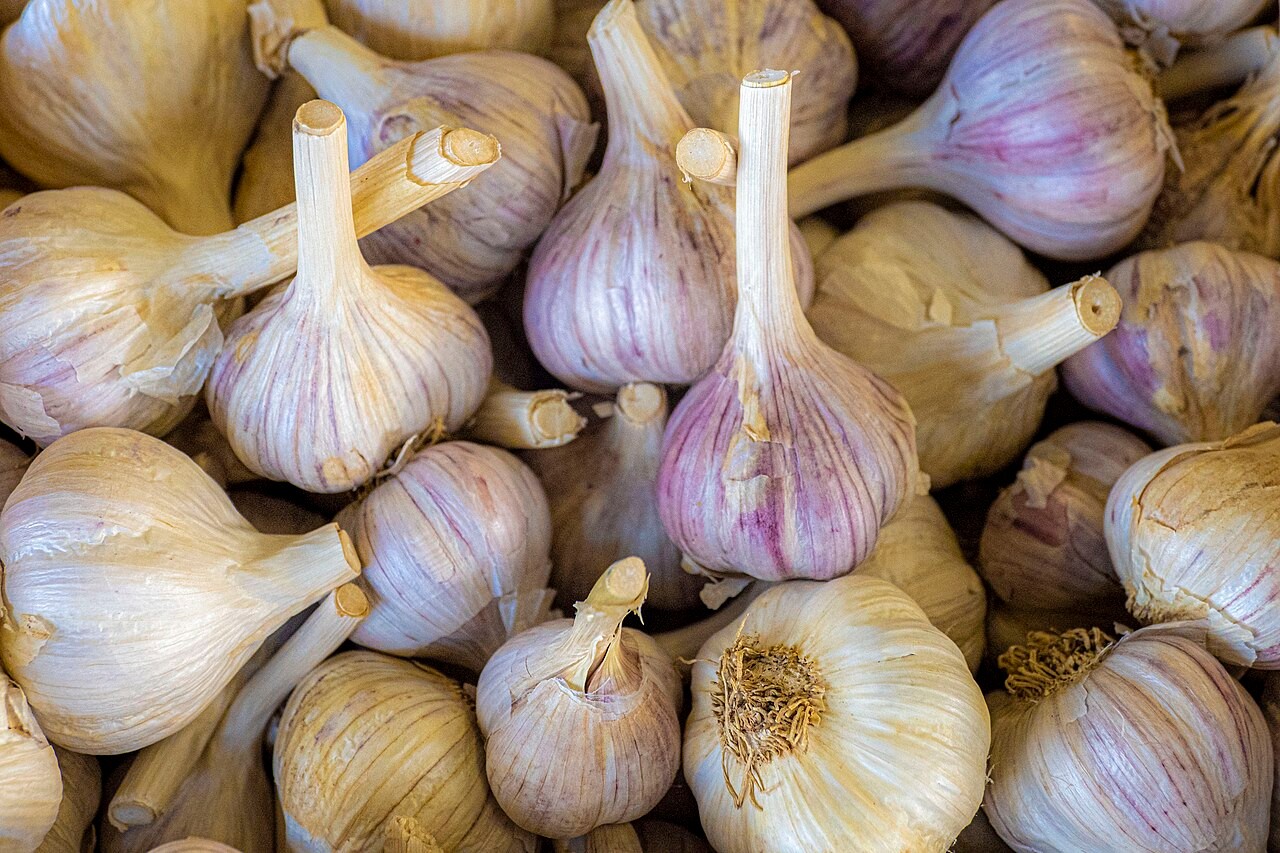
An intact clove contains alliin, which turns into allicin only when the clove is cut or crushed.
Alliin and allicin
Garlic's characteristic flavour and smell come from sulphur compounds. An intact clove contains alliin and, in a separate part of its cells, the enzyme alliinase. When the clove is cut or crushed, the two meet and alliin is converted into allicin, the compound responsible for pungency. Allicin is unstable and breaks down into other sulphur compounds, and its content depends on variety and on the sulphur available in the soil, as shown in garlic fertilisation.
What research says about health
A great deal of research has been done on garlic, but according to the US National Center for Complementary and Integrative Health (NCCIH), much of it consists of small, preliminary or low-quality studies. The current picture is as follows:
- Blood pressure: limited evidence suggests garlic supplements may lower blood pressure slightly in people with high blood pressure
- Blood sugar: supplements may lower blood sugar slightly in people with diabetes
- Cholesterol: supplements may lower total and LDL cholesterol to a small extent in people with high cholesterol
- Cancer: eating garlic does not appear to reduce the risk of stomach cancer, and it is uncertain whether it affects colorectal cancer risk
- Colds and immunity: very little research exists. A 2022 review found only two studies, with small numbers of participants and methodological weaknesses
Most of these findings concern supplements at specific doses rather than kitchen garlic.
Health claims in the EU
In the European Union, any health claim for a food, such as "lowers cholesterol", must be authorised and included in the Union register. For botanical ingredients such as garlic, health claims have been on hold since 2010, meaning they have been neither authorised nor rejected. Consequently, no health claim for garlic appears on the list of authorised claims, while the use of on-hold claims on food supplements varies between member states.
Precautions
- Bleeding and anticoagulants: garlic may increase the risk of bleeding. People taking anticoagulants such as warfarin should tell their doctor if they take or plan to take garlic supplements
- Before surgery: according to the Merck Manual, garlic should not be eaten or taken as a supplement for 2 weeks before surgery or a dental procedure
- Drug interactions: garlic reduces the effectiveness of saquinavir, an HIV medicine, may add to the effects of blood-sugar-lowering and blood-pressure-lowering medicines, and interacts with tacrolimus, used after organ transplants
- Raw garlic on the skin: fresh raw garlic may not be safe when applied to the skin, because it can cause burns
Garlic in oil and botulism
Homemade garlic in oil is the most important food safety issue involving garlic. Oil creates an oxygen-free environment in which Clostridium botulinum can grow and produce botulinum toxin, one of the most potent biological toxins known. The toxin does not change the product's appearance, smell or taste, so it cannot be detected by the senses.
According to Oregon State University, non-acidified homemade garlic in oil goes straight into the fridge and is used within 4 days, or is frozen. If it stays at room temperature for more than 2 hours, it is discarded. Commercial products are safe because they are acidified and processed, and are stored as their label directs.
Frequently asked questions
How many calories are in garlic
100 grams of raw garlic provide 149 kcal. One or two cloves, about 5 grams, provide around 7 kcal.
What vitamins does garlic contain
Per 100 grams, garlic is rich in vitamin B6, vitamin C and manganese. In the amounts actually eaten, though, its contribution to daily needs is small.
Does garlic lower blood pressure
Limited evidence suggests garlic supplements may lower blood pressure slightly in people with high blood pressure. They do not replace medication, and any change should be discussed with a doctor.
Does garlic help with colds
There is not enough evidence. A 2022 review found only two small studies, both with methodological weaknesses.
Is garlic safe with blood thinners
Garlic may increase the risk of bleeding, so people taking anticoagulants such as warfarin should tell their doctor, especially about garlic supplements. Avoiding garlic for 2 weeks before surgery is recommended.
How long does homemade garlic in oil keep
Without acidification, no more than 4 days in the fridge, or it can be frozen. If left at room temperature for more than 2 hours, it should be discarded because of the botulism risk.
Important notes
The health information in this article is for general awareness and does not replace medical advice. Anyone taking medication or planning to take garlic supplements should first consult a doctor or pharmacist.
Growing garlic in the garden and in pots starts in autumn, with cloves planted in October and November in most Mediterranean regions.
References
- USDA FoodData Central, Garlic, raw.
- Regulation (EC) No 1924/2006 on nutrition and health claims made on foods.
- Food Safety Authority of Ireland, Information on nutrition and health claims, 2021.
- National Center for Complementary and Integrative Health, Garlic.
- Merck Manual, Garlic.
- Oregon State University Extension, Herbs and vegetables in oil.
- Clemson Cooperative Extension, Herb infused oils.
- Exploitation of the traditional evidence for botanical health claims on foodstuffs in Europe, Journal of Functional Foods, 2022.
- Pungency related gene network in Allium sativum, response to sulfur treatments, BMC Genomic Data, 2024.
- List of countries by garlic production, based on FAOSTAT.