Seasonal Climate Outlooks for Europe – June 2025
Scroll through this page for an overview of the state of the climate in Europe for June, as well as seasonal outlooks for July-September 2025. Want to find out more? Explore the in-depth seasonal climate outlook for June Seasonal Climate Outlook for Europe, June 2025 — Climate Strategies (PDF).
State of the Climate – May 2025 Europe Observations
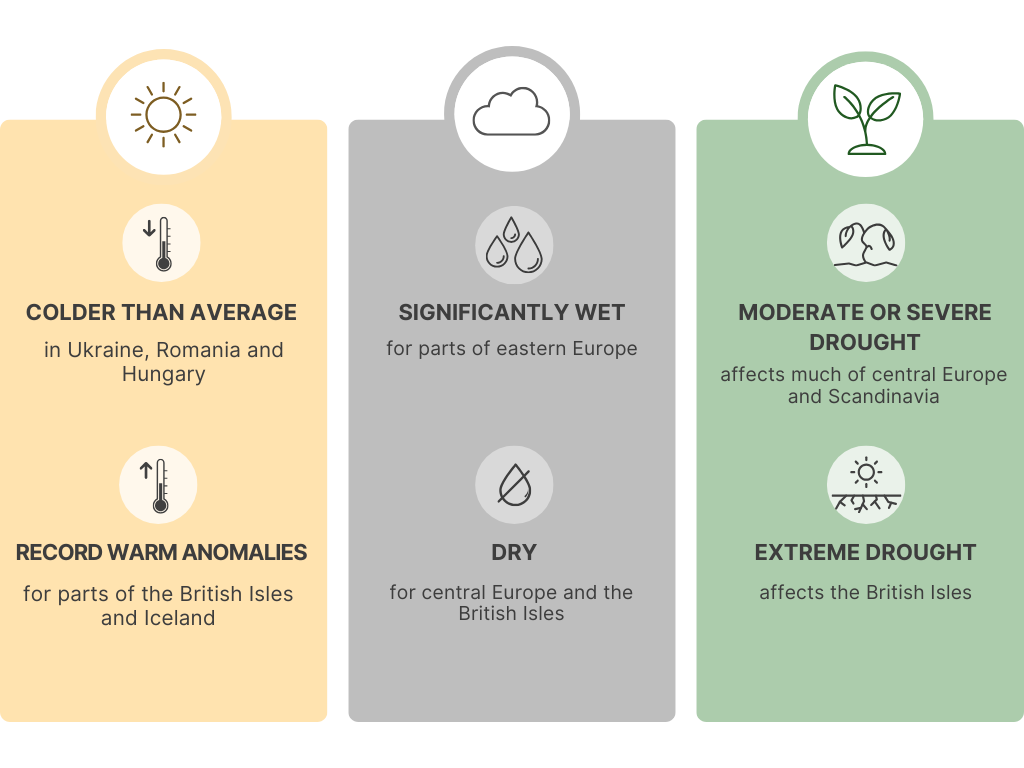
- Most of eastern Europe experienced a colder than average May, with anomalies of up to -4°C in Ukraine, Romania and Hungary. At the same time, parts of the British Isles and Iceland saw record warm anomalies.
- In terms of precipitation, May was significantly wet for parts of eastern Europe and dry for central Europe and the British Isles. Weak deviations from climatology characterised the rest of Europe.
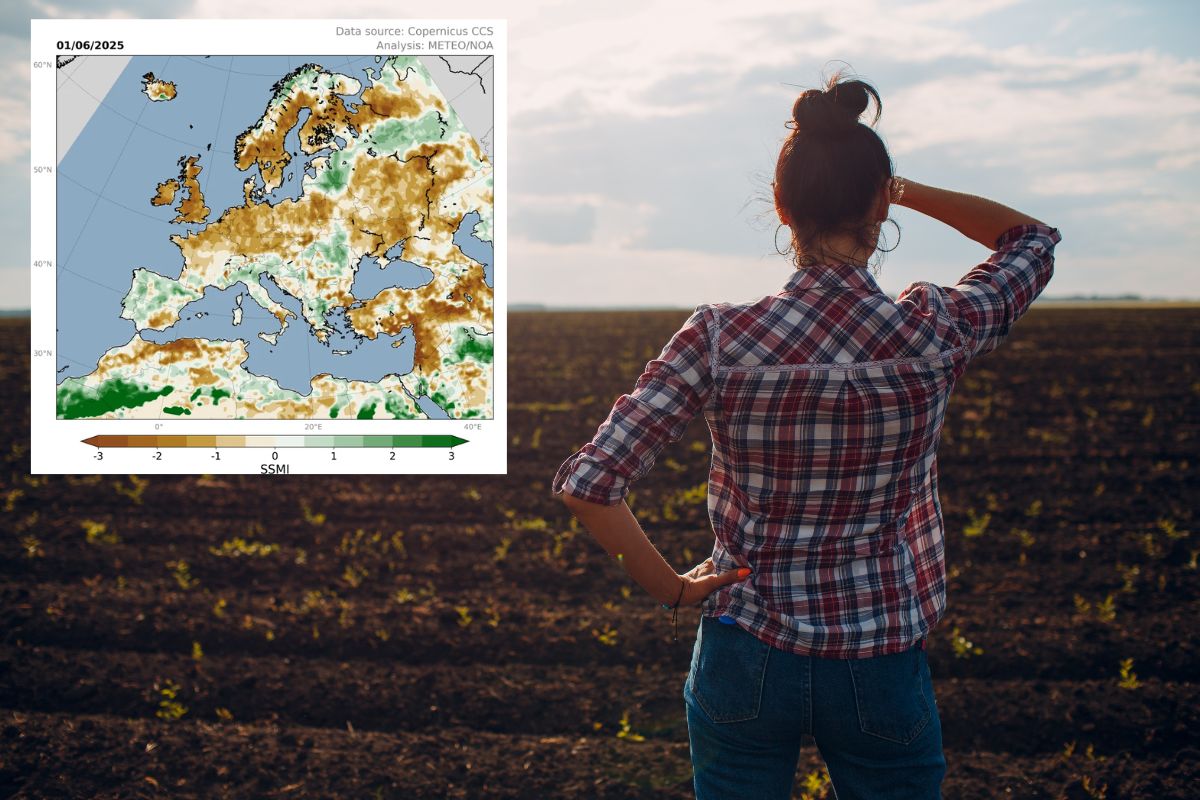
- A state of moderate or severe drought affects much of central Europe and Scandinavia, based on the June 1st soil moisture conditions (Fig. 1). Extreme drought conditions affect the British Isles. The aforementioned excess of rainfall in much of eastern Europe during May improved the soil moisture conditions from severely dry to near-normal levels.
Seasonal Outlook – Forecasts for July-September 2025
The key points of the seasonal forecasts issued in early June 2025 for the July-September period in Europe are summarised below:
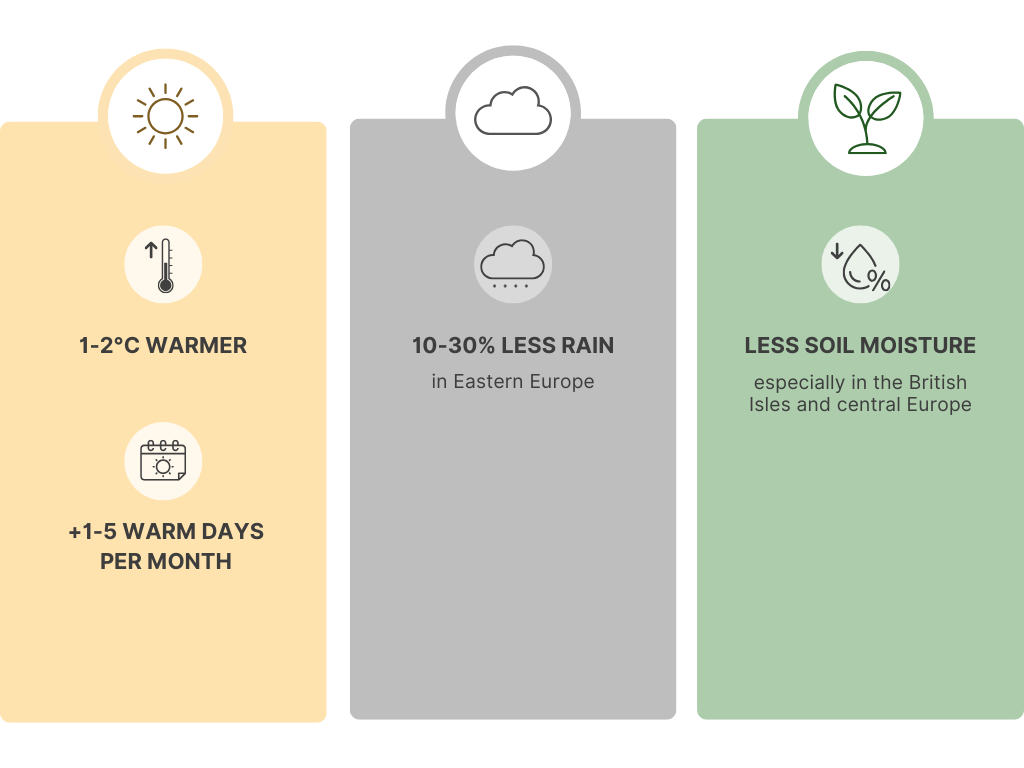
- Most of Europe is projected to be 1-2°C warmer than average, with the strongest anomalies expected in eastern and central Europe (Fig. 2).
- While the day-to-day weather evolution of the coming months cannot be foreseen, an increase of 1-5 Warm Days (i.e., days when the daily maximum temperature exceeds the climatological 90th percentile) per month is expected almost throughout Europe.
- In terms of the total summer precipitation, the mean of all examined scenarios results in negative anomalies of 10-30% for parts of eastern Europe and the Iberian peninsula, while only weak signals emerge for the rest of the continent (Fig. 2).
- Given the state of the climate and the aforementioned forecasts, negative soil moisture anomalies are projected to persist in much of Europe and especially the British Isles and central Europe.
Considering the complexity of the Earth system, seasonal forecasts are characterised by large uncertainty. Daily and local weather conditions may differ significantly from the monthly average conditions in a broader region.
Access the complete seasonal outlook report
Important note: Seasonal forecasts are intended for informational purposes only and should not be interpreted as precise predictions. The team accepts no liability for any decisions or actions taken based on this information.
The Wikifarmer team of agronomists uses the data presented above to make some data-driven assumptions about how these conditions may affect the crops growing across Europe for the indicative period, highlight possible risks that may arise, and advise farmers on management measures.
Agricultural Weather Outlook and Advice: July–September 2025
Eastern and Central Europe (e.g., Ukraine, Romania, Hungary, Poland, Moldova)
Main crops: Wheat, barley, maize, sunflower, sugar beet, vegetables
Forecast:
- Temperatures are expected to be 1–2°C above average, with a 50–80% probability of a "warm month" in July and August.
- Precipitation will likely be 10–40% below normal, especially in July and August, leading to persistent negative soil moisture anomalies.
Risks:
- Maize and sunflowers are particularly vulnerable to heat and drought during flowering and grain filling. Expect bigger problems (some yield reduction and crop stress) in non-irrigated fields.
- Sugar beet and vegetables may suffer from water stress, affecting both yield and quality.
- Wheat and barley (if still in the field for late harvest) could face shriveled grains and lower protein content if exposed to heat above 35°C.
Advice:
- Prioritize irrigation for maize, sunflower, and vegetables; monitor soil moisture and consider deficit irrigation if water is limited.
- If these conditions are more and more frequent (from year to year), you might need to consider adopting new practices to conserve soil moisture, such as mulch and reducing tillage.
- To avoid these risks, you may also need to consider adjusting planting dates and selecting drought-tolerant hybrids for future seasons.
- Monitor for pests (e.g., spider mites and aphids) that thrive in hot, dry weather. Expect some sifting in the population of pests favored by these conditions (maybe a higher population, more generations, or earlier infestations). New pest threats may also arise.
Southern Europe (e.g., Spain, Italy, Greece, Bulgaria)
Main crops: Olives, grapes, citrus, tomatoes, maize, sunflowers, vegetables
Forecast:
- Above-average temperatures (+1–2°C), with frequent heatwaves likely.
- Rainfall 10–40% below average, especially in the Iberian Peninsula and Balkans.
Risks:
- Grapes and olives: Accelerated ripening, smaller fruit size, and increased risk of sunburn.
- Tomatoes and vegetables: Blossom-end rot and reduced fruit set due to heat and water stress.
- Maize and sunflowers: High risk of yield loss during flowering and grain-filling.
Advice:
- Be ready to harvest grapes and olives earlier if ripening is accelerated; monitor for quality issues. – More sugars may be expected to accumulate in grapes, which can negatively affect the quality of wine varieties. In extreme and prolonged high-temperature conditions, the olive oil produced may have higher acidity. On the other hand in temperatures above 38oC the problems of the olive fruit fly (Dacus) may be decreased, favouring the tree and the farmer.
- Apply shade nets or whitewash to protect fruit crops from sunburn. You may need to alter the pruning you apply in order to leave sufficient canopy (branches and leaves) to shade fruits and even the tree trunk.
- Irrigate efficiently—use drip systems and irrigate at night to minimize evaporation.
- Monitor for water restrictions and plan for alternative water sources if possible.
Western and Northern Europe (e.g., UK, France, Germany, Scandinavia)
Main crops: Wheat, barley, oats, potatoes, rapeseed, grass for livestock
Forecast:
- Warmer than average (+1–2°C), with increased frequency of "warm days."
- Central and northern UK, Scandinavia, and northern Germany: Dryer than normal with ongoing drought; some areas may see more storms and localized heavy rainfall.
Risks:
- Spring cereals and potatoes: Reduced growth and lower yields if irrigation is not available.
- Grasslands: Poor regrowth affecting fodder supplies for livestock.
- Winter cereals (if harvest is delayed): Lodging and quality loss in case of heavy rainfall.
Advice:
- Prioritize irrigation for potatoes and high-value vegetables. Advise local agronomists to learn when and how to irrigate more efficiently (correct amount and time)
- Monitor grass growth and plan for supplementary feed if pastures are poor.
- Harvest winter cereals promptly to avoid quality loss from late-summer storms.
- Check abstraction licenses and explore water rights trading if facing water shortages.
Nordic Region (e.g., Sweden, Finland, Denmark)
Main crops: Wheat, barley, oats, potatoes, grass
Forecast:
- Warmer and drier than average; risk of "micro-droughts" (3–4 weeks without rain) especially early in the season.
Risks:
- Cereal crops: Short-term droughts may reduce grain filling and quality.
- Potatoes and vegetables: Higher risk of scab and poor tuber development if irrigation is insufficient.
Advice:
- Monitor for drought stress and irrigate during critical growth stages if possible.
- Check for available varieties that are more drought-tolerant and consider testing them in a small area in your field for future use on a larger scale if the results are good.
- Scout for new pests and diseases favored by warmer conditions.
General Recommendations for All Regions
- Review water storage and irrigation plans; consider investing in on-farm reservoirs or rainwater harvesting.
- Adjust crop rotations and future planting based on water availability and heat tolerance.
- Communicate with buyers early about potential quality or yield issues.
- Stay updated with local extension services and weather alerts for rapid response to extreme events.
Summary:
Expect a hotter and drier summer than usual across most of Europe, with the greatest risks for maize, sunflower, vegetables, and grasslands in eastern, central, and southern regions. Efficient water use, timely harvests, and crop protection measures are essential to minimize losses and maintain farm profitability.
Further reading
The impact of the July 2025 heatwave on crops across southern europe
How EU farmers can overcome the 2025 Stone fruit shortage: Market tactics & orchard recovery steps
Summer Fertilization and Plant Protection Under High Temperatures: Essential Strategies for Farmers
Smart Harvesting & Market Moves for Mediterranean Watermelons in the 2025 EU Season
How to protect olive trees from heat and drought stress during summer months
Mastering potato harvest in 2025: Pre-harvest protocols & post-harvest success for EU growers