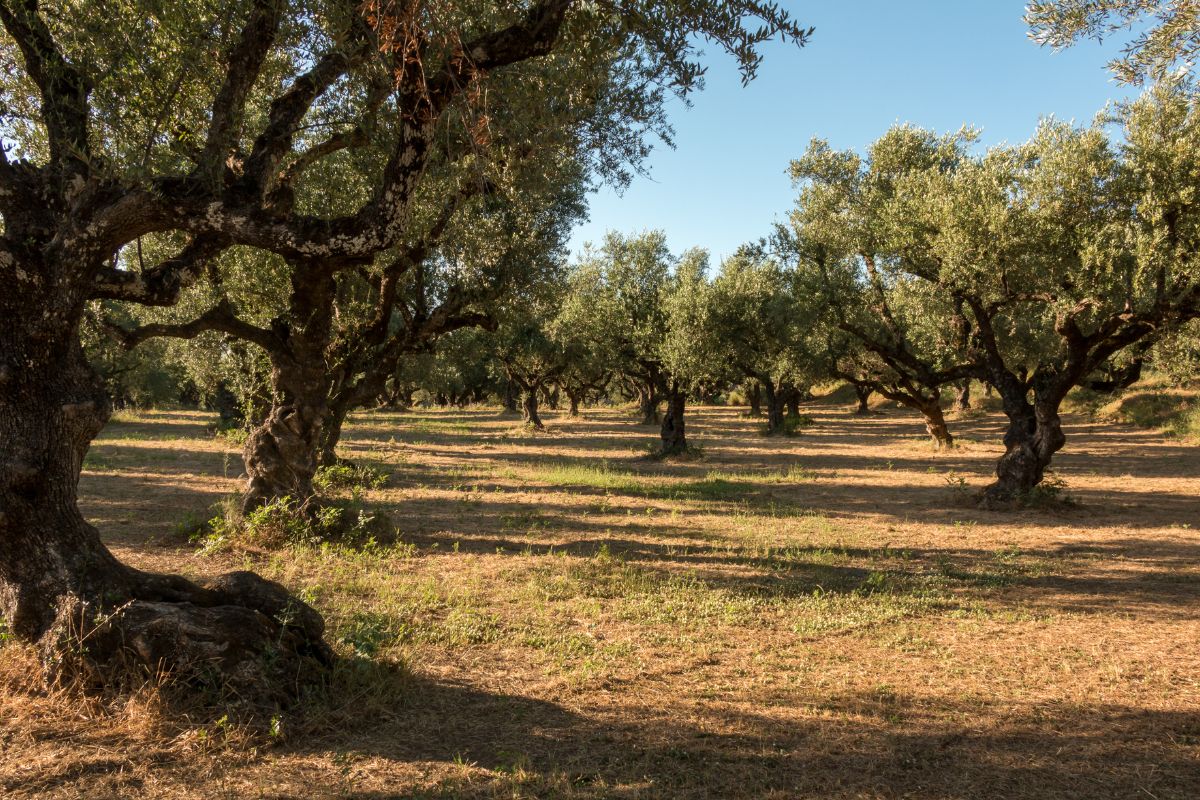
Climate change is reshaping the Mediterranean landscape, bringing earlier, longer, and more intense periods of heat and drought each year. Olive growers are facing unprecedented challenges as these extreme conditions threaten both the yield and quality of their crops. From May to September, farmers must be proactive and strategic to safeguard their olive trees against stressors that can compromise flowering, fruit set, and overall tree health.
Temperatures That Stress Olive Trees
Olive trees are well-adapted to Mediterranean climates, thriving best when temperatures remain between 21°C and 29°C (70°F–85°F). However, stress begins to manifest when:
- Temperatures consistently exceed 30°C (86°F): Photosynthesis efficiency drops, impacting fruit formation and oil quality.
- Above 35°C (95°F): Growth and physiological processes are significantly reduced, especially during flowering and fruit set.
- Prolonged exposure to 40–42°C (104–108°F): Severe stress can occur, leading to fruit drop, leaf scorch, and potential tree decline.
These thresholds are particularly critical from late spring through early autumn, with the most sensitive periods being flowering (May–June) and fruit development (July–September).
Key Practices to Reduce Heat and Drought Stress
1. Efficient Irrigation Management
Olive trees can be irrigated with many different ways like furrow or basin irrigation sprinklers, or more with systems of higher precision like drip irrigation. Farmers in the Mediterranean (Spain, Italy, Greece but also Turkey, and Tunisia), especially in areas with water shortage and in fields with steeper slopes have already started using drip irrigation on a large scale. This system is highly efficient and useful in helping the trees to cope with the 2 major stresses during the warm summer period in these areas: drought and heat.
Drip Irrigation is the most effective system for olive groves, delivering water directly to the root zone and minimizing evaporation.
- Young Trees (0–1 year): Require about 4-8 litres (1-2 gallons) per week, adjusted for local conditions.
- Mature Trees (5+ years): Deep watering is recommended, with mature trees needing 150–400+ gallons (570–1,500 liters) per watering session, typically every 1–2 weeks, depending on soil type and weather.
- Schedule: Water deeply but infrequently—once or twice per week for young trees, and every 10–14 days for mature trees during peak summer. Adjust frequency based on rainfall and soil moisture monitoring.
The benefits of deficit irrigation for olive trees
What is deficit irrigation?
Deficit irrigation is an agricultural water management strategy where water is applied at levels below the full crop water requirements, intentionally allowing mild water stress during less sensitive growth stages to maximize water use efficiency and stabilize yields, especially under conditions of limited water availability.
Applying 50–75% of the crop's evapotranspiration needs, especially when combined with mulching, can maintain growth while conserving water.
This irrigation strategy has been proven especially beneficial for olive groves. Recent studies show that regulated deficit irrigation (RDI) can save 25–30% of irrigation water in olive orchards with only a slight (10–15%) reduction in fruit yield, while also improving water use efficiency by 5–20%. Research on Jordanian olive cultivars further found that applying deficit irrigation had no negative effect on vegetative growth or yield, and using 65% of crop evapotranspiration achieved the highest water-use efficiency among tested treatments.
To further minimize losses from evaporation, prefer to irrigate early in the morning before temperature rises. In areas where farmers have access to water for only a few and predefined hours it is important to plan ahead to make the best use of it.
2. Mulching and Soil Management
Many olive growers use tillage to control weeds on their fields (especially in organic systems). However, soil disturbance during the warmest summer months may lead to soil moisture loss. Instead, mowing during this period is much more effective. At the same time, the low vegetation can function as a living mulch (soil cover) helping to maintain soil moisture for longer periods. Organic Mulch can also be applied for this purpose. Applying a 5–10 cm layer of straw, wood chips, or compost around the base of trees (but not touching the trunk) can help:
- Retain soil moisture
- Reduce soil temperature
- Suppress weeds
- Improve soil structure over time
3. Foliar Applications for Heat Protection
- Kaolin Clay Sprays: Applying a fine film of kaolin (3–10 kg per 100 liters of water) on the canopy reflects sunlight, reduces leaf temperature, and minimizes sunburn and fruit drop. Studies show this can boost fruit yield by up to 17% and improve oil quality.

- Other Products: Foliar sprays based on glycine betaine, seaweed extracts, or wood distillates can enhance plant resilience to physiological stress by regulating water loss and supporting metabolic functions.
We strongly advise you to contact and consult your local licensed agronomist to choose the best product for each case.
4. Shade and Canopy Management
While old tree are generally more resistant (and shade with nets is almost impossible), young trees might be benefitted by installing shade nets or using companion planting (shading from mature olive trees) to reduce direct sun exposure during peak heat.
Farmers should avoid pruning during these warm months because this will further stress the plants. However, maintaining an open canopy to improve air circulation and leaving some leaf area to offer shade can be beneficial. These actions should be pr-programmed and executed during the winter (main) pruning.
5. Fertilization and Soil Health
- Balanced Nutrition: Farmers should ensure adequate potassium and micronutrients, which are essential for drought tolerance and fruit development. Avoid excessive nitrogen during drought, as it can exacerbate stress.
- Organic Amendments: Incorporating compost or well-rotted manure to improve water retention and soil fertility, can help reduce stress.
Olive Varieties: Sensitivity and Tolerance
With these extreme weather conditions to become the new normal, olive growers should select with more caution the varieties they choose to plant.
Not all olive varieties respond equally to heat and drought stress. Selecting or grafting more resilient cultivars can be a long-term adaptation strategy.

Recent research ranks varieties like Chemlali, Arbequina, Picholine, and Giarraffa among the most drought and heat tolerant, while Maurino and some local Greek varieties (e.g., Koroneiki) are more sensitive.
How to help your olive trees recover from heat and drought stress
It is very common to have very high temperatures coming in waves during summer. After a heatwave, farmers are advised to take some management practices to help the trees recover. The first action is to thoroughly rehydrating the soil with careful, deep irrigation, avoiding sudden overwatering that could shock the roots. Damaged or scorched leaves and branches should be pruned to reduce the tree’s energy demand and minimize the risk of disease. Applying a balanced post-stress fertilization, especially with potassium and essential micronutrients, will support the trees’ recovery and encourage healthy new growth.
Farmers should also replenish mulch and organic matter around the base of the trees to improve soil health and moisture retention. Foliar sprays containing substances such as salicylic acid or kaolin can be used to further support recovery by protecting leaves and enhancing the trees’ natural stress responses. Lastly, it is important to review and adjust orchard management practices and irrigation schedules based on the lessons learned during the stress period, ensuring greater resilience to future episodes of heat and drought.
Conclusion
With Mediterranean summers growing hotter and drier, olive growers must adapt by combining efficient irrigation, mulching, protective foliar sprays, and careful variety selection. By implementing these practices, farmers can reduce stress on their olive trees, protect yields, and ensure the sustainability of their groves in a changing climate.
Being prepared and proactive is now essential for every olive farmer. The resilience of the olive tree is legendary, but with climate change, it needs all the help it can get to continue thriving in the Mediterranean landscape.
References and Further reading
Adaptation Mechanisms of Olive Tree under Drought Stress: The Potential of Modern Omics Approaches
Olive Tree Drought Stress a Systematic Review – Iwaponline
Deficit irrigation for reducing agricultural water use
USiena AIR — University of Siena research archive
https://www.scirp.org/journal/paperinformation?paperid=60353
Factors Affecting the Quality of Olive Oil
Soil Management in Olive Farming
Olive Tree Climate - Temperature Requirements