Mediterranean Tomato Harvest 2025: Best Practices & Market Outlook
As June unfolds across the Mediterranean, tomato fields from Spain to Greece are alive with activity. This is the pivotal month when the first flush of ripe, sun-warmed fruit signals the start of the main harvest season for open-field tomatoes. For growers, this period is not just about picking fruit at its peak but also about making critical decisions that will determine the quality, shelf life, and profitability of their crop. Here, we present a comprehensive guide for Mediterranean tomato farmers, covering best practices for harvest and post-harvest management, and offering a market outlook for 2025, so you can make the most of this crucial window in the crop calendar.
How 2025’s Weather Patterns Are Impacting Mediterranean Tomatoes
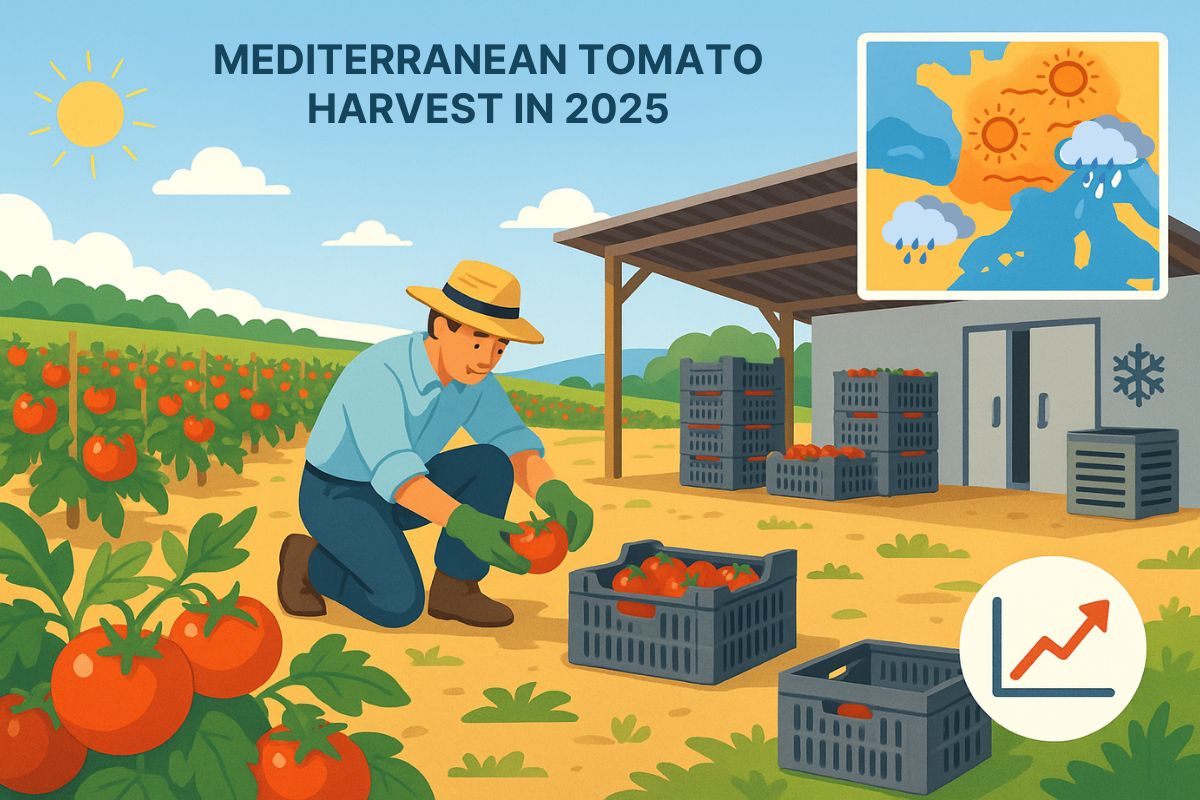
The 2025 Mediterranean tomato season has been heavily influenced by unusual weather patterns, resulting in both delays and reductions in harvests across the region. Spain and Portugal experienced exceptionally heavy winter and spring rains, which, while replenishing water reserves after years of drought, delayed planting by several weeks and compressed the growing calendar. In contrast, much of southern Europe, the Balkans, and the Black Sea region faced a warmer and drier than average spring due to a marine heatwave, leading to expanding drought conditions and increased irrigation needs. The eastern Mediterranean, including Greece and Turkey, saw above-normal temperatures and sporadic rainfall, creating mixed outcomes for growers and increasing the risk of heat stress on crops.
Italy’s situation was split, with the north expecting increased production thanks to better spring weather and water management, while the south continued to struggle with drought, limiting yields. France and Spain are both forecasting significant drops in tomato output for 2025 compared to last year, with Spain’s harvest expected to fall by nearly 700,000 tonnes. Overall, the region anticipates an 11.5% decline in tomato production compared to 2024. These weather-driven challenges are likely to impact both the timing and quality of the crop, as well as market prices and availability throughout the season.
Where the Harvest Begins: Regional Overview and Leading Varieties
In the European Union, June marks the onset of open-field tomato harvesting in southern Spain, southern Italy (notably Sicily and Apulia), Greece, and parts of southern France. These regions benefit from early warmth and long days, allowing field-grown tomatoes to mature ahead of their northern counterparts. The majority of tomatoes harvested at this time are destined for the fresh market, with open-field production dominating in these Mediterranean zones.
Among the most prominent varieties, cherry tomatoes are especially popular, holding an estimated 26.9% market share in 2025 due to their versatility and consumer appeal. Specialty varieties such as Adora (a brown tomato prized for its unique flavor and high antioxidant content) have also gained traction in Spain, while Italy and France see success with ribbed and heart-shaped types like Buffalopink F1 and Flamansun. These varieties are typically grown in open fields, though some specialty and early-season tomatoes are produced under cold covers or unheated greenhouses to extend the harvest window.
The 2025 Tomato Market: Stability and Rising Value
Looking ahead to 2025, the European market for fresh tomatoes remains stable in terms of production, but its value continues to rise. This is driven by increasing diversity in varieties, consumer demand for specialty and sustainably produced tomatoes, and ongoing trends toward healthy eating. Imports remain essential to meet demand, especially in northern Europe, but Mediterranean producers retain a competitive edge during the summer months when their open-field crops are at their peak.
Prices for fresh tomatoes have been buoyed by higher production costs and inflation, but demand remains strong, particularly for high-quality and specialty types. The market is expected to grow at an annual rate of 1–3% over the next five years, with cherry and specialty tomatoes leading the way in consumer preference. Producers who focus on quality, careful handling, and innovative varieties are well-positioned to benefit from these trends.
Best Practices for Harvesting Tomatoes: Timing, Technique, and Field Hygiene
The timing of harvest is critical. In the Mediterranean, field tomatoes mature rapidly as temperatures climb. For local markets, the optimal harvest stage is when fruit is fully colored but still firm—this ensures the best flavor and shelf life. For export or longer-distance transport, harvesting at the “breaker” stage (when the fruit just begins to change color) is advisable, as tomatoes will continue to ripen off the vine without becoming overripe by the time they reach consumers.
Harvesting should be done during the coolest parts of the day—early morning or late afternoon—to minimize field heat, which can accelerate spoilage. Gentle handling is essential: fruit should be picked by lifting, twisting, and pulling to avoid tearing the skin. Harvesters should use clean hands or gloves, and containers must be smooth and clean to prevent bruising or contamination. Wet fruit should be avoided, as moisture can promote fungal growth.
Field hygiene cannot be overstated. Damaged or diseased fruit should be removed promptly to prevent the spread of pathogens. Harvesters must keep fingernails trimmed and hands clean, further reducing the risk of injury to the fruit.
Immediate Post-Harvest Handling of Tomatoes: From Field to Packing Shed
Once picked, tomatoes are at their most vulnerable. The transition from field to packing area is a critical phase where much of the potential for post-harvest loss is determined (losses in this stage can reach up to 25% even in developed countries). Tomatoes should be placed gently into clean, stackable plastic crates or pails—never sacks or rough baskets that can bruise or puncture the fruit. Overfilling containers should be avoided, as the weight of upper layers can crush those beneath.
Harvested fruit should be moved to a shaded area immediately to protect it from the sun and reduce field heat. Even a simple tarpaulin or shade structure at the field’s edge can make a significant difference. If possible, pre-cooling, removing the field heat from the fruit, should be done as soon as possible to slow down ripening and reduce the risk of spoilage.
Sorting, Grading, and Cleaning Tomatoes: Preparing for Market
Before tomatoes are packed for market, they must be sorted and graded. This involves separating fruit by size, color, and ripeness, and removing any that are damaged, diseased, or overripe. Grading ensures uniformity, which is highly valued by buyers and can command premium prices.
Cleaning is also important. Tomatoes should be gently wiped or washed to remove dirt, using clean water and avoiding prolonged soaking. In areas with high disease pressure, a mild disinfectant may be used, but always ensure a final rinse with clean water.
Cooling and Storage: Extending Shelf Life
Immediately after harvest, tomatoes should be pre-cooled quickly to around 14°C (57°F) to remove field heat. For optimal storage, maintain temperatures between 12–14°C (53–57°F) and about 85% relative humidity. Green, mature tomatoes can last up to 28 days under these conditions, while fully ripe tomatoes may only keep for a few days. Avoid exposing tomatoes to temperatures below 8°C (46.4°F), as this can cause chilling injury and loss of quality.
Dynamic cooling with gentle, even airflow is crucial—store tomatoes in well-ventilated packages, leaving space between pallets and from the chamber ceiling to ensure uniform cooling. Do not store tomatoes with ethylene-producing fruits like apples or peaches, as tomatoes are highly sensitive to ethylene. For controlled ripening, ethylene treatment in specialized chambers can be used, along with careful management of carbon dioxide levels.
Only healthy, undamaged tomatoes should be stored, and regular inspection is necessary to remove any fruit showing signs of disease or chilling injury. These practices should also be followed during transportation to maintain quality until the tomatoes reach the market. By implementing these steps, growers can significantly reduce losses and protect the value of their crop.
Packaging and Transportation: Delivering Quality to Market
Proper packaging and careful transportation are vital to maintaining tomato quality from farm to market. Ventilated plastic crates are preferred, as they protect the fruit and allow airflow. For delicate or specialty tomatoes, lining crates with clean paper can provide extra cushioning.
During transport, crates should be loaded gently and not stacked excessively. Covered vehicles are ideal for protecting fruit from sun and rain. For longer distances or high-value markets, refrigerated transport can significantly reduce losses and extend shelf life.
Value Addition: Making the Most of Every Tomato
Despite best efforts, some tomatoes may be too ripe or blemished for the fresh market. Rather than letting these go to waste, consider simple processing options such as solar drying, which is popular in Mediterranean countries, or small-scale production of sauces and purees. These value-added products can provide an important additional income stream, especially during periods of surplus.
Training and Partnerships: Building Capacity for Success
Continuous improvement in harvest and post-harvest practices requires ongoing learning and collaboration. Farmers are encouraged to participate in training sessions, field days, and partnerships with traders and extension services. Understanding buyer requirements and sharing experiences with neighboring growers can help spread best practices and improve outcomes for the entire community.
Conclusion: Seizing the June Advantage
June is a decisive month for Mediterranean tomato farmers. By focusing on careful harvest timing, gentle handling, rapid cooling, and thoughtful packaging, you can protect the quality of your crop, reduce losses, and maximize returns. The market for fresh tomatoes in 2025 is stable and growing in value, especially for those who offer specialty varieties and high-quality fruit. With rising demand for both classic and innovative tomatoes, Mediterranean growers are well-placed to thrive, provided they follow best practices from field to market.
As part of our crop calendar and field tips series, this guide offers practical, time-sensitive advice tailored to the realities of Mediterranean tomato production. Apply these strategies now to ensure your tomatoes reach consumers at their best, and to secure a successful season for your farm.
References
Tomato Farming Guide: Soil Preparation, Water Management, Fertility, and Market Strategies
How to store tomatoes to minimize post-harvest losses
Tomato Processing Update – Expanamarkets
Growing Tomatoes Outdoors for Profit - Complete Outdoors Tomato Growing Guide
Further reading
Growing Tomatoes – Summary Facts
Interesting Facts about Tomato
Key Breeding Traits and Future Prospects of Processing Tomatoes
Tomato Farming Guide: Soil Preparation, Water Management, Fertility, and Market Strategies