
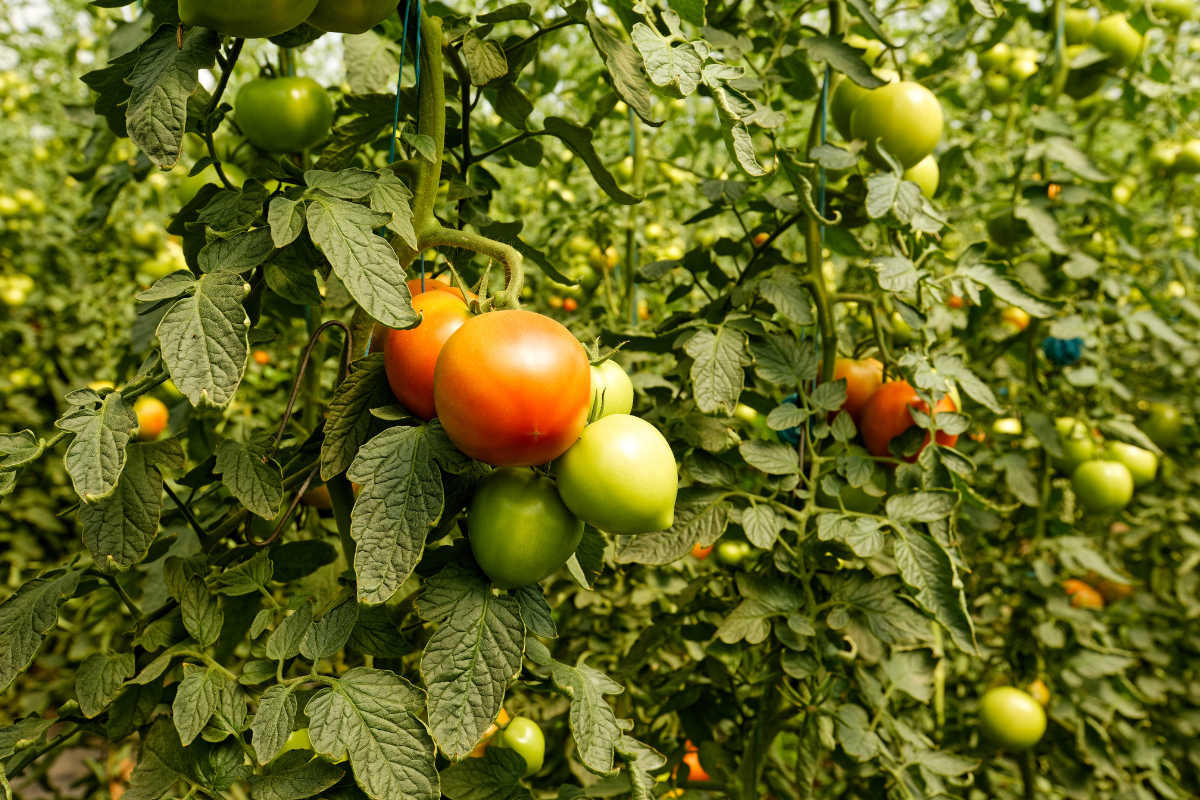
As the title suggests, in this article, we will focus on how to grow tomatoes in a sustainable and smart way. We know that tomatoes are very difficult to grow, especially concerning diseases and insects. This often leads to high costs and low yields (even just only a handful of tomatoes harvested).
A great way to grow tomatoes is by using an integrated system, which reduces long-term costs. We will divide the methods into groups:
- soil
- plant
- water
- fertility
- market
1. Soil
A great farmer should understand the basic principles of soil science. Ensure your soil has the proper nutrients to sustain tomato plants. A good way to do this is to take a soil sample for testing to determine nutrient needs and pH. Land preparation is also crucial. Before transplanting, clear the field and dig trenches about 40-50 cm deep. Fill them with cleared plant matter to help root development and water absorption.
2. Plant
For sustainable growth, you are advised to choose the right tomato variety based on your goals and local conditions. For the market, I recommend indeterminate varieties over determinate varieties (determinate varieties are dwarf; indeterminate varieties keep growing). Understand your plant's requirements: weather, nutrients, susceptible diseases, and fruit yield. After choosing an appropriate variety, you can buy seeds and start a nursery (this is cheaper than buying seedlings).
3. Water
Water management is crucial to decrease expenses, save this valuable resource, improve crop growth and production, and avoid diseases that relate to and benefit from wet conditions. Drip irrigation and mulch are the best methods for managing water supply and mitigating diseases. Controlling soil pH is also important, as improper water use can alter pH levels in your soil.
4. Fertility
Mainly defined by academics as "the ability of a soil to sustain plant growth by providing essential plant nutrients and favorable chemical, physical, and biological characteristics as a habitat for plant growth."
To sustainably create and maintain the fertility of the soil, I would recommend the use of compost and other organic amendments such as manure, green cover crops, and biochar. Compost improves soil structure, enhances microbial activity, and increases water retention capacity, which are all essential for long-term soil fertility. In addition to compost, crop rotation, and intercropping can help maintain soil fertility by preventing nutrient depletion and reducing the risk of soil-borne diseases. For example, rotating legumes like beans or cowpeas with nutrient-demanding crops can naturally replenish nitrogen levels in the soil. Another sustainable approach is mulching, which helps retain soil moisture, regulate temperature, and reduce erosion. Organic mulches, such as straw or grass clippings, gradually decompose and contribute to soil organic matter. Finally, conservation tillage practices, such as reduced or no-till farming, can help maintain soil structure and microbial diversity, further enhancing fertility.
5. Market Access
For a farmer to have a successful and/or sustainable tomato growing business, he/she must have a target market to supply his/her product and a product demands. This are essential for making the agribusiness profitable and sustainable.
To secure a stable market for your tomatoes, the farmer needs to focus on market research, diversification, and strategic partnerships.
Identifying Your Market
- Local markets: Selling fresh tomatoes to open markets, roadside stands, or local grocery stores can provide quick sales and cash flow.
- Wholesale buyers: Restaurants, hotels, schools, and supermarkets require a steady fresh produce supply. Building relationships with these buyers can provide consistent demand.
- Processing industry: Companies that produce tomato paste, sauces, and dried tomatoes need bulk supply. If farmers can meet their quality and quantity requirements, they can be a great market/partner (and establish contract farming).
- Export potential: If production scales up, exporting to neighboring countries could be an option, but this requires compliance with export standards.
Timing and Seasonality
Tomato prices, like in other food products, fluctuate depending on supply in the market. During peak seasons (with large supply), prices are usually lower. On the other hand, in the off-season (when there is not a large available product in the market), prices rise. Growing off-season tomatoes using irrigation can benefit from the lower antagonism and existing consumer demand and maximize farmers' profit.
Value Addition
To avoid losses during oversupply, consider processing some tomatoes into products like dried tomatoes, sauces, or puree, which can be sold later at better prices.
Marketing Strategies
- Branding and packaging: Good packaging and branding can make your tomatoes more attractive to supermarkets and high-end buyers.
- Direct sales and contracts: Selling directly to consumers via social media or having contracts with buyers can guarantee sales. Farmer cooperatives: Joining a cooperative can help secure bulk buyers and better prices.
- Quality Control and Consistency: Buyers prefer uniform, high-quality tomatoes. Ensuring good post-harvest handling, such as proper grading and storage, will make your produce more marketable.
Concluding remarks
Successful tomato farming requires proper soil management, variety selection, efficient water use, and sustainable fertility practices. Securing a stable market through research, timing, and value addition ensures profitability. Farmers can maximize yields and build a resilient agribusiness by adopting these best practices.