Seasonal Climate Outlooks for Europe – November 2025
Scroll through this page for an overview of the state of the climate for Europe this autumn, as well as seasonal outlooks for December 2025 – February 2026. Want to find out more? Explore the in-depth seasonal climate outlook for the month Seasonal Climate Outlook for Europe, November 2025 — Climate Strategies (PDF).
State of the Climate – October 2025 Observations
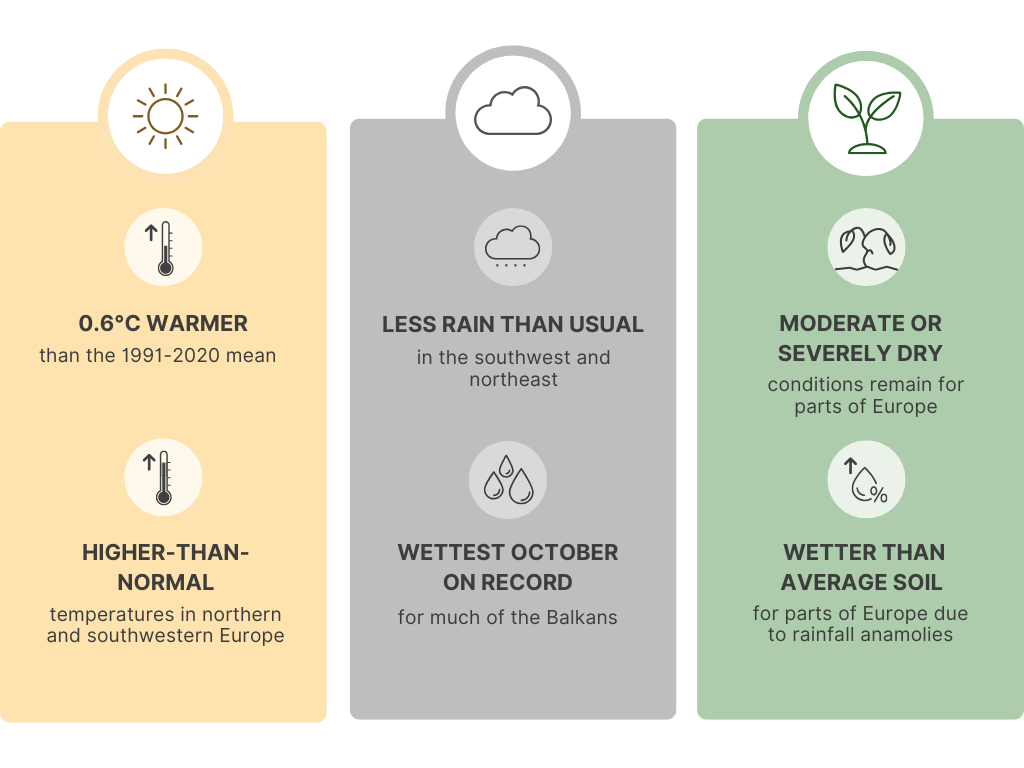
- Europe experienced a slightly warmer than average October, at 0.60°C above the 1991-2020 mean. Monthly-mean temperatures were significantly above normal in northern and southwestern Europe, while they were below normal in Italy and southeastern Europe (Fig. 1).
- In terms of precipitation, October had a mixed imprint for Europe, with negative anomalies to the southwest and northeast. Significant positive anomalies characterised southeast Europe, and it was the wettest October on record for much of the Balkans.
- While much of Europe remains moderately to severely dry (index between -1 and -2.5) in terms of the soil conditions (relative to the average conditions for this period of the year), the situation has improved in parts of southeastern Europe owing to the aforementioned precipitation anomalies. Positive soil moisture anomalies are also found in Scandinavia and parts of central Europe.
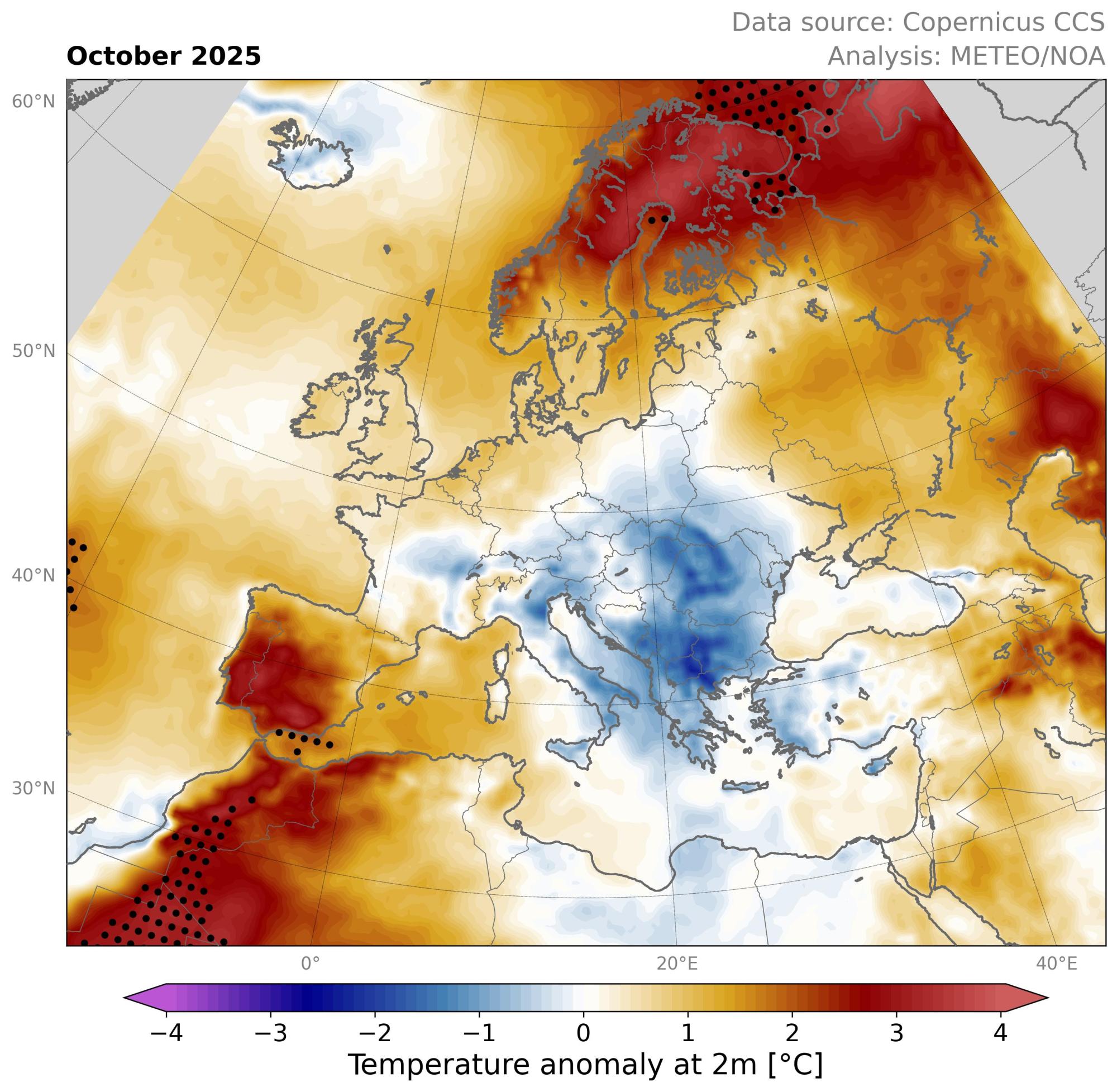
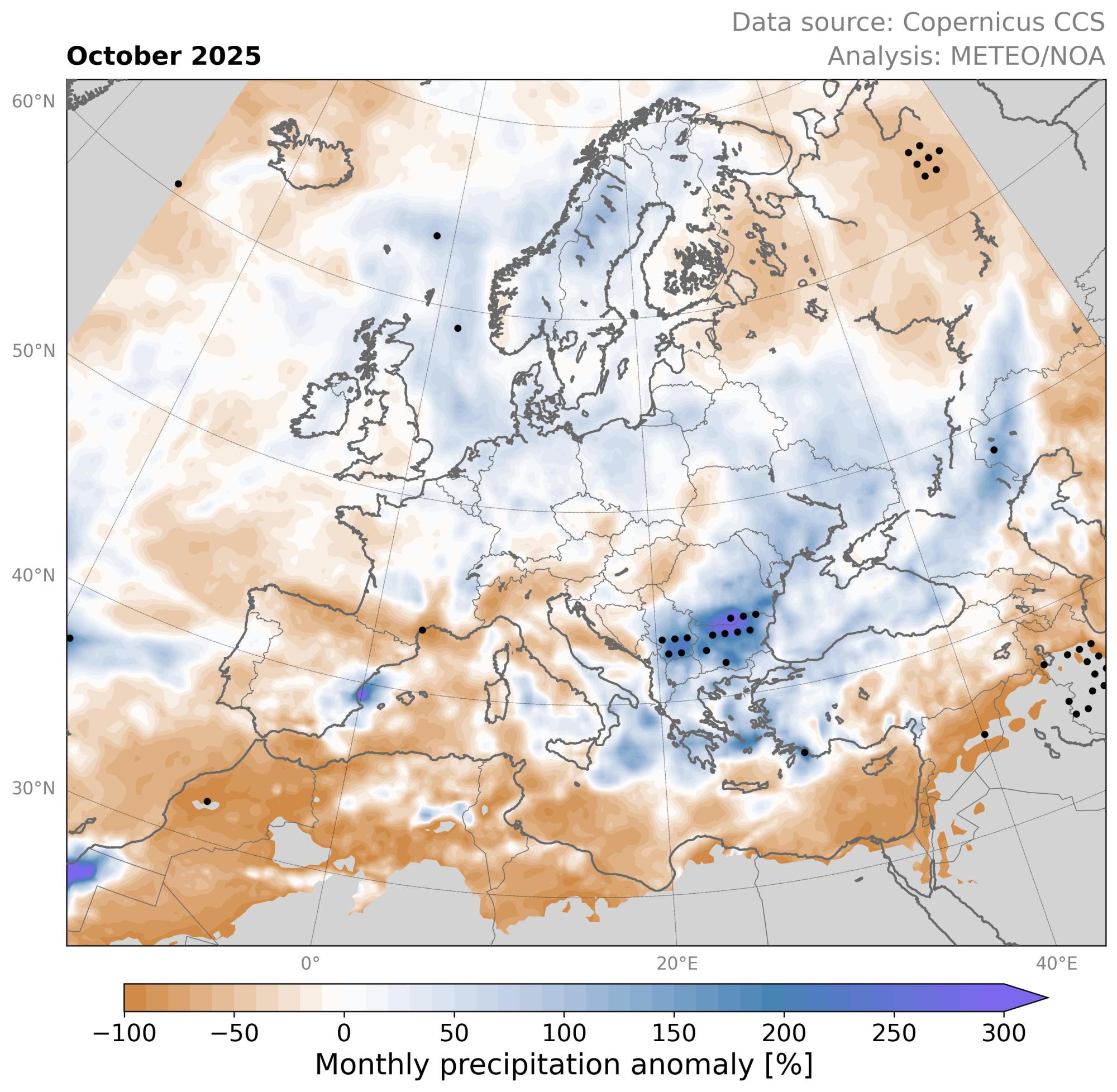
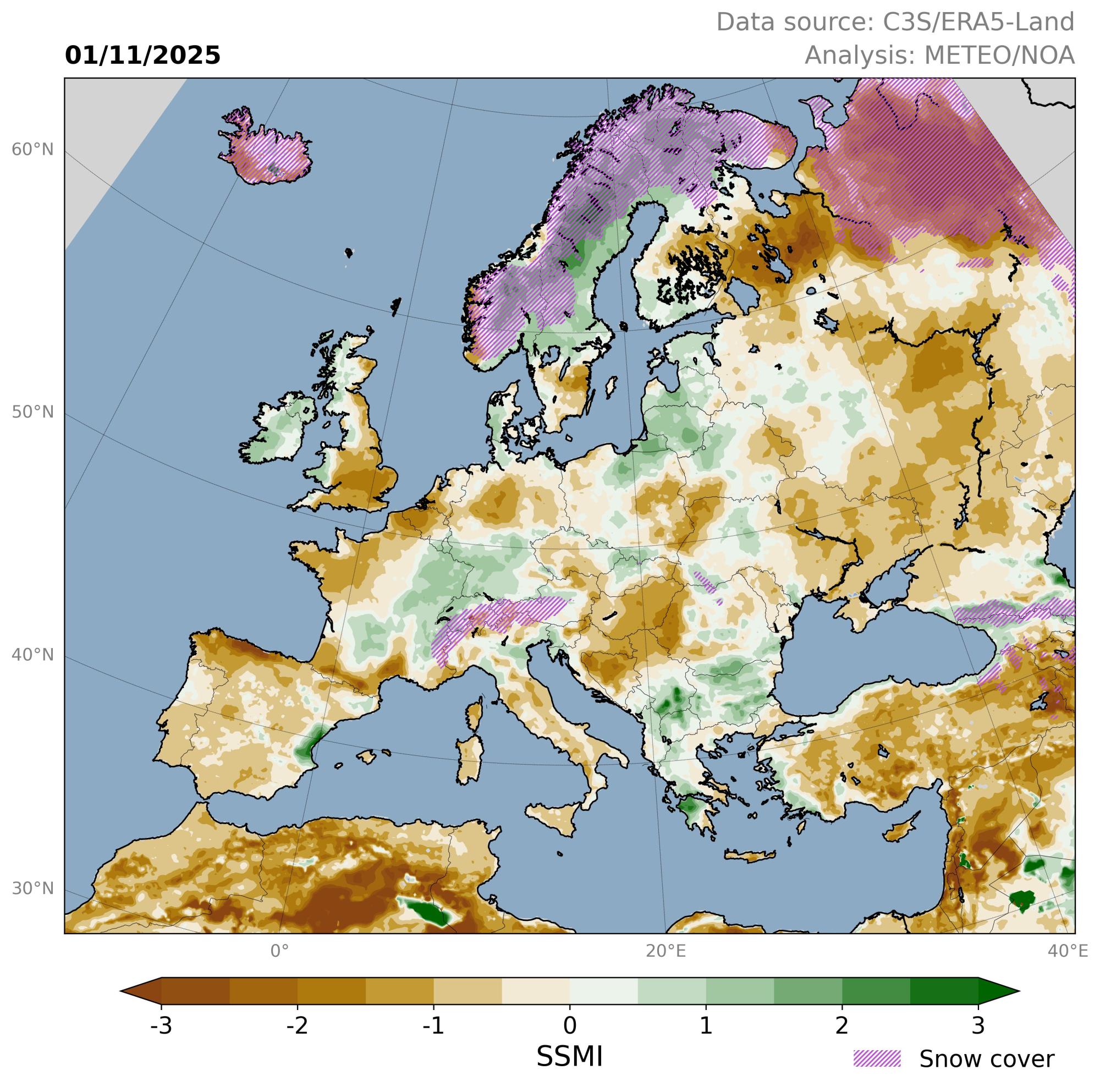
Figure 1. Agrometeorological overview of September 2025 in Europe. Top: Anomalies in temperature at 2m. Middle: Anomalies in precipitation accumulation (right) based on ERA5. Black dots indicate the areas where the observed anomalies were record-high (positive or negative) for July in the period from 1960 to today. Bottom: Standardised anomaly in soil moisture in the 28-100cm layer below surface on October 1st, 2025, based on ERA5-Land. Values below -1, -1.5, -2, and -2.5 indicate “moderately dry”, “significantly dry”, “severely dry”, and “extremely dry” conditions, respectively. Values above +1, +1.5, +2, and +2.5 indicate “moderately wet”, “significantly wet”, “severely wet”, and “extremely wet” conditions. Values between -1 and +1 reflect near-normal conditions. The climatological baseline for the computation of anomalies is the 1991-2020 period. Purple hatching indicates snow covered areas.
Seasonal Outlook – Forecasts for December 2025 – February 2026
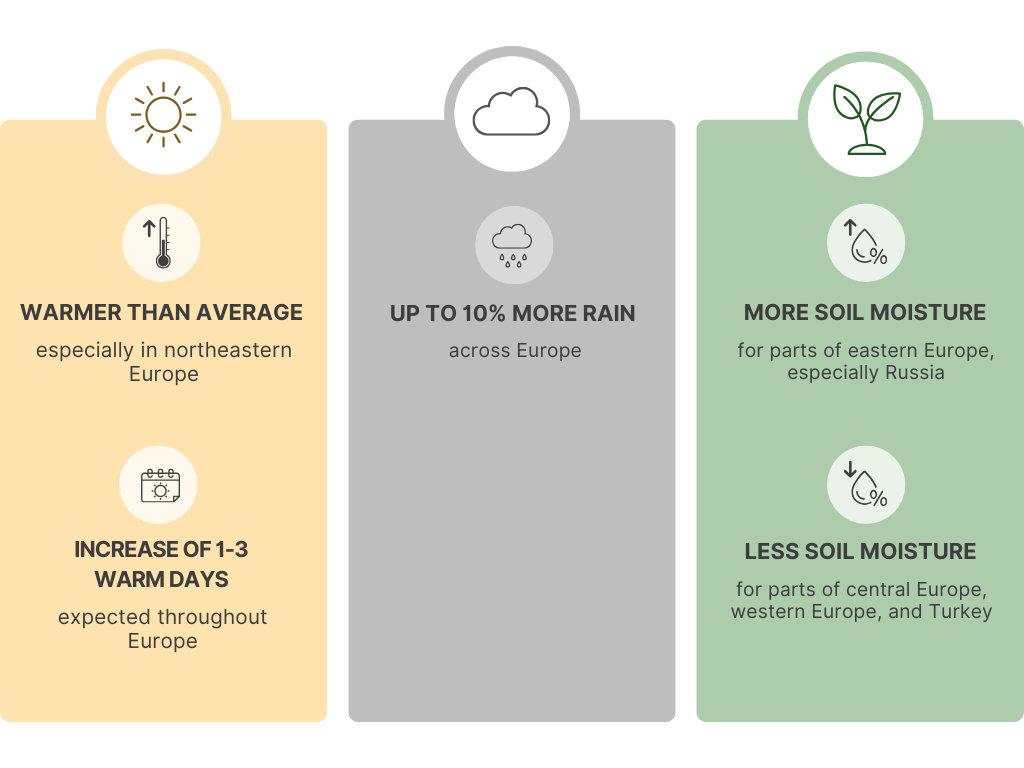
The key points of the seasonal forecasts issued in early November 2025 for the upcoming winter in Europe are summarised below:
- Europe is projected to be warmer than average, with the anomalies increasing gradually from 0.5°C in western Europe to 2°C in eastern and especially northeastern Europe (Fig. 2).
- While the day-to-day weather evolution of the coming months cannot be foreseen, an increase of 1-3 Warm Days and a decrease of 1-4 Frost Days per month are expected throughout Europe.
- In terms of the total precipitation, the mean of all examined scenarios results in weakly positive anomalies for Europe (up to +10%). This is an expected result, as winter weather systems in Europe are highly unpredictable even at shorter timescales (Fig. 2).
- Positive soil moisture anomalies are projected for parts of eastern Europe and especially Russia, while weakly negative anomalies are projected for parts of central Europe, western Europe, and Turkey (Fig. 2).
Considering the complexity of the Earth system, seasonal forecasts are characterised by large uncertainty. Daily and local weather conditions may differ significantly from the monthly average conditions in a broader region.
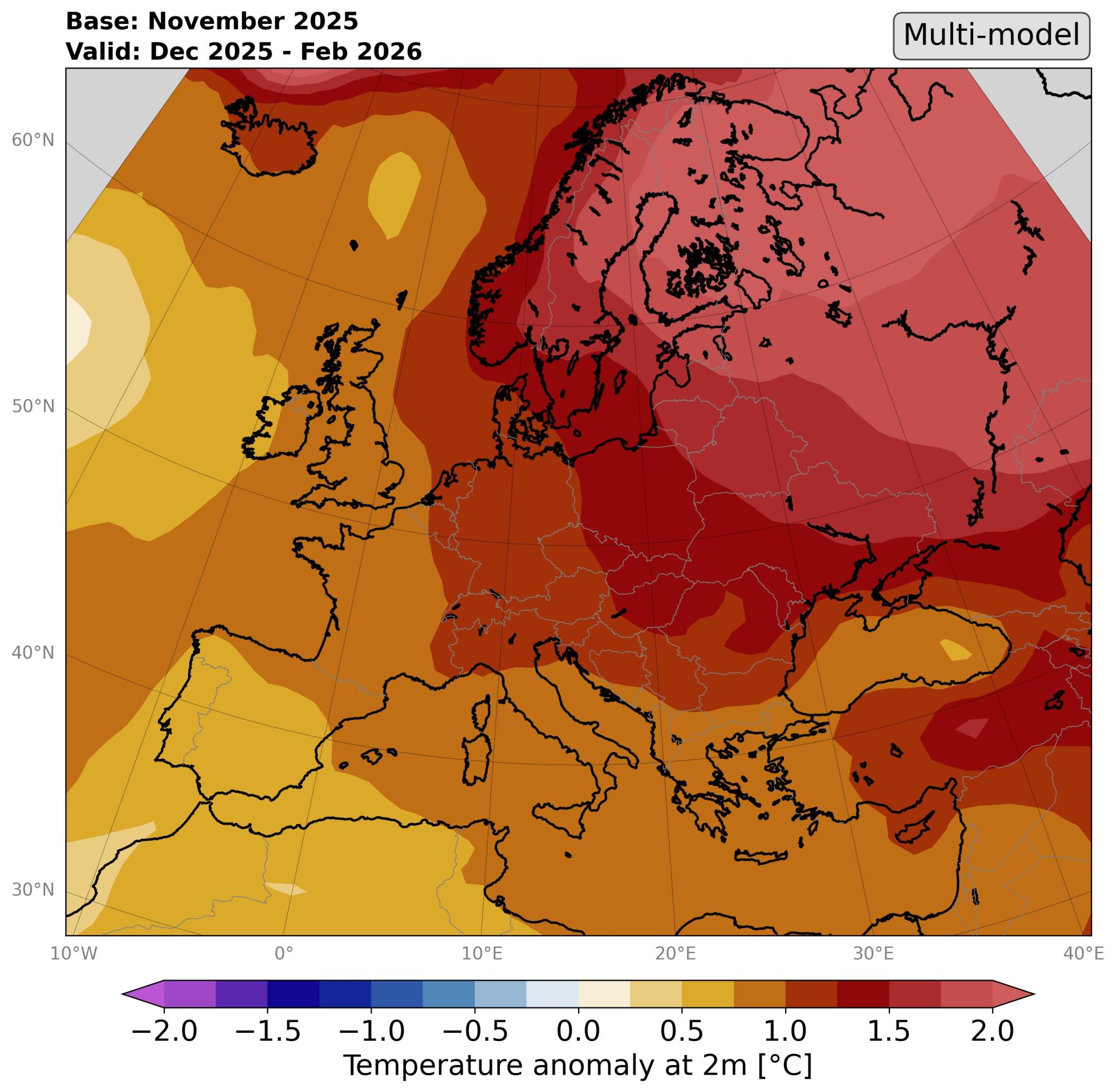
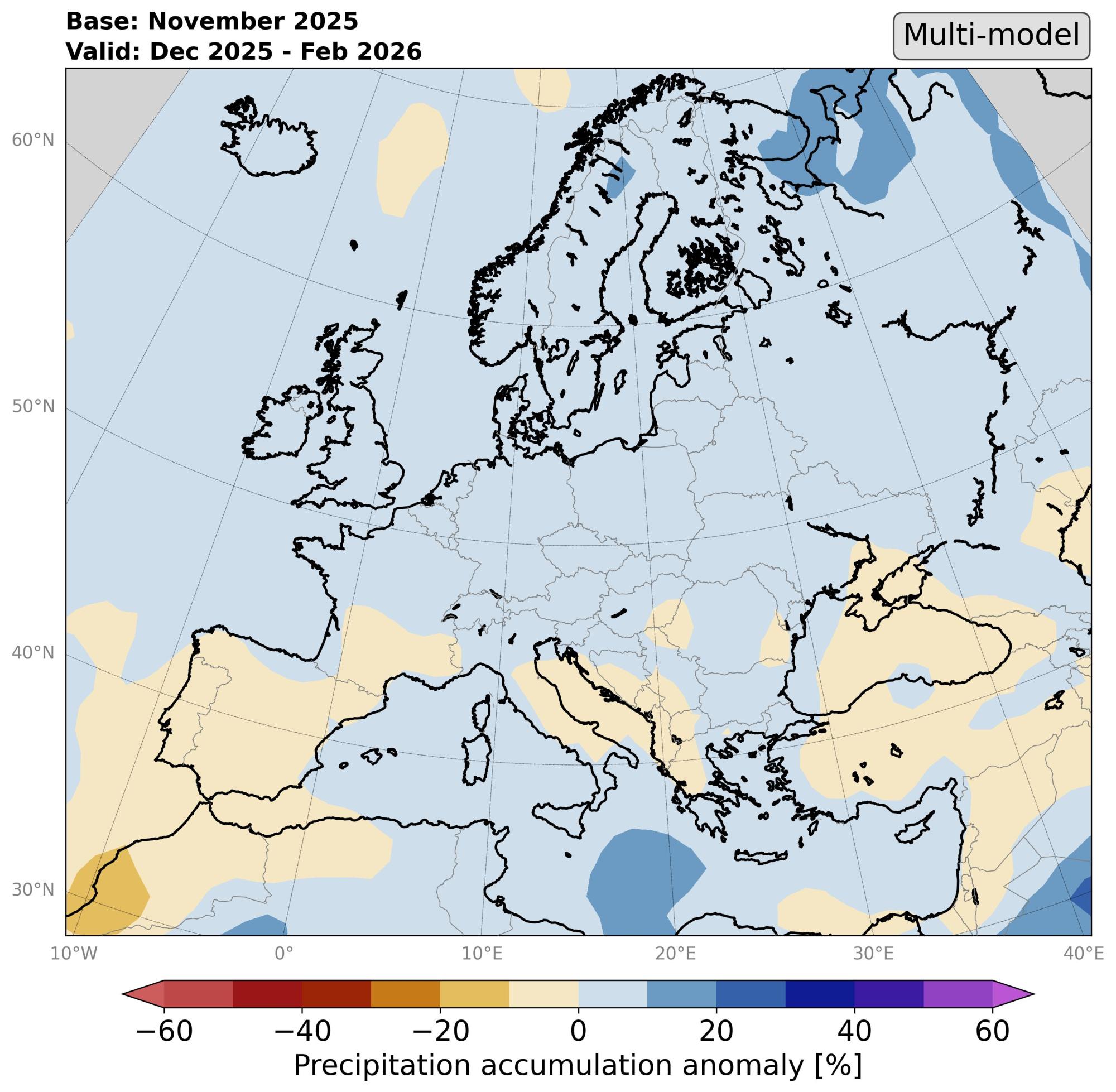
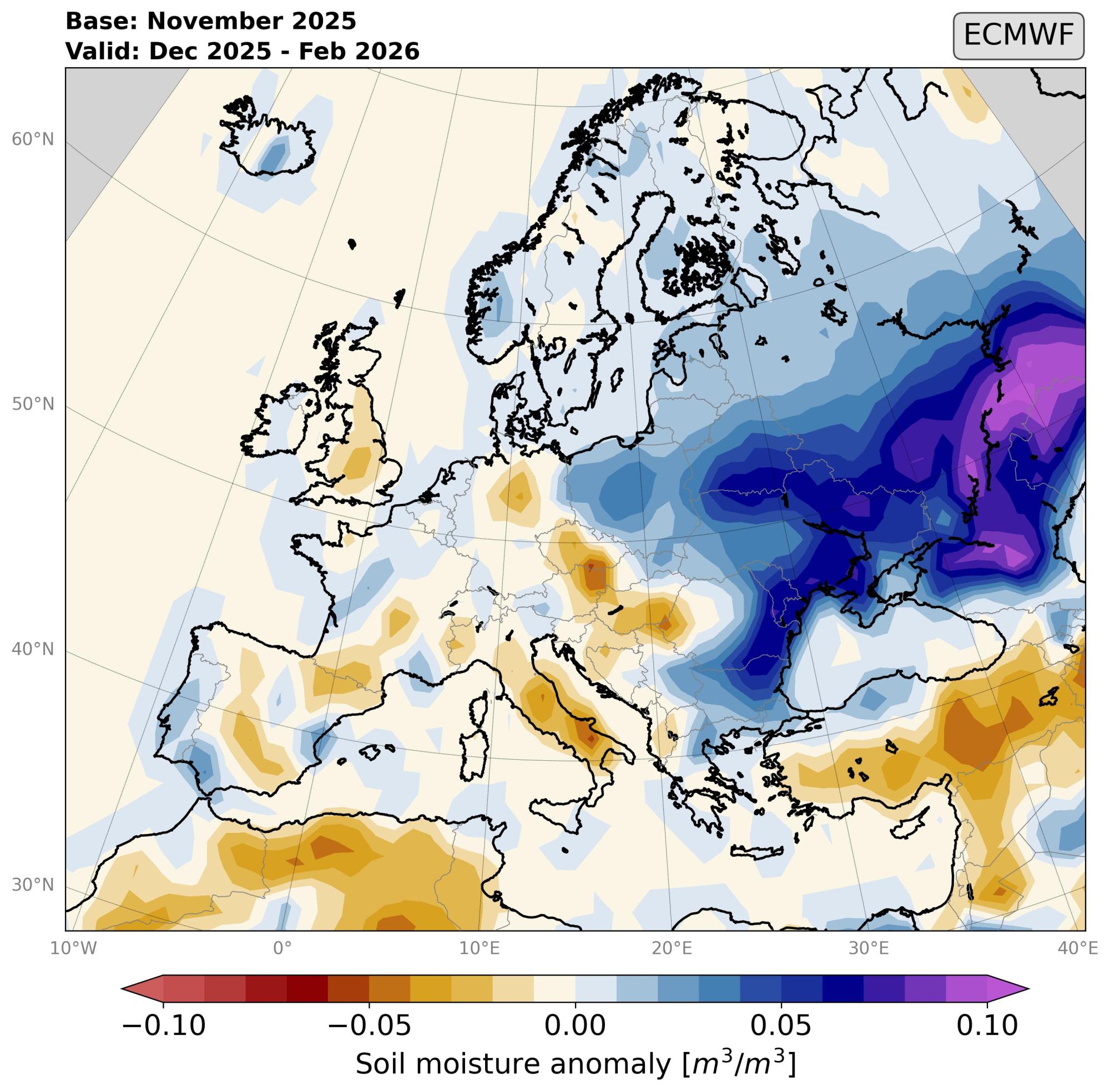
Figure 2. Climate outlook for the upcoming winter in Europe based on the seasonal forecasts issued in October 2025. Top: Multi-model mean 2m-temperature. Middle: Multi-model mean precipitation anomaly. Bottom: ECMWF soil moisture anomaly in layer-3 (28–100cm).
The Wikifarmer team of agronomists uses the data presented above to make some data-driven assumptions about how these conditions may affect the crops growing across Europe for the indicative period, highlight possible risks that may arise, and advise farmers on management measures.
Agricultural impact assessment: Winter climate outlook 2025-2026
Europe moves into the 2025-2026 winter season under a complex duality of climatic conditions, characterized by a warmer-than-average October (0.60°C above the 1991-2020 mean) and a stark contrast in moisture levels. While the Balkans experienced their wettest October on record, alleviating some regional drought stress, much of the continent remains under moderate to severe soil dryness. The seasonal forecast issued in November 2025 projects winter temperatures ranging from 0.5°C to 2°C above the baseline, signaling a continued disruption of traditional dormancy patterns. Farmers must navigate a season defined by thermal anomalies and erratic precipitation, requiring agile management to mitigate risks to winter cereal establishment and soil health.
Regional climate patterns and agricultural implications
Southeastern Europe and the Balkans
Southeastern Europe and the Balkans present a unique scenario following the record-breaking rainfall in October. While these significant positive precipitation anomalies have replenished soil moisture profiles, improving conditions following previous dry spells, they introduce a new risk of waterlogging and anaerobic soil conditions. Farmers in these regions should monitor fields for saturation that could hamper root development in winter wheat and barley. The challenge here shifts from conservation to drainage management, ensuring crop survival through the winter.
Eastern and Northeastern Europe
Eastern and Northeastern Europe are projected to face the most severe thermal deviations, with temperature anomalies reaching up to 2°C above average. This substantial warming poses a critical threat to winter crop vernalization. The forecasted decrease of 1-4 frost days per month suggests that winter cereals may not receive the necessary chilling hours to trigger proper flowering in the spring. In parts of Russia, however, projected positive soil moisture anomalies may favor early spring crop establishment, provided the warmer temperatures do not prematurely break crop dormancy, exposing vulnerable growth to late-season freeze events.
Western and Central Europe
Western and Central Europe, along with Turkey, face a compounding trajectory of "warm and dry." While forecasts suggest weakly positive precipitation anomalies (up to +10%) for the continent generally, these specific regions are projected to see weakly negative soil moisture anomalies. With temperatures forecast to be 0.5°C warmer than average in the west, higher evapotranspiration rates could negate minor precipitation gains. Farmers in these areas must view soil water as a scarce resource; winter cover crops should be managed carefully to prevent them from competing excessively with cash crops for limited moisture.
Southern and Mediterranean Regions
Southern and Mediterranean regions, including Turkey, Spain, and Portugal, continue to face persistent water stress. Despite modest precipitation increases of up to 10%, forecasts point to persistent negative soil moisture anomalies. This may restrict the replenishment of water reserves needed for spring flowering and fruit set in olive groves, vineyards, and citrus orchards. Farmers in these areas should plan early irrigation strategies and adopt soil conservation measures to retain moisture through the dormant season.
Critical impacts on winter agricultural Operations
Vernalization and crop dormancy disruption
The projected mild winter threatens to decouple biological cycles from the calendar year. In regions where temperature anomalies exceed 1.5°C, the risk of inadequate vernalization for winter cereals is substantial. Winter wheat, barley, and rapeseed planted in autumn may not accumulate sufficient chilling hours to trigger the physiological transition to reproductive development. This could result in delayed or irregular flowering come spring, potentially compromising grain fill duration and reducing both yield and quality. Farmers should assess the vernalization requirements of their planted varieties and prepare contingency strategies, including consideration of spring-planted alternatives if winter crop establishment proves compromised.
Pest and disease pressure intensification
The forecasted reduction in frost days will likely result in higher pest survival rates, as the typical "winter kill" that suppresses insect populations may fail to materialize. Aphid populations, which vector Barley Yellow Dwarf Virus (BYDV), may remain active longer into the season, amplifying disease risk. Additionally, fungal pathogens causing diseases such as Septoria tritici and Powdery Mildew may maintain viable spore loads throughout winter, potentially requiring adjusted prophylactic treatment timing and intensity. Farmers should maintain vigilant scouting protocols and adjust Integrated Pest Management (IPM) thresholds, anticipating earlier and more robust pest pressure in spring 2026.
Soil microbial dynamics and nutrient cycling
The thermal acceleration of soil microbial activity during what should be a dormant period risks mineralizing organic nitrogen when crop uptake is low. This creates a risk of nutrient leaching, particularly in the wetter southeastern regions and areas receiving winter precipitation. To counter this, maintaining living roots through cover crops is essential to capture mobile nutrients and prevent loss. In drought-stressed western regions, elevated temperatures may paradoxically stress soil microbial communities if insufficient moisture is available, further complicating nutrient availability predictions.
Water resource management and strategic planning
Management strategies must be bifurcated based on regional moisture profiles. In Southeastern Europe, the priority is drainage and soil structure maintenance; farmers should avoid trafficking wet fields to prevent deep compaction that would plague future operations. Verify drainage systems are functioning and consider adjusting spring planting timing to accommodate potentially saturated soils.
Conversely, in Central and Western Europe, the focus remains on moisture conservation. Practices such as residue retention and minimal tillage are critical to capturing every millimeter of winter precipitation and enhancing soil infiltration. The unpredictability of winter weather systems means that reliance on "average" rainfall is risky; contingency planning for continued moisture deficits is advised.
In Mediterranean regions, early planning for irrigation infrastructure and mulching strategies should begin now, ensuring capacity to deploy water-saving measures when spring arrives. Soil moisture monitoring technologies can provide real-time decision support for irrigation timing and volume.
Outlook for winter and early spring 2026
The agricultural sector faces a winter defined not by deep freeze, but by volatility and mildness. The primary drivers of yield potential in 2026 will be how effectively farmers can manage the risks of insufficient vernalization in the east, moisture deficits in the west, and waterlogging in the southeast. Success will depend on adaptive decision-making, shifting from calendar-based interventions to those driven by real-time field observations of soil moisture and crop phenology.
Farmers should embrace a posture of continuous monitoring and flexible planning, adjusting operations based on emerging weather patterns and soil conditions rather than static seasonal forecasts. The combination of unprecedented thermal anomalies and spatially heterogeneous precipitation creates an environment where local knowledge, integrated observation networks, and rapid response capacity will determine resilience. The 2025-2026 winter will reward those who manage adaptively and challenge those who rely on historical patterns.