Seasonal Climate Outlooks for Europe – October 2025
Scroll through this page for an overview of the state of the climate for Europe this autumn, as well as seasonal outlooks for December 2025 – February 2026. Want to find out more? Explore the in-depth seasonal climate outlook for the month Seasonal Climate Outlook for Europe, September 2025 — Climate Strategies (PDF).
State of the Climate – September 2025 Observations
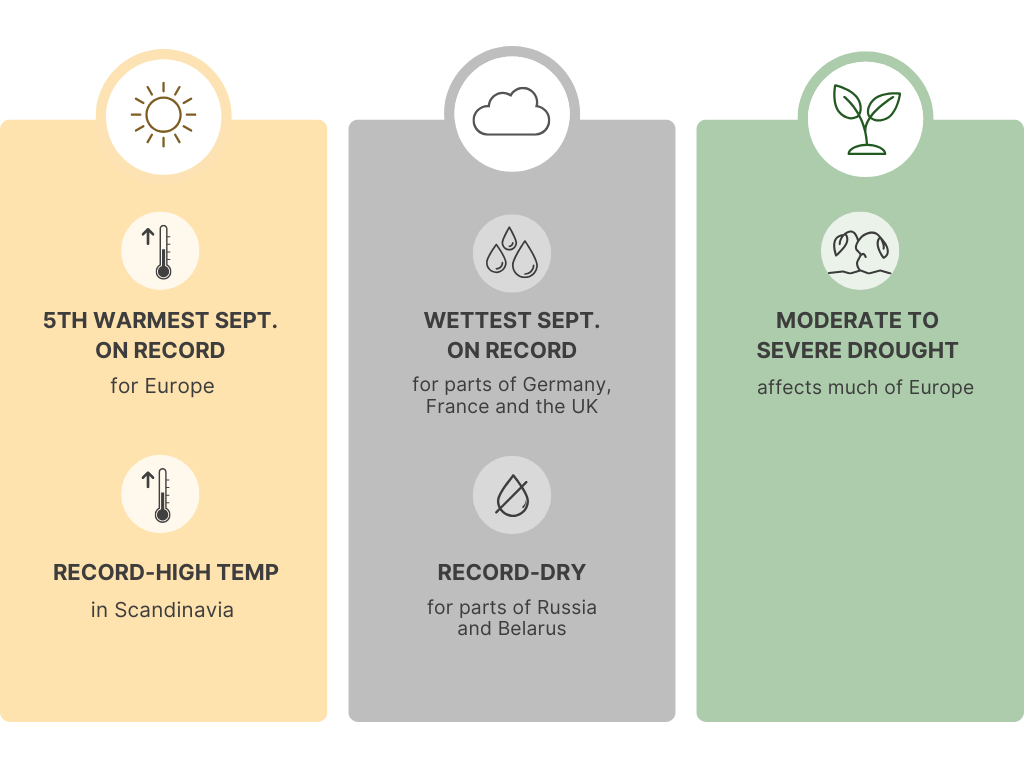
- Europe experienced its 5th warmest September on record, at 1.23°C above the 1991–2020 mean. Monthly-mean temperatures were significantly above normal in eastern Europe and record-high in Scandinavia, while they were below normal in France, the UK, and parts of Turkey and the Iberian peninsula (Fig. 1).
- In terms of precipitation, September had a mixed imprint for Europe, with negative anomalies to the northeast, southeast, and the Iberian peninsula, and mostly positive anomalies elsewhere. This was the wettest September on record for parts of Germany, France, and the UK, while it was record-dry for parts of Russia and Belarus.
- While much of Europe remains moderately to severely dry (index between -1 and -2.5) in terms of the soil conditions (relative to the average conditions for this period of the year), the situation has improved in parts of central Europe owing to the aforementioned precipitation anomalies.
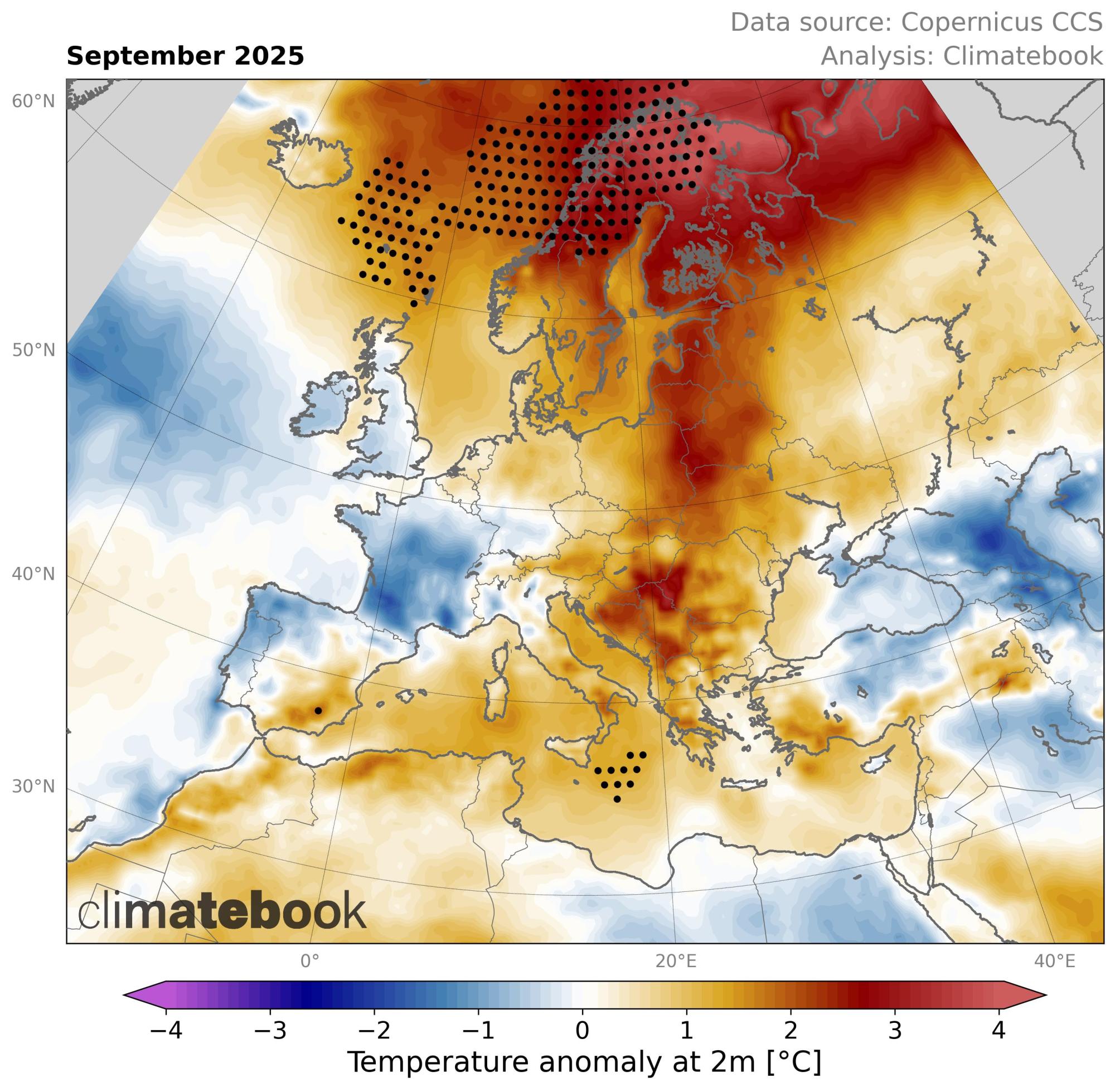
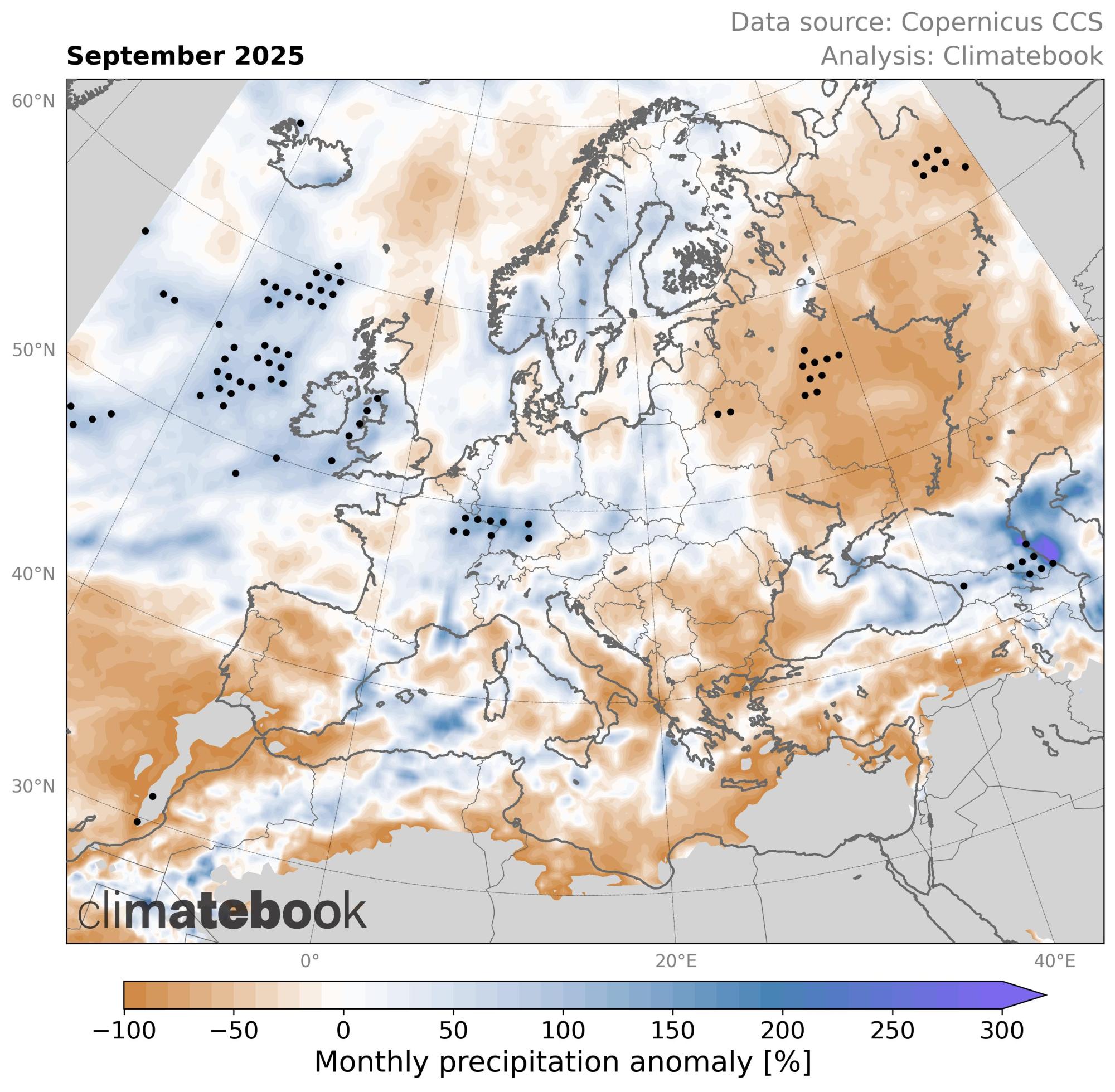
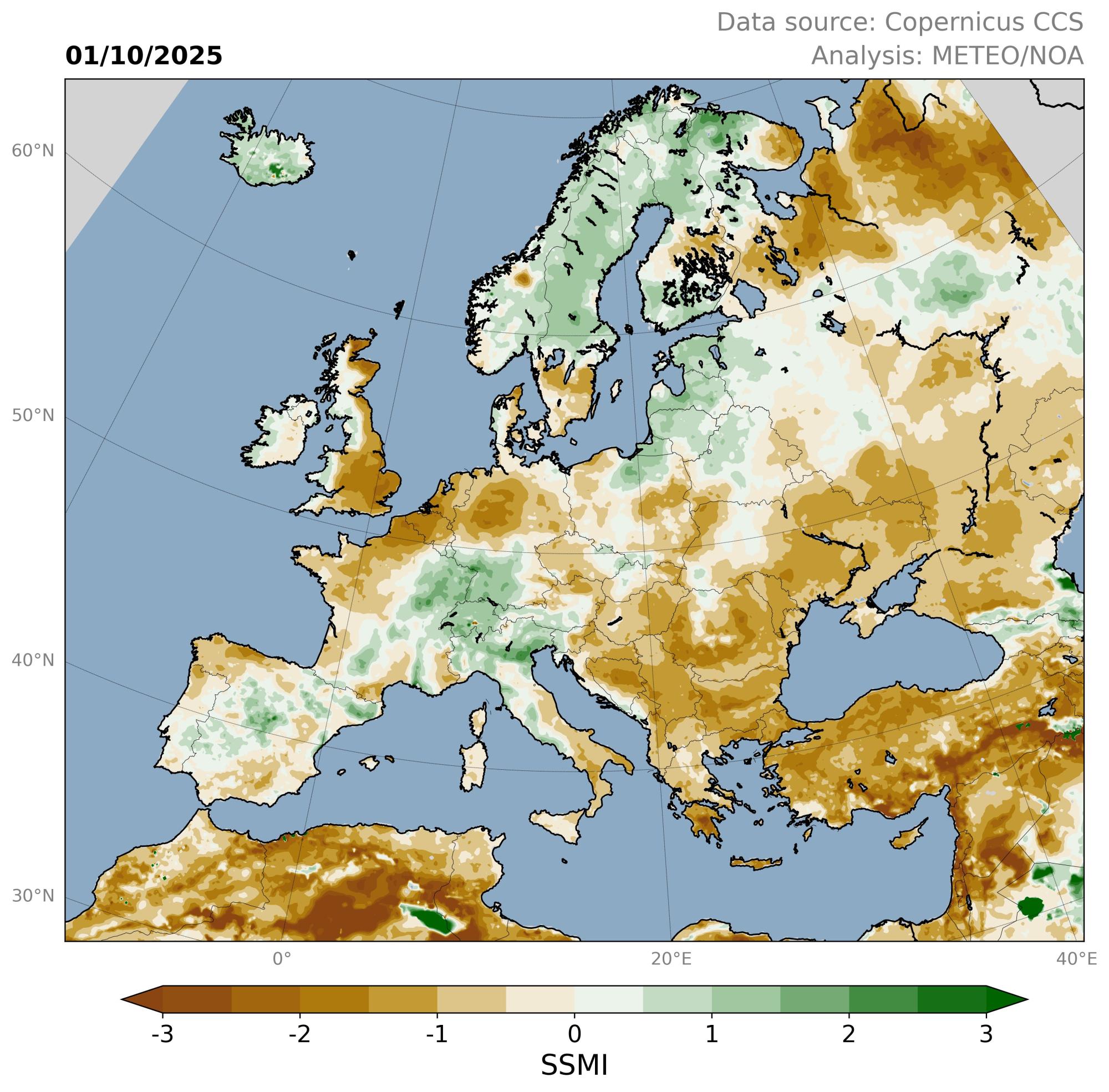
Figure 1. Agrometeorological overview of September 2025 in Europe. Upper row: Anomalies in temperature at 2m (top) and precipitation accumulation (middle) based on ERA5. Black dots indicate the areas where the observed anomalies were record-high (positive or negative) for July in the period from 1960 to today. Lower row: Standardized anomaly in soil moisture in the 28-100cm layer below surface on October 1st, 2025, based on ERA5-Land. Values below -1, -1.5, -2, and -2.5 indicate “moderately dry”, “significantly dry”, “severely dry”, and “extremely dry” conditions, respectively. Values above +1, +1.5, +2, and +2.5 indicate “moderately wet”, “significantly wet”, “severely wet”, and “extremely wet” conditions. Values between -1 and +1 reflect near-normal conditions. The climatological baseline for the computation of anomalies is the 1991-2020 period.
Seasonal Outlook – Forecasts for December 2025 – February 2026
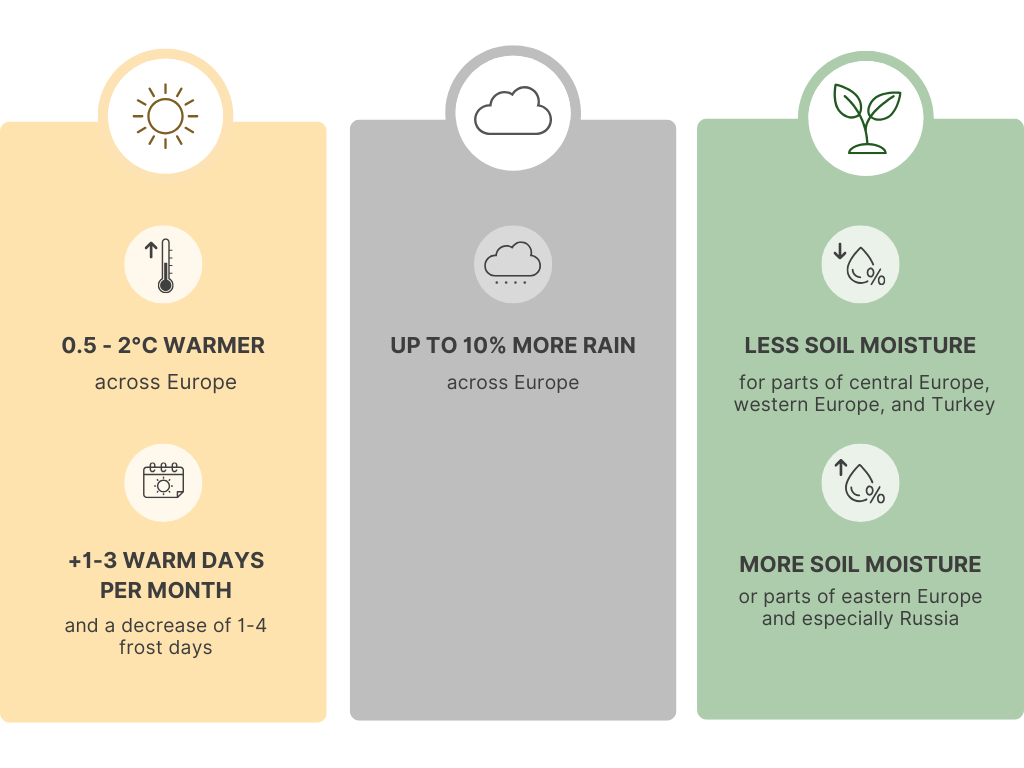
The key points of the seasonal forecasts issued in October 2025 for the upcoming winter in Europe are summarised below:
- Europe is projected to be warmer than average, with the anomalies increasing gradually from 0.5°C in western Europe to 2°C in eastern and especially northeastern Europe (Fig. 2).
- While the day-to-day weather evolution of the coming months cannot be foreseen, an increase of 1-3 Warm Days and a decrease of 1-4 Frost Days per month are expected throughout Europe.
- In terms of the total precipitation, the mean of all examined scenarios results in weakly positive anomalies for Europe (up to +10%). This is an expected result, as winter weather systems in Europe are highly unpredictable even at shorter timescales (Fig. 2).
- Positive soil moisture anomalies are projected for parts of eastern Europe, particularly Russia, while weakly negative anomalies are projected for parts of central Europe, western Europe, and Turkey (Fig. 2).
Considering the complexity of the Earth system, seasonal forecasts are characterised by large uncertainty. Daily and local weather conditions may differ significantly from the monthly average conditions in a broader region.
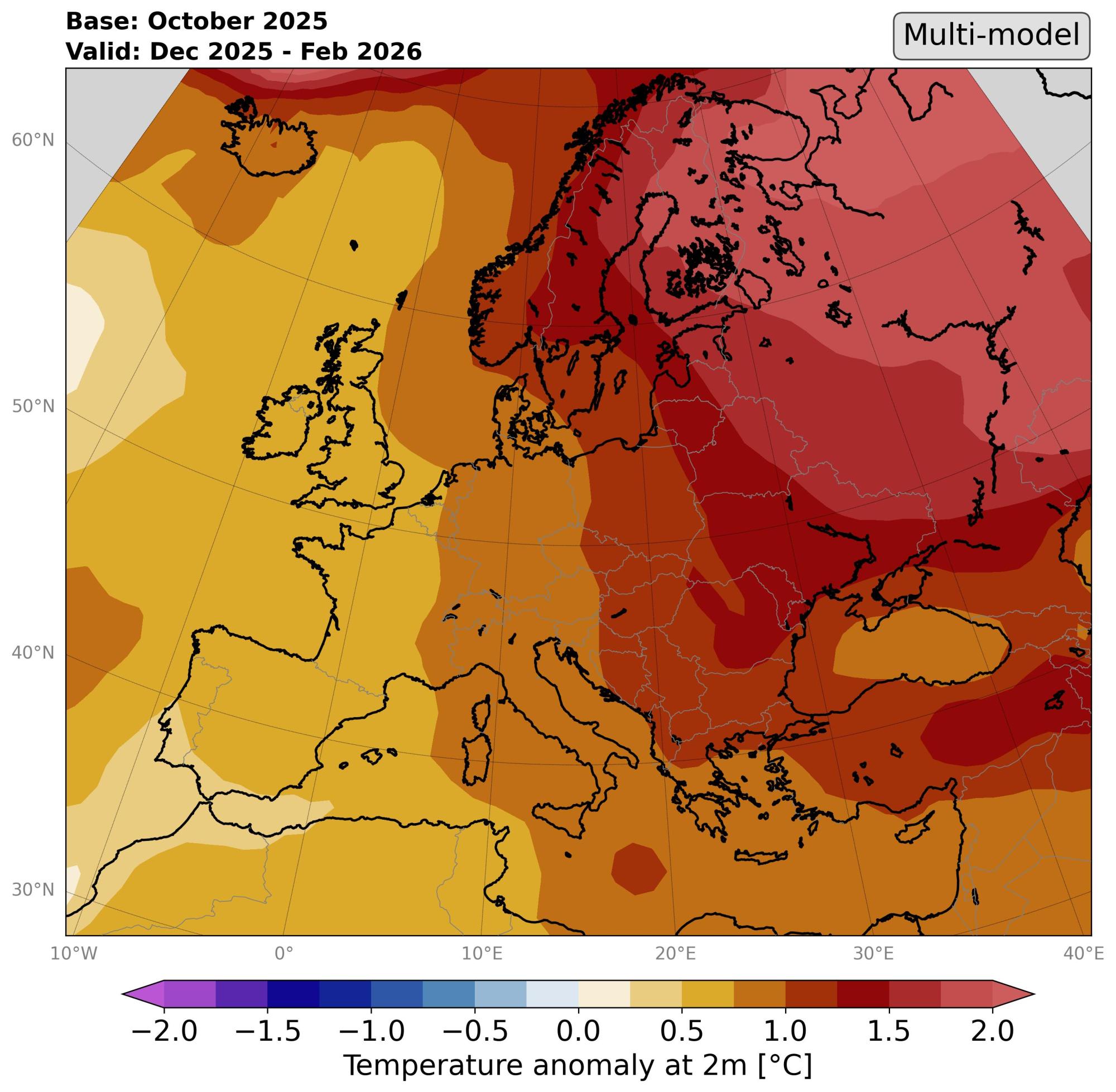
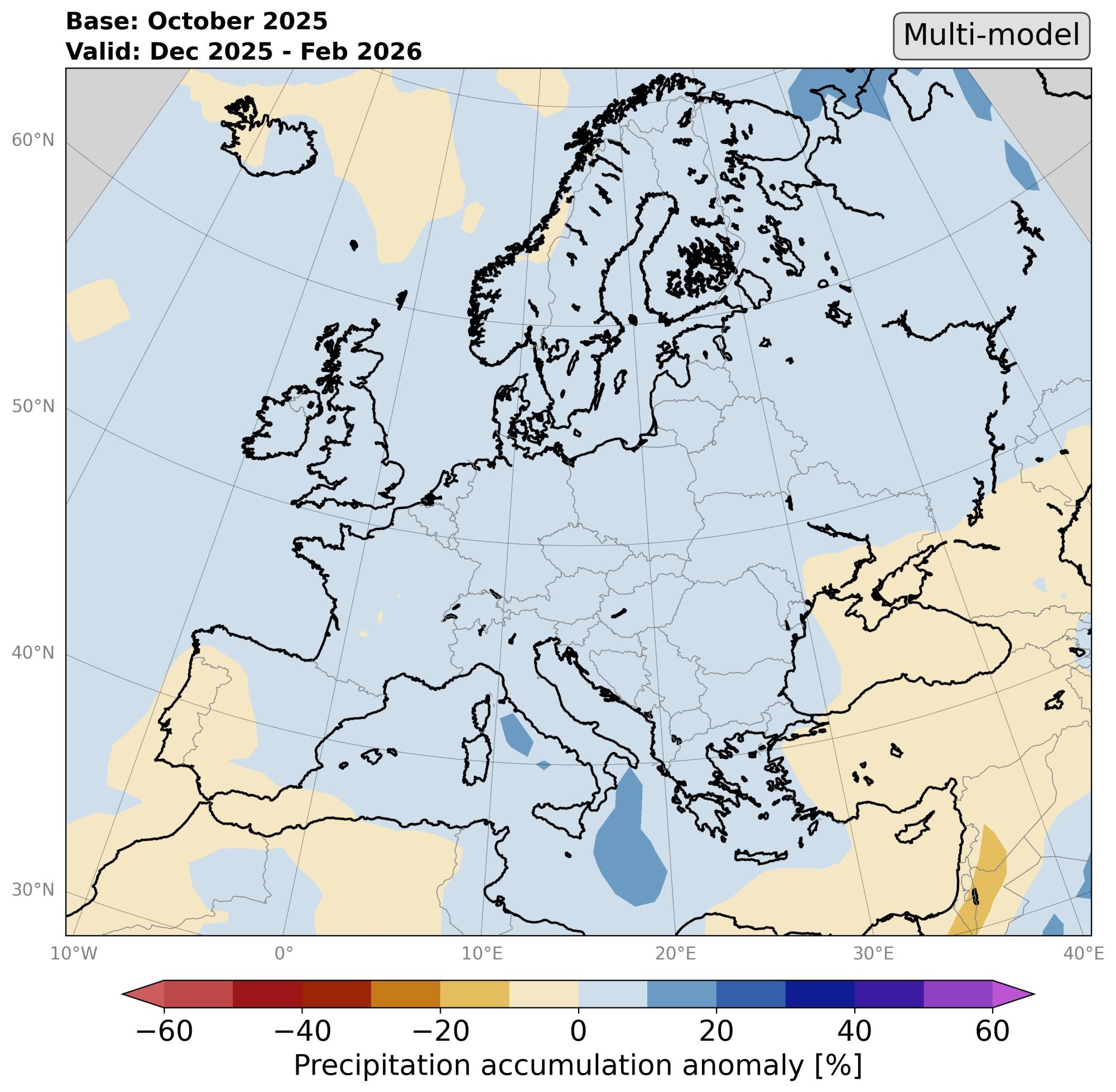
Figure 2. Multi-model mean 2m-temperature (top) and precipitation (bottom) anomaly for the upcoming winter in Europe, based on the seasonal forecasts issued in October 2025.
Agricultural impact assessment: Winter climate outlook 2025-2026
Europe approaches winter 2025-2026 under profoundly challenging conditions, with a warmer-than-average season building upon an already strained agricultural landscape marked by persistent drought and extreme weather variability. The seasonal forecast issued in October 2025 projects temperatures 0.5-2°C above the 1991-2020 baseline and reveals a continent still grappling with moderate to severe drought conditions that have yet to improve despite recent precipitation in central Europe. These climatic patterns will fundamentally reshape winter agricultural management across the continent, requiring farmers to adapt their operations while navigating considerable uncertainty in forecasts.
Regional climate patterns and agricultural implications
Eastern and Northeastern Europe faces the most dramatic temperature departures, with anomalies reaching up to 2°C above average. This substantial warming will compress traditional winter dormancy periods and fundamentally alter vernalization requirements for winter cereals. The forecast reduction of 1-4 frost days per month across Europe, combined with an increase of 1-3 warm days monthly, means that winter wheat, barley, and rapeseed crops may experience incomplete chilling accumulation. Farmers in these regions must reconsider varietal selection, prioritising cultivars with reduced vernalization requirements that can adapt to shortened cold periods. However, positive soil moisture anomalies projected for parts of eastern Europe, particularly Russia, offer some relief by potentially supporting spring crop establishment.
Western and Central Europe will experience a more moderate warming of approximately 0.5°C; however, this region confronts a compounding challenge: while many areas received record September precipitation, which temporarily improved soil conditions, much of Europe remains moderately to severely dry. The forecast of weakly negative soil moisture anomalies for parts of central Europe, western Europe, and Turkey throughout winter creates a precarious situation, where elevated temperatures will accelerate evapotranspiration during any non-frozen periods, further depleting already stressed soil water reserves.
For regions that experienced record-breaking September rainfall, including parts of Germany, France, and the UK, the temporary moisture recharge may prove insufficient to offset cumulative seasonal deficits if winter precipitation remains only marginally above average.
Southern and Mediterranean regions, including Turkey, Spain, and Portugal, continue to face water stress. Despite modest precipitation increases of up to 10%, forecasts point to persistent negative soil moisture anomalies. This may restrict the replenishment of water reserves needed for spring flowering and fruit set in olive groves, vineyards, and citrus orchards. Farmers in these areas should plan early irrigation strategies and adopt soil conservation measures to retain moisture.
Critical impacts on winter agricultural operations
The warmer winter disrupts natural agricultural cycles across multiple production systems. Winter cereal vernalization faces unprecedented challenges as traditional chilling period accumulation becomes increasingly uncertain. Varieties requiring extended cold exposure may experience delayed or irregular flowering patterns come spring, potentially reducing yields and grain quality. Farmers should urgently assess the vernalization requirements of their planted varieties and prepare contingency strategies for crops that may not accumulate sufficient chill hours.
Soil dynamics present a dual concern. The increase in warm days per month will sustain microbial activity at levels atypically high for winter, accelerating organic matter decomposition and potentially mineralising nutrients that would typically remain stable until spring. While this may temporarily boost the availability of nitrogen and other nutrients, it risks depleting soil organic matter reserves and creating nutrient imbalances.
In drought-affected regions, this accelerated biological activity occurs in soil profiles already stressed by moisture deficits, potentially compromising soil structure and aggregate stability. Farmers should consider maintaining protective cover crop systems wherever feasible to moderate soil temperature fluctuations and preserve moisture.
Pest and disease pressure will intensify significantly due to extended favourable conditions for pathogen survival and insect overwintering. Warmer winters historically correlate with reduced natural pest mortality, allowing higher populations to survive until spring and creating earlier, more intense infestations. Fungal diseases that typically experience population crashes during sustained cold periods may maintain viable spore loads throughout winter, potentially requiring adjusted prophylactic treatment timing and intensity. Integrated pest management strategies must evolve to account for continuous pest pressure, rather than relying on traditional winter suppression periods.
Water resource management and strategic planning
The forecast precipitation signal remains highly uncertain, with total accumulation projections ranging from marginally below average to up to +10% above normal. This uncertainty, combined with the inherent unpredictability of winter weather systems, demands that farmers develop flexible water management strategies that can adapt to diverse scenarios. In drought-affected regions where soil conditions remain moderately to severely dry, any precipitation must be maximised through residue management, reduced tillage practices, and strategic cover cropping to enhance infiltration and minimise runoff.
In contrast, northeastern Europe may experience localised waterlogging due to positive soil moisture anomalies. Potential waterlogging could delay spring field operations and create anaerobic soil conditions detrimental to crop health. Farmers in these areas should verify the functionality of their drainage systems and consider adjusting their spring planting timing to accommodate potentially saturated soils. The reduced frost penetration associated with warmer temperatures may compound drainage challenges by limiting natural soil structure formation that typically occurs during freeze-thaw cycles.
Outlook for winter and early spring 2026
The coming season demands adaptive, data-driven management across European agriculture. Continuous weather monitoring, flexible planning, and scenario-based contingency strategies will be key to minimizing losses. Farmers must remain ready to adjust operations based on real-time soil and climate indicators rather than static schedules.
The interaction of persistent drought, rising temperatures, and unpredictable precipitation creates a complex risk environment. How effectively farmers adapt, through improved soil management, variety selection, and water use efficiency, will determine Europe’s agricultural resilience through winter 2025–2026 and into the next growing season.