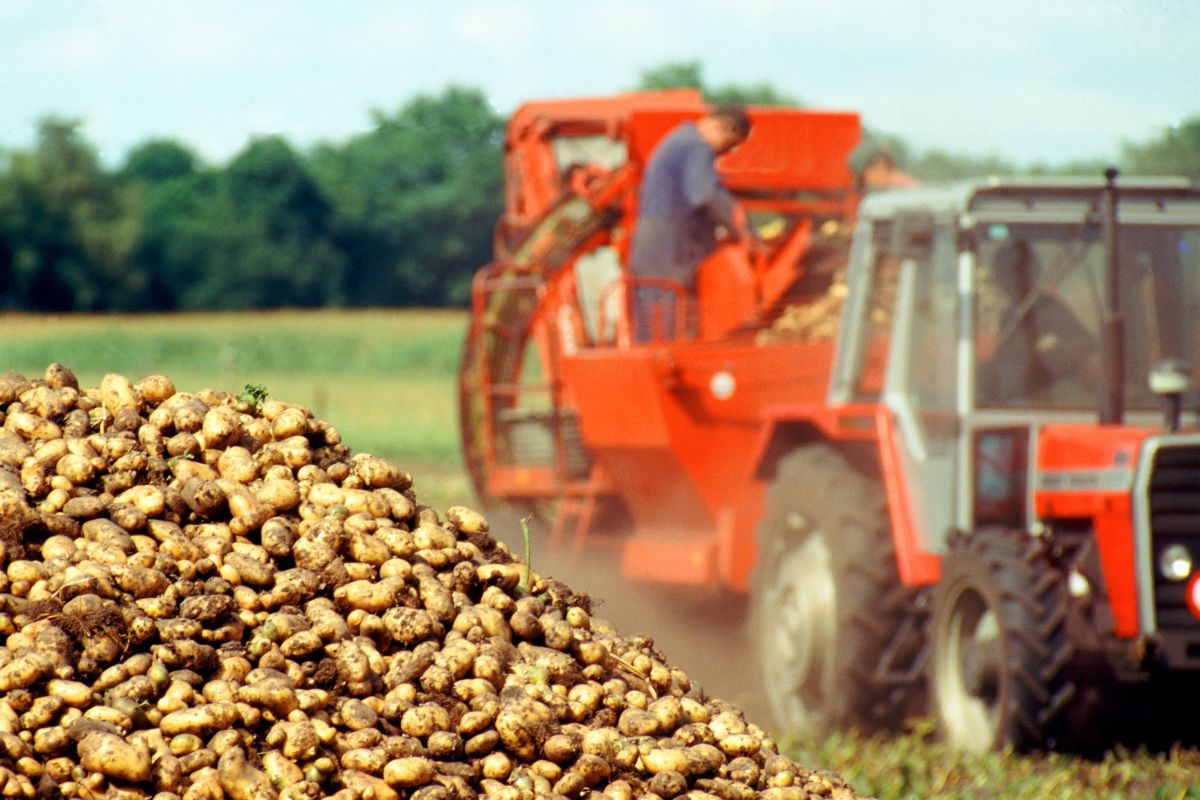
Strategic Potato Management: Pre-Harvest Protocols and Post-Harvest Excellence
As summer approaches across Europe, potato farmers prepare for one of the most critical periods in the crop calendar: the final stages of tuber bulking, and finally the harvest. With harvests typically spanning June through early September, success hinges on precise irrigation, vigilant pest and disease management, and careful preparation and post-harvest handling. In this article we aim to provides actionable, up-to-date advice for EU potato growers seeking to maximize yield, quality, and storability under increasingly challenging climatic and regulatory conditions.
EU Potato Market 2025
EU comes 3rd globally in potato production with many EU members to contribute to this, from the south to north. As we see from the graph below, Germany, France, Netherlands and Poland lead the way as key producers of the Union.
The European potato market in 2025 faces a complex landscape of cautious optimism and mounting challenges. Production across key EU nations (Germany, France, Belgium, Netherlands) is projected to rise, building on 2024’s 24.7 million-ton harvest in the NEPG region, with expanded acreage driven by high early-year prices (€30/100 kg in February 2025). Interestingly this year has a paradox. Central and North Eu producer countries have experience favourable weather in early Spring and a warmer weather and some drought in April and May leading to less problems with fungal diseases, higher yields and expected earlier harvest, driving the prices down. On the other hand, the heavy rainfalls in Spain, Portugal, Italy and Greece had delayed planting in many regions or caused problems with the newly sprayed plants to confront waterlogging conditions.
If the season closes with no surprises, we expect to see a relatively coordinated enter of EU potato growers on their fields to dig up this popular vegetable. At this final stage, careful management is key in order to avoid yield losses and protect tuber quality and storability. Let’s dive into specific steps and practices farmers can take to ensure a successful harvesting period.

Pre-Harvest Crop Handling: Fine-Tuning the Final Weeks
Vine Desiccation and Skin Set Enhancement
Two to three weeks before harvest, vine removal—termed dehaulming—initiates the tuber’s final maturation. Mechanical methods, such as flail beaters or rotary choppers, efficiently shred foliage without disturbing tubers, while chemical desiccants like diquat ensure uniform vine kill. The University of Idaho emphasizes that this process halts tuber growth, stabilizes dry matter content, and triggers skin set, where suberin deposits form a protective layer over the tuber.
In water-scarce regions like the Mediterranean (where irrigation if applied), that is also earlier, ceasing irrigation during this phase is critical; residual soil moisture should be monitored to prevent clod formation, which abrades tuber skins during digging.
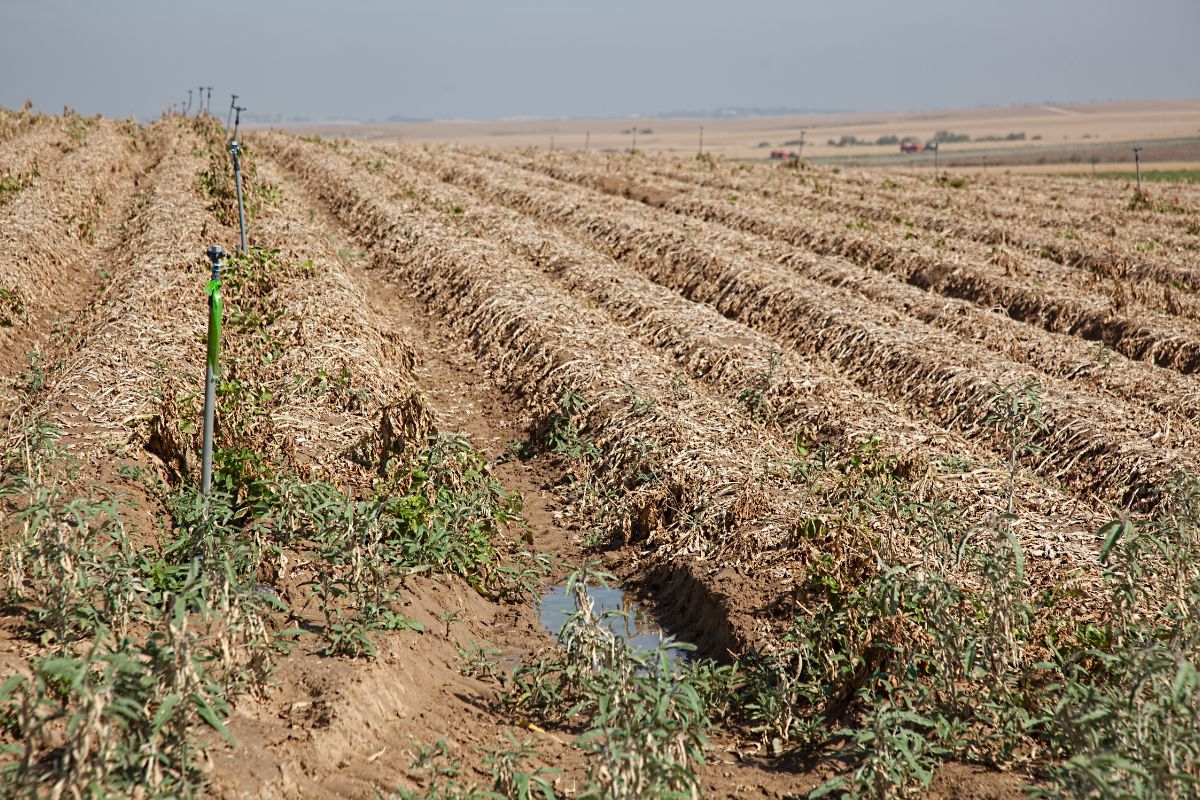
Late-Season Disease Surveillance - Vigilance Against Late-Season Threats for Potatoes
Even as vines senesce, pathogens like Phytophthora infestans (late blight) remain a threat. Late blight remains the most destructive disease for European potato crops, with new, more aggressive and fungicide-resistant strains emerging each year. In many regions farmers are forced by law to destroy their crop or harvest earlier if the infection rate surpasses a specific level. So, careful surveillance and the adoption of preventive and holistic protection measures is essential to help maximize yield even at the last month of the crop’s life.
Important note: EU farmers are advised to use forecasting models (e.g., EuroBlight, myFIELD BlightCAST) to anticipate outbreaks and time interventions.
The UK’s Agriculture and Horticulture Development Board (AHDB) advises a final fungicide application post-desiccation, prioritizing broad-spectrum products like mancozeb to protect exposed tubers. Fields should be scouted for foliar blight symptoms, and infected foliage removed to prevent spore transfer to tubers. In parallel, integrated pest management (IPM) tactics, such as pheromone traps for potato tuber moths, reduce larval infestations that escalate as harvest delays.
Harvest Preparation: Timing and Techniques
Assessing Physiological Maturity of Potatoes
Maturity indicators vary by cultivar but universally include natural foliage senescence (yellowing and dieback) and skin set. Gently rubbing a tuber’s surface reveals suberization: mature skins resist peeling, while immature ones shed easily, risking dehydration and decay. For processing varieties, the University of Massachusetts recommends verifying tuber solids via hydrometer tests, ensuring optimal fry color and starch content.
Soil and Environmental Conditions
Harvesting under ideal soil moisture, neither waterlogged nor parched, minimizes bruising. Oregon State University’s trials show that soil at 60–65% field capacity cushions tubers during mechanical digging, whereas arid conditions increase shatter bruising. If rainfall occurs pre-harvest, delaying digging by 48 hours allows excess moisture to dissipate, reducing rot risk. In the potato fields of the south, farmers may need to apply an irrigation to help loosen up the soil 3-4 days before harvest if necessary. However, this should be performed with great caution (advice a local licenced agronomist).
Equipment Calibration
Modern harvesters with adjustable shares and webs minimize tuber damage. The DAERA-NI highlights that incorrect settings can slice tubers or leave soil clods, which abrade skins during sorting. Daily equipment checks, including belt speeds and roller spacing, ensure gentle handling. Post-digging, conveyor systems should feature padding to cushion drops into storage bins.
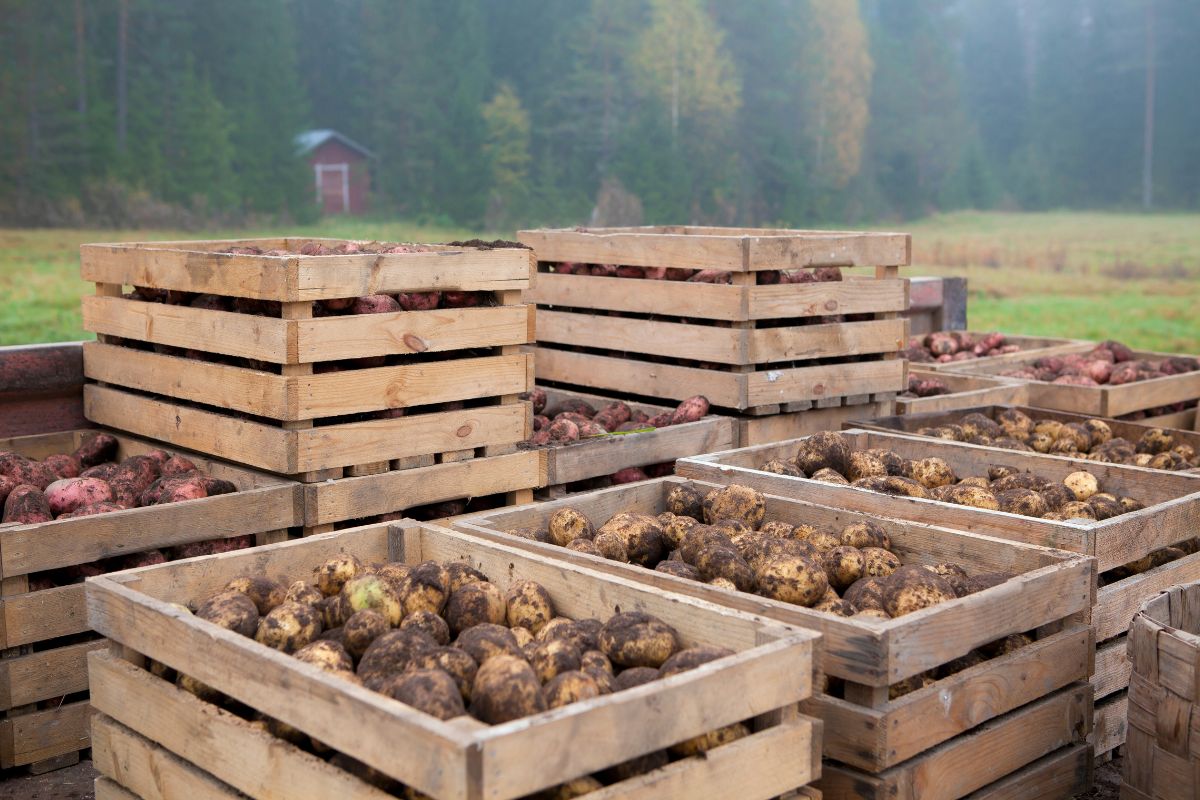
Post-Harvest Handling of Potatoes: From Field to Storage
While potato is not considered among the most sensitive vegetables, it is essential to be careful while harvesting to avoid bruising of cutting in the tubers that will decrease their storability and commercial value. Farmers and workers should minimize drops, avoid rough handling and clods or stones from fields before harvest to reduce physical injury.
Advice: If you hire workers to help, take some time to explain and train them before starting to ensure the optimum effectiveness and tuber quality.
Curing: The Foundation of Storability
Curing should begin immediately post-harvest, initiating wound healing and secondary skin formation. The NPCK advocates stacking tubers in ventilated crates at 12–15°C and 90–95% relative humidity (RH) for 10–14 days. This environment promotes suberization while inhibiting pathogens like Pectobacterium, which thrive in anaerobic conditions. Farmers in India’s Himachal Pradesh region use pit curing, lining trenches with dry grass and soil, to replicate these conditions affordably.
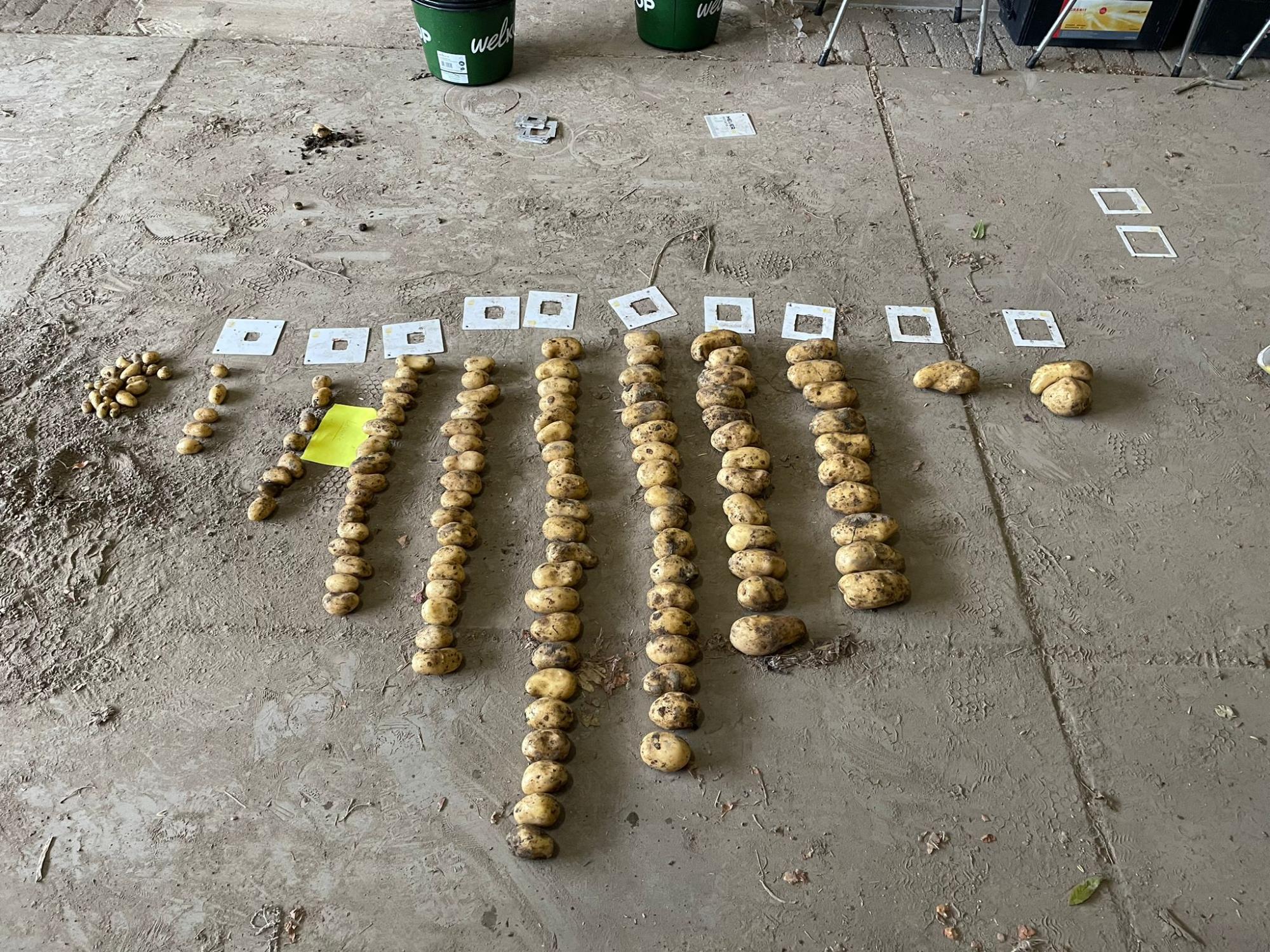
Grading and Disease Screening
Before storage, tubers must be graded to remove damaged or diseased specimens. The University of Idaho’s protocols suggest a three-step process:
- Pre-storage sorting: It is important that you eliminate tubers with cuts, greening, or soft rot.
- Density grading: Submerge potatoes in brine (1.07–1.10 specific gravity) to separate high-density processing stock from lower-quality tubers.
- Pathogen testing: Random samples are assessed for latent infections (e.g., Fusarium) via hot-boxing, incubating at 27°C for 72 hours to accelerate symptom development.
Important note: Farmers should discard all green tubers with ≥10% surface greening. If the tubers have been emerged and come in contact with the sunlight the skin starts turning green (chlorophyll accumulation). The glycoalkaloids (primarily α-solanine and α-chaconine) that start accumulating in the tuber’s tissues are toxic, making these potatoes unsuitable for consumption.
Storage Optimization by End Use
|
Parameter |
Table Stock |
Processing |
Seed Tubers |
|
Temperature (°C) |
4–5 |
7–10 |
2–4 |
|
Humidity (%) |
90–95 |
85–90 |
85–90 |
|
Ventilation |
Continuous |
Intermittent |
Minimal |
Sources: University of Idaho, UMass Extension, DAERA-NI
- Table stock: It is best to maintain 4°C to suppress sprouting, but avoid chilling injury (below 3°C), which induces sweetening.
- Processing: Higher temperatures (7–10°C) preserve reducing sugars for optimal fry color, with chlorpropham (CIPC) fogging applied for long-term storage.
- Seed tubers: It is advised to store near 2°C to prolong dormancy, gradually warming pre-planting to encourage sprouting.
Innovations in Sustainable Storage
With the EU phasing out CIPC, research into alternatives has intensified. Cranfield University’s collaboration with PepsiCo explores hybrid potato varieties with extended dormancy genes, reducing reliance on chemicals. Meanwhile, biocontrol agents like Bacillus subtilis sprays inhibit Fusarium without residues, aligning with Green Deal sustainability targets.
Conclusion: Integrating Science and Practice
From vine desiccation to climate-smart storage, each step in the potato lifecycle demands precision. EU growers facing water scarcity and regulatory shifts must adopt drip irrigation, IPM, and data-driven storage protocols. As harvest concludes, auditing water infrastructure and participating in pathogen monitoring programs (e.g., EuroBlight) will prepare farms for future challenges. By marrying agronomic tradition with innovation, Europe’s potato sector can thrive amid evolving climatic and market pressures.
For region-specific advisories, consult your national agricultural extension service or the European Potato Trade Association (Europatat).
Potato Blight Ipm Europe Ipmorama – Ipmorama
Analysis of Glykoalkaloids – Eurofins
Storing for Success Science Aims to Extend Potato Shelf Life – Spudsmart
European Potato Market Outlook Growth Nfqhc – Linkedin
Further reading
Potato Losses Across the Value Chain: Causes, Impacts, and Solutions
The Potential Impact of Generative AI on the Potato Industry
Soil Health and Potato Yield: Cultivating a Sustainable Future from the Ground Up
The Potato: A Journey through Time, and Cultures
The Impact of Climate Change on the Potato Industry and Possible Solutions
Potato Harvest Yield & Storage