Consumers often assume that “fresh” fruits and vegetables are automatically more nutritious than their frozen counterparts. While it’s true that produce straight from the farm or garden at peak ripeness is packed with nutrients, the reality is more nuanced. From the moment a fruit or vegetable is harvested, its vitamins and antioxidants begin to change.Selected nutrient analyses of fresh, fresh-stored, and frozen fruits and vegetables — Journal of Food Composition and AnalysisPost-harvest handling, transport, and storage conditions can lead to significant nutrient losses in fresh produce, especially if it travels long distances or sits for days before consumption. By contrast, freezing produce shortly after harvest can lock in many nutrients, sometimes making frozen fruits and veggies equal to or even more nutritious than “fresh” ones that have been stored for a while. This article explores the science behind nutrient retention in fresh vs. frozen.
Fresh vs frozen vegetables: Nutrient retention and quality
Harvest timing and post-harvest nutrient loss
Vegetables are usually most nutrient-rich right after harvest. Produce that is frozen is often picked at peak ripeness and processed quickly, so there is less time for vitamins to break down before it reaches the consumer. Fresh produce sold in supermarkets, especially when shipped long distances, is often harvested before fully ripe and may spend days in transport, storage, and then in the home fridge. Early harvest can mean the produce hasn’t developed its maximum nutrient content.
Produce that is shipped across the country may spend days in transit and storage before it reaches the consumer. If the cold chain (proper refrigeration) isn’t perfectly maintained, nutrients break down even quicker. “If the spinach is coming from the other side of the country… by the time it reaches the dinner table, much of the nutrient content might already be gone,” explains a Penn State food scientist. Even when produce still looks visually acceptable, subtle enzymatic and oxidative changes can quietly sap its vitamins and antioxidant compounds during storage.
For instance, in the case of spinach, keeping it refrigerated slows nutrient loss but doesn’t stop it – at 4 °C it retained only ~53% of its folate after 8 days, and at warmer 10 °C it hit that level in just 6 days. Vitamin C in leafy greens and broccoli is especially prone to degradation; studies have noted that spinach can lose up to 90% of its vitamin C within the first 24–48 hours at room temperature. The bottom line is that the more time “fresh” produce spends from farm to table (especially without ideal cooling), the more vitamins it can lose.
Local fresh vs long-distance fresh
It’s important to distinguish truly fresh, locally harvested produce from “fresh” produce that has traveled and aged. If you pick vegetables from your garden or buy from a local farm and consume them the same day, you’re likely getting maximum nutritional value. No freezing process can beat same-day harvest for certain sensitive nutrients. In these cases, fresh has an advantage: no initial processing (like blanching) and no long storage. However, such ideal freshness is not the norm for most consumers most of the year.
Several studies have busted the myth that “fresh is always more nutritious.” Researchers note that it is a “fallacy that fresh produce is always better than canned or frozen.” If fresh veggies are stored for days, they can lose more nutrients than their frozen (or even canned) counterparts. For instance, canned spinach (which undergoes heat processing) and frozen spinach both retain more nutrients than fresh spinach stored in the refrigerator for a few days. The reason is simply that lower temperatures (and in canning, lack of oxygen) slow down or halt the vitamin degradation.
So, unless you can get produce from field to plate very quickly, the “fresh” produce from a supermarket may not provide a big nutritional edge over frozen. In fact, as we’ll see with some examples, it can be the opposite, frozen produce often matches or surpasses the nutrient levels of days-old fresh produce.
How freezing preserves nutrients
To understand frozen food nutrition, it helps to know what happens during freezing. Commercially frozen vegetables are first blanched, which means they are briefly heated (often a quick boil or steam for a couple of minutes) and then rapidly cooled. Blanching serves an important purpose: it inactivates enzymes that would otherwise cause the produce to spoil or lose color, flavor, and nutrients over time in the freezer. This step “locks in” the vegetable’s quality and most of its nutrients by halting enzymatic activity.
Blanching and why it matters for nutrients
Blanching is a brief heat step (usually steam or hot water for a short time), followed by rapid cooling. Its main role is to inactivate enzymes that would otherwise keep breaking down quality and some nutrients during frozen storage. This matters because some enzyme activity can continue, even at low temperatures. Comparing blanched and unblanched frozen vegetables reveals that unblanched samples tend to lose more vitamin C and antioxidant capacity during storage, whereas blanched samples retain these nutrients better over time.
It’s true that blanching causes some initial nutrient loss, especially water-soluble vitamins like vitamin C and some B vitamins, since they can be heat-sensitive and may leach into blanching water. Reported losses vary by vegetable and method, but are often described as modest, commonly around 10–30% for certain vitamins . Broccoli is a useful example because it is rich in vitamin C, and some sources report around a 30% loss under specific steam blanching conditions and timing. Some antioxidant compounds (including certain polyphenols) can also decrease slightly during blanching.
The reason the blanching step is still used is that it can reduce larger losses later. In practical terms, a small one-time reduction can help protect nutrients from a slower decline over weeks or months in the freezer. That is why, blanched vegetables often show better vitamin C retention and better maintenance of antioxidant activity than frozen vegetables without blanching.
Rapid freezing
After blanching, vegetables (and fruits, though fruits are not usually blanched) are flash frozen. Rapid freezing (often in air-blast freezers at –40 °C or using liquid nitrogen for IQF – individual quick freezing) solidifies water in the food into tiny ice crystals. Smaller crystals cause less physical damage to plant cells. This improves texture after thawing, and it can also reduce drip loss, which is one way nutrients can be lost when frozen foods are thawed or cooked.
Once food reaches typical storage temperatures (around –18°C or 0°F), most reactions that break nutrients down slow dramatically. Microbial growth stops, and chemical changes occur much more slowly than they would in a refrigerator. That is why freezing is generally considered a strong method for preserving vitamins and antioxidants, particularly when freezing happens soon after harvest and storage temperatures stay stable. Even after 8 months, vegetables retained the majority of their phenolic (antioxidant) compounds and vitamins, especially when blanched properly.
Of course, even frozen foods aren’t perfectly preserved forever – over very long storage (say >1 year) or if temperature fluctuates, some slow declines can occur (and flavor/texture might suffer). But within recommended storage times (generally up to 8–12 months for most frozen vegetables, vitamin levels stay impressively close to what they were at freezing time. For instance, vitamin C, which would degrade within days at room temperature, remains largely intact for months in properly frozen foods.
Nutrient retention in frozen vs fresh
A fair comparison between fresh and frozen usually needs three versions of the same crop:
- fresh, tested soon after purchase or harvest
- fresh stored for a few days in the fridge, which reflects what often happens at home and across supply chains
- frozen, typically processed soon after harvest
This matters because many vitamins keep declining after harvest, even when produce is refrigerated. Across these comparisons, freezing usually preserves nutrients well. In a two-year study (eight fruits and vegetables), most vitamins showed no significant differences between fresh and frozen samples. When differences appeared, frozen samples were more often higher than fresh-stored samples, because storage time reduced vitamins in the fresh produce. A similar overall pattern appears across multiple crops and nutrients (vitamin C, riboflavin, vitamin E, beta-carotene): frozen produce generally matched fresh, and sometimes had slightly higher measured levels for specific vitamins and items.
At the same time, a few nutrients can behave differently depending on the crop and processing. Beta-carotene, for example, can be more sensitive in some items, especially when blanching is involved . The crop examples below show where frozen tends to match fresh, and where small differences sometimes appear.
Nutrient retention by crop
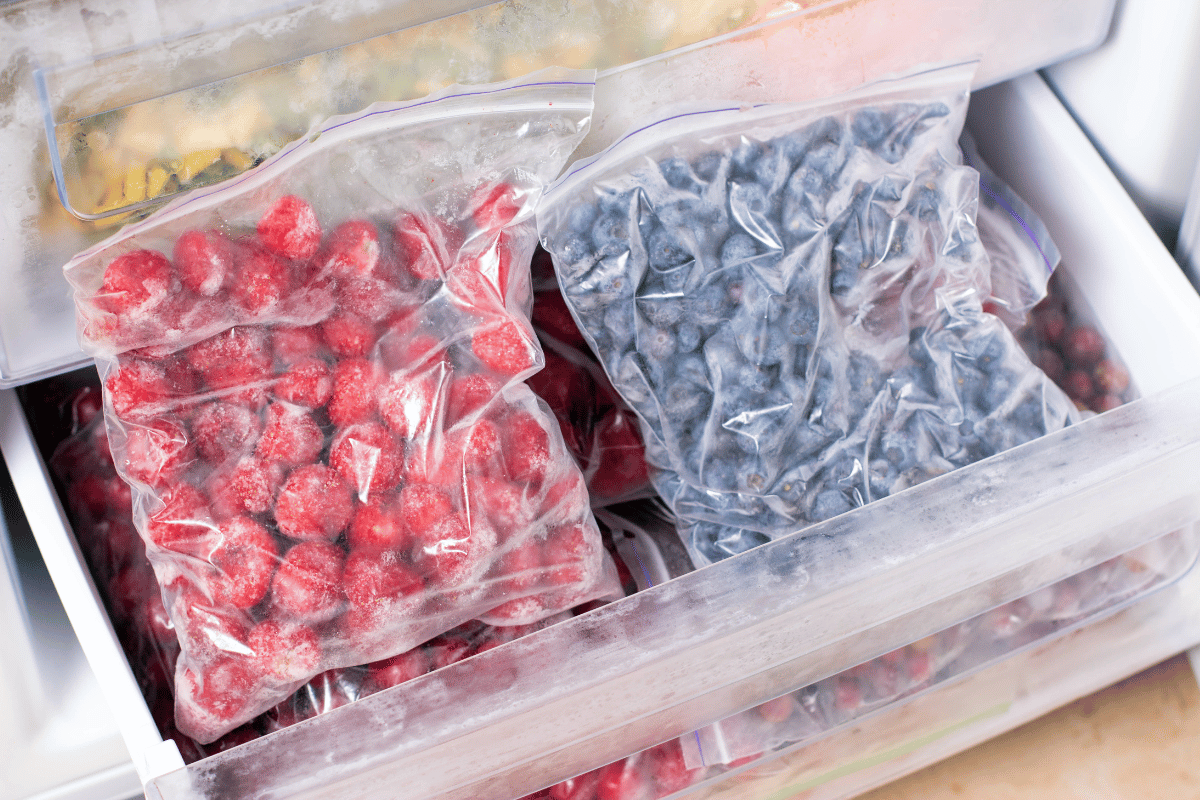
Berries (strawberries, blueberries)
- Vitamin C: Berries are highly perishable, and vitamin C can decline during handling and storage. Studies that tested frozen strawberries and blueberries found vitamin C broadly comparable to fresh in many comparisons. No significant differences in vitamin content appear between fresh and frozen products in most cases. So a cup of frozen berries provides essentially the same vitamin C as a cup of fresh berries, unless those fresh berries truly just came off the plant.
- Antioxidants: Some antioxidant compounds in berries (including anthocyanins) are relatively stable to freezing, although results can vary depending on the compound and processing conditions.
Peas
- Vitamin C: Frozen peas are usually processed quickly, and studies using vitamin C as a marker found frozen peas had vitamin C levels comparable to peas at harvest and higher than peas stored in the fridge for several days.
- Beta-carotene: Some comparisons found lower beta-carotene in frozen peas than fresh, likely due to some breakdown during processing.
Broccoli
- Vitamin C: In comparisons that reflect real purchasing conditions, frozen broccoli often shows similar vitamin C to “market fresh” broccoli, especially once storage time for fresh broccoli is considered.
- Folate: Studies measuring folate often found no significant difference between fresh and frozen broccoli.
- Riboflavin and vitamin E: Riboflavin was usually similar across crops, with some item-specific differences. Vitamin E was higher in frozen samples for some vegetables, with others showing no difference.
Spinach
- Folate: Spinach kept at 4°C (39°F) lost nearly half its folate (47%) in 8 days, and at warmer storage temperatures, the losses happened even faster. Freezing soon after harvest slows this loss, and research comparing retail “fresh” with frozen spinach has found frozen spinach can retain folate better than spinach that has spent days in distribution and storage.
- Vitamin C: Spinach stored at room temperature (~20 °C) for just a day or two can lose a majority of its vitamin C.
Carrots
- Beta-carotene: Carrots are rich in beta-carotene, but some studies found frozen carrots had lower beta-carotene than fresh, likely linked to blanching and processing conditions.
- Vitamin C: In an earlier comparison, frozen carrots showed no loss of vitamin C during freezing relative to fresh-harvested levels.
Green beans
- Vitamin C: No loss of vitamin C was found in frozen green beans, and nutritional quality was comparable to fresh at harvest for that marker.
- Beta-carotene: In some comparisons, green beans showed no significant difference in beta-carotene content between fresh and frozen samples.
Finding the right balance between fresh and frozen
In practical terms, what does this mean? For most vitamins (C, B, E) and minerals, frozen is virtually identical to fresh. For carotenoids (vitamin A compounds) and certain polyphenols, fresh-from-the-field might have an edge if consumed promptly. But if that fresh carrot or green bean is going to spend a week in transit or storage, the scales tip back toward frozen. Also, remember that whether fresh or frozen, vegetables are often cooked before eating, and cooking itself can reduce some nutrients (while increasing bioavailability of others). The key point for farmers and consumers is that freezing preserves the nutritional essentials of produce extremely well. Any minor losses in a few antioxidants during blanching are generally far smaller than the losses those same antioxidants would suffer as fresh produce sits around.
Fresh or frozen?” is not a one-size-fits-all answer and both have their advantages. Truly fresh, just-harvested produce (especially local and in-season) offers superb taste and nutrition, and nothing can quite replicate the experience of a vine-ripened tomato or corn picked that morning. If you have access to farm-fresh produce and can consume it quickly, you’ll get maximal vitamin benefits, and fresh produce avoids the slight nutrient losses that blanching might cause. On the other hand, frozen produce offers a level of consistency and nutrient retention that “fresh” produce often cannot match, especially when time and distance are involved. The evidence shows that frozen vegetables and fruits are at least as nutritious as the fresh equivalents you find in supermarkets, and in many cases even more so, because freezing halts the vitamin losses that occur day by day in fresh storage.
The best choice is to eat a variety of fruits and vegetables, in any form, fresh, frozen, or even canned, rather than skip them.
Sources
- Selected nutrient analyses of fresh, fresh-stored, and frozen fruits and vegetables
- Storage time and temperature effects nutrients in spinach
- Chow Line: Frozen Vegetables Are Healthy Options
- Novel insights into ascorbate retention and degradation during the washing and post-harvest storage of spinach and other salad leaves
- Influence of blanching and low temperature preservation strategies on antioxidant activity and phytochemical content of carrots, green beans and broccoli
- Effect of Long-Term Frozen Storage on Health-Promoting Compounds and Antioxidant Capacity in Baby Mustard
- Vitamin retention in eight fruits and vegetables: a comparison of refrigerated and frozen storage