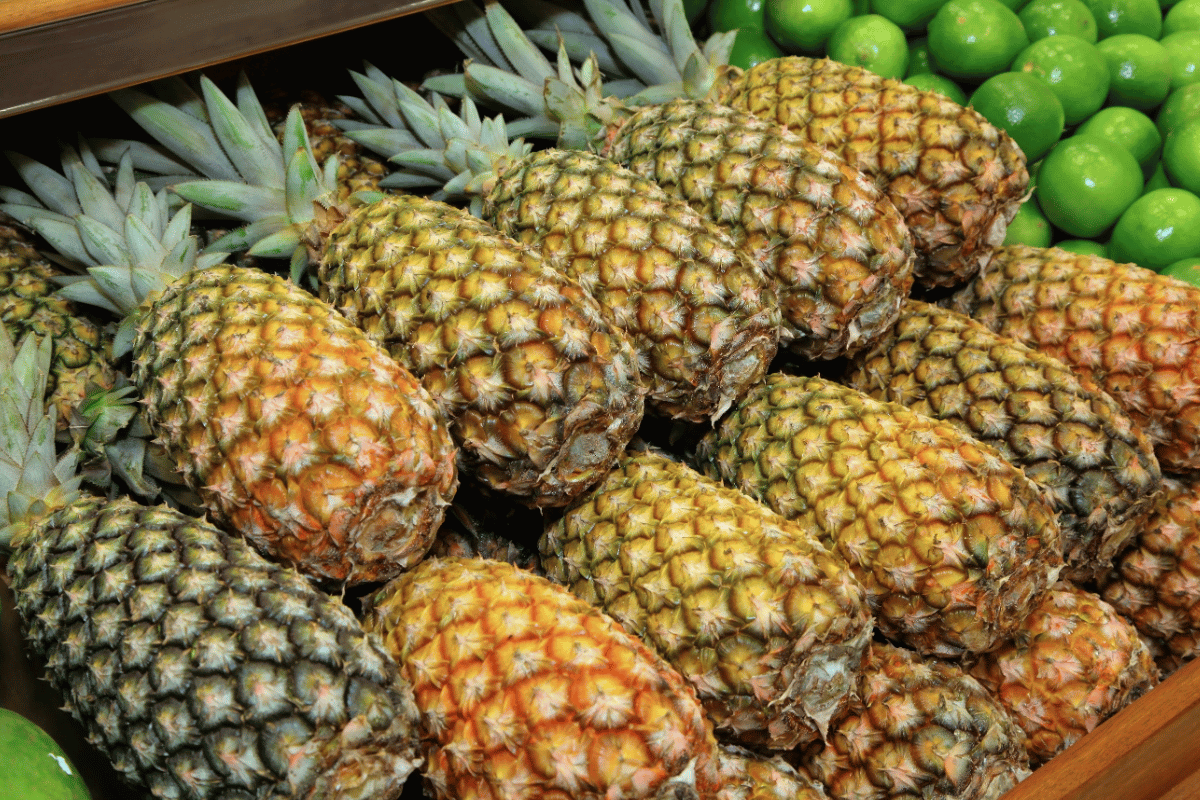
The Clean Fifteen 2025 explained
The Clean Fifteen is the Environmental Working Group’s (EWG) annual list of the 15 conventionally grown fruits and vegetables with the lowest pesticide residues. It is based on testing conducted under the USDA Pesticide Data Program, which analyzes produce after typical washing or peeling.
In 2025, cauliflower and bananas joined the Clean Fifteen, reinforcing a consistent pattern rather than a sudden shift. These crops stand out because they naturally require fewer chemical inputs to remain healthy and marketable.
The Clean Fifteen is the positive counterpart to EWG’s Dirty Dozen. While the Dirty Dozen highlights where pest pressure and market demands drive higher pesticide use, the Clean Fifteen shows where crop biology, growing conditions, and consumer expectations align to keep residues low.
All detected residues remain well below EPA safety limits, and nutrition experts consistently emphasize the same message: eating fruits and vegetables is essential for health. The Clean Fifteen simply helps identify where conventional produce already performs well.
The 2025 Clean Fifteen list
Crops with the lowest detectable pesticide residues
According to EWG’s 2025 analysis, the Clean Fifteen are:
1. Pineapples
2. Sweet Corn (fresh and frozen)
3. Avocados
4. Papaya
5. Onions
6. Sweet Peas (frozen)
7. Asparagus
8. Cabbage
9. Watermelon
10. Cauliflower
11. Bananas
12. Mangoes
13. Carrots
14. Mushrooms
15. Kiwi
What has changed since 2024
Compared with 2024, cauliflower and bananas entered the list, while honeydew melon and sweet potatoes moved just outside the top fifteen. This reflects updated sampling rather than a deterioration in residue profiles.
What the numbers show
- Nearly 60% of Clean Fifteen samples had no detectable pesticide residues
- Only about 16% showed two or more residues
- The vast majority contained either one residue or none at all
In practical terms, the Clean Fifteen represents a stable group of crops that consistently test low, year after year.
Why do these crops rank lowest
Physical protection matters
Thick peels and protective skins: Many top Clean Fifteen crops have heavy outer layers that keep residues out of the edible portion. Pineapples, avocados, mangoes, and papayas all have thick skins that are peeled off before eating, so almost any pesticides remain on the rind. Similarly, watermelons have a hard rind, and onions are covered with papery layers, so residues seldom reach the inner vegetable. (EWG notes that pineapple, onion, avocado and other such items consistently show among the lowest pesticide levels.)
Natural husks and layered leaves: Some veggies have additional natural coverings. Fresh sweet corn is wrapped in a green husk, sheltering the kernels. Cabbage and cauliflower encase the edible interior in overlapping leaves. These barriers both deter many pests and make it hard for sprays to penetrate. As a result, these crops often go through their growing season with very little pesticide residue on the parts we eat.
Inherent resistance to pests
Natural chemical defenses: Certain Clean Fifteen crops are simply less appealing to pests. Onions (and garlic) produce sulfur compounds and pungent odors that most insects avoid. Asparagus contains bitter compounds and tough fibers that deter many bugs. Papaya contains natural enzymes (papain) and latex that ward off insects. These inherent defenses mean farmers can often get away with little or no spraying.
Robust plant structure: Several clean crops grow underground or have sturdy tissues. Carrots and kiwi (in cooler climates) grow mostly in the soil, avoiding many above-ground pests and weather-related diseases. Asparagus has fibrous stems and crowns that are less prone to insect attack. Even when pests arrive, these crops can tolerate some damage without losing marketability. Farmers report that minor nibbles on onions or dirt on carrots are acceptable, unlike blemishes on a tomato, these aren’t usually rejected by buyers.
Lower disease pressure
Less moisture retention: Thick-shelled fruits often resist fungal and bacterial infections. Watermelon and cabbage have surfaces that shed water quickly, reducing mold growth. Sweet corn grows in well-aerated fields, limiting fungal diseases that plague other crops. Many Clean Fifteen are harvested quickly (e.g. fresh sweet peas, asparagus), so they spend less time in the field during peak pest season. This “short window” of exposure lowers the odds that pests will build up significant pressure.
Shorter exposure windows: Some Clean Fifteen crops are grown when pest populations are naturally lower. For example, asparagus is an early spring crop in many regions, so its vulnerable growth stage comes before many insects are active. Similarly, carrots in many climates mature in cooler weather when pest insects are less numerous. Farmers choose planting and harvest times strategically for these crops, exploiting weather and biology to minimize spraying.
Market expectations work differently
Market and cosmetic tolerance: The market often treats these crops more leniently. People expect carrots and cucumbers to have some surface dirt, or bananas to ripen unevenly—minor imperfections are accepted. Since consumers peel many of these (bananas, pineapples, onions), retailers are less strict about visual flaws. This tolerance gives farmers breathing room: they can let some imperfections stand instead of spraying extra chemicals for cosmetic reasons. The Dirty Dozen crops (like apples or berries) by contrast demand visual perfection, driving more preventive spraying.
Lower Economic Stakes: Many Clean Fifteen crops are commodities for which high-volume, low-price production is the norm (e.g. bananas, carrots, onions). These markets historically grew up around large-scale, low-input farming. In those systems, low-cost cultural controls (crop rotation, sanitation, timing) were emphasized. Farmers know they can produce these affordably without heavy pesticides, and consumers expect low prices. In short, there is less financial incentive to use expensive or riskier chemicals on these crops.
What the data actually means
How residues are measured
The Clean Fifteen rankings are based on testing conducted under the USDA Pesticide Data Program (PDP), which follows a very specific and conservative methodology. Produce samples are collected from retail outlets and distribution points across the United States, reflecting what consumers actually buy, not what comes directly from the field.
Before testing, samples are prepared as they would be at home. This means produce is washed under running water and, where relevant, peeled or trimmed. The analysis therefore captures residues that remain after normal handling, not worst-case field residues.
Laboratories use highly sensitive analytical equipment capable of detecting pesticides at parts-per-billion levels. At this scale, detection does not imply heavy use. It simply means the instruments are able to identify extremely small traces, often thousands of times lower than regulatory thresholds.
This sensitivity is important to understand. A sample can register a “detectable residue” even when the amount is so small it has no practical relevance for exposure. For this reason, residue presence is recorded separately from residue quantity, frequency, and diversity.
What makes the clean fifteen stand out in the data
The Clean Fifteen consistently shows a very different residue profile from most other produce categories.
In 2025:
- Nearly 60% of Clean Fifteen samples showed no detectable pesticide residues at all
- The majority of the remaining samples contained either a single residue or trace detections
- Only about 16% showed two or more residues, indicating limited chemical diversity rather than layered applications
Equally important is what is not seen in these crops. High residue counts, repeated detections of the same active substances, and complex mixtures are uncommon. When residues are present, they tend to be sporadic rather than systematic.
This pattern holds across years. The Clean Fifteen is not defined by a single low year, but by consistent performance across multiple sampling cycles, which is why many of the same crops appear repeatedly.
Why do farmers use fewer sprays on these crops?
Often they simply do not need to. The natural barriers and resistances described above mean these plants stay healthy without much chemical help. Because the fruits or vegetables are also easily stored, processed or cleaned, economic losses from minor pest damage are low. Integrated practices work well: for example, rotating carrots with non-host crops or planting trap crops for pests. Many of these crops also have established market standards that accept some variability, so there’s less pressure for “perfect” yield. In short, many Clean Fifteen crops succeed with low-input farming by design.
This is not to say these crops use zero pesticides. Growers may still apply minimal fungicides or insecticides if needed, especially in intensive production areas. But on average, both residue incidence and the amount used are very low. For consumers (especially budget-conscious shoppers), the result is clear: eating Clean Fifteen produce, even in non-organic form, involves very little pesticide exposure. Washing produce thoroughly can further reduce any residues. In practice, choosing Clean Fifteen items is a money-saving strategy: these crops give you the nutritional benefits of fruits and vegetables with minimal worry, and often at lower cost than organic alternatives.
An agricultural success story
The Clean Fifteen crops show that low-input farming can work at scale. Many of these foods have been grown successfully for generations using relatively simple methods: crop rotation, timing, basic sanitation, and limited chemical intervention. Farmers gradually selected varieties and planting schedules that fit local pest cycles instead of fighting them.
Root vegetables such as carrots are a good example. They were bred for vigor and resistance to rot long before modern pesticides became widespread, and today they still perform reliably across many climates with standard soil management. Banana production follows a similar logic. Despite being a global staple, bananas rely more on dense planting, continuous harvesting, and natural resilience than on heavy insecticide use.
What looks like simplicity is actually accumulated experience.
Modern research is now building on these long-standing successes. Plant breeders study the natural chemistry of crops like onions and asparagus to understand which compounds deter pests. Geneticists explore whether traits common in tropical crops, such as banana’s passive pest resistance, can be strengthened or adapted elsewhere. Researchers also look at why certain crops outside the Clean Fifteen require far more spraying, using hardy crops as reference points for improvement.
Each Clean Fifteen success offers practical clues. If a cabbage or avocado can stay healthy with minimal intervention, there is something to learn from how it grows, not just how it is managed.
Farmers interested in sustainability often treat Clean Fifteen crops as working models. Techniques such as timing plantings for cooler periods, using physical barriers like mulches, or encouraging beneficial insects are common practices in these systems. The takeaway is simple: approaches that work for Clean Fifteen crops are not niche or experimental. In many cases, they are already proven and adaptable.
What works in farming
The Clean Fifteen reflects a side of agriculture that never fully depended on heavy chemical use. Many of these crops matured commercially before pesticides became central to production, succeeding through crop diversity, timing, and acceptance of natural variation.
Traditionally, onions, carrots, cabbage, and peas were grown in mixed rotations and smaller fields. Pest pressure stayed manageable because diversity disrupted pest cycles. Those same principles still shape how these crops are grown today.
The lesson is straightforward. When crops have natural advantages, farming economics change. Thick skins, shorter growing periods, and tolerance for minor imperfections lower risk. Farmers can remain profitable with fewer inputs, while consumers still get affordable food.
This does not mean all crops are the same. It means some pesticide pressure is cultural rather than biological. When markets demand visual perfection, chemical use rises. When imperfections are accepted, pressure eases.
Globally, many Clean Fifteen crops are already produced this way. Bananas, pineapples, papayas, cabbage, and peas are grown at scale under relatively low-input systems and still meet export standards. Sustainable agriculture is not theoretical. It already feeds millions, and the Clean Fifteen makes that success visible.
Conclusion
The Clean Fifteen shows that low-input farming is not an exception. It is already working, quietly and at scale, across crops that rely on natural protection, sensible timing, and realistic market expectations.
For consumers, this is practical news. Many affordable, conventionally grown fruits and vegetables consistently carry very low pesticide residues, making it easier to eat well without stretching budgets or worrying about trade-offs.
For farmers, the Clean Fifteen offers proof that working with a crop’s biology can reduce risk, inputs, and costs while remaining competitive. These crops point to a food system that rewards resilience rather than cosmetic perfection.
The message is simple and forward-looking. Sustainable agriculture does not start from scratch. It grows from what already works. The Clean Fifteen makes those successes visible, and shows how much further food systems can go by building on them.
Sources
EWG's 2025 Shopper's Guide to Pesticides in Produce | Summary
Pesticide Data Program Annual Summary: Calendar Year 2024