


The share of agri-food firms in the European Union that use at least one AI technology rose from 5% in 2021 to 13% in 2025, according to a policy brief published on 14 October by the European Commission's Joint Research Centre (JRC). Across all sectors the share rose from 8% to 20%, a figure that matches the 19.95% Eurostat reports for 2025. Agri-food sits at the bottom of the ten strategic sectors in the Commission's Apply AI Strategy, level with tourism and just above mobility, while media reached 38% and energy 34%.
Farms are left out of the agri-food figure
In the full report behind the brief, the JRC defines the agri-food sector broadly, from crop and animal production and fishing to food and beverage processing and the manufacture of agricultural machinery. Its data, however, come from Eurostat's survey on ICT use in enterprises, which covers firms with 10 or more employees in sections C to N of the EU's activity classification. Farming and fishing fall outside it, so the survey reaches only 8.4% of the firms in the JRC's definition of the sector.
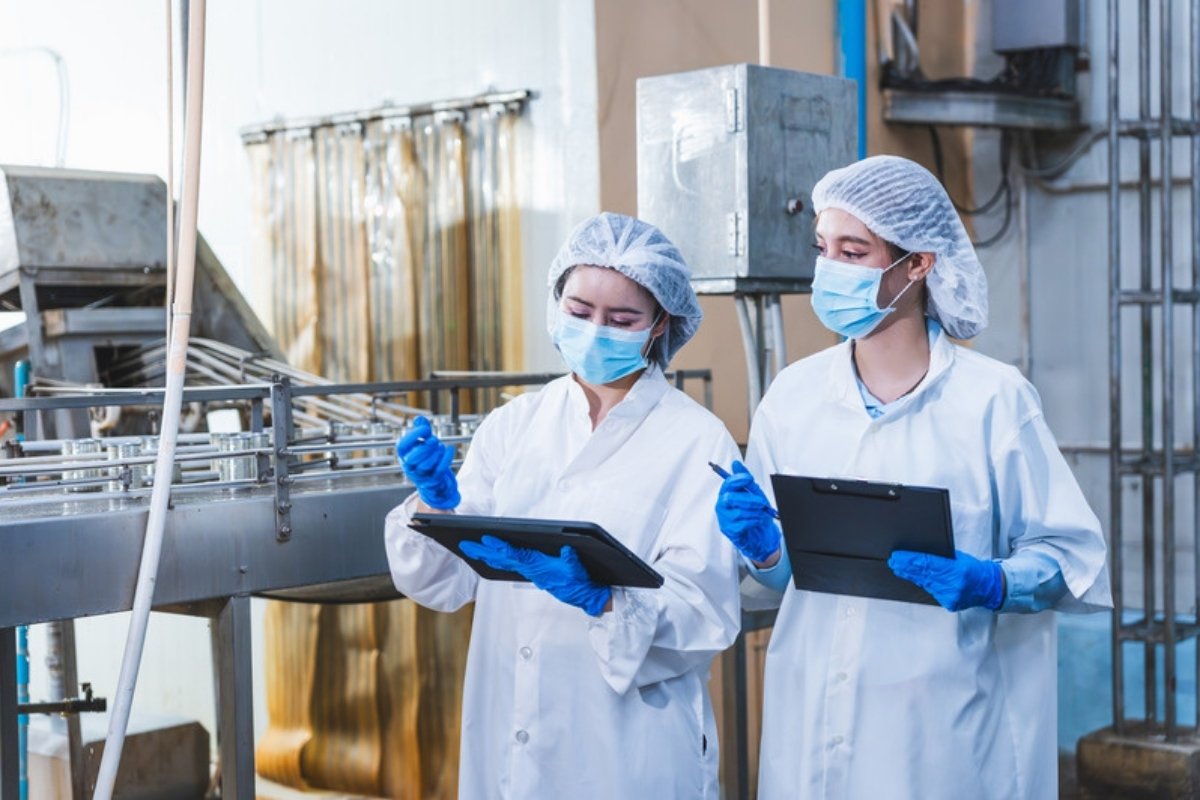
The 13% is a weighted average of two groups: food and beverage processors, at 12%, and makers of agricultural machinery, at 25%. Wholesale trade in food is absent from the sector's definition altogether. The JRC's agri-food figure therefore describes the factories in the middle of the chain, with the farm at one end and the trader at the other left unmeasured.
Writing and selling account for almost all of the growth
Among all agri-food firms, 4% used AI for marketing or sales in 2025 and another 4% for business administration. Accounting, production, ICT security and research each stood at 2%, and logistics at 1%. Between 2023 and 2025 the use of AI for marketing or sales rose by 3.3 percentage points and for administration by 2.5, while production processes gained 0.2 points and logistics lost 0.1.
The tools behind this growth are the ones that analyse and generate text, the large language models that also power everyday AI assistants. In the JRC's words, the increase in agri-food is "almost solely concentrated" on these technologies for marketing, sales and administration, with other technologies and purposes rising by less than 2% and often by less than 1%. AI that lets machines move on their own, the category that covers robots and self-driving machinery, was used by fewer agri-food firms in 2025 than in 2021.
AI has barely reached the parts of the chain where food is traded
Eurostat's survey has no separate question on buying, selling at wholesale or setting prices. Logistics is the closest category to trade, and it is the least common use of AI in every strategic sector except mobility. In agri-food it fell slightly between 2023 and 2025.
Since September, AI assistants connected through an open standard can book freight with some forwarders and read commodity price benchmarks from at least one price reporting agency. The 2025 survey predates both launches, so later rounds of Eurostat data will be the first that could show whether food firms take AI into logistics.
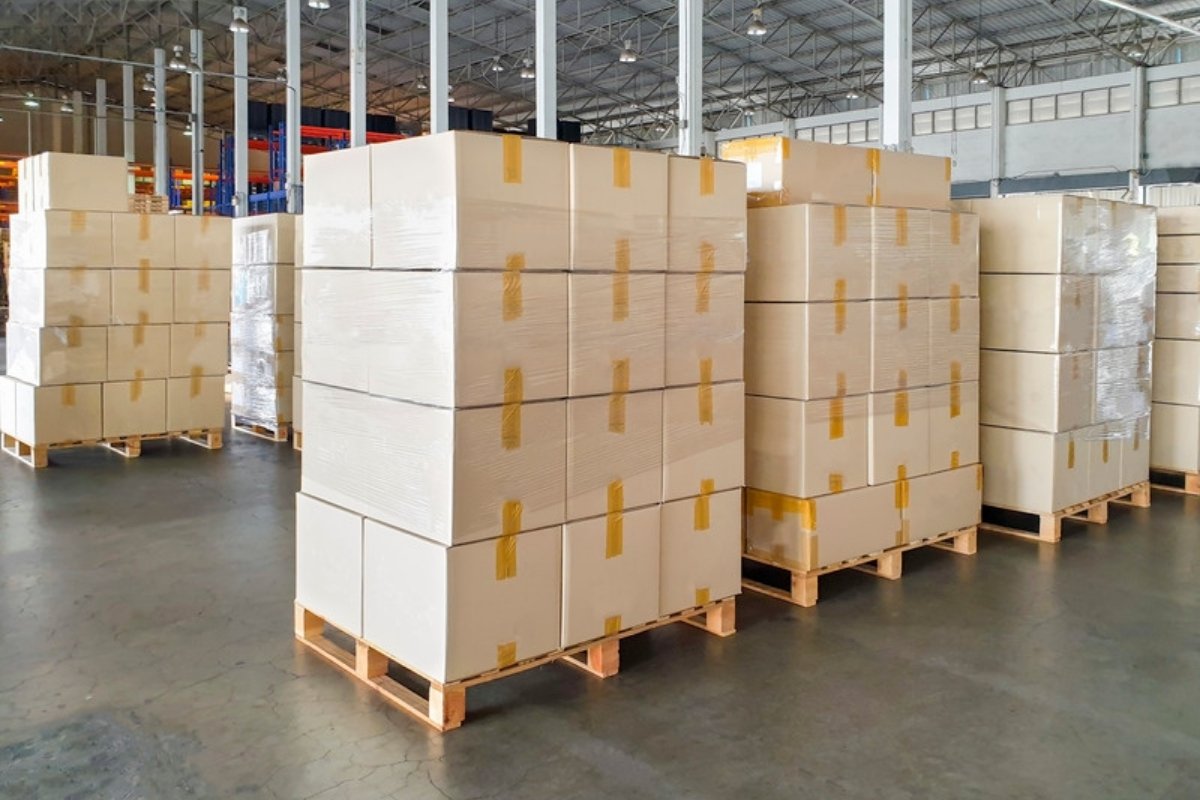
Logistics, the closest category to food trade in Eurostat's survey, is one of the least common uses of AI among agri-food firms
Digital foundations come before AI
The full report describes AI as "the tip of the digitalisation pyramid". Most firms with a very high level of digitalisation use at least one AI technology, while almost none with a very low level do. Sectors and countries where more firms were highly digitalised in 2021 also raised their AI use faster up to 2025. Citing OECD research, it lists cloud computing, customer relationship management, enterprise resource planning and fast broadband as prerequisites, and the JRC concludes that agri-food and tourism "will require more substantial organisational restructuring" than other sectors to turn AI into productivity gains.
In every strategic sector, more than half of the firms using AI bought at least one ready-to-use commercial system, and fewer now rely on systems built by outside providers. Agri-food and energy are the only sectors where the share of firms adapting commercial software with their own staff has risen.
Lack of expertise is the main reason firms hold back
Among agri-food firms that considered AI but did not adopt it, a lack of relevant expertise is the reason given most often, as it is in almost every sector. Its relative weight fell more in agri-food between 2023 and 2025 than anywhere else. Across all sectors, concerns about cost, data quality and compatibility with existing systems declined over the same period, while concerns about legal consequences and data protection grew.
The findings mean different things at each stage of the chain
- Producers and cooperatives: farm-level evidence comes from a separate JRC survey of 1,444 farms in nine member states, including Greece and Spain, carried out in 2024. It found general IT tools in wide use, more advanced farm technologies less common, most farm data still collected manually or with basic tools, and farmers sharing data selectively, mainly out of concern for privacy, security and control.
- Food processors: the assistant already used to draft a product sheet can, with the right connections, also check a freight rate or a price benchmark. The step from writing to acting inside company systems depends on the digital tools and data a smaller firm already has in place.
- Traders and importers: food wholesale is missing from the sector's measurement, so there is no official figure for AI in food trade specifically. Keeping a record of what an agent quoted or booked, and who approved it, gives a firm a baseline of its own.
- Skills: expertise is the barrier firms cite most often, and training and collaboration between smaller agrifood firms is one documented way to build it.
New Eurostat data are due in December
Eurostat plans to publish its next results on AI use in enterprises in December 2026. The Commission plans an agri-food AI platform for the first quarter of 2027, meant to help users find and integrate specialised AI tools. The JRC report itself calls for the ICT survey to cover more activities and to release firm-level data, which would be needed before farms appear in the EU's AI statistics, or before food traders can be told apart from wholesale as a whole.
Sources
- Ignaszak, M., Nepelski, D., Stake, J. and André, A.-A. (2026). AI adoption in the European Union. New evidence for Apply AI strategic sectors. Science for Policy Briefs, JRC147371. European Commission.
- Ignaszak, M., Nepelski, D., Stake, J. and André, A.-A. (2026). Measuring AI adoption in the European Union. Methodology and results for strategic sectors. JRC146753. European Commission.
- Eurostat. (2025). Use of artificial intelligence in enterprises. Statistics Explained.
- Eurostat. (n.d.). ICT usage in enterprises, reference metadata. Eurostat.
- Tur Cardona, J., Ciaian, P., Antonioli, F. et al. (2025). The state of digitalisation in EU agriculture. Insights from farm surveys. JRC141259. European Commission.
- European Commission. (n.d.). Advancing AI in Europe's agri-food sector. Futurium, Apply AI Strategy.