
By Dr. Katerina Konstantinou, Project Manager, European R&D Department, REZOS BRANDS S.A.
A new era for European agriculture
Digital transition, sustainability goals, food security, and rising global competition are pushing agriculture into a new era. Policies such as the European Green Deal and the Farm to Fork Strategy highlight the need to make agriculture more efficient, environmentally friendly, and resilient. Yet limited access to skills, knowledge, familiarity with new technologies, and resources continues to create a gap between research and innovation, slowing the ability of farmers and agrifood SMEs to adopt technological innovations and weakening their competitiveness in an increasingly demanding market.
The innovation gap, key challenges
Several challenges drive the innovation gap in agriculture. There is an ongoing need for upskilling and practical training for both SMEs and farmers, since awareness of digital tools does not always translate into confidence or effective use. Access to integrated stakeholder networks is limited, which makes it difficult for key actors to fully benefit from new knowledge and technologies. Many innovative solutions remain confined to academic environments and are not shared widely with practitioners, which keeps innovation isolated from its real-world application.
The importance of skills
Digital transformation in agriculture requires well-informed and well-trained people who understand how to use technological innovations. Farmers, SME professionals, and agronomists need new skills to manage the data they acquire, interpret results, and integrate digital solutions into their daily operations. These capacities involve technical knowledge as well as the ability to make informed, data-driven decisions. For many farmers and agrifood SMEs, the real challenge lies in the gap between theoretical knowledge and practical implementation.
Investing in skills development is therefore a key step toward unlocking the full potential of innovation in the agrifood sector. Through targeted training programmes, workshops, and hands-on learning experiences, farmers and SMEs can move beyond theory and engage directly with new technologies. Rather than simply learning what digital tools are, they learn how and when to use them, and how these tools can respond to real challenges in agricultural production.
Initiatives such as the TALLHEDA project illustrate how training can act as a bridge between research and the agrifood sector. By bringing together actors from different countries, professional backgrounds, and levels of experience, such initiatives create a dynamic environment for knowledge exchange, collaboration, and co-creation. Participants are exposed to the latest developments in digital agriculture and gain insight into how these innovations are applied in real-world conditions. Experiences such as summer schools and workshops play a particularly important role here. Through direct interaction with experts, researchers, and industry professionals, farmers and agrifood SMEs can explore new technologies in practice, visit model farms and innovation companies, and observe how digital solutions are integrated into everyday operations. This kind of experiential learning helps turn abstract concepts into tangible knowledge.
Education as a bridge to innovation
Education holds a central role in connecting innovation with everyday agricultural practice. Tertiary agricultural education in particular needs to evolve, by integrating digital technologies into the curricula and by combining theory with practical exercises, so that a new generation of agronomists is prepared to support the sector's digital transition.
The TALLHEDA project is already transforming the pedagogical systems of two Widening agricultural universities, integrating digital agriculture and related tools into undergraduate and postgraduate curricula. The new generation of agronomists is being equipped with advanced knowledge and practical experience to lead the digital transition in the agriculture sector. Compared with previous generations, these students are familiar with traditional and modern farming practices alike, and they are also developing strong digital skills, including AI-enabled data analysis, precision farming tools, and smart decision-making systems.
As they enter the workforce, they are expected to play a fundamental role in supporting farmers and agrifood SMEs in adopting innovation. Their hybrid ability to blend scientific knowledge with practical applications can help translate complex technologies into useful solutions, acting as trusted intermediaries and building confidence among farmers and SMEs who may be hesitant to adopt new technologies. This new generation of agronomists offers a comfortable and supportive environment for fostering trust, encouraging the uptake of innovation, and supporting a resilient digital transformation of the agrifood sector.
The power of collaboration
Innovation is a collaborative outcome between different actors, each bringing its own expertise and perspective. In agriculture, this means connecting universities and research institutions, which develop new knowledge, with industry and technology providers, which create innovative solutions, with farmers and SMEs, who apply these solutions in practice, and with public authorities and society, which shape the broader framework. This collaborative model, often referred to as the quadruple helix, is essential for ensuring that innovation is both relevant and impactful. By joining forces, these actors can accelerate the development and adoption of digital solutions across the agrifood sector.
Initiatives such as TALLHEDA play a key role in building and strengthening such ecosystems. The TALLHEDA Digital Innovation Hub, which welcomes registrations from farmers and agrifood SMEs, fosters long-term, meaningful collaborations among higher education institutions, industry stakeholders, SMEs, and policymakers, creating a structured environment in which innovation is jointly designed, developed, tested, and shared. The TALLHEDA alliance, through its Digital Innovation Hub, aims to create sustainable collaborations that continue to generate value over time and to expand access to excellence in digital agriculture, especially for regions and stakeholders that might otherwise be left behind.
Upskilling, education, and networking build stronger innovation ecosystems
Real progress towards the digital transition in agriculture depends on how effectively key actors are engaged and connected to build a strong, well-functioning innovation ecosystem, one in which knowledge, skills, and ideas can flow freely between research, education, and practical application. In such an ecosystem, collaboration becomes a driving force for innovation. Universities and research institutions contribute scientific knowledge and technological developments, industry partners and technology providers translate these innovations into practical solutions, and farmers and SMEs bring real-world experience, ensuring that the solutions are applicable and have practical impact. Public authorities contribute by shaping the landscape so that these interactions and innovations are feasible, promoted, and transformed into innovation hubs.
Over time, ecosystems such as TALLHEDA can fundamentally transform how innovation is created and applied. Knowledge becomes more accessible and practical, and innovation responds more directly to real needs, rather than remaining confined to isolated research environments. The result is faster adoption of new technologies, more effective solutions, and a more inclusive and resilient agricultural system. Building strong innovation ecosystems is fundamentally about creating the favourable conditions for long-term, sustainable transformation across the entire agrifood sector.
Upskilling, education and networking support agrifood SMEs in the digital transition
Most agrifood SMEs lack the internal capacity to explore and adopt emerging technologies on their own. Limited financial resources, lack of specialised personnel, and uncertainty about the benefits of innovation often act as barriers to change.
For these SMEs, access to education, training, and multi-actor networks becomes essential. Participation in structured initiatives and innovation ecosystems also reinforces SMEs' engagement with novel technologies in a supportive, low-risk environment. They can explore solutions gradually with the guidance of experts, building a clearer understanding of the potential value and applicability of each technology. Through collaboration with universities, research institutions, and technology providers, SMEs can access expertise that would otherwise be difficult to obtain. They can test innovative tools, experiment with digital solutions, and receive guidance on integrating these technologies into their existing operations.
This gradual integration of digital tools into the workflow improves operational efficiency while keeping flexibility and control over the investment. The process reduces uncertainty and helps build the confidence needed to move forward with adoption. Over time, it leads to stronger, more resilient businesses that are better equipped to respond to current and future market demands and environmental challenges.
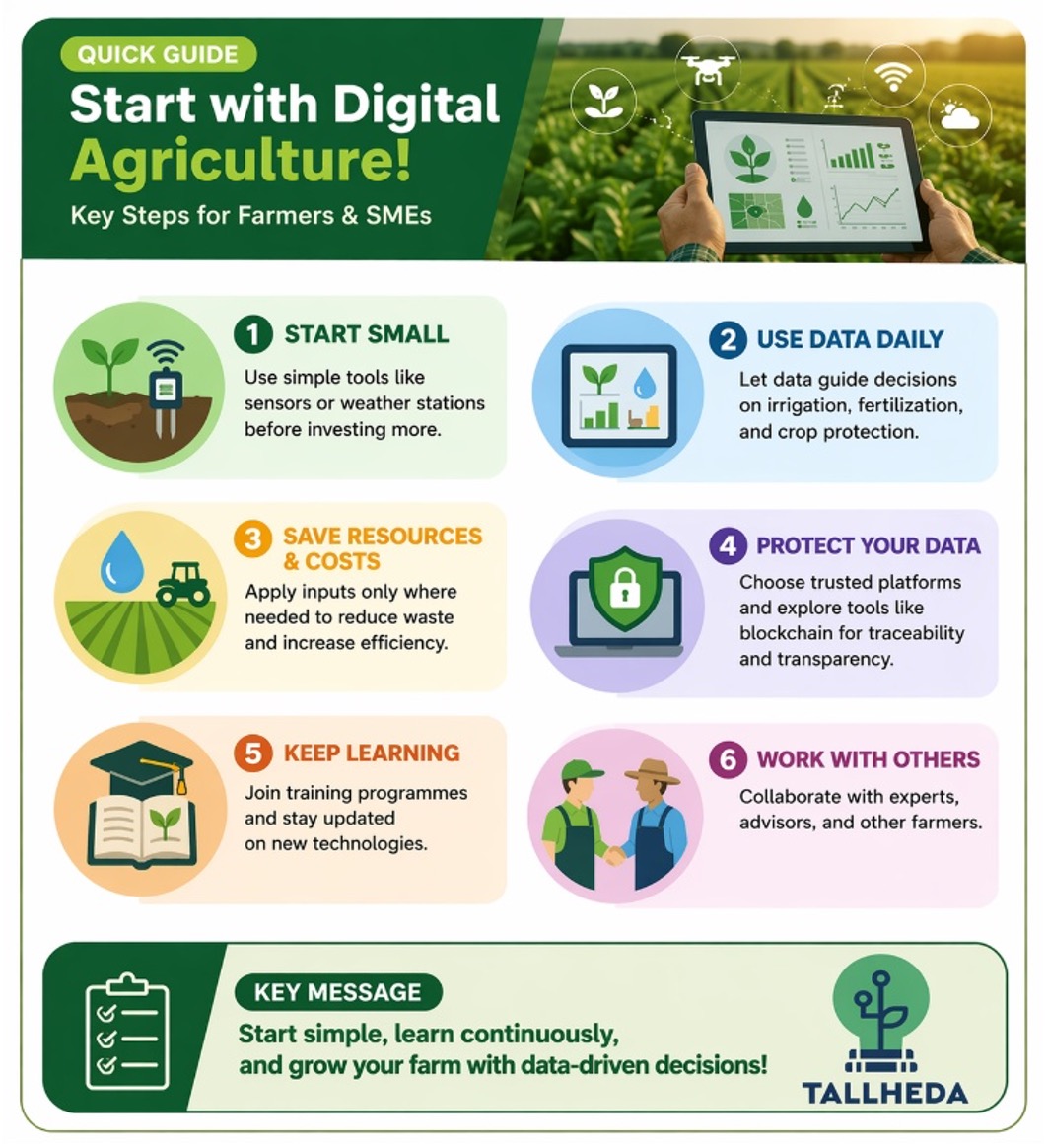
Figure 1: A practical roadmap towards digital transformation of agrifood SMEs
From knowledge to impact
Bridging the innovation gap towards the digitalisation of agriculture requires investment in education, stronger and more resilient partnerships, and greater access to knowledge for all stakeholders, especially SMEs. By combining skills development with meaningful collaboration, initiatives like TALLHEDA help ensure that innovation moves from theory to practice, becoming a tool for improving productivity, sustainability, and competitiveness in the agrifood sector.
About the project
This article was developed in the context of the TALLHEDA project (Transforming Access to Excellence with Successful Alliances of Higher Education in Digital Agriculture), a Horizon Europe WIDERA ACCESS Initiative.
Project website: www.tallheda.eu CORDIS record: cordis.europa.eu/project/id/101136578 Author affiliation: REZOS BRANDS S.A.
Funded by the European Union under Grant Agreement No 101136578 (HORIZON-WIDERA-2023-ACCESS-03). Views and opinions expressed are however those of the author only and do not necessarily reflect those of the European Union or the granting authority. Neither the European Union nor the granting authority can be held responsible for them.