Co-authors: Japhia Ramkumar, Davendra Ramkumar, and Jack McCoy from University of Illinois Urbana-Champaign
When we think of a classroom, we often imagine desks, books, and a teacher at the front. But beneath our feet lies one of the most fascinating and instructive classrooms on Earth: the soil microbiome. This hidden world of microorganisms offers profound lessons for food security, human health, and environmental sustainability. By studying and respecting the life in soil, farmers, scientists, and policymakers can uncover solutions to some of our greatest global challenges.
What is the soil microbiome?
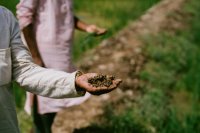
The soil microbiome refers to the vast community of microorganisms, including bacteria, fungi, protozoa, archaea, and viruses, that live in soil. Just as the human gut microbiome is essential for digestion, immunity, making necessary vitamins and other useful substances, and maintaining overall good health, the soil microbiome plays a critical role in nutrient cycling, plant growth, and ecosystem balance (Vincze et al., 2023). Every teaspoon of healthy soil contains billions of microorganisms working together in a complex web of interactions. They break down organic matter, release nutrients, protect plants against pathogens, and even influence climate regulation through carbon storage
Lesson 1: Food security depends on healthy soil life
Modern agriculture often relies heavily on external inputs like synthetic fertilisers and pesticides. However, the soil microbiome shows us that long-term food security depends on fostering natural fertility through biological processes. Healthy soil is full of tiny living organisms that break down dead plants, release nutrients, and help crops grow strong. Refocusing on soil biology allows us to understand and harness these natural systems, reducing dependency on chemical inputs. When we protect these microbes, the soil becomes naturally fertile without needing as many external inputs. This means farmers can grow more food in a sustainable and affordable way (Du et al., 2025).
- Smallholder example: In many parts of sub-Saharan Africa, farmers have successfully improved maize yields by planting legumes such as cowpea or groundnut in rotation. These legumes host nitrogen-fixing bacteria in their roots, enriching the soil for the next crop (Pretty et al., 2018). As the legumes grow, the bacteria capture nitrogen from the air and convert it into a form that plants can use. When the legume crop is harvested or its residues are left in the soil, this natural nitrogen remains behind, enriching the soil for the next maize crop. As a result, yields increase without the need for large amounts of chemical fertilisers. In regions where chemical inputs are unaffordable or inaccessible, this natural fertilisation strategy becomes even more valuable.
- Practical tip: By rotating cereals with legumes or incorporating cover crops, smallholders can reduce the need for expensive chemical fertilizers while improving soil health. Legumes, unlike cereals, collaborate with beneficial soil bacteria in order to capture the nitrogen available in the air and put it in the soil naturally. It is an indication that by growing legumes, soil fertility is improved for the next crop, reducing the need for chemical fertiliser . Additionally, there is the provision to cover crops, other quick-growing plants such as sunn hemp, clover or lablab during the off-season as opposed to leaving the fields bare. These cover crops prevent soil erosion, replenish organic matter, control weeds and nourish soil microbes. Legumes are often used in cover crop mixes as well. Legumes and cover crops, both in rotation or as green manure, act like a savings account to the soil - storing nutrients now to ensure that future crops will have greater strength without depending on external inputs to thrive.
Lesson 2: Soil health is human health
The health of the soil is directly connected to the health of people. There is growing evidence that food grown using organic or regenerative agricultural practices is more nutritious because these farming practices support a wider variety of beneficial microbes in the soil, which improve the health of plants, animals and people (Ramkumar et al., 2024). Nutrient-rich soils have the potential to produce crops that are naturally richer in vitamins and minerals (Montgomery & Biklé, 2021).
These nutrient-dense foods help strengthen the immune system, improve brain function, and support overall well-being. People who consume foods grown in healthy soils are more likely to stay strong, fight diseases, and maintain energy throughout the day. Conversely, degraded soils often lead to food with lower levels of essential micronutrients such as zinc and iron (Sanchez, 2010). This can happen due to over-farming, erosion, pollution, or excessive chemical inputs.
The crops grown in such soil may still produce high yields, but the food often contains fewer essential micronutrients like zinc, iron, and magnesium (Sanchez, 2010). This can lead to a form of malnutrition known as “hidden hunger,” where people have enough food to fill their stomachs but lack the key nutrients their bodies need to thrive. Even in regions where food is available, poor soil quality can contribute to fatigue, weakened immunity, stunted growth in children, and higher rates of illness (Rani et al., 2023).
- Smallholder example: In Ethiopia, the use of compost and manure has been shown to increase the micronutrient content of teff, a staple grain, improving both yield and nutritional quality for local communities (Assefa et al., 2016). They not only achieved higher grain yields but also recorded notable increases in micronutrient levels, including iron, zinc, and calcium. These improvements are particularly significant in rural communities where hidden hunger micronutrient deficiency, despite adequate calorie intake, remains a widespread challenge.
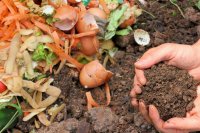
- Practical tip: Applying locally available organic amendments, such as compost, manure, or crop residues, can improve both harvests and the nutrient quality of food. Collecting farmyard manure, composting kitchen scraps, or incorporating decomposed crop residues before planting helps enrich the soil naturally. Regular application, even in small amounts, builds soil fertility over time, enhances water-holding capacity, and improves root growth. For best results, farmers can apply compost or manure during land preparation or use it as a top dressing around growing plants. This low-cost, environmentally friendly approach strengthens resilience to drought, boosts both harvest quantity and nutritional quality, and ensures households grow more nutritious food directly from their own land.
Lesson 3: Sustainability means working with nature
Soil microorganisms recycle waste, build organic matter, and regulate greenhouse gases. They decompose the dead plants and waste materials from people and convert them into handy nutrients, which serve the purpose of allowing other plants to grow. By so doing, they accumulate organic matter, which makes the soil healthy and fertile. These minute creatures also aid in the control of greenhouse gases as they control the movement of carbon and nitrogen in soil. As a matter of fact, certain soil bacteria and fungi even help sequester carbon, locking it in the soil and mitigating climate change (Chen et al., 2024).
- Smallholder example: In India, farmers practising zero tillage, where seeds are directly sown into untilled soil, in wheat-rice systems found that soil organic matter increased, microbial activity improved, and irrigation costs went down (Jat et al., 2020). It further meant that the soil surface was not disturbed, so it was able to hold on to more moisture, hence reducing irrigation needs, which is a significant benefit in areas experiencing groundwater decline. Less field work also led to lower fuel and labour expenses incurred by farmers, proving that zero tillage is not only environmentally friendly, but also cost-effective.
- Practical tip: Reducing soil disturbance, such as by limiting ploughing, allows microbes to thrive and organic matter to accumulate. Farmers can also use direct seeders or simple jab planters to use minimal or no-till planting methods instead of ploughing the field several times. The presence of crop residues on the soil surface protects the ground, is beneficial to soil organisms, and accumulates organic matter. In the long run, this enhances soil health, water conservation, lowers the cost of production, and yields do not deteriorate, but may actually increase.
Lesson 4: Diversity builds resilience
Just as a diverse classroom fosters creativity and problem-solving, diverse microbial communities in soil make farms more resilient to shocks such as drought, pests, or climate extremes. Diverse soil microbial communities contribute to ecosystem function and resilience (Iqbal et al., 2025). Farmers can leverage this resilience by implementing practices that promote microbial communities.
- Smallholder example: In Nigeria, intercropping cassava with maize not only spreads risk but also encourages different microbial interactions in the soil, supporting better nutrient cycling and disease resistance (Nwokoro et al., 2022). The deeper roots of cassava aid in breaking down compacted layers of soil, and the fibrous roots of maize add organic matter towards the surface - forming a more balanced and biologically active soil ecosystem. Intercrop farming is also advantageous to farmers because of the efficient utilisation of land and a constant income/food base, even when one crop fails.
- Practical tip: Instead of monocropping, diversify farm systems with intercropping, agroforestry, or crop-livestock integration to strengthen resilience. Mixing different plant species or combining crops with trees or livestock creates a more stable ecosystem below and above ground, allowing farms to better withstand drought, pests, or market fluctuations.
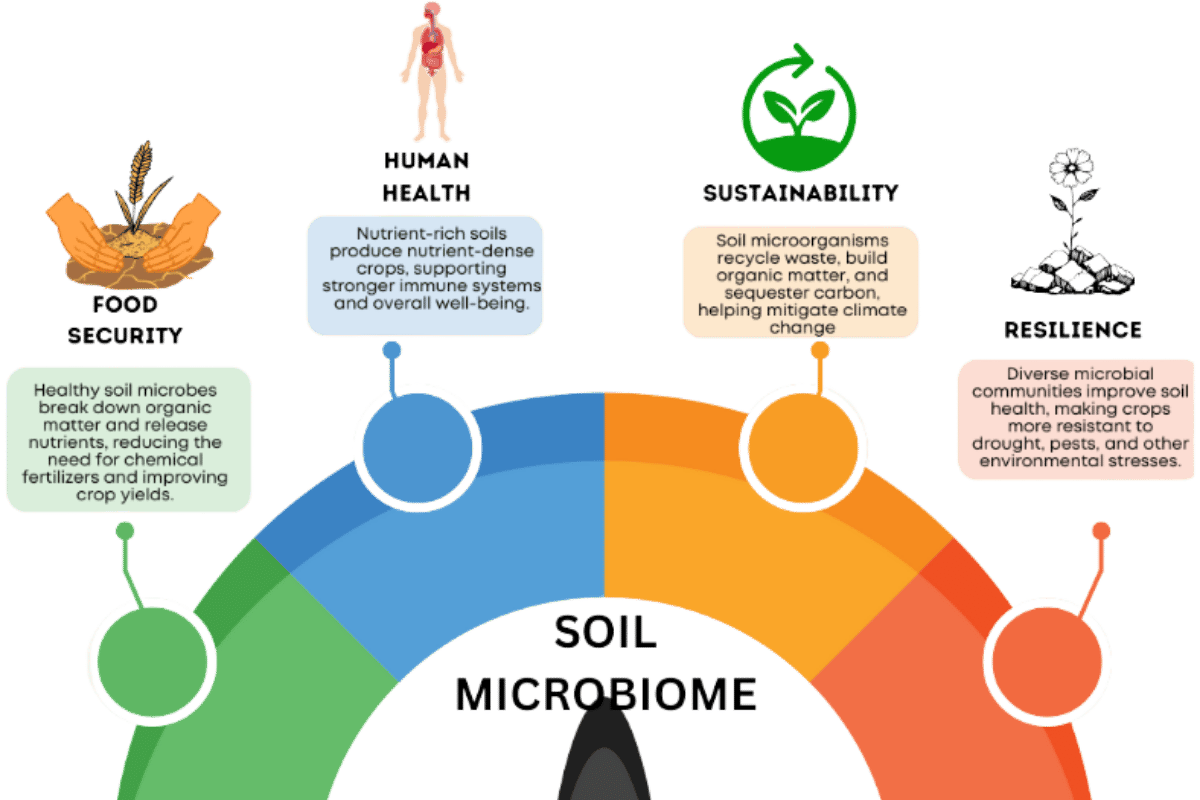
Figure 1: Lessons from Soil Microbiome
Cultivating the soil classroom: Steps for farmers
The Green Revolution of the 21st century, inspired by soil-centered practices, should focus on ecosystem-friendly farming where farming should work with nature, using resources efficiently, reducing waste and relying less on chemicals and outside inputs (Lal, 2020)
To unlock the lessons of the soil microbiome, smallholders can take practical steps:
- Reduce tillage: Minimise frequent or deep ploughing so that soil structure remains intact and microbial habitats are not disrupted. Shallow or zero-tillage methods help beneficial organisms like earthworms and fungi thrive.
- Add organic matter: Use compost, farmyard manure, or crop residues to feed soil microbes. It helps them break down nutrients and improve soil fertility naturally.
- Plant cover crops: During fallow periods, grow cover crops such as cowpea, clover, or grasses to keep soil covered and alive throughout the year. Their roots support microbial life and prevent erosion.
- Rotate crops: Alternate cereals with legumes or root crops to balance soil nutrients. Each crop type supports different microbes, creating a more diverse and resilient soil community.
- Limit chemicals: Use biocontrol methods where possible to avoid harming beneficial microbes. Reduce reliance on synthetic pesticides and fertilizers where possible, as excess chemicals can kill beneficial microorganisms and weaken soil health over time.
Conclusion: Learning from the invisible teachers
The soil microbiome is not just a scientific curiosity; it is a living classroom offering daily lessons on how to sustain life on Earth. If we pay attention, it teaches us that food security, human health, and sustainability are deeply interconnected. By nurturing soil microorganisms, we nurture ourselves and future generations. For smallholder farmers especially, working with the soil’s “invisible teachers” is one of the most practical and affordable ways to build healthier, more resilient farming systems.
References
- Assefa, A., Tana, T., & Abdulahi, J. (2016). Effects of Compost and Inorganic NP Rates on Growth, Yield and Yield Components of Teff (Eragrotis teff (Zucc.) Trotter) in Girar Jarso District, Central Highland of Ethiopia. Journal of Fertilizers & Pesticides, 7(12).
- Chen, Q., Song, Y., An, Y., Lu, Y., & Zhong, G. (2024). Soil microorganisms: Their role in enhancing crop nutrition and health. Diversity, 16(12), 734. https://doi.org/10.3390/d16120734
- Du, J., Gao, Q., Sun, F., Liu, B., Jiao, Y., & Liu, Q. (2025). Agricultural soil microbiomes at the climate frontier: Nutrient-mediated adaptation strategies for sustainable farming. Ecotoxicology and Environmental Safety, 295, 118161.
- Iqbal, S., Begum, F., Nguchu, B. A., Claver, U. P., & Shaw, P. (2025). The invisible architects: Microbial communities and their transformative role in soil health and global climate changes. Environmental Microbiome, 20(1), 36.
- Jat, H.S., Datta, A., Choudhary, M., Sharma, P.C., Yadav, A.K., Choudhary, V., Gathala, M.K., Jat, M.L. and McDonald, A. (2019) Climate Smart Agriculture practices improve soil organic carbon pools, biological properties and crop productivity in cereal-based systems of North-West India. CATENA 181, p. 104059. Available from
- Lal, R. (2020). Regenerative agriculture for food and climate. Journal of Soil and Water Conservation, 75(5), 123A-124A.
- Montgomery, D. R., & Biklé, A. (2021). Soil Health and Nutrient Density: Beyond Organic vs. Conventional Farming. Frontiers in Sustainable Food Systems, 5.
- Nwokoro, C. C., Kreye, C., Necpalova, M., Adeyemi, O., Barthel, M., Pypers, P., Hauser, S., & Six, J. (2022). Cassava-maize intercropping systems in southern Nigeria: Radiation use efficiency, soil moisture dynamics, and yields of component crops. Field Crops Research, 283, 108550.
- Pretty, J., Benton, T.G., Bharucha, Z.P., Dicks, L.V., Flora, C.B., Godfray, H.C.J., Goulson, D., Hartley, S., Lampkin, N., Morris, C., Pierzynski, G., Prasad, P.V.V., Reganold, J., Rockström, J., Smith, P., Thorne, P., Wratten, S. and Borlaug, N.E. (2018). Global assessment of agricultural system redesign for sustainable intensification. Nature Sustainability, 1(8), pp.441–446.
- Davendra Ramkumar, Aileen Marty, Japhia Ramkumar, Holly Rosencranz, Radhika Vedantham, Modan Goldman, Erin Meyer, Jasia Steinmetz, Amy Weckle, Kelly Bloedorn, Carl Rosier. (2024). Food for thought: Making the case for food produced via regenerative agriculture in the battle against non-communicable chronic diseases (NCDs). One Health, Volume 18,100734,
- Rani, M., Kaushik, P., Bhayana, S., & Kapoor, S. (2023). Impact of organic farming on soil health and nutritional quality of crops. Journal of the Saudi Society of Agricultural Sciences, 22(8), 560-569.
- Sanchez, P.A. (2010). Tripling crop yields in tropical Africa. Nature Geoscience, 3(5), pp.299–300.
- Vincze, É., Becze, A., Laslo, É., & Mara, G. (2023). Beneficial Soil Microbiomes and Their Potential Role in Plant Growth and Soil Fertility. Agriculture, 14(1), 152.