


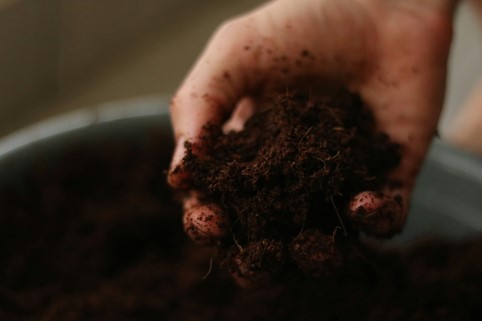
Introduction - Soil health in the spotlight
Soil health is a critical component of sustainable agriculture, influencing crop productivity, ecosystem services, and environmental quality. Healthy soils are essential for food security, as they support plant growth, regulate water cycles, and provide habitat for diverse organisms. Under proper management, healthy soils can provide food while requiring fewer inputs. The relevance of soil health extends beyond agricultural productivity; it plays a vital role in mitigating climate change, preserving biodiversity, and maintaining the overall health of our planet.
Historically, there has been a strong focus on the chemical and physical aspects of soil health, but recent studies have confirmed that the attention from policy and academia has broadened to include soil biodiversity as an essential aspect of soil health. (1) Current definitions of soil health, such as the one from the USDA - which describes it as "the continued capacity of a soil to function as a vital living ecosystem that sustains plants, animals and humans" (2) - acknowledge the fundamental role of the living ecosystem as the basis for a healthy soil. Recently, the EU reached a non-binding agreement to achieve healthy soils by 2050 (3). To do so, it will introduce a monitoring framework that will include biological aspects as indicators of soil health, as suggested in the initial proposal for a directive (4).
Understanding the role of soil biota in the healthy functioning of soils more in depth is, therefore, essential not only for developing effective management practices but also for being ready to align with upcoming policies.
Understanding Soil Biota
Soil biota refers to the diverse community of living organisms that inhabit the soil, including bacteria, fungi, protozoa, nematodes, and various invertebrates. The relevance of soil biota lies both in the service they deliver as functional groups, but more importantly in their ability to interact with each other and with the soil environment, creating a complex web of relationships that underpin soil functionality.
This is where we should try, when discussing healthy soils, to avoid talking exclusively about chemical and physical factors. By oversimplifying a highly complex system, we risk bypassing relations of natural checks and balances, as well as redundancies, that make natural ecosystems so resilient. A rich and diverse soil biota can contribute to the resilience of agricultural systems (5), enabling them to withstand stressors such as drought, pests, and diseases, but it only does so as a complex system. Selecting for specific strains of highly performing bacteria or fungi is akin to the oversimplistic performative mentality that led to the input-demanding monocultures birthed by the green revolution.
To provide an example: if we focus on one specific strain of bacteria to speed up the decomposition of fresh residues and the weather conditions end up not being ideal – let's say, too dry - the process will likely fail. In the same way, a monoculture of high-yield but water-demanding crops will tend to fail under the same conditions, or only succeed with large amounts of inputs. Since we have at best mapped a 5% of the soil biota communities and their interactions, pretending to optimize it would be overly ambitious at best. Instead, the focus should be on creating the conditions for the native communities to thrive and find their balance in complexity.
While it is challenging to provide silver-bullet solutions, we know that for many agricultural soils, this can be generally achieved by making sure that the soil has a healthy pH range, enough organic matter, is neither waterlogged nore too dry and, more importantly it i,s not subject to abuse of mineral fertilizers or synthetic pesticides. The effects of a plethora of pesticides have been widely studied, and their negative influence on the soil microbiome is hardly ever negligible (6, 7).
It should not be forgotten, though, that microorganism communities create specific relationships with specific plants, and that seasonal conditions have an impact on the ratio between different groups of the soil biota. We should not think, therefore, of a field as a static pool of organisms optimally working for our benefit, but rather as a living ecosystem, where populations of specific organisms may rise and fall over time.
What does this mean for a farmer, in practical terms? First, let's familiarize ourselves with the most relevant actors of the soil biota.
Groups of Soil Biota and Their Relevance
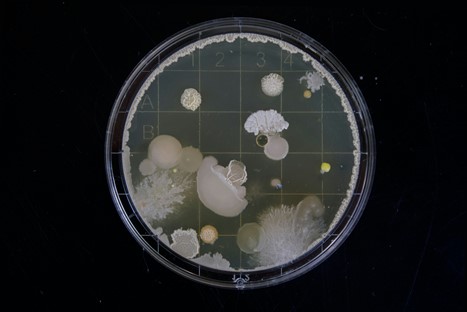
Illustration 2: Bacteria on a petri dish. Photo by Michael Schiffer on Unsplash
Soil biota can be categorized into several groups based on their size and ecological roles: microfauna, mesofauna, macrofauna, and megafauna. Each group plays a role in maintaining soil health:
1. Microfauna: Microfauna are critical for nutrient cycling and the regulation of bacterial populations. They help control the abundance of pathogenic organisms and contribute to the overall health of the soil ecosystem.
- Bacteria - These organisms play a crucial role in maintaining soil health by contributing to nutrient cycling, organic matter decomposition, and soil structure formation.
- Fungi – While we are more familiar with the fruiting bodies we eat, the hidden, underground part of fungi has the bigghest importance for soil health. Mycelial networks are thread-like structures that span across the soil: one Kg of healthy soil can contain several Km of these filaments. They enhance soil structure by binding soil particles together, promoting aggregation, and improving water retention. Additionally, many fungi establish symbiotic relationships with plant roots through mycorrhizal associations, which significantly enhance nutrient uptake. Fungi play a vital role in soil health by contributing to the decomposition of organic matter, particularly complex materials like lignin and cellulose that are resistant to breakdown by bacteria.
- Archaea - Archaea are a group of single-celled microorganisms distinct from bacteria and eukaryotes. They are involved in various biochemical processes, including the cycling of nutrients such as nitrogen and carbon. Archaea, particularly methanogens and ammonia-oxidizing archaea, contribute to the breakdown of organic matter and the transformation of nitrogen compounds, which enhances soil fertility.
- Nematodes – Nematodes are microscopic, unsegmented roundworms that inhabit various soil environments. They are the most abundant animal on earth, and they cover a wide range of ecological niches. Although plant-parasitic nematodes earned attention for the threat they pose to agriculture, they are diverse in function, with some species acting as beneficial organisms that contribute to nutrient cycling by feeding on bacteria, fungi, and organic matter, thereby facilitating decomposition and nutrient release.
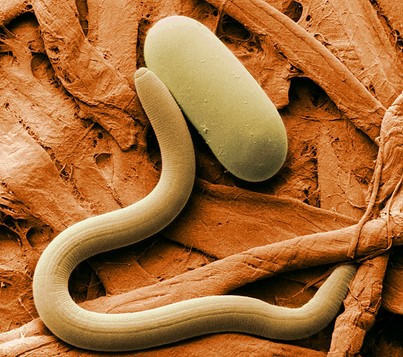
Illustration 3: A soybean cyst nematode
2. Mesofauna: Mesofauna play a vital role in decomposing organic matter and regulating microbial populations, thus influencing nutrient cycling.
- Acari - Commonly known as mites, they are a diverse group of arachnids found in various soil environments and contribute to the decomposition of organic matter by feeding on fungi, bacteria, and decaying plant material. Acari helps regulate microbial populations and enhance nutrient cycling. Additionally, their feeding activities promote soil aeration and structure by breaking down organic matter into smaller particles, facilitating the formation of soil aggregates.
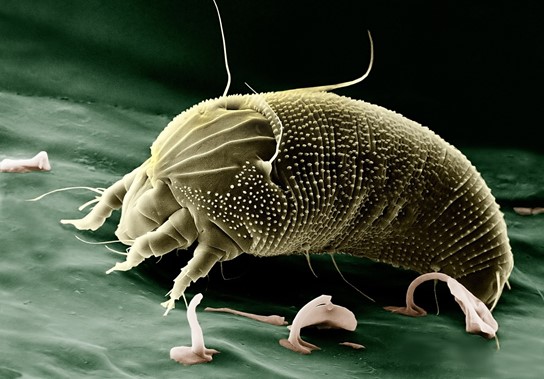
Illustration 4: Aceria anthocoptes. Image by WikiImages from Pixabay
- Collembola - Commonly known as springtails, they are small, wingless arthropods that contribute significantly to the decomposition process by feeding on decaying organic matter, fungi, and bacteria. By breaking down organic material into smaller particles, springtails enhance nutrient cycling and improve soil structure. Their activities also promote soil aeration and moisture retention. Additionally, springtails serve as a food source for various predators, contributing to the overall biodiversity and ecological balance within the soil ecosystem.
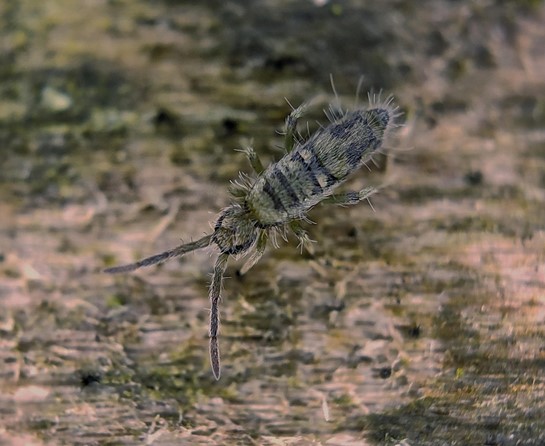
Illustration 5: A macro picture of a springtail. Image by Eric Dawe from Pixabay.
- Diplura - Diplura are small, wingless arthropods that are commonly found in soil and leaf litter environments. They feed on decaying plant material, fungi, and bacteria, helping to break down complex organic compounds into simpler forms that can be utilized by plants and other soil organisms. Their burrowing activities also improve soil structure and aeration, promoting water infiltration and root growth.
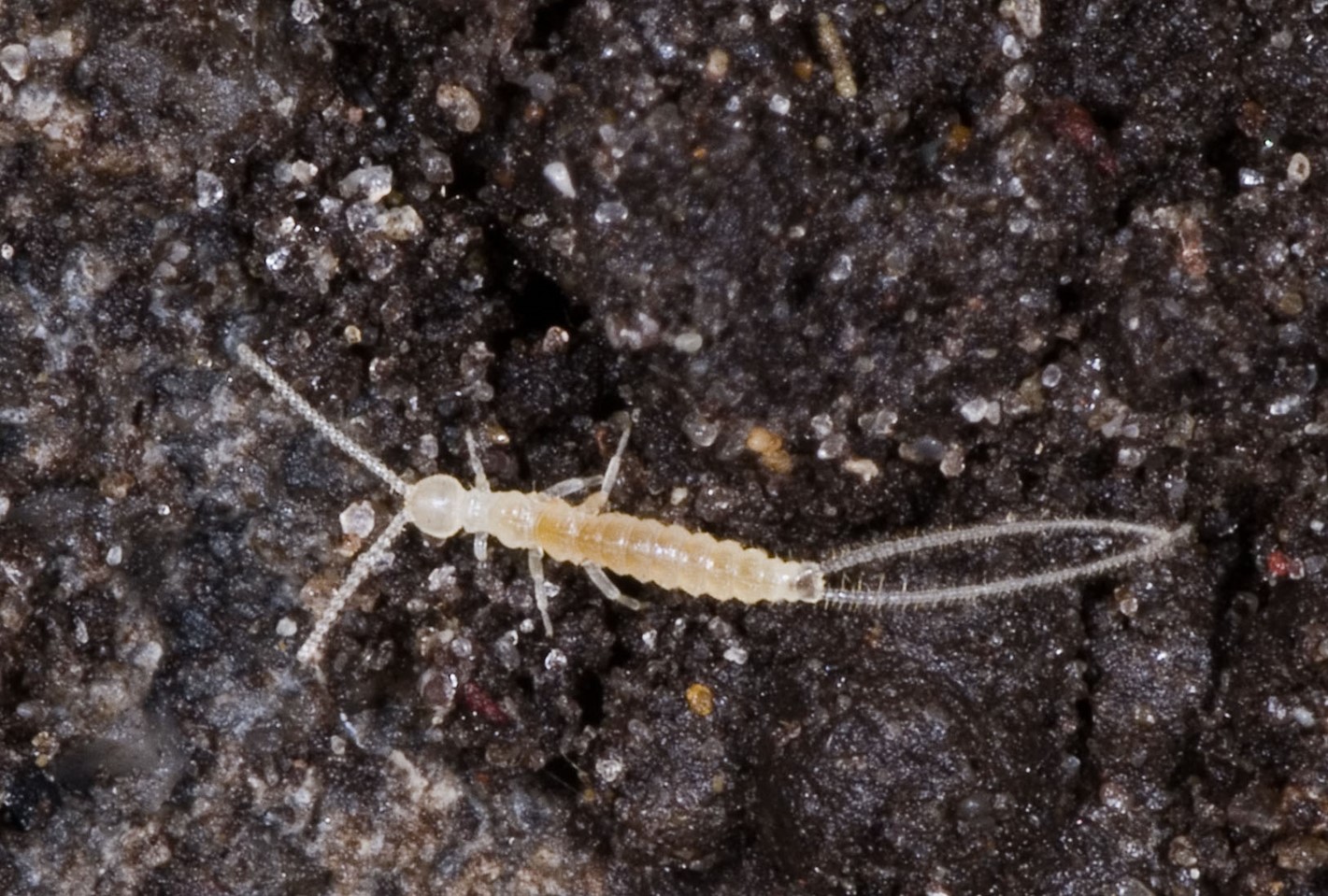
Illustration 6: Campodea staphylinus, a dipluran. By Mvuijlst at English Wikipedia, CC BY-SA 3.0, https://commons.wikimedia.org/w/index.php?curid=3676894
3. Macrofauna: Comprising organisms like ants, beetles, and larger nematodes, macrofauna contribute to the breakdown of organic matter and the formation of soil aggregates. Their activities promote soil porosity and water infiltration.
4. Megafauna: They are essential for soil aeration and the mixing of organic matter, which enhances nutrient availability and improves soil structure.
- Coleoptera – Commonly known as beetles, many species of Coleoptera are detritivores, feeding on decaying organic matter, which aids in the decomposition process and nutrient cycling. By breaking down plant material and organic debris, beetles contribute to the formation of nutrient-rich soil and enhance soil structure. Additionally, some beetles, such as dung beetles, play a vital role in recycling nutrients by burying and decomposing animal waste, which improves soil fertility. Their activities also promote aeration and water infiltration in the soil.
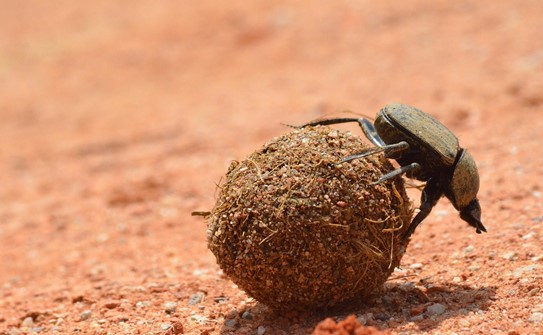
Illustration 7: A dung beetle. Image by Baynham Goredema from Pixabay.
- Earthworms - Often referred to as "nature's plow," they contribute to soil structure by burrowing through the soil, which enhances aeration, drainage, and root penetration. As they consume organic matter, such as dead leaves and plant material, earthworms break it down into nutrient-rich castings, which are an excellent source of nutrients for plants. Their feeding and burrowing activities also promote the mixing of soil layers, facilitating nutrient distribution and microbial activity. In this article, you can explore how to take advantage of their abilities to make vermicompost.
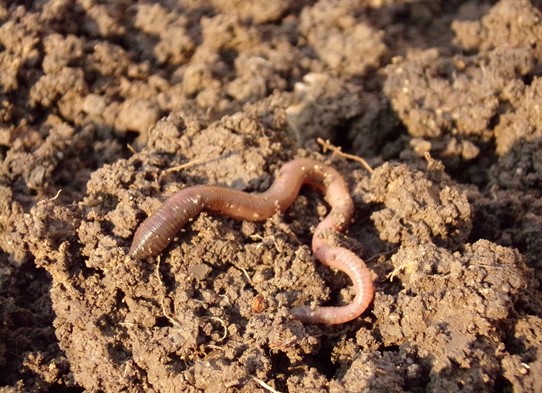
Illustration 8: Closeup of an earthworm. Image by Natfot on Pixabay.
- Isopods – Isopods play a crucial role in the decomposition of organic matter by feeding on dead plant material, fungi, and detritus, facilitating nutrient cycling and enhancing soil fertility. Isopods also contribute to soil structure by creating burrows, which improve aeration and water infiltration. Additionally, they serve as a food source for various soil-dwelling predators, thus supporting the overall biodiversity of the soil ecosystem.
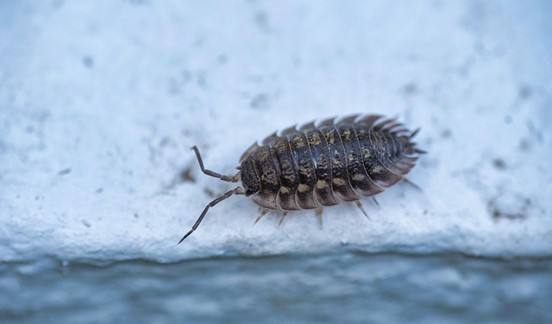
Illustration 9: An isopod, commonly known as 'roly poly'. Image by Daniel Hourtoulle from Pixabay.
Response of Soil Biota to Agricultural Management Practices
Now that we are familiar with some of the actors of the soil, what does this mean in practice? How can we use this knowledge to inform decisions on best agricultural management practices?
As mentioned, the topic of soil biota and the functions it contributes to, is broad, complex and not fully mapped, but it is the subject of a lot of research. Groups such as Soil Biology at Wageningen University and Research are developing tools that can help mapping and understanding soil biota and its functions.
What do we know, then? A recent meta-data analysis highlighted how certain practices, such as the use of organic fertilizers, reduced tillage, cover cropping, and intercropping, are ideal under most circumstances for nurturing a thriving and diverse soil biome across all actors.
That is too generic, you will think, how can we make informed decisions with a specific purpose in mind? While the topic is too broad and context-specific, we do know that within these practices, many solutions exist to fix problems through plant-soil biome interactions. For instance, the ability of marigold, used as a cover crop, to suppress plant-parasitic nematodes has been well researched (8), while the ability of earthworms to significantly modify soil aggregation and porosity, therefore improving water absorption, has been known since the 18th century (9, 10).
References
Illustration 1: Photo by Alicia Christin Gerald on Unsplash
- Mapping the conceptual and intellectual structure of soil health research (1996–2021): a terms co-occurrence and co-cited reference network analysis — Frontiers in Soil Science
- Soils: Soil Health — USDA NRCS
- The EU Agreed on Soil Monitoring
- Proposal Directive Soil Monitoring and Resilience
- https://www.researchgate.net/publication/320493215_Measuring_soil_sustainability_via_soil_resilience
- Pesticides and Microbiome Shifts — The Interplay of Pesticides and Climate Change
- https://www.researchgate.net/publication/351562264_Disruption_of_the_Soil_Microbiota_by_Agricultural_Pesticides
- Using marigold (Tagetes spp.) as a cover crop to protect crops from plant-parasitic nematodes — Applied Soil Ecology
- Earthworms accelerate soil porosity turnover under watering conditions — Geoderma
- Factors Affecting the Abundance of Earthworms in Soils — Earthworm Ecology