
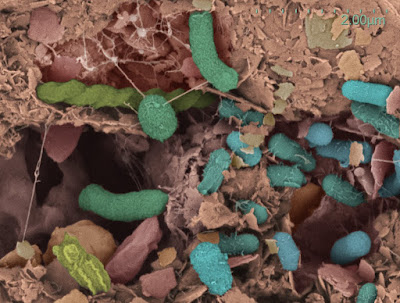
As the global population grows and environmental challenges like climate change and soil degradation intensify, the need for sustainable food production has never been more urgent. Central to this effort is an often-overlooked but critical component: the soil microbiome. This intricate community of bacteria, fungi, archaea, viruses, and protozoa plays a pivotal role in maintaining soil health, promoting plant growth, and enhancing resilience to environmental stressors.
How Does the Soil Microbiome Boost Soil Health and Fertility?
The soil microbiome is essential for nutrient cycling and maintaining soil fertility. Microorganisms break down organic matter, releasing critical nutrients such as nitrogen, phosphorus, and sulfur in forms that plants can absorb and use. For instance, nitrogen-fixing bacteria convert atmospheric nitrogen into ammonia, reducing reliance on synthetic fertilizers. Similarly, mycorrhizal fungi form beneficial partnerships with plant roots, significantly improving water and nutrient uptake—factors that are essential for robust plant health and high crop yields.
Moreover, microbes enhance soil structure by forming aggregates that improve soil aeration, water infiltration, and root growth. These processes support vigorous plant growth and reduce soil erosion and runoff, contributing to a healthier and more sustainable environment.
In What Ways Does the Soil Microbiome Foster Plant Growth and Health?
Soil microbes do more than just provide nutrients; they also produce phytohormones such as auxins, gibberellins, and cytokinins, which stimulate plant growth and development. These hormones can enhance root growth, improve seed germination, and increase plant vigor. Plant growth-promoting rhizobacteria (PGPR) can also boost a plant's resistance to pathogens and pests, further supporting healthy crop production.
Biocontrol agents, another beneficial aspect of the soil microbiome, help suppress soil-borne diseases. For example, Bacillus subtilis produces antibiotics that inhibit harmful fungal pathogens, thereby protecting crops and reducing the need for chemical pesticides.
How Does the Soil Microbiome Enhance Resilience to Environmental Stress?
As climate change leads to more frequent and severe abiotic stresses such as drought, salinity, and temperature extremes, soil microbes have become vital allies of plants and farmers. Certain microbes help plants cope with these stressors by enhancing their physiological responses. They can produce osmolytes and antioxidants, which aid plants in managing stress caused by drought or salinity.
Agricultural practices like crop rotation, cover cropping, and organic amendments can optimize microbial communities, increasing the resilience of farming systems. These practices encourage the proliferation of beneficial microbes and help mitigate the impact of environmental stressors, ensuring sustainable agriculture even under challenging conditions.
How Does the Soil Microbiome Promote Environmental Sustainability?
The soil microbiome also plays a crucial role in reducing agriculture's environmental impact. By improving plants’ nutrient use efficiency, soil microbes reduce the need for chemical fertilizers, decrease nutrient runoff into water bodies, and prevent eutrophication. Additionally, certain soil microorganisms can degrade organic pollutants and heavy metals, contributing to the remediation of contaminated soils.
Microbes are also integral to carbon sequestration efforts. By breaking down organic matter and forming stable soil organic carbon, they help sequester carbon in soils, reducing greenhouse gas emissions and aiding in climate change mitigation.
Future Prospects
The future of soil microbiome research holds exciting possibilities for sustainable agriculture. Scientists are exploring microbiome engineering to enhance beneficial microbial communities, leveraging advancements in genomics to decode microbial functions and interactions. Research into crop-specific microbiomes and their adaptation to climate change aims to boost crop resilience and productivity. Additionally, developing microbial-based biopesticides and biofertilizers presents eco-friendly alternatives to chemical inputs. Researchers are paving the way for a more resilient and sustainable food system by integrating these innovative approaches with traditional farming practices.
Conclusion
The soil microbiome is indispensable for sustainable food production. Soil microorganisms are the foundation of sustainable agriculture, enhancing soil health, promoting plant growth and resilience, and contributing to environmental sustainability. As we strive to feed a growing global population while protecting our planet, harnessing the power of the soil microbiome offers a promising pathway to a sustainable and resilient food system. Continued research and innovation in soil microbial ecology will be crucial in unlocking the full potential of these microscopic allies.
Photo Source:
Tecon, R. (2019, March 10). A view of microbial life in soil [Blog post]. Retrieved August 3, 2024, from A view of microbial life in soil — Of Bacteria and Men
Image Details:
Blog post title: A View of microbial life in the soil, Author: Robin Tecon, Date posted: Sunday, March 10, 2019, Date accessed: Saturday, August 3, 2024 Link: A view of microbial life in soil — Of Bacteria and Men
References
- Antoszewski, M., Mierek-Adamska, A., & Dąbrowska, G. B. (2022). The importance of microorganisms for sustainable agriculture—A review. Metabolites, 12(11), 1100.
- Backer, R., Rokem, J. S., Ilangumaran, G., Lamont, J., Praslickova, D., Ricci, E., ... & Smith, D. L. (2018). Plant growth-promoting rhizobacteria: context, mechanisms of action, and roadmap to commercialization of biostimulants for sustainable agriculture. Frontiers in plant science, 9, 1473.
- Gitz, V., Meybeck, A., Lipper, L., Young, C. D., & Braatz, S. (2016). Climate change and food security: risks and responses. Food and Agriculture Organization of the United Nations (FAO) Report, 110, 2-4.
- IPCC, 2019: Climate Change and Land: an IPCC special report on climate change, desertification, land degradation, sustainable land management, food security, and greenhouse gas fluxes in terrestrial ecosystems.
- Iqbal, B., Li, G., Alabbosh, K. F., Hussain, H., Khan, I., Tariq, M., ... & Ahmad, N. (2023). Advancing environmental sustainability through microbial reprogramming in growth improvement, stress alleviation, and phytoremediation. Plant Stress, 100283.
- Malhi, G. S., Kaur, M., & Kaushik, P. (2021). Impact of climate change on agriculture and its mitigation strategies: A review: sustainability, 13(3), 1318.
- Nadarajah, K., & Abdul Rahman, N. S. N. (2023). The microbial connection to sustainable agriculture. Plants, 12(12), 2307.
- Suman, J., Rakshit, A., Ogireddy, S. D., Singh, S., Gupta, C., & Chandrakala, J. (2022). The microbiome is a critical player in sustainable agriculture and human health—frontiers in Soil Science, 2, 821589.
- United Nations Department of Economic and Social Affairs, Population Division (2022). World Population Prospects 2022: Summary of Results. UNDESA/POP/2022/TR/NO.
- Xue, S., Kui, L., Sharifi, R., & Chen, J. (2024). The role of microbiome in sustainable agriculture. Frontiers in Microbiology, 15, 1388926.