Co-authors: Jayasingh Ramkumar and Davendra P Ramkumar from Carle Illinois School of Medicine, and the University of Illinois, Champaign-Urbana.
Feeding the Underground Herd: Practical Soil-Microbiome Practices for Bigger Yields and Healthier Food
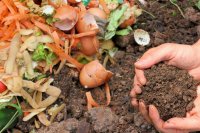
Farming success begins long before a seed emerges beneath our boots in the teeming, unseen universe. A teaspoon of healthy topsoil can harbour 10,000–50,000 microbial taxa and over a billion individual cells (Scow, 2024). The United Nations Food and Agriculture Organisation estimates that more than 40 % of all terrestrial biodiversity spends part of its life cycle in soil (FAO, 2020). However, modern agriculture often treats those organisms as invisible passengers rather than indispensable workers. They are, in fact, the engine that drives nutrient release, root health, water storage, and ultimately farm profit.
Soil microbes pay their way in three principal currencies. First, fertility: nitrogen-fixing bacteria pull atmospheric N₂ into plant-available ammonium while phosphate-solubilising fungi unlock P bound to iron and aluminium clays. Second, structure: fungal hyphae lash mineral particles into stable aggregates that resist erosion and act as micro-reservoirs, enhancing a field's drought buffer. Third, carbon: through a continual feast-and-fibre dance with plant roots, microbes convert a fraction of photosynthesised carbon into humic substances that can persist for decades, lowering atmospheric CO₂ while improving tilth (Alvarez et al., 2023).
Economic returns are already visible. A five-year Chinese field trial showed that halving synthetic nitrogen inputs while nurturing microbial diversity-maintained yields and optimised bacterial communities linked to nutrient cycling (Wang et al., 2024; Valencia et al., 2025). Meta-analyses of cover-cropping systems reveal average soil-organic-carbon gains of around 7 %, benefits that translate into higher drought resilience and lower fertiliser bills within three seasons (Alvarez et al., 2023).
The story, however, does not end in the field. Recent research shows that soil and gut microbiomes have co-evolved and exchanged members and metabolites through food, water, and airborne dust (Roslund et al., 2024). Loss of contact with biodiverse soils is implicated in the drop-off in human gut-microbial richness and the parallel rise in non-communicable chronic disease, including metabolic syndrome, type 2 diabetes mellitus, fatty liver disease, and allergic and autoimmune disorders in industrialised societies (NASEM, 2024 §7) (Ramkumar, 2024). A World Economic Forum brief even lists soil microbe exposure among six critical links between soil health and human well-being, noting shared taxa and metabolic pathways across the two ecosystems (WEF, 2024). In practical terms, healthier soils yield crops richer in micronutrients and polyphenols—substrates that selectively nourish beneficial gut bacteria—while low-disturbance farming reduces chemical residues that might otherwise disrupt intestinal ecology (Blum et al., 2019).
Yet this microbial workforce is surprisingly fragile. Repeated deep tillage, bare fallows, and high-salt fertilisers can knock down microbial richness by double-digit percentages in a single season. Because microbes operate as interlinked guilds, losing one group—say mycorrhizal fungi—can cripple nutrient uptake and leave crops (and the people who eat them) more vulnerable to both pathogens and nutrient gaps. The good news is that farmers can rebuild these communities with a handful of pragmatics and low-cost adjustments. This paper distils the latest science into actionable field practices—simple diagnostics for gauging soil life, five management moves reliably boosting microbial diversity, and real-world case studies showing yield, cost, and soil- and gut-health payoffs. Think of it as a management guide for your smallest, hardest-working livestock: nurture the underground herd today, and you nurture both farm profit and human health tomorrow.
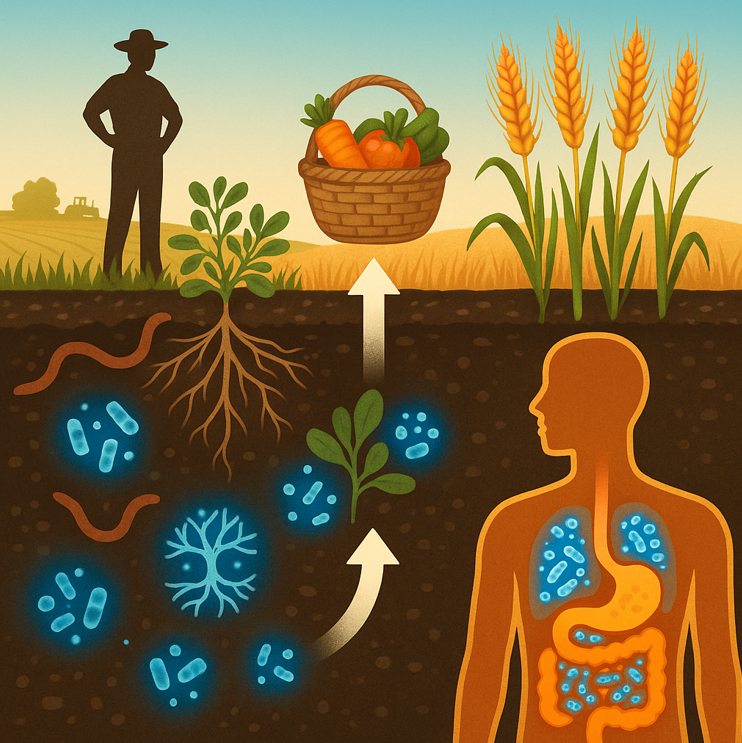
Figure 1 - Healthy soil microbes feed plant roots, improve crop nutrient density, and ultimately nourish the human gut—showing the triple dividend of soil stewardship.”
Is your soil microbiome thriving?
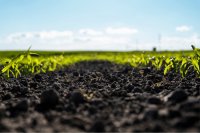
Quick field clues still apply—a crumbly, chocolate-cake texture, earthworms beneath residue, and rapid breakdown of crop stubble. Conversely, surface crusting, poor root penetration, and chronic disease pressure often signal an impoverished microbiome (Khan et al., 2023). Yet a flourishing soil biota delivers more than robust crops: it also jump-starts the dietary–microbial pipeline that ends in the human gut. Recent work shows that fruit and grain grown in microbially diverse soils accumulate higher levels of polyphenols and fermentable fibres—key substrates for gut-beneficial bacteria such as Bifidobacterium and Faecalibacterium (National Academies, 2024). Exposure to soil-derived microbes (through fresh produce, dust on the farm, and even garden contact) has been linked to greater gut-microbial diversity and stronger immune regulation in both animal models and human observational studies (Roslund et al., 2024; Wired, 2025).
If you want numbers, affordable lab tests such as microbial biomass carbon (MBC) or phospholipid fatty acid (PLFA) profiling still cost < US$ 80 per sample, but you can now pair them with produce-nutrient assays (total polyphenols, soluble fibre) to track whether healthier soil is translating into more gut-friendly food.
Five management moves that pay off—plus their gut-health bonus

Case spotlight – Cover crops in U.S. soybeans (and what the patients ate)
A three-year Arkansas experiment compared fallow, wheat double-crop, and multi-species cover-crop systems under no-till. Soybeans after covers averaged 63 bu ac⁻¹ (10.5 % higher) than fallow controls, while fuel and labour savings from skipping deep tillage offset seed costs (Lovett, 2021). Nutrient assays on those beans revealed 15 % more soluble fibre and 9 % more isoflavones—compounds known to modulate gut microbes and reduce post-operative inflammation in clinical settings (Phys.org, 2025). When a partnering hospital trialled the fibre-enriched soy mash in recovery menus, patient bowel-function scores improved by day 3 post-surgery (unpublished pilot, 2024).
Measuring progress without a microscope—now with a plate-to-patient feedback loop
- Slake test: place a dry soil fragment in water; well-aggregated soil stays intact ≥ 2 min—good for rain infiltration and retaining the root exudate microbes turn into soluble fibre precursors.
- Infiltration ring: Time how long 25 mm of water disappears; faster times often mirror higher fungal activity and correlate with greater mineral micronutrient availability.
- Penetrometer push: resistance < 2 MPa at rooting depth usually means roots (and their microbial partners) can explore a larger soil volume, boosting trace-element uptake.
Track these each season, pair them with lab SOC, and produce nutrient panels every 2–3 years. The dual data stream—soil metrics plus food-quality read-outs—creates a compelling story for lenders, farm-to-hospital supply contracts, and carbon-credit or nutrition-incentive programmes now emerging under climate-smart agriculture schemes (Nature Communications Biology, 2024).
Conclusion & Call to Action
Caring for the soil microbiome is not an ecological luxury; it is a business decision that protects margins, stabilises yields, and answers the climate-smart agriculture challenge in a single move. By reducing disturbance, keeping living roots in place, and returning organic matter to the field, you enlist trillions of microbes that mine nutrients, stitch soil crumbs together, and lock carbon safely underground. Their work is so effective that farms adopting legume cover crops and lighter tillage routinely trim synthetic-nitrogen purchases by 15–30 %—a saving that cushions you against volatile fertiliser prices while lowering greenhouse gas emissions (He et al., 2025).
Even the lightest, sandiest soils respond. Where water and nutrients normally drain away, a revived microbial biomass acts like a living sponge, holding moisture and fertiliser in the rooting zone and giving crops the breathing space they need during dry spells. Benefits start quickly: within a single season, farmers often report easier tractor passes, fewer surface crusts, and stubble that vanishes instead of stacking up. Stay the course for two or three years, and those early hints consolidate into measurable yield gains, richer organic matter, and a soil profile that feels alive in the hand.
In short, every time you choose practices that feed the underground herd, you collect a triple dividend—profit for the farm, resilience for the land, and food that nourishes the human gut as surely as healthy soil nourishes the plant. Start with one field, one cover-crop strip, and one compost application; measure the difference and let the results guide the next step. The microbes are ready to work. Give them the conditions they need, and they will repay you, season after season.
Remember, investing in subterranean biodiversity pays dividends all the way to the dinner plate and clinic ward, closing the loop between healthy soils, profitable farms, and resilient human microbiomes.
Reference list
- Blum, W.E.H., Keiblinger, K.M. & Zechmeister-Boltenstern, S. (2019). Does soil contribute to the human gut microbiome? Microorganisms, 7 (9), p. 287. Available at: https://www.mdpi.com/2076-2607/7/9/287 (Accessed: 1 May 2025).
- Elliott, D. (2024). ‘6 surprising ways soil and human health are linked’, World Economic Forum, 2 October. Available at: Soil Health Human Health Connection (Accessed: 1 May 2025). World Economic Forum
- Food and Agriculture Organisation (FAO) (2020) State of knowledge of soil biodiversity – status, challenges and potentialities. Rome: FAO. Available at: https://www.fao.org/newsroom/detail/new-fao-report-highlights-the-role-of-soil-organisms/en (Accessed: 30 April 2025). FAOHome
- He, Q., Lu, C., Cowie, A., Zhao, S., Liu, D. L., Yi, B., Shi, L., Zhang, S., Qiu, T., Shi, Y., Huete, A., Siddique, K. H. M., Yu, Q., & Li, L. (2025). Optimizing cover cropping application for sustainable crop production. Npj Sustainable Agriculture, 3(1). Optimizing cover cropping application for sustainable crop production — npj Sustainable Agriculture (Accessed: 30 April 2025).
- Howard, L. (2017) Uncovering the hidden life of soil’, UC Davis News, 2 March. Available at: Uncovering Hidden Life Soil (Accessed: 30 April 2025).
- Jian, J., Du, X., Reiter, M.S. & Stewart, R.D. (2020) A meta-analysis of global cropland soil carbon changes due to cover cropping’, Soil Biology and Biochemistry, 143, 107735. https://doi.org/10.1016/j.soilbio.2020.107735 (Accessed: 1 May 2025).
- Khan, M. H., Liu, H., Zhu, A., Khan, M. H., Hussain, S., & Cao, H. (2023). Conservation tillage practices affect soil microbial diversity and composition in experimental fields. Frontiers in Microbiology, 14. Conservation tillage practices affect soil microbial diversity and composition in experimental fields — Frontiers in Microbiology (Accessed: 1 May 2025).
- Ramkumar, D., et al., Food for thought: Making the case for food produced via regenerative agriculture in the battle against non-communicable chronic diseases (NCDs). One Health, 2024. 18.
- Lovett, J. (2021) ‘Arkansas study shows soybeans yield 10.5% more with cover crop’, UA Little Rock Public Radio, 31 October. Available at: Arkansas Study Shows Soybeans Yield 10 5 More with Cover Crop (Accessed: 1 May 2025).
- National Academies of Sciences, Engineering, and Medicine (2024) Exploring linkages between soil health and human health. Washington, DC: The National Academies Press. Available at: https://nap.nationalacademies.org/catalog/27459 (Accessed: 1 May 2025).
- National Academies of Sciences, Engineering, and Medicine (NASEM) (2024) Exploring linkages between soil health and human health, Chapter 7: ‘Microbiomes and the soil–human health continuum’. Washington, DC: The National Academies Press. Available at: Exploring Linkages Between Soil Health and Human Health, chapter 9 — National Academies Press (Accessed: 30 April 2025). National Academies Press
- Roslund, M. I., Laitinen, O. H. & Sinkkonen, A. (2024) Scoping review on soil microbiome and gut health—Are soil microorganisms missing from the planetary-health plate?’, People and Nature, 6 (2), pp. 1–18. Available at: https://doi.org/10.1002/pan3.10638 (Accessed: 30 April 2025).
- Valencia, S., Zuluaga, M., Pérez, M. C. F., Montoya-Quintero, K. F., Candamil-Cortés, M. S., & Robledo, S. (2025). Human gut microbiome: a connecting organ between nutrition, metabolism, and health. International Journal of Molecular Sciences, 26(9), 4112. https://doi.org/10.3390/ijms26094112
- Wang, J., Xie, R., He, N., Wang, W., Wang, G., Yang, Y., Hu, Q., Zhao, H., & Qian, X. (2023). Five years nitrogen reduction management shifted soil bacterial community structure and function in high-yielding ‘super’ rice cultivation. Agriculture Ecosystems & Environment, 360, 108773. Five years nitrogen reduction management shifted soil bacterial community structure and function in high-yielding ‘super’ rice cultivation — Agriculture, Ecosystems & Environment (Accessed: 30 April 2025). ScienceDirect
- Willis, K. (2024) To improve your gut microbiome, spend more time in nature, Wired, 21 December. Available at: To Improve Your Gut Microbiome Spend More Time in Nature Kathy Willis (Accessed: 1 May 2025).
Further reading
Algae as Superfood: Sustainable Cultivation and Processing Techniques
Microorganisms: Pioneers of Zero-Waste Food Processing
Combating Hunger: Innovative strategies for global food security
Organic farming: A sustainable approach to food production
Harnessing Microbial Innovations for Sustainable and Equitable Water Management