Introduction
Across the world, farmers are already working through hotter afternoons, unpredictable rains, flash floods, dustier winds, and new pest pressures. Those shifts do not just dent yields; they change food-safety risks from field to market. Warmth speeds up bacterial growth. Floodwater carries pathogens and chemicals into fields and packhouses. Droughts followed by humidity push toxigenic moulds to bloom on maize and groundnuts. Public-health and food-standards bodies are clear: climate change is intensifying existing hazards and surfacing new ones across the supply chain (FAO, 2020; WHO, 2024; EFSA, 2024; IPCC, 2022).
This guide is written for busy farmers, farmer groups, and small agri-businesses. It pulls from Codex, FAO/WHO, and other trusted sources, and then translates the science into practical, low-cost actions that you can start this season. The aim is simple: protect your harvests, your customers, and your reputation, whatever the weather brings (Codex Alimentarius, 2020; FAO, 2020).
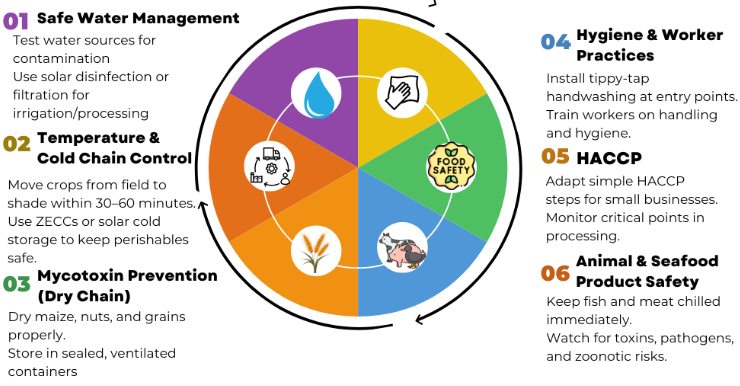
Figure 1. Climate-smart food safety actions for farms and small agri-businesses
The changing risk picture
- Hotter, longer warm seasons. Microbes multiply faster in animals, soil, and on fresh produce. In warm coastal waters, Vibrio bacteria rise, making raw or undercooked shellfish riskier at the very time demand peaks (CDC, 2023).
- Erratic rainfall and floods. Clean water can become scarce overnight. Floods can spread sewage, chemicals, and heavy metals through fields, sheds, and markets, contaminating tools, crates, and food-contact surfaces (WHO WPRO, 2024; U.S. FDA, 2022).
- Droughts and heat waves. Stressed crops are more vulnerable to Aspergillus and other fungi that produce aflatoxins. If grain is not dried fast and kept dry, contamination risk surges (EFSA, n.d.; FAO/IAEA, 2001).
Scientists and regulators are confident that these stressors will compound health risks unless we adapt, especially regarding water, temperature control, and mycotoxin management (IPCC, 2022; FAO, 2020).
Five farmer-friendly pillars for climate-smart food safety
The following pillars are intentionally lean; each can be started quickly and scaled over time.
1) Keep water safe even after storms
Water touches everything: handwashing, rinsing produce, making ice, mixing crop-protection products. In climate-stressed seasons, assume water quality can change suddenly—after a flood, a power cut at the borehole, or upstream pollution.
Actions you can start now
- Anchor your routines in the WHO “Five Keys to Safer Food.” Post the “Five Keys” poster in sheds/pack areas and build a simple routine: clean hands, clean tools, separate raw/ready-to-eat, cook/chill to safe levels, and use safe water and raw materials (WHO, 2006).
- After a flood, treat anything touched by floodwater as unsafe. Deep-clean food-contact surfaces, tanks, and crates; discard items in non-watertight packaging; and do not irrigate leafy greens with contaminated water (U.S. FDA, 2022; WHO WPRO, 2024).
- Install low-cost handwashing stations—a “tippy-tap” made from a jerry can, rope, and stick works perfectly. Put them at field entrances, toilets, and pack areas; keep soap or ash tied on (UNICEF, 2020).
- Keep a log. Record water-source checks and cleaning/sanitising dates. Codex calls for documentation under Good Hygiene Practices (Codex Alimentarius, 2020).
Why it works
In extreme weather, water quality flips from safe to risky faster than people notice. Defensive routines and visible handwashing break the main route pathogens travel through your operation (WHO, 2006; Codex Alimentarius, 2020).
2) Guard temperature from the field to the market
Warm days speed up microbial growth and biochemical spoilage. Many farms struggle to keep produce and animal-source foods cold without reliable power, but practical options exist.
Actions you can start now
- Harvest at first light. Shade produce immediately and move it from the field to shade/cooling within 30–60 minutes for highly perishable crops. Time is temperature.
- Use passive cooling. A Zero-Energy Cool Chamber (ZECC)—bricks, sand, and water—can drop storage temperatures via evaporation in dry climates and add days of shelf life (FAO, n.d.; MIT D-Lab, 2019).
- Explore solar cold rooms through co-ops or markets. Off-grid, shared cold rooms are increasingly viable and can cut losses dramatically in hot seasons. Pre-cool before loading vehicles, use insulated crates, and shield produce at stalls (Codex Alimentarius, 2020).
- Log temperatures. Keep a simple chart for cool rooms and transport. HACCP puts monitoring and corrections at the centre of safe temperature control (Codex Alimentarius, 2020).
Why it works
Every hour that produce sits in the sun compounds bacterial growth and softening. Passive systems like ZECC buy time; cold rooms extend it, reducing waste and complaints in heat waves (FAO, n.d.; MIT D-Lab, 2019).
3) Beat the mycotoxins: dry, keep dry, and store tightly
Hot, dry spells followed by humidity create perfect conditions for aflatoxins in maize, groundnuts, chillies, and tree nuts. Prevention rests on a simple sequence: harvest at maturity, dry fast to safe moisture, and store airtight.
Actions you can start now
- Dry fast to ~12–14% moisture (or the safe range for your crop). Use raised racks, tarps, or solar dryers; never dry on bare soil, which seeds fungal spores into the pile (FAO/IAEA, 2001; FAO, n.d.).
- Use hermetic storage bags (e.g., PICS) once dry. These reduce oxygen, suppress insects and moulds, and keep grain safe as long as you seal at a safe moisture and avoid frequent opening (Dijkink et al., 2022).
- Label and discipline. Mark each bag with date, moisture status, and field plot. Keep bags off the floor; rotate stocks. Control insects and weeds in the field to reduce entry points for fungi (EFSA, n.d.).
Why it works
Drying below the safe threshold stops fungal growth; hermetic storage denies oxygen to insects and moulds. Together they form a reliable “dry chain” through the hottest months (FAO/IAEA, 2001; Dijkink et al., 2022).
4) Refresh your hygiene system with Codex HACCP (2020)
Climate shifts change risk profiles, so your hazard analysis should change too. The 2020 revision of the Codex General Principles of Food Hygiene and its HACCP Annex is your backbone (Codex Alimentarius, 2020).
Actions you can start now
- Map climate-sensitive steps in your process: water intake after floods; field packing during heat; maize drying when humidity spikes; seafood during warm spells.
- Set simple critical limits and checks: “Produce enters shade within 30 minutes of harvest”; “Grain sealed below 14% moisture”; “Cool room ≤ target °C”.
- Train and post procedures. Use posters and photos in local languages; run short drills for floods and power cuts; assign a rotating “HACCP champion.”
- Document and correct. Keep short logs; record any deviation and the fix. This keeps audits smooth and builds culture (Codex Alimentarius, 2020).
Why it works
HACCP is flexible by design. You are not adding bureaucracy; you’re focusing on a few climate-aware controls and checking them consistently (Codex Alimentarius, 2020).
5) Prepare for coastal heat and seafood risks
Warmer, lower-salinity coastal waters extend the season and range of Vibrio bacteria, raising risk in raw or undercooked shellfish. If you handle seafood even occasionally, tighten controls in hot months (CDC, 2023).
Actions you can start now
- Chill fast and hold cold from harvest to sale. Avoid pooling meltwater; shuck on clean surfaces with safe water.
- Communicate risk to high-risk customers (e.g., immunocompromised people should avoid raw shellfish during heat waves).
- Follow public-health advisories and shorten your “time to ice” standard during marine heat anomalies (CDC, 2023).
A quick glance at the playbook, you can start this season
Table 1: Climate-smart food safety actions for farms and small agri-businesses (adapted from FAO/WHO, Codex, and technical literature cited).
|
The problem you face |
Climate trigger |
Food-safety risk |
Action you can start now |
Cost |
Evidence/standard |
|
Handwashing and wash water become unsafe after storms |
Floods, sewage overflows |
Pathogens move from hands/tools to food |
Install tippy taps at field and packhouse entries; use WHO Five Keys; keep a simple cleaning log |
Very low |
WHO Five Keys; UNICEF tippy-tap guides (WHO, 2006; UNICEF, 2020) |
|
Produce heats up in the field and at market |
Heat waves |
Faster microbial growth & spoilage |
Shade immediately; use ZECC or shared solar cold room; pre-cool; log temperatures |
Low, medium |
FAO evaporative cooling; MIT D-Lab; HACCP monitoring (FAO, n.d.; MIT D-Lab, 2019; Codex Alimentarius, 2020) |
|
Aflatoxins spike in maize/groundnuts |
Hot, dry spells then humidity |
Mycotoxin contamination |
Dry to ~12-14%; store in hermetic bags; minimise opening; elevate bags |
Low |
FAO/IAEA mycotoxin guidance; Frontiers/PICS hermetic storage (FAO/IAEA, 2001; Dijkink et al., 2022) |
|
Irrigation/wash water questionable |
Drought then storms |
Contamination of produce |
Prioritise safe sources; sanitise tanks/tools; discard foods exposed to floodwater |
Low |
FDA & WHO flood guidance (U.S. FDA, 2022; WHO WPRO, 2024) |
|
Seafood becomes riskier in hot months |
Coastal warming |
Vibrio increase in raw shellfish |
Shorten time to ice; maintain cold chain; share risk advice at point-of-sale |
Medium |
CDC advisories (CDC, 2023) |
|
Pesticide misuse under new pest pressure |
Warmer seasons, new pests |
Residues; acute poisoning |
Shift to IPM via Farmer Field Schools; follow FAO/WHO Pesticide Code |
Low |
FAO IPM & International Code of Conduct (FAO, 2013) |
Using the table: Refer to Table 1 during morning briefings. Pick one action from each row to implement this week, then add the next set once routines settle (Codex Alimentarius, 2020).
Field story: what this looks like in practice
A vegetable cooperative in a heat-prone valley wanted fewer complaints at market and better shelf life through hot spells. They started with two tippy-taps at the field entrance and a simple “clean—separate cool” poster near the pack table. Harvest moved 45 minutes earlier; produce hit the shade within half an hour of picking. They built a ZECC with locally made bricks for same-day cooling, then pooled money for access to a solar cold room at the district market. For maize, they switched from drying on bare ground to raised tarps and sealed hermetic bags only after a quick moisture check. The HACCP sheet gained “heat-wave rules” (shorter field-to-shade time, a mid-day cooling check, and morning/evening temperature logs).
Within one season, soft-rot losses at market fell, shelf life improved, and a new buyer passed their site with only minor notes. None of it was high-tech; the wins came from simple actions done consistently (FAO, n.d.; Codex Alimentarius, 2020).
Practical checklists
Daily (peak season)
- Wash hands and tools at the start of every break; refill soap; renew dirty rinse water (WHO, 2006).
- Harvest early; move produce to shade in ≤30 minutes; load ZECC or cold room; log temperatures (FAO, n.d.).
- Separate clean and dirty zones, keep animals out of pack areas, and clean knives and boards between tasks (Codex Alimentarius, 2020).
After extreme weather
- Flood: Discard any food touched by floodwater; deep-clean and sanitise equipment, tanks and floors; inspect wells (U.S. FDA, 2022; WHO WPRO, 2024).
- Heat wave: Add a mid-day cooling check; shorten field-to-shade time; move seafood and animal products onto ice earlier in the day (CDC, 2023).
At harvest and storage (grains/groundnuts)
- Dry fast to safe moisture; never heap wet grain; use raised racks/tarps; record moisture and date (FAO/IAEA, 2001).
- Seal in hermetic bags; avoid frequent opening; label each bag (Dijkink et al., 2022).
Build a climate-aware food-safety culture
A plan is only as strong as the habits behind it. Use short “toolbox talks” at the start of each week: one minute on water, one on temperature, one on mycotoxins. Assign a rotating HACCP champion—a trusted staff member who checks logs, spots problems early, and praises good practice. As pest pressures shift with the weather, connect with an IPM Farmer Field School or extension service to reduce pesticide risk while protecting yields (FAO, 2013–2014).
In procurement, ask suppliers simple climate-aware questions: "How quickly do you shade and cool?” "What's your moisture target before storage?” "What's your flood clean-up protocol?" These conversations raise the bar along your chain (Codex Alimentarius, 2020).
The bottom line
Climate change is not just a weather story but a food-safety story. The good news is that many fixes are practical, affordable, and within your control. Start with safe water, shade and cooling, fast drying and airtight storage, a living HACCP plan, and IPM training. Those farmer-friendly steps protect your customers, reduce waste, and make your business more resilient—this season and the next (FAO, 2020; Codex Alimentarius, 2020; WHO, 2024).
References
- Dijkink, B., Broeze, J., & Vollebregt, M. (2022). Hermetic Bags for the Storage of Maize: Perspectives on Economics, Food Security and Greenhouse Gas Emissions in Different Sub-Saharan African Countries. Frontiers in Sustainable Food Systems, 6, 767089. Hermetic Bags for the Storage of Maize: Perspectives on Economics, Food Security and Greenhouse Gas Emissions in Different Sub-Saharan African Countries
- CDC (2023) Severe Vibrio vulnificus infections associated with warming coastal waters. Health Alert Network. Available at: Severe Vibrio vulnificus Infections in the United States Associated with Warming Coastal Waters (Accessed 9 Aug. 2025).
- Codex Alimentarius (2020) General Principles of Food Hygiene CXC 1-1969 (Rev. 2020), including HACCP annex. Rome: FAO/WHO. Available at: Fao Who Codexalimentarius – FAO (Accessed 9 Aug. 2025).
- EFSA (2024) Climate change and food safety. Parma: European Food Safety Authority. Available at: Climate Change and Food Safety – EFSA (Accessed 9 Aug. 2025).
- EFSA (n.d.) Aflatoxins in food. Parma: European Food Safety Authority. Available at: Aflatoxins Food – EFSA (Accessed 9 Aug. 2025).
- FAO (n.d.) Evaporative cooling for horticultural produce (technical note). Rome: Food and Agriculture Organization of the United Nations. Available at: Food and Agriculture Organization of the United Nations (FAO) (Accessed 9 Aug. 2025).
- FAO (2013–2014) International Code of Conduct on Pesticide Management. Rome: FAO/WHO. Available at: Pest and Pesticide Management – FAO (Accessed 9 Aug. 2025).
- FAO (2020) Climate change: Unpacking the burden on food safety. Rome: Food and Agriculture Organization of the United Nations. Available at: FAO Knowledge Repository (Accessed 9 Aug. 2025).
- FAO/IAEA (2001) Manual on the application of the HACCP system in mycotoxin prevention and control. Rome: FAO. Available at: FAO Knowledge Repository (Accessed 9 Aug. 2025).
- IPCC (2022) AR6 WGII—Summary for Policymakers. Geneva: Intergovernmental Panel on Climate Change. Available at: Climate Change 2022: Impacts, Adaptation and Vulnerability — IPCC Sixth Assessment Report, Working Group II (Accessed 9 Aug. 2025).
- MIT D-Lab (2019) Evaporative cooling for improved storage in Rwanda and Burkina Faso. Cambridge, MA: Massachusetts Institute of Technology. Available at: MIT D-Lab (Accessed 9 Aug. 2025).
- UNICEF (2020) Tippy Tap—Field demonstration guide. Pretoria: UNICEF South Africa. Available at: UNICEF South Africa | UNICEF South Africa (Accessed 9 Aug. 2025).
- U.S. FDA (2022) Safety of food crops affected by floods. Silver Spring, MD: U.S. Food and Drug Administration. Available at: Food | FDA (Accessed 9 Aug. 2025).
- WHO (2006) Five Keys to Safer Food—Manual. Geneva: World Health Organization. Available at: Five keys to safer food manual (Accessed 9 Aug. 2025).
- WHO (2024) Food safety—Fact sheet. Geneva: World Health Organization. Available at: Food Safety – WHO (Accessed 9 Aug. 2025).
- WHO WPRO (2024) Floods: Four tips to reduce food safety risks. Manila: World Health Organization—Western Pacific Regional Office. Available at: WPR DSE – WHO (Accessed 9 Aug. 2025).