
In 2021, over 828 million people worldwide faced hunger, an increase of 150 million compared to 2019 (1). The rising problem of food security must be combated as the world slowly reaches its food production limits. Aside from the issue of food insecurity, the current food system exerts major detrimental impacts on the environment (2). The depletion of natural resources like arable land, water, and biodiversity combined with greenhouse gas emissions, especially from animal agriculture, significantly contributes to climate change (3). These challenges and a rapidly growing population have placed immense pressure on the food production system.
Additionally, many regions continue to experience food shortages and widespread malnutrition (4). A sustainable food system must be developed to ensure food security for future generations while maintaining environmental quality and public health. The use of algae as a future food source can address these challenges due to their high nutritional value, minimal resource requirement, and fast growth rate (5). Integrating algae into food and energy systems advances a circular economy, reducing environmental harm while enhancing the resilience of food production systems
Algae as a Food Source
Algae are a group of aquatic organisms that are photosynthetic. They are usually not highly differentiated like higher plants because they lack true roots, leaves, stems, and a vascular system that can circulate water and nutrients (Figure 1) (5). They exist as unicellular or multicellular organisms, live in colonies, and can also take on different appearances, such as the leafy appearance of seaweeds. They grow in both freshwater and marine water. When compared to conventional plants, algae have remarkable nutritional qualities and are friendlier to the environment due to their lack of cellulose, which is inedible and difficult to digest. Algae like spirulina contain up to 60-70% protein, compared to 25-30% in soybeans and 20-25% in beef, making it a highly efficient protein source (6).
Algae, recognized as a superfood, aligns with multiple United Nations Sustainable Development Goals (SDGs) by addressing food security, environmental sustainability, and economic development. Notably, algae contribute to SDG 2: Zero Hunger by offering a nutrient-rich and resource-efficient food source, aiding in the fight against malnutrition and food scarcity, especially in vulnerable regions. Their cultivation supports SDG 12: Responsible Consumption and Production, as algae farming, requires fewer resources compared to traditional agriculture and minimizes waste, promoting sustainable food production practices.
Furthermore, algae play a role in SDG 13: Climate Action, as they absorb CO₂ during growth, thereby reducing greenhouse gas emissions and mitigating climate change impacts. In relation to SDG 14: Life Below Water, sustainable algae farming can be integrated into aquatic ecosystems without harming marine biodiversity, offering an alternative to overfishing and preserving ocean resources. Additionally, algae cultivation supports SDG 15: Life on Land by not necessitating deforestation or extensive land use, thus contributing to biodiversity conservation and sustainable land management.
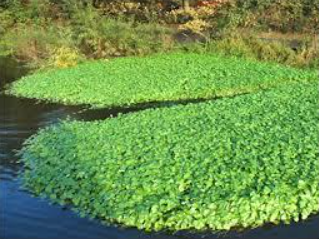
Figure 1: Algae growing in a pond
Algae are not only a valuable food source but also have wide-ranging applications across various industries. Table 1 provides an overview of different sectors that benefit from algae-based solutions, highlighting their diverse roles in sustainability, health, and environmental management.
Table 1: Other Applications of Algae Beyond Food
|
Application |
Description |
|
Biofuels and Renewable Energy |
Algae are a promising feedstock for biofuels due to their high lipid content, which can be converted into biodiesel, bioethanol, and biogas. They do not compete with food crops for arable land and require minimal freshwater resources. |
|
Pharmaceutical and Nutraceutical Products |
Certain algae species produce bioactive compounds beneficial for human health, including antioxidants, vitamins, and anti-inflammatory agents. These compounds have applications in drug formulations and functional foods. |
|
Animal Feed and Aquaculture |
Microalgae are used in animal feed to enhance nutritional value, particularly in poultry and aquaculture, reducing reliance on fishmeal and improving livestock health. |
|
Bioplastics and Sustainable Packaging |
Algae-derived bioplastics offer a biodegradable alternative to petroleum-based plastics, reducing plastic pollution and carbon footprints. |
|
Wastewater Treatment and Carbon Sequestration |
Algae absorb excess nutrients from wastewater, preventing pollution, and contribute to carbon sequestration by capturing CO₂ through photosynthesis. |
|
Cosmetics and Personal Care |
Algae extracts are used in skincare and hair care products for their hydrating and anti-aging properties, contributing to the growing demand for natural beauty products. |
|
Fertilizers and Soil Conditioners |
Algae-based fertilizers enhance soil quality and promote sustainable agriculture by providing essential nutrients without harmful environmental impacts. |
Algae, recognized as a superfood, aligns with multiple United Nations Sustainable Development Goals (SDGs) by addressing food security, environmental sustainability, and economic development. Notably, algae contribute to SDG 2: Zero Hunger by offering a nutrient-rich and resource-efficient food source, aiding in the fight against malnutrition and food scarcity, especially in vulnerable regions. Their cultivation supports SDG 12: Responsible Consumption and Production, as algae farming, requires fewer resources compared to traditional agriculture and minimizes waste, promoting sustainable food production practices.
Furthermore, algae play a role in SDG 13: Climate Action, as they absorb CO₂ during growth, thereby reducing greenhouse gas emissions and mitigating climate change impacts (7). In relation to SDG 14: Life Below Water, sustainable algae farming can be integrated into aquatic ecosystems without harming marine biodiversity, offering an alternative to overfishing and preserving ocean resources. Additionally, algae cultivation supports SDG 15: Life on Land by not necessitating deforestation or extensive land use, thus contributing to biodiversity conservation and sustainable land management (8).
Algae Cultivation Techniques
The cultivation of algae employs various techniques, each with its advantages and challenges. Depending on factors such as cost, environmental conditions, and desired yield, different methods can be utilized. Table 2 provides a comparison of key algae cultivation techniques, highlighting their suitability, benefits, and limitations
Raceway ponds
This is a type of open cultivation system in which algae, water, and nutrients circulate on a race track. The raceway ponds are usually built in compacted earth or concrete and can be of varying lengths and diameters. It is a closed-loop circulation that has a paddlewheel. The flow begins from this paddle wheel, and the culture is fed in front of it, mixing water and circulating nutrients to prevent sedimentation (9). They are usually used due to their cost effectiveness and simple operational use however, there is a high risk of contamination and the dependence on natural resources such as sunlight and water might be inconsistent (9).
Natural water bodies
They can also be cultivated openly in natural water bodies such as lakes, lagoons, and reservoirs. The algae are grown on these existing water bodies without constructing infrastructure to support their growth (10). They rely on environmental factors such as sunlight and nutrients. This cultivation technique is highly cost-effective and does not require technical know-how. However, the challenge with cultivating algae in natural water bodies is the lack of control which can lead to inconsistencies in production (11). There are also risks of contamination and ecological disruptions due to complete reliance on environmental factors. Despite these concerns, this method remains one of the most preferred options, especially in a resource-limited setting.
Innovative Techniques in Algal Cultivation
In addition to traditional systems, new techniques are pushing the boundaries of algae cultivation. One of these emerging techniques is vertical farming. Vertical algae farms combine buildings and farms in a staked manner. This minimizes the use of land, especially in urban settings that usually have limited space. It can also be paired with other plants or combined with an aquaculture system such that the nutrient-packed wastewater generated from the aquaculture can be used to grow the algae (12). This technique efficiently manages resources while servicing different system
Another promising avenue is the use of wastewater from industrial or agricultural sources, which provides a nutrient-rich medium for algae cultivation. This approach reduces the need for synthetic fertilizers and mitigates water pollution, turning waste into a valuable resource (13). Photobioreactors (PBRs) offer a controlled, closed-system environment for algae cultivation, minimizing contamination risks and maximizing productivity. PBRs provide a controlled environment that maximizes algae growth, prevents contamination from external microorganisms, and ensures a sterile environment for its growth (11).
Meanwhile, advancements in artificial lighting, such as LEDs tailored for photosynthesis, enable continuous algae growth in controlled environments, with AI-powered automation systems ensuring optimal conditions for light, nutrients, and CO₂ levels (14). Biostimulants, including plant hormones and microbial consortia, are also being explored to enhance algae growth and productivity, further improving the efficiency of cultivation systems (15).
Table 2: Comparison of Algae Cultivation Techniques
|
Cultivation Method |
Advantages |
Disadvantages |
Suitability |
|
Raceway Ponds |
Low cost, simple operation, widely used |
High risk of contamination, weather-dependent |
Large-scale production |
|
Natural Water Bodies |
Minimal infrastructure needed, cost-effective |
Lack of control, risk of contamination |
Resource-limited regions |
|
Photobioreactors (PBRs) |
Controlled environment, high productivity, minimal contamination |
High initial cost, technical expertise required |
High-tech commercial farming |
|
Vertical Farming |
Space-efficient, urban-friendly, can integrate with aquaculture |
Requires infrastructure investment, monitoring systems |
Urban areas with limited land |
|
Wastewater Utilization |
Reduces need for fertilizers, mitigates water pollution |
Potential for contaminants, regulatory challenges |
Sustainable farming, waste management |
Conclusion and Key Takeaways
By leveraging diverse techniques ranging from natural water body cultivation to sophisticated closed systems and cutting-edge innovations, algae cultivation is evolving into a highly efficient and sustainable solution for food, biofuels, and other applications. As these methods continue to improve, algae are poised to play a transformative role in addressing global challenges such as resource scarcity, food security, and environmental sustainability. Algae farming offers farmers sustainable and innovative opportunities.
Algae can be cultivated in small ponds, integrated with aquaculture systems, or grown on non-arable land, providing alternative income sources for rural and coastal communities. They require minimal freshwater, land, and synthetic fertilizers, making them a low-input, high-yield crop. Additionally, algae can enhance soil health when used as biofertilizers, serve as animal feed supplements, and sequester carbon, supporting climate-smart farming practices. By adopting algae farming, farmers can diversify their production, reduce environmental impact, and contribute to global food security and climate resilience.
Key Takeaways
- Algae are a highly nutritious and sustainable food source, containing up to 70% protein, making them more efficient than traditional protein sources like soybeans and beef.
- Different cultivation techniques, from open raceway ponds to high-tech photobioreactors, offer diverse approaches to large-scale algae production.
- Innovative methods such as vertical farming, wastewater utilisation, and AI-powered systems enhance algae productivity while minimising environmental impact.
- Algae cultivation can address global food security challenges by providing a resource-efficient and scalable protein alternative.
- Despite the benefits, economic factors, scalability, and consumer acceptance remain key challenges that need further exploration.
References
- Food and Agriculture Organization (FAO), 2022. The State of Food Security and Nutrition in the World 2022: Repurposing food and agricultural policies to make healthy diets more affordable. Rome: FAO. Available at: The State of Food Security and Nutrition in the World 2022 — FAO [Accessed 18 Feb. 2025].
- Ahmad, N., Shahnawaz, S. K. and Alam, Z., 2021. Food insecurity: Concept, causes, effects and possible solutions. Journal of International Academic Research for Multidisciplinary Studies, 2, pp.105–113. https://doi.org/10.47310/jiarjhss.v02i01.016
- Diaz, C. J., Douglas, K. J., Kang, K., Kolarik, A. L., Malinovski, R., Torres-Tiji, Y., Molino, J. V., Badary, A. and Mayfield, S. P., 2023. Developing algae as a sustainable food source. Frontiers in Nutrition, 9(January), pp.1–21. Developing algae as a sustainable food source
- Matemilola, S. and Elegbede, I., 2017. The challenges of food security in Nigeria. OALib, 4(12), pp.1–22. The Challenges of Food Security in Nigeria
- Wu, J. Y., Tso, R., Teo, H. S. and Haldar, S., 2023. The utility of algae as sources of high-value nutritional ingredients, particularly for alternative/complementary proteins to improve human health. Frontiers in Nutrition, 10(October). The utility of algae as sources of high value nutritional ingredients, particularly for alternative/complementary proteins to improve human health
- Food and Agriculture Organization (FAO), 2020. The State of the World's Biodiversity for Food and Agriculture. Rome: FAO. Available at: The State of World Fisheries and Aquaculture 2020. In brief [Accessed 18 Feb. 2025].
- Olabi, A. G., Shehata, N., Sayed, E. T., Rodriguez, C., Anyanwu, R. C., Russell, C., & Abdelkareem, M. A. (2023). Role of microalgae in achieving sustainable development goals and circular economy. The Science of the total environment, 854, 158689. https://doi.org/10.1016/j.scitotenv.2022.158689
- Ferreira, A., Bastos, C. R. V., Marques-Dos-Santos, C., Acién-Fernandez, F. G., & Gouveia, L. (2023). Algaeculture for agriculture: from past to future. Frontiers in Agronomy, 5. Algaeculture for agriculture: from past to future
- Jayasankar, R., 2024. Mariculture of economically important seaweed and its utilization for the development of high-value products. pp.328–347. ICAR Sponsored Winter School Ch Reeta Jayasankar (PDF) – org.in
- Karthikeyan, D., Muthukumaran, M. and Balakumar, B. S., 2016. Mass cultivation of microalgae in open raceway ponds for biomass and biochemicals production. 3, pp.247–260.
- Khan, N., Sudhakar, K. and Mamat, R., 2024. Macroalgae farming for a sustainable future: Navigating opportunities and driving innovation. Heliyon, 10(7), e28208. Macroalgae farming for sustainable future: Navigating opportunities and driving innovation
- Abdur Razzak, S., Bahar, K., Islam, K. M. O., Haniffa, A. K., Faruque, M. O., Hossain, S. M. Z. and Hossain, M. M., 2024. Microalgae cultivation in photobioreactors: Sustainable solutions for a greener future. Green Chemical Engineering, 5(4), pp.418–439. Microalgae cultivation in photobioreactors: sustainable solutions for a greener future
- Kalantari, F., Mohd Tahir, O., Mahmoudi Lahijani, A. and Kalantari, S., 2017. A review of vertical farming technology: A guide for implementation of building-integrated agriculture in cities. Advanced Engineering Forum, 24, pp.76–91. A Review of Vertical Farming Technology: A Guide for Implementation of Building Integrated Agriculture in Cities | Scientific.Net
- Li, J., Li, T., Sun, D., Guan, Y. and Zhang, Z., 2024. Treatment of agricultural wastewater using microalgae: A review. In: G. M. Gadd and S. B. Sariaslani, eds., Advances in Applied Microbiology. 128, pp.41–82. Academic Press. Treatment of agricultural wastewater using microalgae: A review
- Prisa, D. and Spagnuolo, D., 2023. Plant production with microalgal biostimulants. Horticulturae, 9(7), pp.1–14. Plant Production with Microalgal Biostimulants