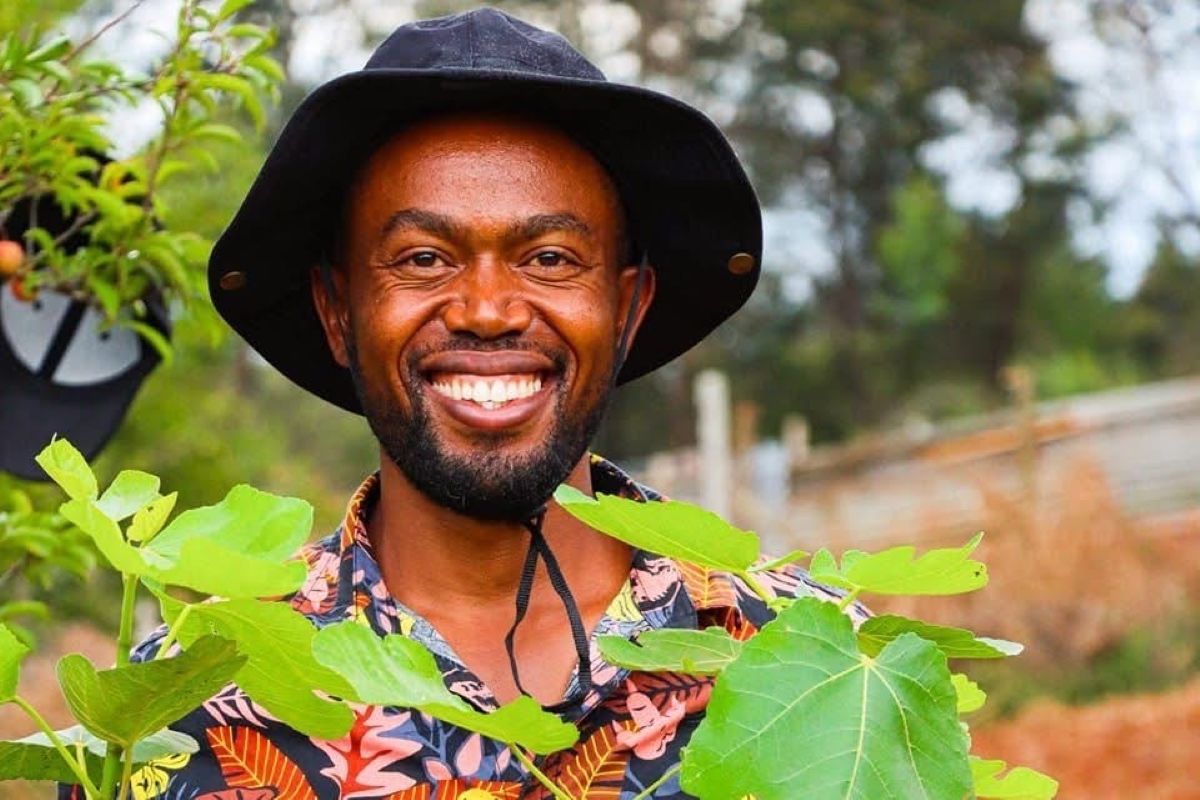
Kenyan regenerative agriculture consultant Thiong’o Gachie has spent a decade showing how small, diversified farms can transform food systems
When Thiong'o Gachie began building his training centre out of mud and straw, his neighbours thought he had lost his mind. Why build with earth when concrete was readily available? Why plant ten different crops when maize was considered the safe bet? And why devote a career to working in rural communities when the cities promised greater wealth?
What Gachie has built is a living case for regenerative farming — showing that agriculture can restore the land while remaining productive and profitable. Now recognized as one of East Africa’s leading regenerative agriculture trainers and consultants, he works across Kenya, Uganda, Tanzania, Somalia, Namibia, Rwanda, Zambia, Malawi, and beyond. His journey began with a simple desire: to care for the environment.
Growing up on a farm in Laikipia
Gachie grew up on a 10-acre family farm in Laikipia County, about 200 kilometres north of Nairobi. The land had been purchased by his grandfather in the years following Kenyan independence in 1963, when families were moving out of crowded ancestral areas to establish new farms in rural areas.
“I grew up on a farm,” he recalls. “We had maize, wheat, fruits—bananas, avocados, oranges—and livestock: cows, sheep, chickens. It was an integrated system. It was abundant.”
The last of four siblings, he was given lighter duties — grazing the sheep while his older brothers and sisters took on heavier work. Village life, by his description, was satisfying. "As a child in the village, you just live. Your basic needs are met, and you're happy."
He left only for university — and found, in Nairobi, that city life was not for him. It was there, too, that he began to recognize how deeply poverty affected rural communities like the one he had left behind. "The real need is in the rural areas," he says plainly. "They grow monocrops, or they don't have the money to buy quality food, and all the best food goes to the cities."
Environmental decline takes hold
Kenya's post-independence population boom drove widespread deforestation as families cleared land for agriculture and the ecological balance began to break down, with the consequences becoming impossible to ignore. Forests were felled for timber and charcoal, flooding hit, and wildlife habitats shrank.
“By the 2000s, we started seeing the effects—droughts, floods, soil degradation, and conflict over resources,” he says. “People were destroying the environment, and then wondering why there was no food.”
Watching all this unfold, Gachie enrolled in a double degree in Environment and Community Development at a Nairobi university. "Getting emotional doesn't help," he says. "You have to do something."
The degree crystallized his conviction that the environment and food systems are inseparable — and that protecting one requires protecting both. "Everyone grows food," he says. "But the question is: are you destroying the environment to do it?" That question led him toward regenerative agriculture.
Learning and working across East Africa
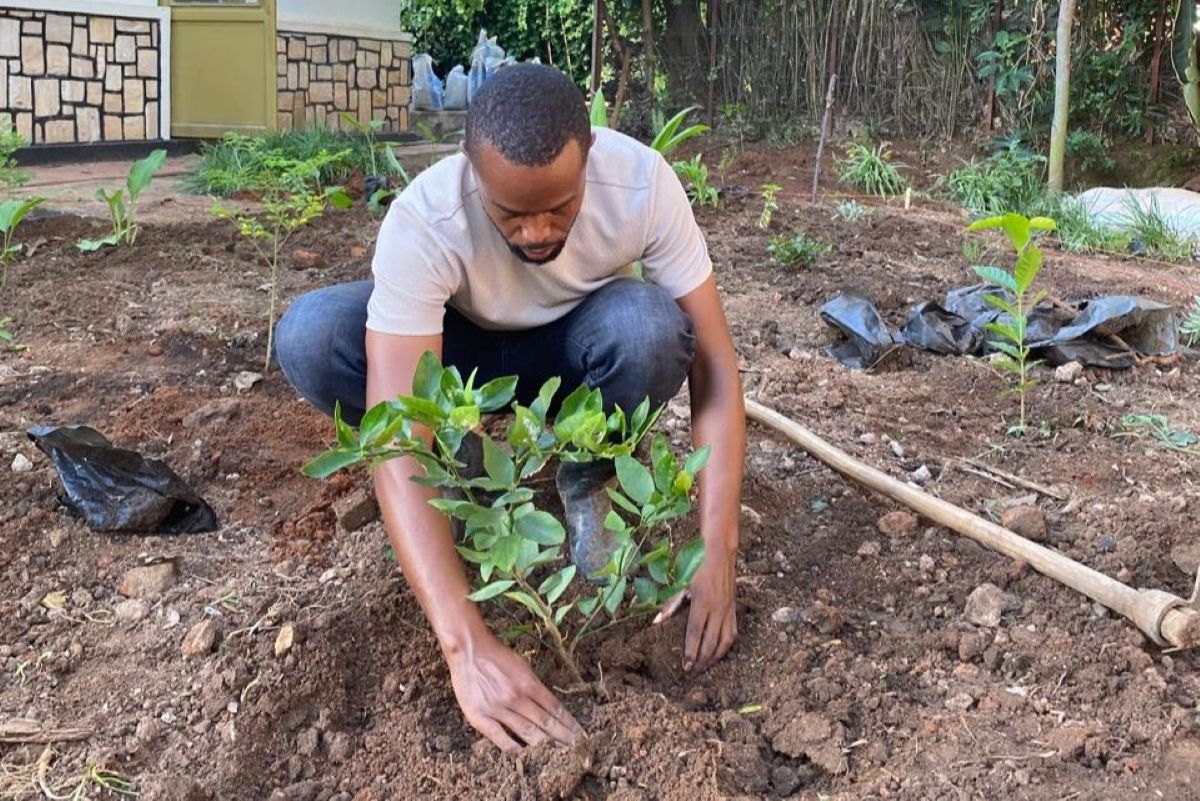
In 2017, after completing a permaculture design course, he spent an entire year volunteering across Kenya, Uganda, and Tanzania — working on farms in exchange for food and accommodation.
"I spent a whole year just learning — working on farms, understanding different climates, different cultures," he says. "I didn't have a stable income, but I had time to learn and connect."
He joined WWOOF (Worldwide Opportunities on Organic Farms), a global platform that connects volunteers with organic farms. In Uganda, he worked as a farm manager at an ecological project, overseeing vegetable and herb production. Today, he serves as WWOOF's country coordinator for Kenya.
In his second year, he began leading one- and two-day training sessions. In his third year, he was working across East Africa.
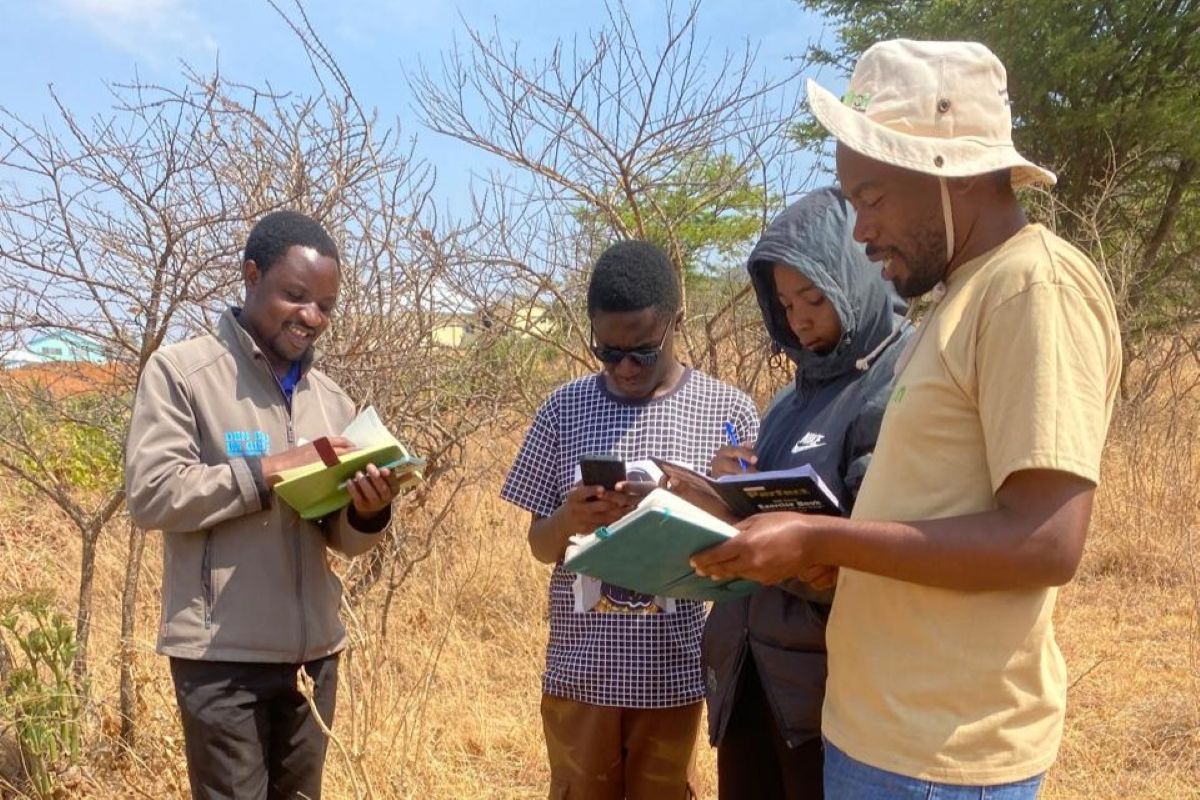
He noticed something important: in the permaculture and regenerative agriculture space, the trainers in Africa were almost always from Europe, the United States, or Australia. Local practitioners were scarce and largely invisible.
"I had this vision because I could see on the internet that most trainers coming to Africa were foreigners," he explains. "I knew there was a demand, but I had to build my capacity first."
He began posting his work on social media and built a following of over 50,000 across platforms. He then landed his first major international role at a consultancy in Rwanda, assessing indigenous botanical species for a craft rum distillery, thanks to a LinkedIn connection.
Building a one-acre model for smallholders
Two years ago, Gachie established his own farm in Rumuruti, about 25 km from his ancestral home. He made a choice: keep it small. One acre, intensively managed, with a half-acre extension now being developed as a training centre.
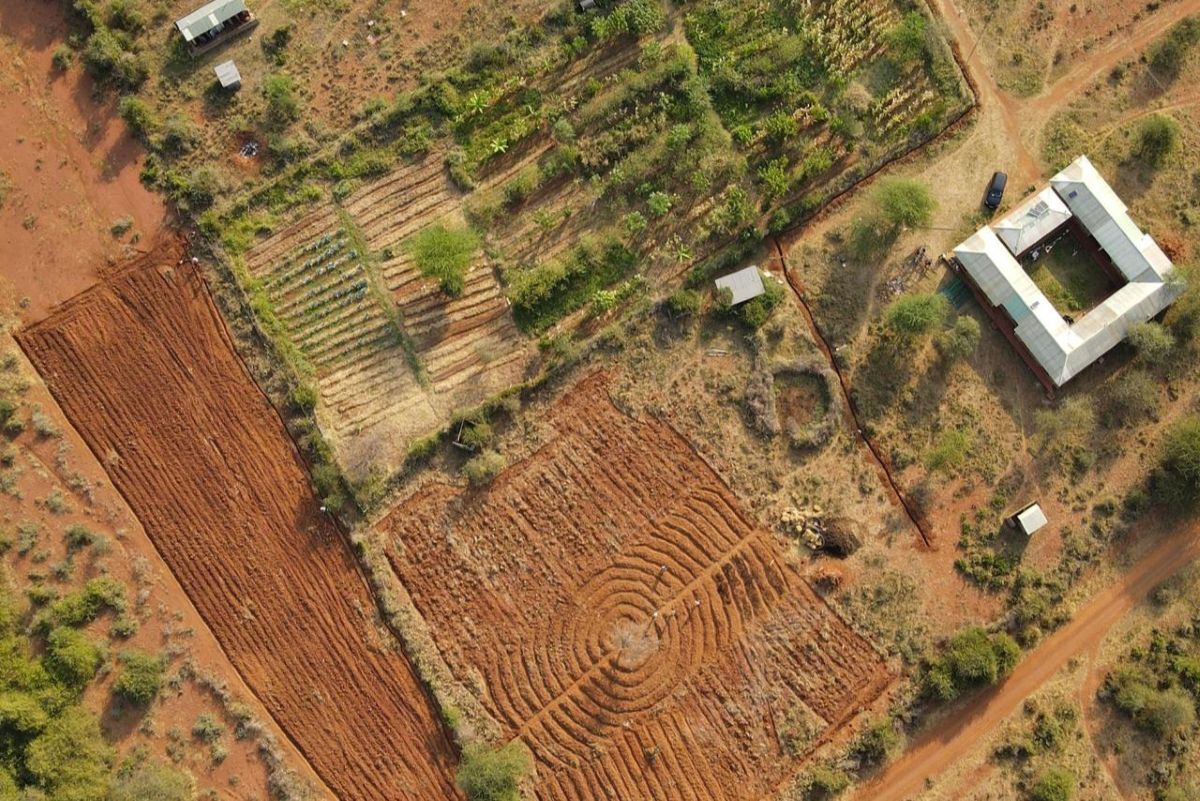
"I want it to reflect what smallholder farmers can do," he says. "Most smallholders in the global south have between one and three acres and live on that land. So mine is a model."
The farm is intentionally dense and diverse. It produces food crops, fruits, tubers, vegetables, and herbs. Livestock includes goats, sheep, chickens, ducks, rabbits, and bees, with a fish system planned next. He has experimented with cricket rearing as a sustainable protein source for his chickens, as well as with black soldier flies.
His tree nursery is the farm's primary source of income. Because Gachie travels widely, he brings back seeds and cuttings of unusual, locally adapted species — desert melons from Namibia, cotton from Somalia, spices from Zanzibar, teff from Ethiopia, gluten-free buckwheat from the United States. He propagates them, sells the seedlings, and introduces farmers to the possibility of niche, high-margin crops that monoculture systems never consider.
"It's about finding what works locally, but also introducing new opportunities," he says. On his social media, he has demonstrated dishes made with sorghum as a rice and maize alternative — and watched followers who would never have considered it start experimenting with it themselves.
"Small farms produce up to 80% of the world's food. They are diverse, adaptable, and resilient. Large-scale monoculture is fragile."
Shifting away from monoculture
The hardest part of Gachie's work is not technical but cultural. Teaching farmers to shift away from familiar practices, especially monocropping, takes time.
"It's difficult," Gachie acknowledges. "But we show them it's possible. People believe by seeing, not by hearing. You can go and tell them a beautiful story, and then you're gone, and they go back to their habits."
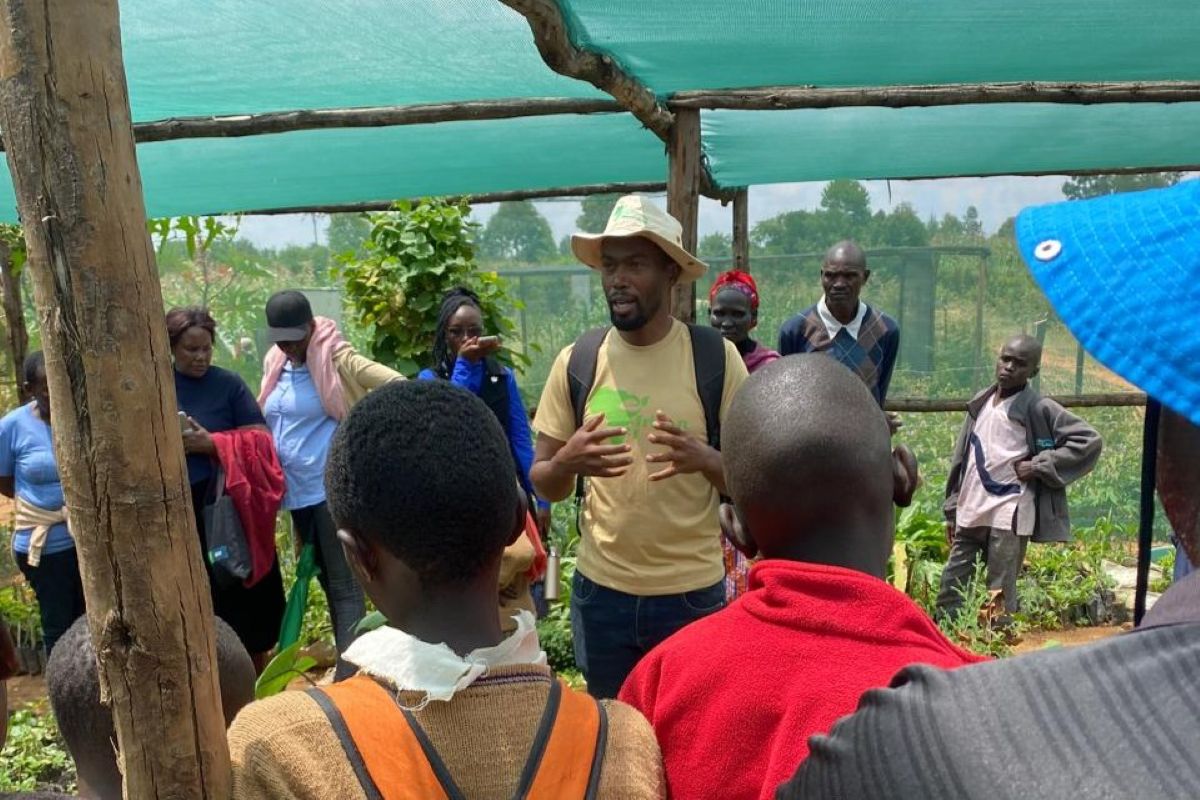
Everywhere he works, his first intervention is to establish a model garden — a living demonstration that integrates crops, trees, livestock, and bees; that produces food, fodder, honey, herbs, and income; that shows, concretely, what a diversified system looks like and what it yields. "If they can see a garden giving fruit, fodder, honey, herbs — they start to change gradually," he says. "Change is a slow process."
He has learned, through experience, that projects without ongoing support collapse. He now commits to a minimum of one year on any project — enough time for trees to establish, for farmers to develop skills, for early crops to generate income, for the system to begin sustaining itself. "Water access, fencing, long-term support — those are now non-negotiable on every project," he says. "That's when real change happens."
Working where need is highest
Gachie's clients are predominantly NGOs, nonprofits, religious organizations, schools, hospitals, and rescue centres — institutions working with people at the sharpest end of food insecurity.
In hospitals, he installs food gardens to improve patient nutrition during recovery. In children's homes and rescue centres, he builds gardens that not only supply fresh produce but teach practical growing skills to children and women. "If they are undernourished, you rescue them — and then start feeding them with fruit and vegetables," he says.
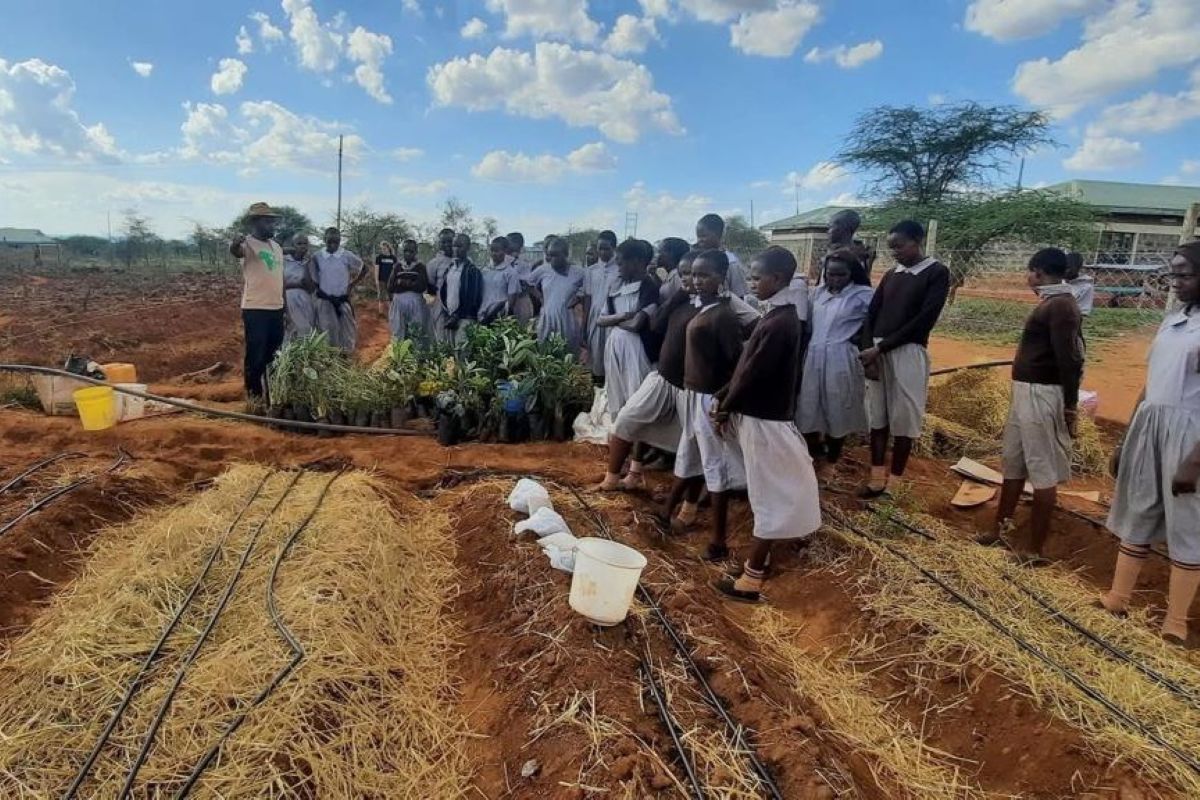
In schools, he has partnered with organizations like Plumpton College in the UK, whose students fundraised to support a Kenyan primary school garden, then came to help set it up — spending a week building cross-cultural friendships and then monitoring the garden's progress remotely.
In forest-edge communities, the stakes are higher. In Zanzibar last month, Gachie was assessing a project to protect the Masingini Forest — the primary water source for Stone Town and the broader urban population. Communities living near the forest were cutting trees for firewood and charcoal, poaching small game, and encroaching on the forest for farmland.
"People were cutting trees because they needed to survive," he says. His intervention: introduce agroforestry systems that provide food, income, and cooking fuel without touching the forest. Small animals, kitchen gardens with fruit and spices, and beehives. "If people benefit from nature, they protect it," he says. "If you take care of the people, they have food and income, and then they take care of the environment."
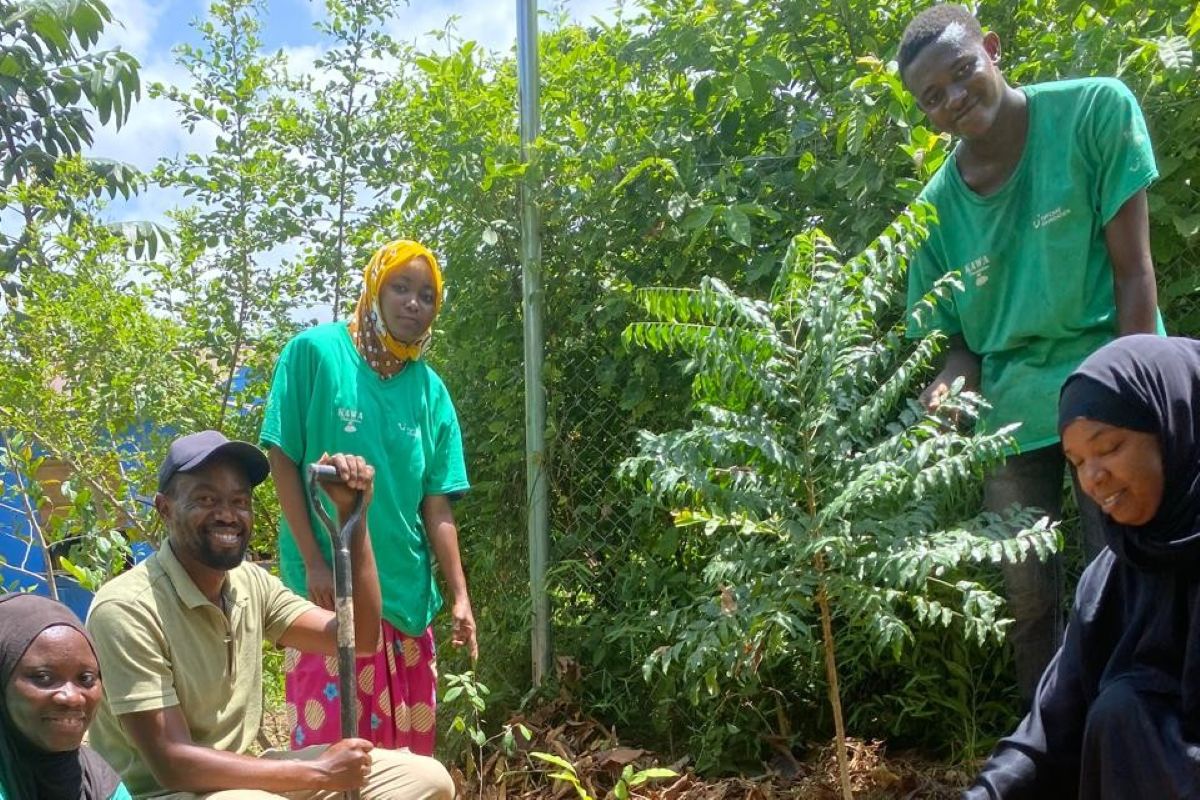
He saw the same dynamic in Somalia, where he worked on a frankincense conservation project. The trees producing some of the world's finest frankincense — some of them 200 to 300 years old — were being cut down for firewood by communities that could see no other way to cook their meals. "They don't see the long-term benefit," he explains. "They only see that they need to cook today." Demonstrating that the trees have direct economic value changes the calculation entirely.
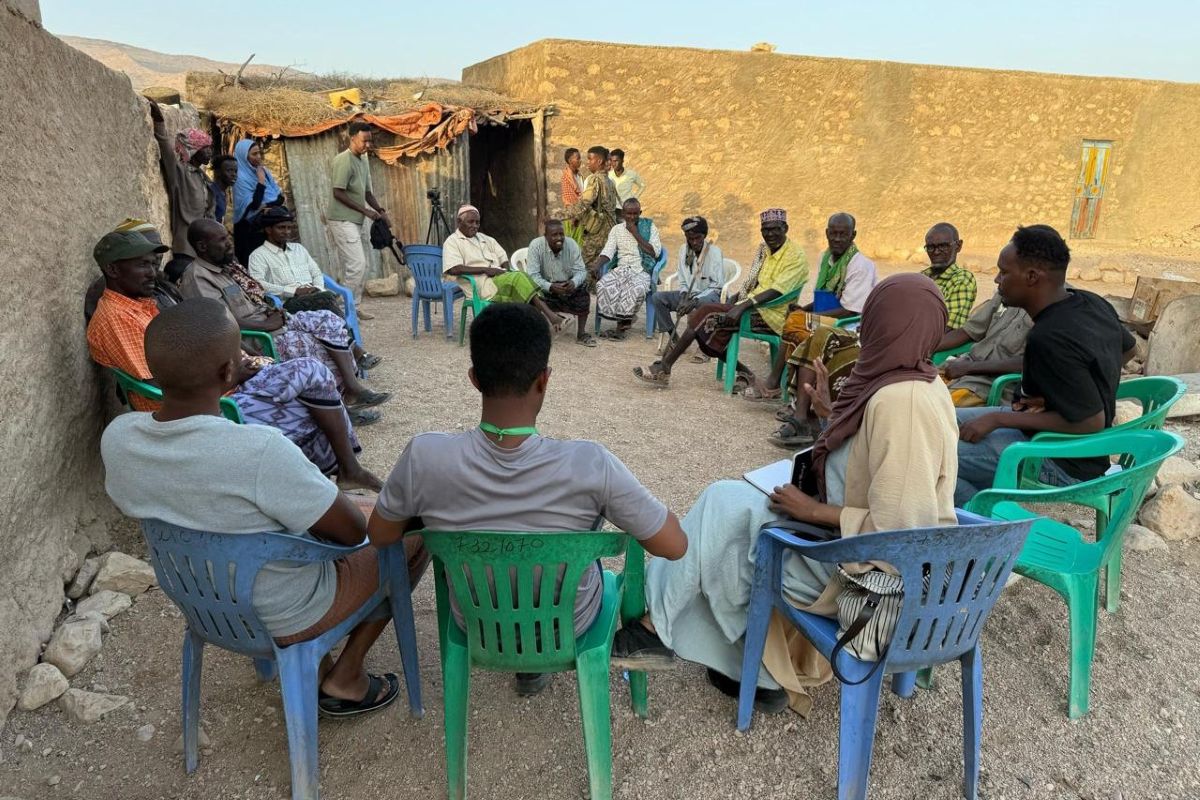
Adapting to drought and failures
Challenges are ever-present, and not all projects succeed. Water, says Gachie, is the most significant constraint he faces. Several projects have failed entirely during droughts. When there is no water, importing it is too expensive, and the only option is to let the drought-tolerant plants survive and replant when the rains return.
"It's difficult," he says. "But it's nature. You accept it and start again. There's always a balance between success and failure. And the things we cannot control, we accept."
What keeps him going, he says, are the farmers who contact him years later with photos: fruit trees heavy with harvest, vegetable gardens thriving, cereal crops stacked in storage — projects that were small and uncertain at the start, now self-sustaining and productive. "That powers me," he says.
He faces social resistance, too. When he began building his cob training centre — a structure made of earth, straw, and water — neighbours questioned why he would build with mud when concrete was available. When he promotes organic methods, critics tell him it is backward, primitive, and unable to feed the world. He laughs it off. "They think concrete is more modern. They think organic farming is what your grandparents did. They don't understand the philosophy behind it."
Creating a training hub for regenerative skills
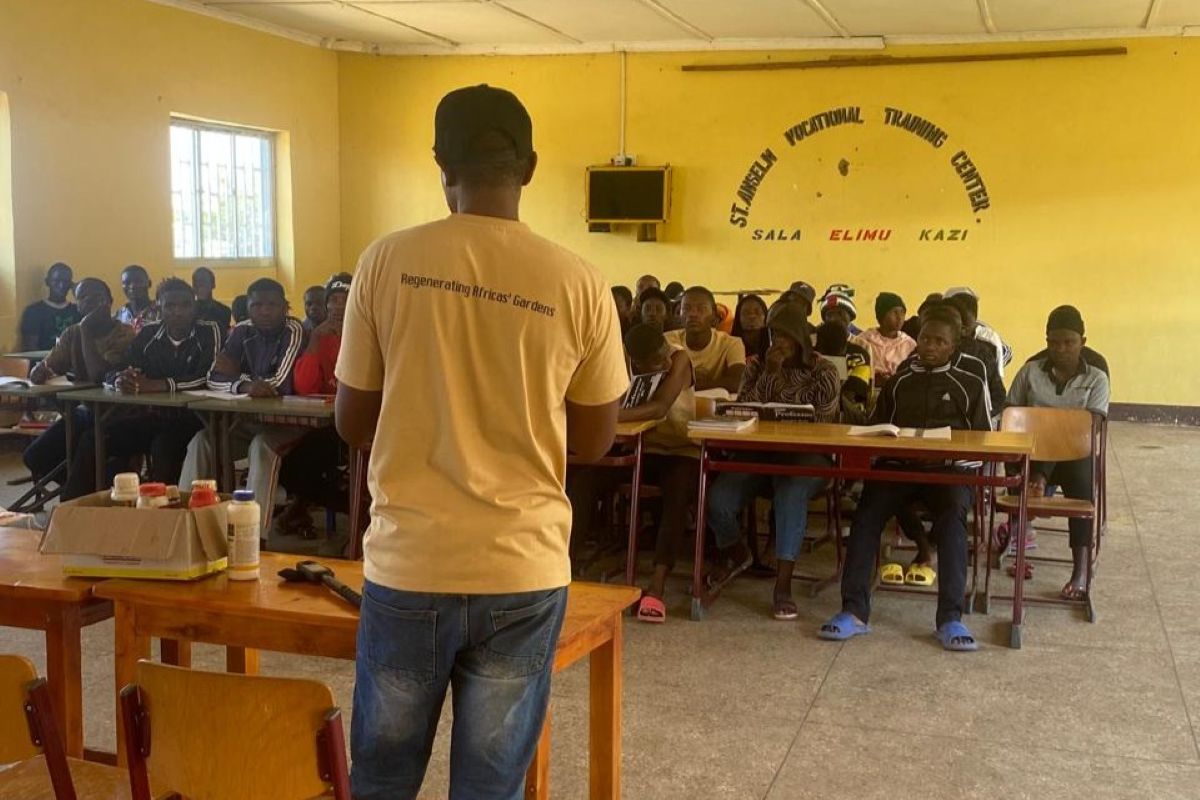
In August last year, Gachie hosted an open training session on his farm, and more than 100 people showed up. The response confirmed that there is an appetite, particularly among young Kenyans, for hands-on regenerative agriculture education.
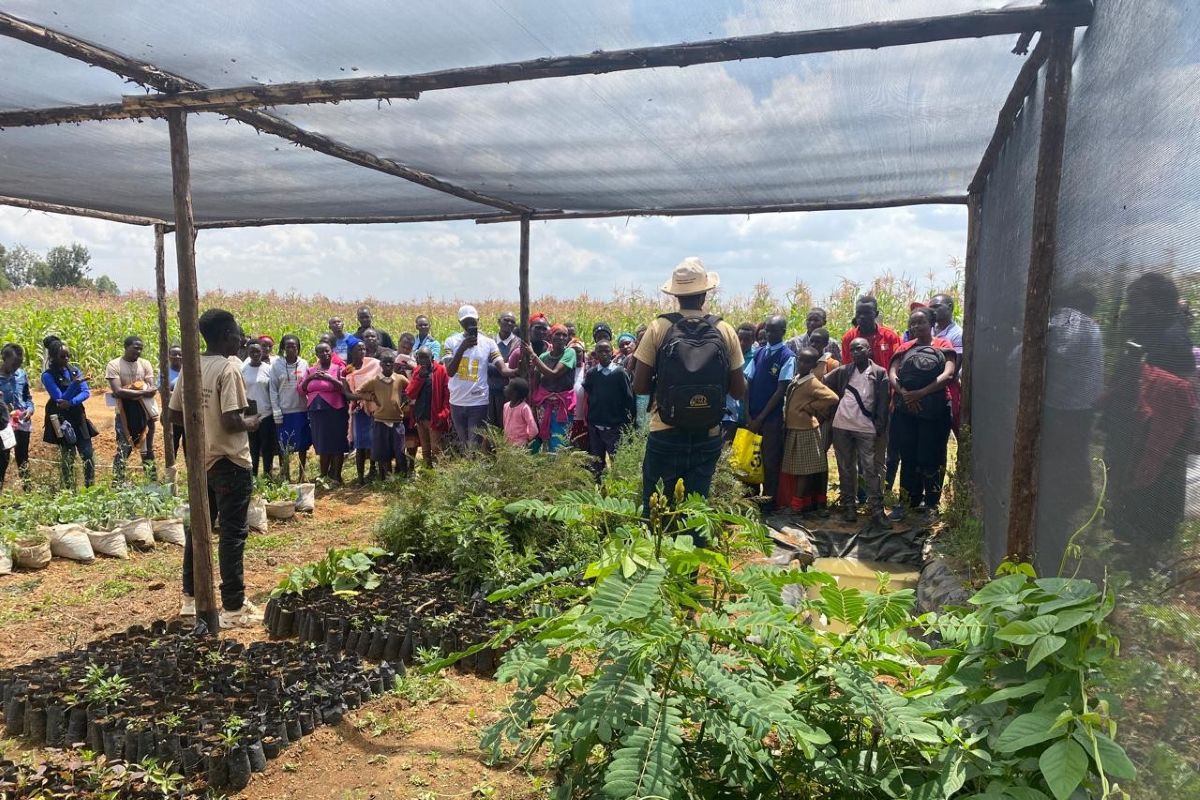
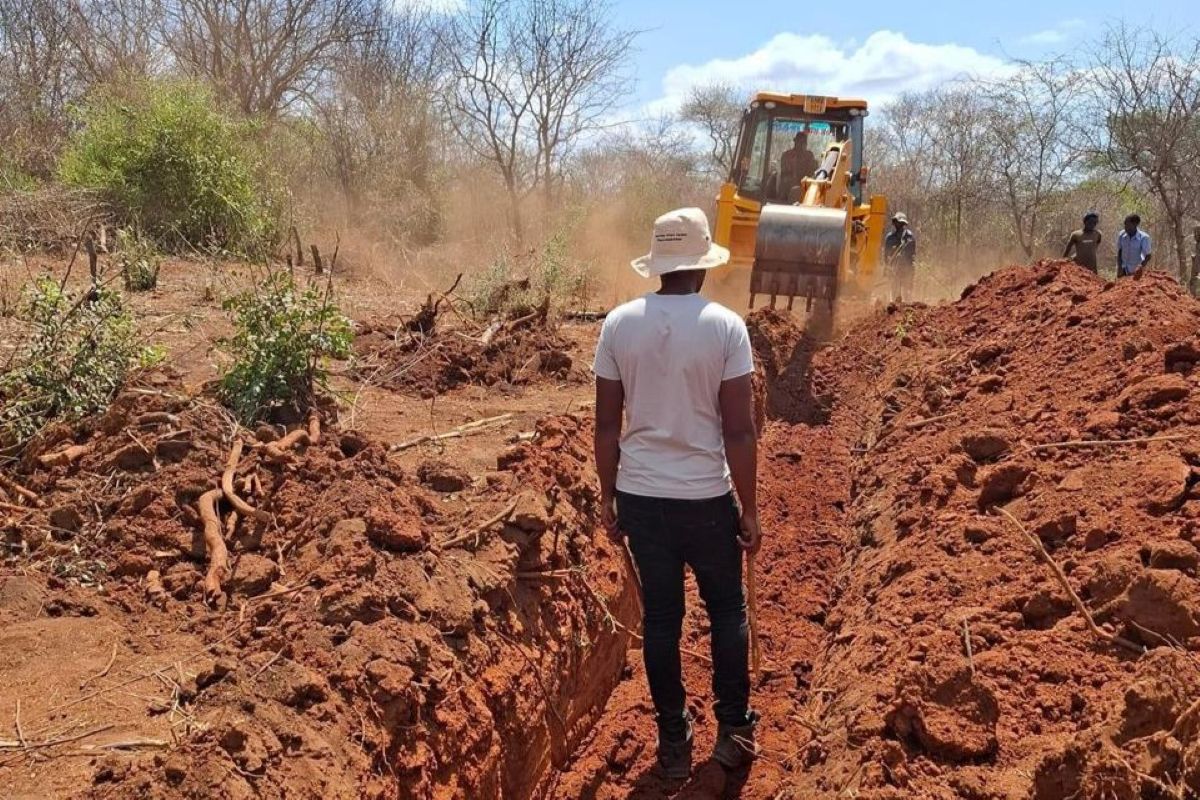
He is now building a dedicated training centre on a half-acre extension of his farm — constructed using cob, a traditional natural building method that uses locally sourced earth and straw, with a water-harvesting pond dug from the same soil used to build the walls.
"This is not just about farming," he says. "It's about a way of life."
The vision for the centre extends well beyond agriculture. He wants it to become a place where people can come to learn regenerative building, water harvesting, value-addition from farm products — soaps and candles from beeswax, natural dyes, fibres. He has collaborated with his neighbours to scale production and imagines, in ten years, something resembling a regenerative supermarket: natural products spanning food, beauty, clothing, building materials, and medicines — all sourced and produced within the community.
"I want to show people that we can all live regeneratively," he says. "We can create communities around us, make good money, and also give something back to the next generation."
A regenerative farming future
By this year, Gachie has travelled to 11 countries, contributed to projects in at least seven, and represented Kenya at the WWOOF global conference in France — where he spoke about the need for more local African voices in the regenerative agriculture space, and for more young people to discover volunteering on farms.
He has built a career that did not exist as a template when he started. No role model, no defined path, no government support. "I had to build everything from scratch," he says. "So I can be that example — that beam of light — that shows young Africans it's possible. You don't have to scramble for the few conventional jobs. You can create green jobs, sustainable jobs, for yourself and your community."
His grandfather — the man he is named after — bought land in Laikipia in the early 1970s, staking a claim to the future when Kenya was still finding its feet. His ten-year-old daughter now helps him plant trees on the same land.
"It's like a big circular loop," Gachie says. "The future looks uncertain — economic crises, natural resource crises. But if you start building regenerative systems now, in ten or twenty years, your children will have more opportunities than we had."
His advice to anyone considering this path is the same advice he gives every farmer facing their first agroforestry system: "Start small. See it work. Then scale up. If you are failing, it's part of the process."