















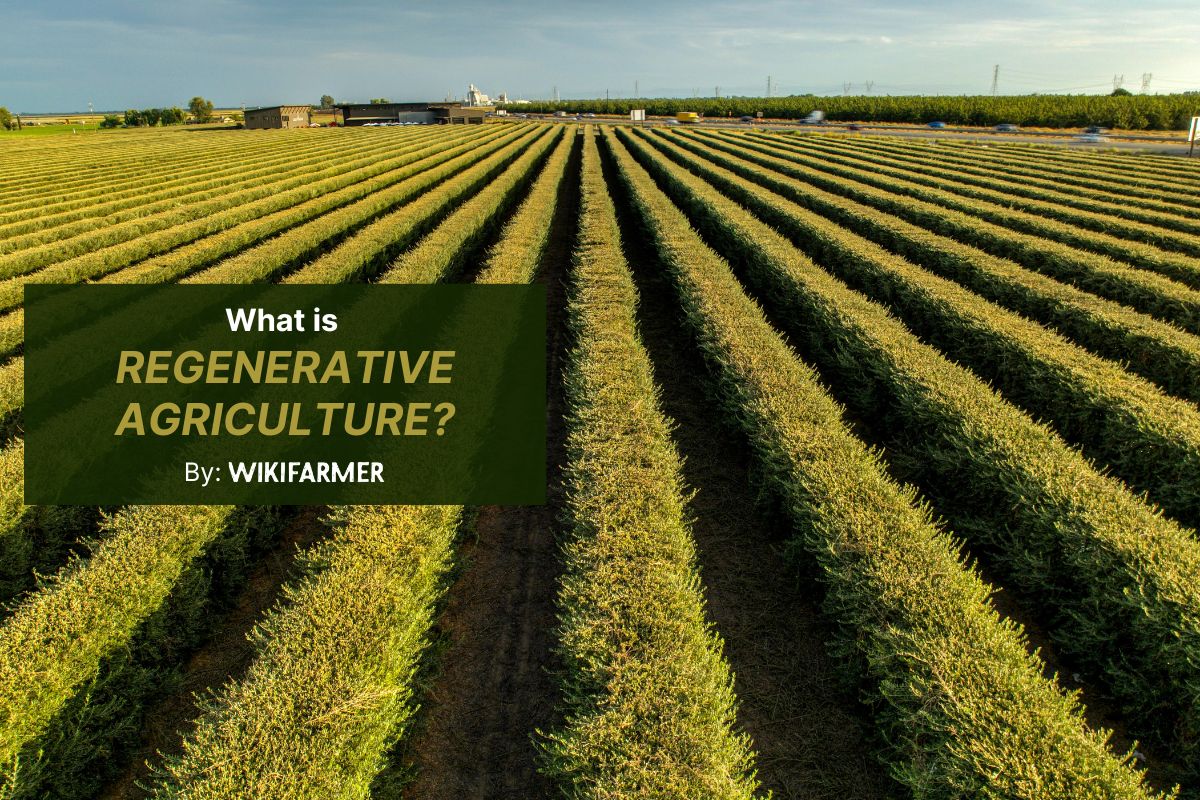
Regenerative agriculture explained: Key questions and answers
Regenerative agriculture has moved from a niche concept to a central topic in discussions about soil health, climate change, and food security. Yet definitions, outcomes, and expectations vary widely. This Q&A addresses the most frequently asked questions.
What is regenerative agriculture?
Regenerative agriculture is a system of farming practices designed to improve soil health, restore biodiversity, strengthen water cycles, and increase ecosystem resilience. It focuses on minimizing soil disturbance, keeping soil covered year-round, increasing plant diversity, and integrating livestock where appropriate.
At its core, it treats soil as a living ecosystem rather than an extractive resource. Unlike conventional models that prioritize yield through synthetic inputs, regenerative agriculture is principle-based, not governed by a single global certification.
What ecosystem does regenerative agriculture attempt to mimic?
Regenerative systems aim to replicate natural, self-sustaining ecosystems such as grasslands, forests, and prairies. In nature, soil is rarely left bare, plants are diverse, and animals are integrated into the nutrient cycle.
These systems are characterized by continuous living roots in the soil, high biodiversity instead of monocultures, natural nutrient cycling, and disturbance patterns similar to grazing or fire. The objective is to restore ecological functions that modern agriculture has often disrupted.
What are some types of regenerative agriculture?
Regenerative agriculture is not a single method but a combination of practices tailored to local conditions. Common approaches include:
- No-till or reduced tillage: Preserves soil structure and microbial life
- Cover cropping: Protects and enriches soil between main crops
- Rotational grazing: Moves livestock to mimic natural herd movement
- Agroforestry: Integrates trees with crops or livestock
- Silvopasture: Combines forestry with grazing systems
- Composting: Adds organic matter back into the soil
- Polyculture: Grows multiple crops to increase resilience
Most farms combine several of these techniques depending on climate, soil, and economic constraints.
How is animal welfare used to support regenerative agriculture?
Animal welfare plays a significant role, particularly in grazing systems. Practices such as rotational grazing, lower stocking densities, and access to pasture can reduce soil degradation, improve natural fertilization through manure distribution, support healthier pasture ecosystems, and align livestock production with ecological recovery. However, results depend heavily on management quality and local conditions.
What is the best example of large-scale regenerative agriculture?
There are many examples of large-scale regenerative agriculture initiatives. Notable examples include:
- In La Pampa, Argentina, El Mate farm has adopted regenerative grazing to restore soils degraded by decades of monoculture. The operation now supports a thriving ecosystem, producing around 1,000 grass-fed cattle annually alongside sheep and free-range poultry.
- In East Africa, Kenyan agronomist Thiong’o Gachie has helped catalyze a broader regenerative farming movement, working with farmers across the region to improve soil health, resilience, and productivity.
- Brazil’s EVERTE project is targeting the restoration of 1 million hectares of degraded land by 2030, positioning regenerative agriculture as a tool for large-scale landscape recovery.
- In the United States, White Oak Pastures transitioned to regenerative practices and an independent lifecycle assessment found its beef production significantly reduced net emissions, while increasing soil carbon and reducing reliance on synthetic inputs.
How do regenerative agriculture systems deal with flooding?
Regenerative practices can significantly improve water management and reduce flood risk. They work by increasing soil organic matter, which enhances water absorption, reducing compaction through minimal tillage, using deep-rooted plants to improve infiltration, and maintaining ground cover to slow runoff.
Healthy soils can absorb far more rainfall than degraded soils. However, these systems cannot fully prevent flooding during extreme weather events.
Does regenerative farming combat climate change?
Yes, regenerative farming may contribute to climate mitigation. One way it does this is through soil carbon sequestration, meaning that healthy soil pulls CO2 from the atmosphere and stores it as stable organic matter.
Potential benefits include capturing atmospheric carbon in soil organic matter, lower fertilizer-related emissions, and increased resilience to climate shocks
However, scientific consensus is mixed and the scale of carbon sequestration remains debated. Some studies suggest meaningful potential, while others caution that soil carbon gains may plateau or be reversible. Most experts agree it is a supportive tool—not a standalone climate solution.
Does regenerative cow farming combat climate change?
Regenerative grazing systems may reduce emissions per unit of food by improving pasture quality and soil carbon storage. When cows are moved frequently, their hooves and manure stimulate grass growth, increasing soil carbon.
However, cattle still produce methane, a potent greenhouse gas. The total climate benefit depends on stocking density and land management, and lifecycle emissions must be considered.
In practice, regenerative cattle farming may reduce impact compared to industrial systems, but does not eliminate livestock-related emissions completely.
Does regenerative farming protect tropical ecosystems?
Regenerative approaches such as agroforestry can help reduce pressure on tropical forests by improving productivity on existing farmland and restoring degraded land. They can limit expansion into forest areas, provide alternatives to slash-and-burn agriculture, and enhance biodiversity within agricultural systems
However, long-term protection depends primarily on policy, enforcement, and economic incentives. Regenerative farming can support these goals, but cannot replace forest conservation measures.
What are the limitations of regenerative agriculture?
Despite its benefits, regenerative agriculture has some constraints:
- Measurement challenges: Soil carbon is difficult to quantify consistently
- Land requirements: Some systems require more land, especially for livestock
- Scalability issues: Labour and knowledge demands can be high
- Greenwashing risks: Lack of standards allows misuse of the term
- Input trade-offs: Some no-till systems rely on herbicides
- Time delays: Ecological recovery can take years or decades
- Regional variability: Outcomes differ widely by climate and soil
As a result, regenerative agriculture is not a universal solution but a context-dependent approach.
Do people understand regenerative farming in 2025/2026?
Awareness has grown rapidly, driven by media attention, corporate commitments, and climate discussions. However, confusion remains, as there is a lack of a single global definition, there exist overlapping terms (organic, sustainable, regenerative), and marketing claims outpacing scientific consensus.
Many consumers confuse regenerative practices with "sustainable farming," not realizing that "regenerative" implies active improvement rather than just "sustaining" a depleted status quo. Many consumers still misunderstand it as simply “less harmful.”
Understanding is growing, but still uneven across consumers, policymakers, and parts of the agricultural sector.
Conclusion
Regenerative agriculture is best understood as an evolving framework rather than a fixed model. Its potential lies in improving soil health, biodiversity, and resilience—but outcomes depend on how, where, and at what scale it is implemented. As interest continues to rise, scientific validation and clear standards will remain central to its credibility in global food systems.