
For some crops and some nutrients, yes, although by less than headlines often suggest. The strongest evidence comes from trials that grow old and new varieties side by side. In India, rice released over the past 50 years lost about 33% of its zinc and 27% of its iron, and wheat about 30% of its zinc and 19% of its iron, and long-term records at Rothamsted in England show wheat grain minerals falling after high-yielding semi-dwarf varieties arrived. The main cause is the dilution effect: higher-yielding varieties spread the same minerals across more grain. Comparisons of old and new food composition tables also show declines in vegetables and fruit, but those comparisons are disputed, because sampling and laboratory methods have changed over the decades. Rising carbon dioxide in the atmosphere is a second, separate pressure on the zinc, iron and protein in staple grains. None of this makes fruit, vegetables or whole grains less worth eating. This article covers the dilution effect, the evidence from variety trials and from food tables, how strong that evidence is, and what rising CO2 adds.
The dilution effect
Plant scientists use the term dilution effect for a common observation: as crop yields rise, nutrient concentrations in the harvested part often fall. Steve McGrath, a crop nutrition scientist at Rothamsted Research, describes it as nutrients taken up from the soil being spread more thinly across a much larger amount of grain, with the highest-yielding varieties showing the lowest grain nutrient concentrations.
The reason lies in what breeding has rewarded. As biochemist Donald Davis has pointed out, farmers are paid for yield, not for nutrient content. Decades of selection for size, growth rate and pest resistance, with vitamins and minerals rarely measured, favoured varieties that put more of their extra growth into starch than into protein, iron or zinc. A higher-yielding plant does not automatically take up proportionally more minerals from the soil, so each gram of harvest carries a little less.
Evidence from old and new varieties grown side by side
The most reliable way to test the dilution effect is to grow old and new varieties in the same field, in the same year, and analyse them in the same laboratory. Several studies have done this, mostly with cereals.
- Wheat at Rothamsted: at the Broadbalk experiment, where wheat has been grown and archived since the 1840s, grain mineral concentrations were steady until the 1960s and then began to fall after high-yielding semi-dwarf wheats took over. Zinc, iron, copper and magnesium declined while soil mineral levels did not change, pointing to the varieties rather than the soil
- Rice and wheat in India: Debnath and colleagues grew 16 landmark rice and 18 landmark wheat cultivars released since the 1960s. Zinc and iron in rice grain fell by about 33% and 27%, and in wheat by about 30% and 19%. A combined mineral diet quality index fell by about 57% in rice and 36% in wheat between 1960 and 2010, while concentrations of some toxic elements, such as arsenic in rice, rose
- Maize: comparisons of maize hybrids from different eras show that modern hybrids take up more nutrients per plant, because they are larger, but carry lower concentrations of several nutrients in the grain
- Broccoli, an exception: a USDA study of 14 broccoli varieties from different decades found no clear decline in mineral concentrations in modern hybrids, although one old open-pollinated variety from 1950 was richer in minerals
These trials show that the yield-nutrient trade-off is real, especially in cereals, but not universal. Some crops and breeding programmes have raised yields without losing nutrients.
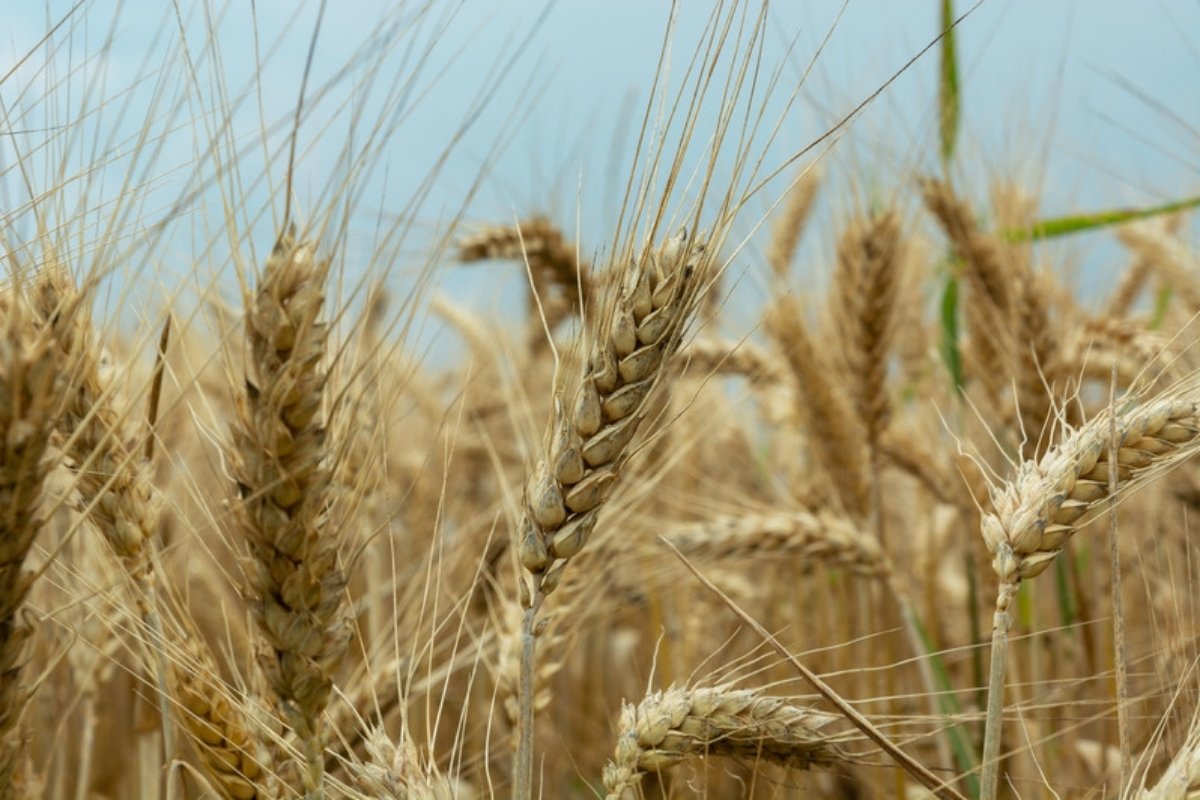
Trials growing old and new wheat varieties side by side show lower grain zinc, iron and other minerals in modern high-yielding cultivars.
Evidence from historical food composition tables
A second line of evidence compares the nutrient values that governments published for the same foods in different decades.
- United States, 1950 to 1999: Davis and colleagues compared USDA data for 43 garden crops, mostly vegetables. After adjusting for water content, they found statistically significant declines in 6 of 13 nutrients, with median declines of 6% for protein, 16% for calcium, 9% for phosphorus, 15% for iron, 38% for riboflavin and 15% for vitamin C. The authors considered changes in cultivated varieties the most likely cause
- United Kingdom, 1930s to 1980s: Mayer compared 20 fruits and 20 vegetables in British food tables and found significant reductions in calcium, magnesium, copper and sodium in vegetables, and in magnesium, iron, copper and potassium in fruit. Phosphorus showed no change. Mayer herself noted that the differences could reflect anomalies of measurement or sampling as well as changes in varieties and farming practice
These studies are widely cited, but they compare numbers produced decades apart, from different samples, with different analytical methods.
The food table comparisons are disputed
The food table comparisons have been challenged directly. In a 2017 review, Marles examined the reported declines and concluded, as summarised by the Quadram Institute, that the mineral composition of vegetables, fruits and grains is not declining and that claims of decline due to soil mineral depletion are unfounded. His argument rests on how much of the apparent change can be explained by changes in sampling and laboratory methods.
Re-analyses support that caution. When Food Standards Australia New Zealand measured 44 fruits and vegetables in 2000 and 2001 and compared them with analyses from the early 1980s, it found no significant or consistent changes in mineral content. A more recent Australian comparison of the 1991 and 2022 databases found both decreases and increases. Iron in fruit fell by 55%, but by only 0.2 mg per 100 grams in absolute terms, while zinc in grains rose by 36%. The authors warn that the two time points cannot be compared directly, because sampling, varieties and methods differ.
Read together, the evidence points in one direction for cereals and is mixed for fruit and vegetables. Side-by-side variety trials, which avoid most of the methodological problems, show real declines in grain zinc, iron and other minerals in modern high-yielding varieties. Comparisons of food tables for fruit and vegetables suggest declines in some nutrients, but how large they are remains contested, and the absolute differences are often small.
Rising CO2 is a second pressure
Carbon dioxide in the atmosphere affects crop nutrition independently of breeding. In field trials at 546 to 586 ppm, the level expected around the middle of this century, Myers and colleagues found that wheat grain contained 9.3% less zinc, 5.1% less iron and 6.3% less protein than wheat grown at current levels, and rice 7.8% less protein. Legumes such as soybeans and field peas lost zinc and iron but not protein, while maize and sorghum showed no significant change. Plants grown at higher CO2 produce more carbohydrate, which dilutes the minerals and protein in much the same way as high-yield breeding does.
Cereals matter most for global nutrition
The evidence supports concern about cereals, which provide much of the zinc and iron in diets built on staples, more than alarm about fruit and vegetables. That matters for global nutrition. According to The State of Food Security and Nutrition in the World 2025, the global prevalence of anaemia in women aged 15 to 49 rose from 27.6% to 30.7% in the latest update, and iron deficiency is one of its main causes.
For consumers, the practical message has not changed. Fruits, vegetables, pulses and whole grains remain among the best sources of vitamins, minerals and fibre, and a varied diet is the most reliable way to cover needs. For agriculture, the trade-off is a breeding and farming choice that can be changed, and how agriculture can restore nutrient density covers the routes that already work, from biofortified varieties to zinc and selenium fertilisers.
Frequently asked questions
Is food less nutritious than it was 50 years ago
For some crops and nutrients, yes. Trials growing old and new varieties side by side show clear declines in grain zinc and iron in modern rice and wheat. For fruit and vegetables, food table comparisons suggest some declines, but how large they are is disputed.
What is the dilution effect
It is the tendency for nutrient concentrations to fall as crop yields rise. Higher-yielding varieties produce more grain or larger fruit, but do not take up proportionally more minerals, so each gram contains less.
Is soil depletion making food less nutritious
Mostly not, according to current evidence. At Rothamsted, grain minerals fell while soil mineral levels stayed the same, and reviews such as Marles (2017) find claims of decline from soil depletion unfounded. Soils low in micronutrients such as zinc or selenium still produce crops with less of them.
Does rising CO2 reduce the nutrients in food
Field trials suggest it does for some crops. At CO2 levels expected around mid-century, wheat grain had 9.3% less zinc, 5.1% less iron and 6.3% less protein, while maize and sorghum were not significantly affected.
Are modern vegetables still worth eating
Yes. Even where nutrient concentrations have fallen, fruits, vegetables, pulses and whole grains remain among the best sources of vitamins, minerals and fibre.
Why is broccoli an exception
A USDA study found no clear decline in mineral concentrations across broccoli varieties from different decades, showing that breeding for yield does not always reduce nutrient content.
References
- Science Societies. (2025). Modern wheat classes converge in grain mineral nutrition, and that's not great news. CSA News.
- Davis, D. R., Epp, M. D. and Riordan, H. D. (2004). Changes in USDA food composition data for 43 garden crops, 1950 to 1999. Journal of the American College of Nutrition.
- Debnath, S. et al. (2023). Historical shifting in grain mineral density of landmark rice and wheat cultivars released over the past 50 years in India. Scientific Reports, volume 13, article 21164.
- Corn era hybrid nutrient concentration and accumulation of secondary and micronutrients. Agronomy Journal.
- USDA Agricultural Research Service. (2011). USDA research demonstrates new breeds of broccoli remain packed with health benefits.
- Mayer, A.-M. (1997). Historical changes in the mineral content of fruits and vegetables. British Food Journal, volume 99, issue 6.
- Marles, R. J. (2017). Mineral nutrient composition of vegetables, fruits and grains, the context of reports of apparent historical declines. Journal of Food Composition and Analysis, volume 56.
- Quadram Institute. Mineral depletion in our foods. Food and Nutrition National Bioscience Research Infrastructure.
- Food Standards Australia New Zealand. Mineral levels in Australian fruits and vegetables.
- Temporal changes in mineral content of fruit, vegetables and grains in Australian food composition databases. Proceedings of the Nutrition Society.
- Myers, S. S. et al. (2014). Increasing CO2 threatens human nutrition. Nature, volume 510.
- FAO, IFAD, UNICEF, WFP and WHO. (2025). The State of Food Security and Nutrition in the World 2025. Rome, FAO.