Co-author: Dilpreet Singh Brar
AI and chemometrics take the sting of adulteration out
Honey is an extensively consumed natural food not just because of its unique organoleptic properties and nutritional values, but also has high functional properties with numerous health benefits. China is the leading honey producer, producing 457.9 thousand metric tons, followed by Turkey and Iran (Table 1) (APEDA). The overall market value of honey in 2021 was 8.58 billion USD, reaching 9.01 billion USD in 2022 (Grand View Research, 2022).
Honey is a very complex matrix, containing over 200 compounds, whose concentrations can slightly vary and have been proven to have natural variability based on the botanical and geographical source. The authentication issue is very important, as monofloral honeys have an increased market value. The addition of different substances or low-cost varieties to honey is a common practice observed on the market. The indirect adulteration by the over-feeding of bees with sucrose solutions or crystalline industrial sugar is also a significant concern, especially because this type of adulteration is very difficult to detect. Because of the matrix complexity, traditional chemical profiling may not reveal subtle compositional differences.
Thus, the main tendency in honey adulteration is the direct addition of sweeteners, such as glucose, fructose, sucrose, maltose, corn, cane, beet, rice, barley malt, or inverted sugar syrups, as well as colorants like ammonia or sulfite ammonia caramel. The mislabelling, transshipments, blending with overstored low-quality honey, avoiding good manufacturing practices and enhancing its yield by feeding bees with sugar syrup during nectar flow are the other unethical rampant practices1. For example, the mixture of high-value honey types (e.g., manuka) with more accessible and low-cost honey varieties (e.g., colza, sunflower, etc.) also has a significant impact on the honey industry.
|
Table 1. Top natural honey-producing countries with their production data for the year 2020 |
|
|
Country |
Production (in 1000 metric tons) |
|
China |
458.1 |
|
Turkey |
104.08 |
|
Iran |
79.96 |
|
Argentina |
74.4 |
|
Ukraine |
68.03 |
|
USA |
66.95 |
|
Russian Federation |
66.37 |
|
India |
62.13 |
|
Mexico |
54.17 |
|
Brazil |
51.51 |
|
(Source: https://www.statista.com (published by M.Shahbandeh, 2022)) |
|
Global concerns about honey adulteration
The major concern for the countries is adulteration with cheap syrups, as it not only adversely affects the quality of honey but also results in several adverse health effects on consumers2. Furthermore, advanced methods of honey adulteration have been increasing, such as absorbent resin, which has been used to remove adulteration traces in honey3.
Honey adulteration is a serious global issue that requires cooperation among regulatory agencies, synchronization of standards, awareness among beekeepers, and impeccable traceability at the source for the sustainability and survival of this vital sector. Unfortunately, the existence of different standards in countries, the lack of research on the unifloral honey, and the nonexistence of accredited labs in most countries halt the development of an effective method to cope with adulteration issues. Several actions, locally and internationally, have been taken to detect fraud and solve the problem, but no real solution has been found to control the production of adulterated honey5. Honey’s authenticity is essential for consumers and honey processors6.
Worldwide, the authenticity of honey has two different aspects:
- Processing integrity (liquefaction, pasteurisation, moisture control, sugar addition)
- Verification of botanical and geographical origin
These two factors often overlap. Ensuring authenticity is essential for both consumers and processors.
Analytical approaches for detecting adulteration
Advanced techniques have been widely adopted in recent years. These include NMR, chromatography, spectroscopy and DNA-based methods. Such techniques generate large datasets, which are then analysed using chemometric tools such as:
- Linear Discriminant Analysis (LDA)
- Partial Least Square Linear Discriminant Analysis (PLS-LDA)
- Soft Independent Modelling of Class Analogies (SIMCA)
These methods allow efficient discrimination between pure and adulterated samples.
Chemometrics is the science of extracting information from chemical systems by data-driven means. Chemometrics is inherently interdisciplinary, using methods frequently employed in core data-analytic disciplines such as multivariate statistics, applied mathematics, and computer science, in order to address problems in chemistry, biochemistry, medicine, biology and chemical engineering9.
A comprehensive review of honey adulteration detection by various methodological procedures was published by Brar et al., 20237. In the last few years, several spectroscopic techniques (NMR, Raman, MIR, or Vis-NIR) have been used in combination with supervised ML methods for the identification of honey adulteration by either the direct addition of sweeteners or by mixture creation with cheaper honey8. ML algorithms have also been involved in identifying a more subtle adulteration that is obtained by mixing two types of honey8.
Detection of sugar syrup adulteration using deep learning
Brar et al., 2024 proposed a deep learning framework (Fig. 1) based on a two-dimensional convolutional neural network (2D-CNN) to overcome these challenges of traditional analytical methods. The framework uses high-resolution video sequences (one minute) of each honey sample with varying levels of sugar syrup adulteration (0% - pure honey, 25%, 50%, and 75% sugar syrup) (Fig. 2). Before using the videos in the model, they undergo pre-processing. The performance of the proposed method is validated using several performance indices, including accuracy (0.94), precision sensitivity (0.99), specificity (1.00), etc.
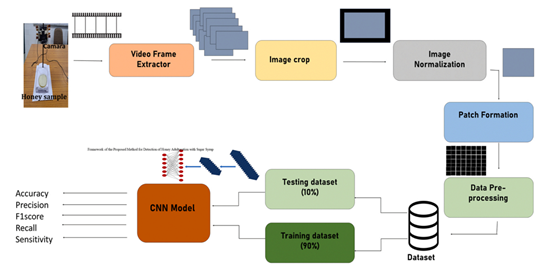
Figure 1. Framework of Proposed Method for Detection of Honey Adulteration with Sugar Syrup
The model consists of convolutional layers, pooling layers, a fully connected layer, followed by a classifier having an input layer, hidden layers, and an output layer. The details of the model architecture are given in Fig. 3. The convolutional layers capture the spatial and temporal dependencies in the image patches. The various convolutional layers hierarchically extract high-level features. A maxpooling layer is used after the convolutional layer to reduce the size of the convolved image. It also reduces dimensionality, making the model robust against rotation and positional variations. A similar deep learning framework based on the 2D-CNN model was used for the botanical authentication of Indian unifloral honey varieties by Brar et al., 2024.11
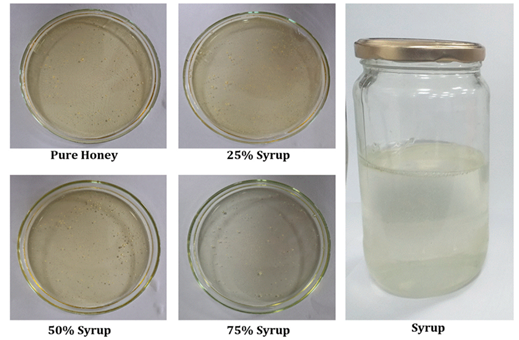
Figure 2. Honey samples with varying sugar syrup concentrations
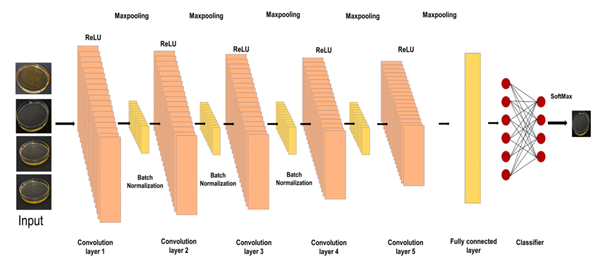
Figure 3. Model architecture used for classification of honey adulteration with varying sugar syrup concentrations
Conclusion
The detection of honey adulteration has traditionally relied on the most sophisticated methods, such as NMR, which can be expensive and time-consuming, making them inaccessible to many researchers. This has created a gap between beekeepers and testing laboratories. However, the proposed deep learning method could be a breakthrough in honey adulteration detection, offering reliability and efficiency. While the model could be further validated using different honey varieties from different locations, it offers a promising direction for AI-based food quality evaluation for researchers. This method could be of significant interest to honey producers, processors, consumers, and society.10
For the detection of adulteration, it is worth highlighting that AI is more effective than chemometrics for detecting subtle food frauds, such as those involving the undeclared mixture of different varieties within the same matrix but with significantly different commercial values (e.g., manuka honey and a common variety).8
References
- Stefas, D., Gyftokostas, N., Kourelias, P., Nanou, E., Tananaki, C., Kanelis, D., Couris, S. (2022) Honey discrimination based on the bee feeding by laser induced breakdown spectroscopy. Food Control, 134, Article 108770.
- Moškrič, A., Mole, K., & Prešern, J. (2021) EPIC markers of the genus Apis as diagnostic tools for detection of honey fraud. Food Control, 121, Article 107634.
- Wang, Q., Zhao, H., Xue, X., Liu, C., He, L., Cheng, N., et al. (2020a) Identification of acacia honey treated with macroporous adsorption resins using HPLC-ECD and chemometrics. Food Chemistry, 309, Article 125656.
- Tiwari, K., Tudu, B., Bandyopadhyay, R., Chatterjee, A., & Pramanik, P. (2018). Voltammetric sensor for electrochemical determination of the floral origin of honey based on a zinc oxide nanoparticle modified carbon paste electrode. Journal of Sensors and Sensor Systems, 7(1), 319–329.
- Tura, A. G., & Seboka, D. B. (2019) Review on honey adulteration and detection of adulterants in honey. Gastroenterology, 4(1), 1–6.
- Peng, J., Xie, W., Jiang, J., Zhao, Z., Zhou, F., & Liu, F. (2020) Fast quantification of honey adulteration with laser-induced breakdown spectroscopy and chemometric methods. Foods, 9(3), 341.
- Brar, D.S.; Pant, K.; Krishnan, R.; Kaur, S.; Rasane, P.; Nanda, V.; Saxena, S.; Gautam, S. A. (2023) A comprehensive review on unethical honey: Validation by emerging techniques. Food Control 2023, 145, 109482.
- Magdas, D.A.; Hategan A.R.; David, M.; Berghian-Grosan, C. (2025) The Journey of Artificial Intelligence in Food Authentication: From Label Attribute to Fraud Detection. Foods 2025, 14, 1808.
- Chemometrics — TrAMS Lab, University of Athens
- Brar, D. S.; Aggarwal, A. K.; Nanda, V.; Kaur, S.; Saxena, S.; Pant, K.; Krishnan, R.; Kaur, S.; Gautam, S. A. (2024) Detection of sugar syrup adulteration in unifloral honey using deep learning framework: An effective quality analysis technique. Food and Humanity, 2, 100190.
- Brar, D. S.; Aggarwal, A. K.; Nanda, V.; Saxena, S. and Gautam, S. A. (2024) AI and CV based 2D-CNN algorithm: botanical authentication of Indian honey. Sustainable Food Technol., 2, 373.