Introduction
Organoleptic properties significantly influence food acceptance, selection, and subsequent consumption. One of the most prominent and attractive qualities of food is its colour. While natural food products are naturally coloured, several processes and factors, including light, pH, water activity, oxygen, metals, and other variables, can cause undesired changes. Food businesses heavily employ colour-affecting chemicals to circumvent this issue. When these advancements take place, more stringent regulations are put in place to guarantee safe production methods and complete consumer safety (1, 2).
"Any colourant, pigment, or substance that, when added or applied to a food, drug, or cosmetic, or the human body, is capable (alone or through reactions with other substances) of imparting colour" (3) is what the FDA defines as a colour additive, sometimes known as a food colourant. Colourants can be categorised based on several factors, including origin (natural, natural-identical, or synthetic; organic and inorganic), solubility (soluble and insoluble), and hiding power (transparent and opaque). However, variations in chemical structures, sources, and intended uses can complicate classifications. Depending on their origin, the most common forms are either natural or artificial.
Natural dyes can be derived from mineral sources (titanium dioxide or calcium carbonate), animal cells (carminic acid and kermesic acid), microorganism metabolism (carotenoids and chlorophylls), or plant tissue (e.g., curcumin, carotenoids, anthocyanins, betalains, or chlorophylls). Chemical synthesis is used to create artificial colourants, which are not present in nature (4). Excessive use of artificial colouring pollutes the environment, distorts the natural equilibrium, and harms human health. The natural colourants are biodisposable, environmentally friendly, in harmony with nature, derived from renewable resources, and prepared with the lowest possible level of potential for chemical reactions (5).
However, because synthetic colours are more stable to light, oxygen, temperature, and pH, among other factors, substituting natural colourants for synthetic ones presents a challenge. The primary obstacle to their use as food colouring is the stabilisation of natural pigments. Emerging methods such as hydrocolloid complexation, metal complexation, microencapsulation, and intramolecular and intermolecular copigmentation have been developed to improve the stability of natural food colours to overcome these drawbacks (6). The use of natural colours as food colouring is growing more and more prominent these days. The market of natural food colouring was estimated to be worth USD 2 billion in 2023 and expanded at a compound annual growth rate (CAGR) of 8.14% between 2024 and 2033 (7) (Figure 1).

Figure 1. The market for natural food colouring (7)
Synthetic Colourants
Synthetic colourants are chemically or physically modified products with desirable manufacturing properties such as high purity, colouring capacity, stability, brightness, a wide range of shades, production uniformity and reproducibility, and low cost when compared to natural colourants (2, 8). However, despite ongoing research on synthetic substances, many of which are for humans, and based on recent discoveries about the side effects and toxicity issues associated with some synthetic colours, natural alternatives have become increasingly attractive to consumers worldwide (9). According to studies, consuming artificial colourants, primarily azo nitro derivatives (E102-Tartrazine, E110-Sunset yellow, E122-Carmoisine, E123-Amaranth, E124-Ponceau 4R, and E129-Allura red or Red 40), can cause various health issues. In response to a 2022 petition from health groups and activists, the FDA stated on Jan. 15, 2025, that it would amend its colour additive regulations to prohibit the use of E127-Erythrosine or Red No. 3 in food, beverages, and ingested pharmaceuticals (10). Food businesses will have until 2027 to reformulate their products, while pharmaceutical companies will have till 2028. At least two studies concluded that high levels of Red 3 were associated with cancer in rats. However, according to the FDA, there is no link between the dye and cancer in humans. While research in other animals and humans has not shown this link to cancer, an FDA restriction bans the agency from authorising colour additives shown to produce cancer in humans or animals, Pushing the agency to cancel the food dye's approval. Since 1994, Europe has prohibited its usage in anything other than cocktails and candy cherries, citing alleged concerns about E127 and public health in the form of hyperactivity and thyroid disorders, including a possible relation to increased incidences of thyroid cancer. In the EU, food products containing E129-Allura Red or Red 40 must include a warning label about potential effects on children's behaviour (hyperactivity). But in the United States, it is commonly utilised without any requirement for such labelling. Only California became the first state in the country to pass a law forbidding the consumption of foods or beverages containing red dye No. 40, yellow dyes Nos. 5 and 6, blue dyes Nos. 1 and 2, and green dye No. 3. in schools with grades kindergarten through 12th on September 28, 2023 (11).
Natural Colourants
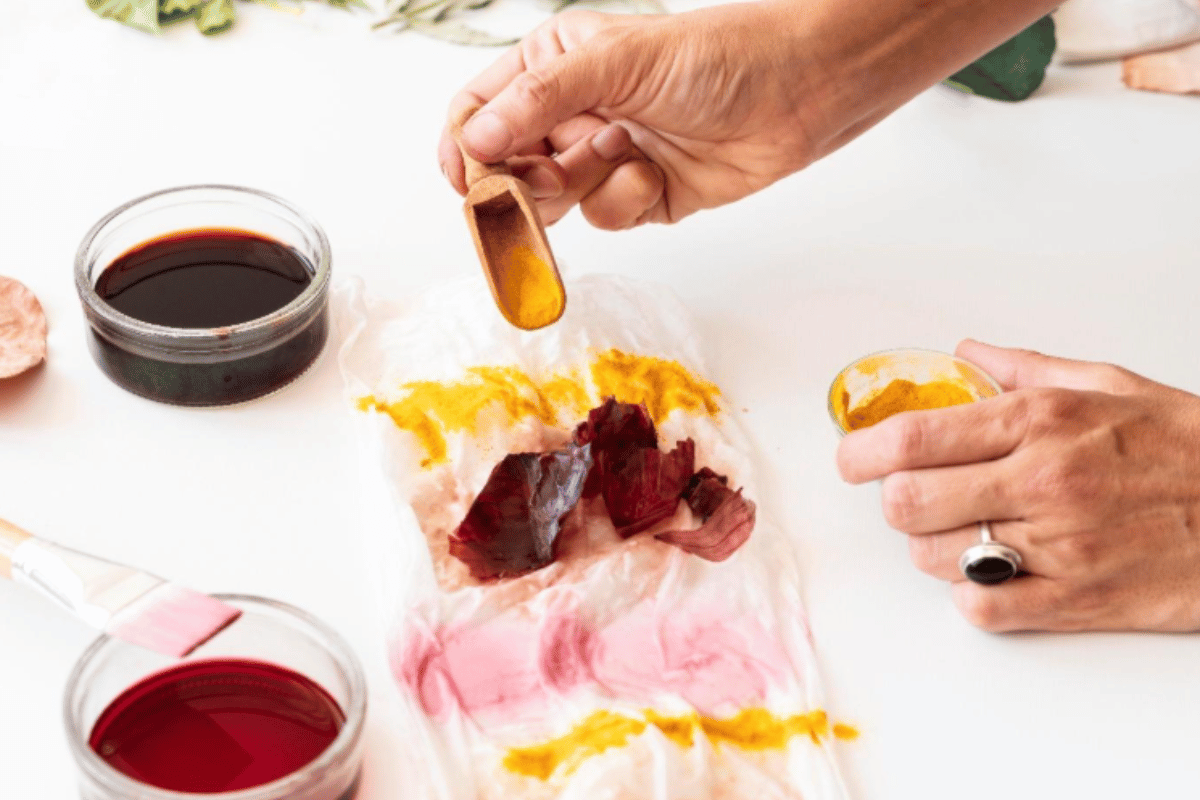
Natural food colouring or biological pigments are obtained from a variety of sources, including vegetables, fruits, plants, minerals, and other edible natural sources (12). There are four types of plant pigments (13). Chlorophyll (green), carotenoids (yellow, red, and orange), flavonoids such as anthocyanins and anthoxanthins (red, blue, and purple), and betalains (red, yellow, and purple) are examples of major plant pigments.
1. Chlorophyll: Green colour
A water-insoluble plant pigment that is principally responsible for the green colour of all green vegetables and fruits, including spinach, fenugreek leaves, coriander leaves, bell peppers, broccoli, green cabbage, celery, green beans, turnip greens, and green chillies (12). There are two forms of chlorophyll: chlorophyll a (intense blue-green) and chlorophyll b (dull yellow-green) (Figure 2). Chlorophylls are highly susceptible to heat, light, oxygen, acids, and enzymes, resulting in their rapid breakdown and colour change. They are stable in an alkaline pH range of 7-9. It is unstable in acidic conditions (6). Chlorophyll is becoming more popular as a natural food ingredient in the food business due to its strong green hue and consumers' growing preference for natural foods (14).
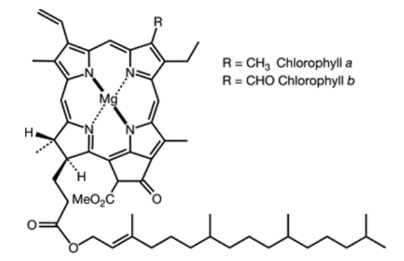
Figure 2. Structure of chlorophyll (6)
2. Anthocyanins: Blue, purple, deep purple, black, red, orange colour
Anthocyanins are water-soluble plant pigments. They are responsible for the blue, purple, red, and orange hues found in many fruits and vegetables. Anthocyanin is a water-soluble vacuolar pigment, whereas anthocyanidin is its sugar-free counterpart, responsible for the appealing red, purple, and blue colours of many flowers, fruits (berries, currants, grapes, and some tropical fruits), and vegetables (15, 16). Only six anthocyanidins are often identified: cyanidin, delphinidin, petunidin, peonidin, pelargonidin, and malvidin. These are extensively dispersed and essential in human food and health. The colour stability of anthocyanins is influenced not only by structural characteristics, but also by pH, temperature, light, co-pigments, enzymes, oxygen, and sugars (6). Anthocyanins degrade at temperatures approaching 100 °C or greater (17). To obtain the most stable colourant, the source of anthocyanins must be evaluated in addition to the right pH adjustment. Anthocyanin architectures vary among plant materials, affecting their stability. Because of acylation, anthocyanins from red cabbage, black carrot, red radish, and red sweet potato are more resistant to heat and pH change than anthocyanins from other sources (6).
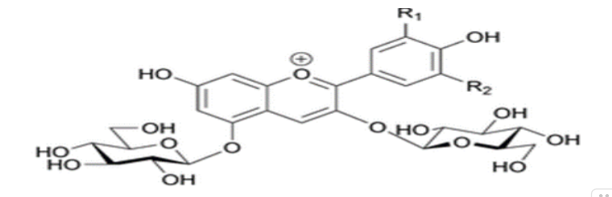
Figure 3. Structure of common anthocyanins (6)
|
R1 |
R2 |
Anthocyanin |
aglycone |
|
H |
H |
pelargonin |
pelargonidin |
|
OH |
H |
cyanin |
cyanidin |
|
oCH3 |
H |
peonin |
peonidin |
|
oH |
OH |
delphin |
delphinidin |
|
oCH3 |
OH |
petunin |
petunidin |
|
oCH3 |
OCH3 |
malvin |
malvidin |
Table 1. The colours that are linked with common anthocyanins
|
Anthocyanin |
Colour |
|
Pelargonidin |
Orange |
|
Cyanidin |
Red |
|
Delphinidin |
Blue |
|
Peonidin |
Reddish purple |
|
Malvidin |
Violet |
|
Petunidin |
Purple |
Table 2. Typical anthocyanin sources
|
Plant |
Anthocyanidins |
|
Apple, red cabbage, peach, rasberry |
Cyanidin |
|
Black current |
Cyanidin , delphinidin |
|
Cherry,plum |
Cyanidin, peonidin |
|
Red radish |
Pelargonidin |
|
Blueberry |
Cyanidin,delphinidin, peonidin, malvidin |
|
Strawberry |
Pelargonidin, cyanidin |
|
Grape |
Malvidin, peonidin, delphinidin, cyanidin, pelargonidin |
3. Carotenoids: Yellow/ Orange colour
Plant pigments with 40 carbon atoms are called carotenoids. Because they can be transformed into retinol by the body, carotenoids have provitamin A activity (18). All higher plants and certain animals contain the lipid-soluble yellow-orange-red pigments known as carotenoids. Carotenoids are divided into two categories: xanthophylls, which are composed of carbon, hydrogen, and oxygen, and carotenes, which are composed solely of carbon and hydrogen. At pH values between 4.0 and 6.0, it is more stable. The primary causes of carotenoids' degradation are oxidation and isomerisation processes, which tend to make plant pigments less red and yellow (19). Carotenoids' oxidation and isomerisation are influenced by several conditions. Carotenoids are oxidised by oxygen; light, heat, peroxide, metal ions, and enzymes can also accelerate the process (20).
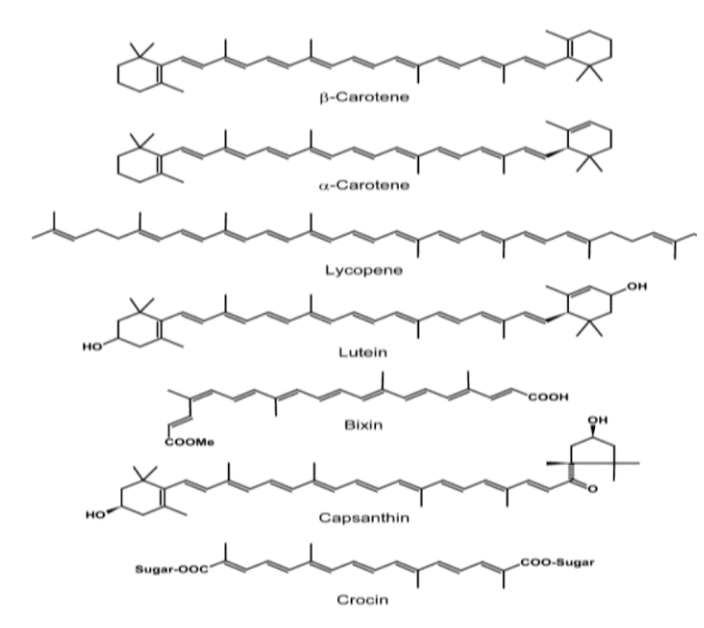
Figure 4. Structure of common carotenoids (6)
One easy pretreatment technique that can be used to deactivate enzymes like lipoxygenase, which catalyses the oxidative breakdown of carotenoids, is hot water or steam blanching. Another strategy to stop carotenoids from oxidising is to apply chemical pretreatments. It is suggested that antioxidant drugs stop oxidation-induced pigment deterioration (21).
Table 3. Carotenoids derived from plants
|
Carotenoids |
Food sources |
|
α-carotene |
Buriti (Mauritia vinifeva), carrot, Cucurbita moschata, red palm oil |
|
β-carotene |
Carrot, acerola (Malpighia glabra), apricot, bocaiava (Acronomia makayliyba), broccoli, buriti, cantaloupe, carrot, Cucurbita maxima, Cucurbita moschata, green leafy vegetables, mamey (Mammea Americana), mango, peach palm (Bactris gasipaes), pink grapefruit, red palm oil, red pepper, yellow and orange-fleshed sweet potato, tucum (Astrocayum vulgare) |
|
β -cryptoxanthin |
Caja (Spondias lutea), pitanga (Eugenia uniflora), red pepper, tree tomato (Cyphomandra betacea) |
|
lycopene |
Pink grapefruit, pink-fleshed guava, red-fleshed papaya, pitanga (Eugenia uniJora), tomato, watermelon, tomato |
|
lutein |
Green leafy vegetables, broccoli, Brussels sprout, corn, Cucurbita maxima |
|
zeaxanthin |
Buriti, corn |
A symmetrical tetraterpene, lycopene (C40H56) (5) is a vivid red carotenoid that can be obtained from red tomatoes and the fungus Blakeslea trispora (6).
One of the oldest, most significant, and most commonly used carotenoid food coloring agents is a paprika extract, also known as "capsanthin" (C40H56O3) or "capsorubin" (C40H56O4). It is a thick, dark-red liquid. The colouring agents that give paprika its yellow-to-orange tint are capsanthin and capsorubin. This red spice adds flavour, and paprika oleoresin, a refined form of the colouring components, can be produced through solvent extracting the paprika colour compound. While paprika and its oleoresin are insoluble in water and sensitive to light and alkalinity, they are stable when heated.
Conclusion
The market for natural food colouring is projected to grow rapidly between 2024 and 2033 as a result of the growing demand for baked goods and confections. Furthermore, stringent regulations prohibiting the use of artificial and comparable colours—such as the recent ban of Red dye 3-erythrosine in the USA—are likely to be the primary driver of industrial growth. The market for natural food colouring is expanding rapidly as a result of consumers' increased demand for natural products and clean labels. Consumers are searching increasingly for food and drink products created with natural ingredients and free of artificial additives. Artificial food colouring has drawn criticism due to potential health risks and worries about detrimental effects on children's behaviour. Natural food colouring is considered to be safer and healthier because it originates from extracts of fruits, vegetables, plants, and other natural sources (7).
Despite possessing rich plant resources, very little of them have been exploited up to this point. Natural hues are extremely unstable under different food processing conditions. The primary obstacle to their use as food colouring is the stabilisation of natural pigments. Furthermore, research on toxicity, carcinogenicity, and other issues is necessary to guarantee the safety of natural substances, even if they are generally safer than synthetic ones (34). Therefore, more thorough research and scientific studies are required to evaluate natural dye-producing resources' true potential and availability.
Keywords: Anthocyanins, carotenoids, chlorophylls, batalains, colourants, dyes, natural colours, plant pigments, synthetic colours, clean label, food additives, biopreservatives, antioxidants, antimicrobials, functional food, natural matrixes
References
- Damodaran, S.; Parkin, K. L. Fennema’s Food Chemistry, 5th ed.; CRC Press, 2017.
- Martins, N.; Roriz, C. L.; Morales, P.; Barros, L.; Ferreira, I. C. F. R. Food colourants: Challenges, opportunities and current desires of agro-industries to ensure consumer expectations and regulatory practices. Trends Food Sci. Technol. 2016, 52, 1−15.
- FDA. Overview of Food Ingredients, Additives & Colours, 2021. https://www.fda.gov/food/food-ingredients-packaging/overview-food-ingredients-additives-colors#foodadd.
- Albuquerque, B. R.; Oliveira, M. B. P. P.; Barros, L.; Ferreira, I. C. F. R. Could fruits be a reliable source of food colourants? Pros and cons of these natural additives. Crit. Rev. Food Sci. Nutrit. 2021, 61 (5), 805−835.
- Joshi, P., Jain, S., Sharma V. Acceptability assessment of yellow colour obtained from turmeric in food products and at consumer level. J. Food Ag-Ind. 2011; 4(1) : 1-15.
- Jadhav, V. R.; Bhujbal, S. S. A review on natural food colours. Pharmaceutical Resonance 2020 Vol. 2 - Issue 2, 12-20.
- https://www.thebrainyinsights.com/report/natural-food-colors-market-13584
- Aparicio, I. M. Aditivos Alimentarios, 1st ed.; Dextra Editorial: Madrid, Spain, 2017.
- Martins, N.; Roriz, C. L.; Morales, P.; Barros, L.; Ferreira, I. C. F. R. Colouring attributes of betalains: a key emphasis on stability and future applications. Food Funct. 2017, 8, 1357−1372.
- https://www.nbcnews.com/health/health-news/fda-bans-red-no-3-artificial-coloring-beverages-candy-rcna185479
- https://edition.cnn.com/2024/08/30/health/california-food-dye-ban-schools-wellness/index.html
- Malabadi, R.V.; Kolkar, K.P.; Chalannavar, R. K. Plant natural pigment colourants – Health benefits: Toxicity of synthetic or artificial food colourants. International Journal of Innovation Scientific Research and Review. Vol. 04, Issue, 10, October 2022, pp.3418-3429.
- Silva MM, Reboredo FH, Lidon FC. Food Colour Additives: A Synoptical Overview on Their Chemical Properties, Applications in Food Products, and Health Side Effects. Foods. 2022; 11:379.
- Dutta S, Halder S. A colourful food palette: Health benefits and beyond. International Journal of Current Research. 2021; 13: (03): 16596-16600.
- Mazza GJ. Anthocyanins and heart health. Ann. Ist. Super. Sanita. 2007; 43: 369-374.
- Pereira, A. R.; Fernandes, V. C.; Delerue-Matos, C.; de Freitas, V.; Mateus, N.; Oliveira, J. Exploring acylated anthocyanin-based extracts as a natural alternative to synthetic food dyes: Stability and application insights. Food Chemistry 461 (2024) 140945.
- Jackman, RL., Smith, JL. Anthocyanins and betalains. In Hendry, GA F, Houghton J D, eds. Natural Food Colorants, 2nd ed., New York: Chapman & Hall publishing Co.; 1996:244–309.
- Khachik, F. Distribution and metabolism of dietary carotenoids in humans as a criterion for development of nutritional supplements. 14th International Symposium on Carotenoids. 2006; 78:1551-1557.
- Provesi, JG., Amante, ER. Changes in carotenoids during processing and storage of pumpkin puree. Food Chemistry. 2011; 128: 195–202.
- Boon, CS., McClements, DJ., Weiss, J., Decker, EA. Factors influencing the chemical stability of carotenoids in foods. Crit Rev Food Sci Nutr. 2010; 50: 515–532.
- Otles S, Agindi. Carotenoids as natural colourants. In Socaciu C, eds. Food Colorants: Chemical and Functional Properties, 1st ed., New York: Boca Raton publishers.; 2008: 51–70.
- Stintzing, FC., Carle, R. Functional properties of anthocyanins and betalains in plants, food, and in human nutrition. Trends in Food Science and Technology. 2004; 15: 19–38.
- Herbach, KM., Stintzing, FC., Carle R. Betalain stability and degradation—structural and chromatic aspects. Journal of Food Science. 2006. 1410, p 71:41–50.
- Altamirano, RC., Drdak, M. Simon, P., Rajniakova, A., Karovicova, J., Preclík L. Thermal degradation of betanine in various water alcohol model systems, Food Chem. 1993; 46: 73–75.
- Khan MI. Stabilization of betalains: A review. Food Chemistry .2016; 197: 1280–1285.
- Delgado-Vargas, F., Paredes- Lopez, O. Natural Colorants for Food and Nutraceutical Uses. 2003; CRC Press, Boca Raton.
- https://www.kanegrade.com/eu-titanium-dioxide-ban-alternative-white-food-colours/
- Aparicio, I. M. Aditivos Alimentarios, 1st ed.; Dextra Editorial: Madrid, Spain, 2017
- Vieira Teixeira da Silva, D.; dos Santos Baiao, D.; de Oliveira Silva, F.; Alves, G.; Perrone, D.; Mere Del Aguila, E.; M. Flosi Paschoalin, V. Betanin, a Natural Food Additive: Stability, Bioavailability, Antioxidant and Preservative Ability Assessments Molecules 2019, 24 (3), 458.
- Ab Rashid, S.; Tong, W. Y.; Leong, C. R.; Abdul Ghazali, N.M.; Taher, M. A.; Ahmad, N.; et al. Anthocyanin Microcapsule from Clitoria ternatea: Potential Bio-preservative and Blue Colorant for Baked Food Products. Arabian Journal for Science and Engineering, 2021, 46 (1), 65−72.
- Serra, A. T.; Poejo, J.; Matias, A. A.; Bronze, M. R.; Duarte, C. M. M. Evaluation of Opuntia spp. derived products as antiproliferative agents in human colon cancer cell line (HT29). Food Research International 2013, 54 (1), 892−901.
- Zhang, J.; Hou, X.; Ahmad, H.; Zhang, H.; Zhang, L.; Wang, T. Assessment of free radicals scavenging activity of seven natural pigments and protective effects in AAPH-challenged chicken erythrocytes. Food Chem. 2014, 145, 57−65.
- Carocho, M.; Morales, P.; Ferreira, I. C. F. R. Antioxidants Reviewing the chemistry, food applications, legislation and role as preservatives. Trends Food Sci. Technol. 2018, 71, 107−120.
- Østerlie, M.; Lerfall, J. Lycopene from tomato products added to minced meat: effect on storage quality and colour. Food Research International 2005, 38, 925−9.
- Novais, C; Molina, K.A.; Abreu, M. V. R.; Santo-Buelga, C.; Ferreira, C. F. R. I.; Pereira, C. and Barros, L. Natural Food Colorants and Preservatives: A Review, a Demand, and a Challenge J. Agric. Food Chem. 2022, 70, 2789−2805.