Introduction
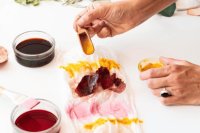
Natural food colorants are gaining popularity as consumers seek alternatives to synthetic additives. Beyond providing vibrant hues, many natural pigments also offer functional benefits, such as antioxidant and antimicrobial properties. This article explores betalains, cochineal, curcumin, riboflavin, caramel, and other natural pigments, discussing their applications, stability, and potential for dual activity in food preservation.
For an introduction to natural food colorants and some of the most commonly used, read Most Common Natural Food Colorants: Types, Benefits & Market Trends.
Natural food colorants
1. The betalains: Red colour
The majority of plants in the Caryophyllales order contain betalains, which are nitrogen-containing, water-soluble plant pigments. In addition to the edible parts of plants, betalains can also be found in the flowers, leaves, stems, and bracts. They are divided into two categories: yellow betaxanthin and violet betacyanins (6). Betanin, the primary pigment found in red beetroots, is the most prevalent betacyanin, betanidin-5-O-glycoside (22). Nevertheless, these pigments are susceptible to several physicochemical conditions, including heat, light, air, high pH (>6), and different metals (23).
Table 1. Betalains-containing plants
|
Betacyanins |
Betaxanthins |
|
Beta vulgaris (Amaranthaceae) |
Mirabilis jalapa (Nyctaginaceae) |
|
Amaranthus caudatus (Amaranthaceae) |
Portulaca grandiflora (Portulacaceae) |
|
Gomphrena globosa (Amaranthaceae) |
Opuntia ficus-indica (Cactaceae) |
|
Bougainvillea glabra (Nyctaginaceae) |
Stenocereus pruinosus (Cactaceae) |
Because betalains are relatively stable over the wide pH range of 3 to 6, they can be incorporated into foods that are low in acidity. For maximal betalain stability, a pH range of 5 to 6 is ideal. The primary factor influencing betalain stability during food processing and storage is temperature. According to certain studies, rising temperatures cause betalain breakdown rates to increase. As a result, these pigments may find application as colourants in low-temperature dairy products, frozen meals, and food items with a short shelf life (24). Antioxidants like ascorbic acid, isoascorbic acid, citric acid, and other preservatives can stabilise betalains to a certain degree, but antioxidant phenolic compounds do not stabilise the pigments (25). Blanching is typically used to inactivate the betacyanin decolourising enzyme, which tends to cause colour fading, to increase the stability of betalains (26).
2. Cochineal, Carminic Acid or Carmines: Red/ Purple colour
Aqueous-alcoholic or alcoholic extracts of cochineal, which are made from the dried bodies of the female insect Dactylopius coccus Costa, are the source of cochineal, carmines, and carminic acid. Certain cactus plants are parasitised by insects belonging to the Coccidae family. Carminic acid, a naturally occurring food colouring that has a purple or red hue, is frequently used in meat products (such as sausages, chorizo and salami, pâtés, and breakfast sausages), fruit syrups, ice creams, and preserved red fruits. Additionally, ripened cheese, desserts, edible cheese rinds, seasoning, marmalades and jams, pastries and fine bakery, confectionery (including chewing gum and breath-refreshing), breakfast cereals flavoured with fruits, fish and crustacean paste, prepared crustaceans, smoked fish, some alcoholic drinks, and snacks made with wine are all produced with carminic acid (6).
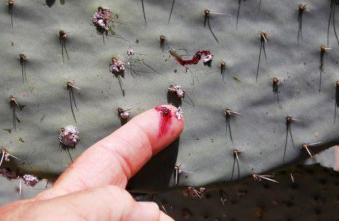
Figure 1. Prickly pear cactus pads with female cochineal scales (Cochineal Scale | Nature Collective)
3. Curcumin: Orange/ Yellow colour
The rhizome of Curcuma longa provides curcumin, often known as natural yellow (12). Curcumin assigns food items a yellow or orange-yellow hue (6).
4. Riboflavin or Vitamin B2: Yellow/ Whey colour
Plants and several microbes synthesise riboflavin, commonly known as "Lactoflavin" or "Vitamin B2" (C17H20N4O6), a water-soluble colouring agent. It is a micronutrient that is necessary for human nutrition. These food colouring substances are crystalline powders that are either yellow or orange-yellow and have a faint odour (6). Although green vegetables also contain significant amounts of riboflavin, milk is the primary source (12). Riboflavin is a thermally stable food colouring that gives whey its yellow hue. Nevertheless, it is susceptible to decomposition reactions that change the flavour and aroma of food items due to its sensitivity to sunshine and fluorescent light (6).
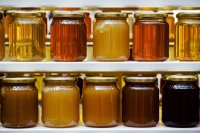
5. Caramels: Yellow-Brown colour
In the food industry, caramels are frequently used to add or enhance the yellow or brown colour. Caramels can disperse in an oil system to create pastes or emulsions, but they are also miscible with water in liquid or powdered form (13).
6. Vegetable carbon or Vegetable black
Vegetable carbon, also known as "vegetable black" is produced from green bamboo refined through high-temperature carbonization processed with steam activation
7. Edible Chemical Food dyes
In chemistry, a dye is a chemical that is applied to a substance to change its colour. It creates a chemical link with the substrate. However, digestible colours—also referred to as "food dyes" or "edible dyes"—have long been used in food and beverage products.
Calcium carbonate (CaCO₃) is a stable food pigment that maintains its colouring qualities without the need for further processing. Calcium carbonate is also used as a stabiliser (which keeps the ingredients in the food uniformly distributed), an anti-caking agent (which keeps food particles from adhering together), and an acidity regulator. Chalk deposits are processed and cleaned to produce calcium carbonate, an ingredient used in the food industry.
8. Titanium dioxide (TiO2)
Anatase, rutile, and ilmenite are the sources of the metal oxide TiO2. Because of its brightness and extremely high refractive index, titanium dioxide is utilised as a white food colouring pigment. Following a six-month transition period, the EU banned its use as a food additive in August 2022 due to safety concerns (EU regulation 2022/63). Scientific studies demonstrating the dangers of breathing in titanium dioxide nanoparticles and their possible genotoxic consequences served as the foundation for the decision. Although titanium dioxide has not yet been outlawed in the UK, the Food Standards Agency (FSA) is reviewing the evidence on its own (27).
9. Iron oxides and hydroxides
Rusts naturally contain iron hydroxides and oxides, or iron sulfate can be synthesized artificially. These colourants, which come in powdered forms of black, brown, red, or yellow, can be used on food products. The majority of food goods can include iron hydroxides and oxides.
10. Aluminum
Although this dye has a limited function, it can be used to decorate cakes and pastries by coating the outside of sugar-based confections.
11. Silver
The elemental form of silver food colouring is produced chemically by electrolysing silver ore. This dye is only utilised in drinking water purification, liqueurs, coatings and decorations for cakes and other confections.
12. Gold
Gold can be used as a food colouring, creating a metallic surface colour that is extremely non-reactive. Straws, or golden-coloured granules, are how it is found. Gold is utilised in chocolate embellishments, liqueurs, and the exterior layer of candies.
Plant natural pigments: Potential compounds with dual activity
Particular compounds found in nature can extend the product's shelf life in addition to stabilising or enhancing its colour. The food industry has shown an increasing amount of interest in evaluating various natural matrixes that may be able to offer colour while also acting as preservatives. Because of their pigmentation, antioxidant capacity, and/or antimicrobial activity, substances such as betalains, carotenoids, anthocyanins, and their derivatives may offer these qualities (Figure 2) (28, 29). An antibacterial food colouring from Clitoria ternatea flowers (butterfly pea), for example, was recently created by Ab Rashid et al. It exhibits a wide range of antibacterial action. It can retain its colour for 21 days at temperatures from −20 to 4 °C, making it a viable substitute for food products as a colourant and biopreservative (30).
Another excellent example of a natural food colouring is betalains, which have not only prominent colouring qualities but also a variety of biological activities, including antimicrobial, antioxidative, and antiradical properties that protect against oxidative damage, as well as antiproliferative, cytotoxic, and neuroprotective capabilities that offer health benefits in addition to their colouring and preservative capabilities (31–32). Carotenoids are another significant class of dual-action chemicals. α-carotene, β-carotene, and lycopene are among the most significant; they are currently authorised and utilised as food colouring agents.
In addition to providing colour and/or preserving food, their strong antioxidant properties make them great natural food additives that pose no toxicological risks in the proportions required for food application (13). β-carotene, a vitamin A precursor, has been effectively incorporated in various foods. Its use in both new and existing products is anticipated to grow in the future, particularly in functional beverages and nutraceuticals. One of the primary phytochemicals found in tomatoes, lycopene, has been integrated into minced beef to improve colour, stabilise it, and offer health advantages (33, 34).
But it's crucial to note that to achieve functional benefits like antioxidant and/or antimicrobial activity, the concentrations of compounds commonly used as dyes differ significantly (usually more) from those used for dye purposes, failing to meet regulatory agencies' acceptable daily intake (ADI) requirements to avoid health risks (9). This demonstrates the necessity of investigating novel natural matrixes with colouring and preservation capabilities that could work together to offer consumers advantageous qualities and present a difficult problem for the scientific community to overcome by creating new biobased molecules. Using novel chemical techniques, the next generation of food additives will alter existing natural compounds to improve their double-purpose (dye and preservation) properties.
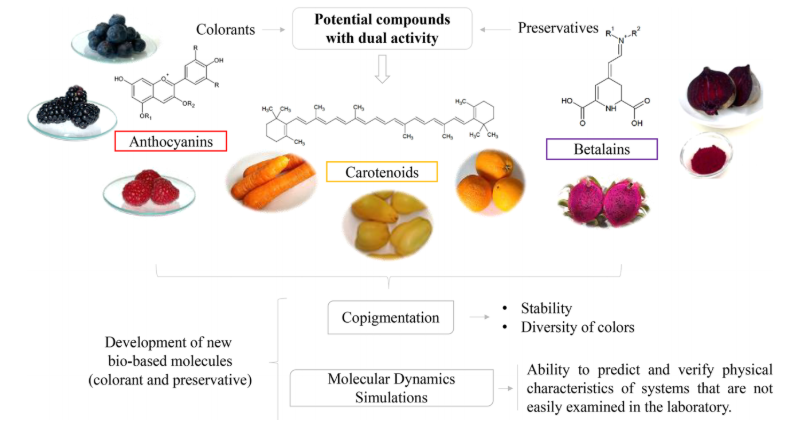
Figure 2. Diagrammatic representation of the creation of new molecules using novel chemical techniques and the alteration of common natural molecules to produce a superior and dual-purpose product (colour and preservative) (35).
Conclusion
Natural food colorants enhance visual appeal and contribute to food stability and potential health benefits. While certain pigments, such as betalains and carotenoids, exhibit antioxidant and antimicrobial properties, further research is needed to optimize their application in food products. As demand for clean-label ingredients grows, these natural compounds present exciting opportunities for innovation in the food industry.
References
- Damodaran, S.; Parkin, K. L. Fennema’s Food Chemistry, 5th ed.; CRC Press, 2017.
- Martins, N.; Roriz, C. L.; Morales, P.; Barros, L.; Ferreira, I. C. F. R. Food colourants: Challenges, opportunities and current desires of agro-industries to ensure consumer expectations and regulatory practices. Trends Food Sci. Technol. 2016, 52, 1−15.
- FDA. Overview of Food Ingredients, Additives & Colours, 2021. https://www.fda.gov/food/food-ingredients-packaging/overview-food-ingredients-additives-colors#foodadd.
- Albuquerque, B. R.; Oliveira, M. B. P. P.; Barros, L.; Ferreira, I. C. F. R. Could fruits be a reliable source of food colourants? Pros and cons of these natural additives. Crit. Rev. Food Sci. Nutrit. 2021, 61 (5), 805−835.
- Joshi, P., Jain, S., Sharma V. Acceptability assessment of yellow colour obtained from turmeric in food products and at consumer level. J. Food Ag-Ind. 2011; 4(1) : 1-15.
- Jadhav, V. R.; Bhujbal, S. S. A review on natural food colours. Pharmaceutical Resonance 2020 Vol. 2 - Issue 2, 12-20.
- Natural Food Colors Market – Thebrainyinsights
- Aparicio, I. M. Aditivos Alimentarios, 1st ed.; Dextra Editorial: Madrid, Spain, 2017.
- Martins, N.; Roriz, C. L.; Morales, P.; Barros, L.; Ferreira, I. C. F. R. Colouring attributes of betalains: a key emphasis on stability and future applications. Food Funct. 2017, 8, 1357−1372.
- Fda Bans Red No Artificial Coloring Beverages Candy Rcna185479 – Nbcnews
- California bans red No. 40 and others from school food — CNN
- Malabadi, R.V.; Kolkar, K.P.; Chalannavar, R. K. Plant natural pigment colourants – Health benefits: Toxicity of synthetic or artificial food colourants. International Journal of Innovation Scientific Research and Review. Vol. 04, Issue, 10, October 2022, pp.3418-3429.
- Silva MM, Reboredo FH, Lidon FC. Food Colour Additives: A Synoptical Overview on Their Chemical Properties, Applications in Food Products, and Health Side Effects. Foods. 2022; 11:379.
- Dutta S, Halder S. A colourful food palette: Health benefits and beyond. International Journal of Current Research. 2021; 13: (03): 16596-16600.
- Mazza GJ. Anthocyanins and heart health. Ann. Ist. Super. Sanita. 2007; 43: 369-374.
- Pereira, A. R.; Fernandes, V. C.; Delerue-Matos, C.; de Freitas, V.; Mateus, N.; Oliveira, J. Exploring acylated anthocyanin-based extracts as a natural alternative to synthetic food dyes: Stability and application insights. Food Chemistry 461 (2024) 140945.
- Jackman, RL., Smith, JL. Anthocyanins and betalains. In Hendry, GA F, Houghton J D, eds. Natural Food Colorants, 2nd ed., New York: Chapman & Hall publishing Co.; 1996:244–309.
- Khachik, F. Distribution and metabolism of dietary carotenoids in humans as a criterion for development of nutritional supplements. 14th International Symposium on Carotenoids. 2006; 78:1551-1557.
- Provesi, JG., Amante, ER. Changes in carotenoids during processing and storage of pumpkin puree. Food Chemistry. 2011; 128: 195–202.
- Boon, CS., McClements, DJ., Weiss, J., Decker, EA. Factors influencing the chemical stability of carotenoids in foods. Crit Rev Food Sci Nutr. 2010; 50: 515–532.
- Otles S, Agindi. Carotenoids as natural colourants. In Socaciu C, eds. Food Colorants: Chemical and Functional Properties, 1st ed., New York: Boca Raton publishers.; 2008: 51–70.
- Stintzing, FC., Carle, R. Functional properties of anthocyanins and betalains in plants, food, and in human nutrition. Trends in Food Science and Technology. 2004; 15: 19–38.
- Herbach, KM., Stintzing, FC., Carle R. Betalain stability and degradation—structural and chromatic aspects. Journal of Food Science. 2006. 1410, p 71:41–50.
- Altamirano, RC., Drdak, M. Simon, P., Rajniakova, A., Karovicova, J., Preclík L. Thermal degradation of betanine in various water alcohol model systems, Food Chem. 1993; 46: 73–75.
- Khan MI. Stabilization of betalains: A review. Food Chemistry .2016; 197: 1280–1285.
- Delgado-Vargas, F., Paredes- Lopez, O. Natural Colorants for Food and Nutraceutical Uses. 2003; CRC Press, Boca Raton.
- Eu Titanium Dioxide Ban Alternative White Food Colours – Kanegrade
- Aparicio, I. M. Aditivos Alimentarios, 1st ed.; Dextra Editorial: Madrid, Spain, 2017
- Vieira Teixeira da Silva, D.; dos Santos Baiao, D.; de Oliveira Silva, F.; Alves, G.; Perrone, D.; Mere Del Aguila, E.; M. Flosi Paschoalin, V. Betanin, a Natural Food Additive: Stability, Bioavailability, Antioxidant and Preservative Ability Assessments Molecules 2019, 24 (3), 458.
- Ab Rashid, S.; Tong, W. Y.; Leong, C. R.; Abdul Ghazali, N.M.; Taher, M. A.; Ahmad, N.; et al. Anthocyanin Microcapsule from Clitoria ternatea: Potential Bio-preservative and Blue Colorant for Baked Food Products. Arabian Journal for Science and Engineering, 2021, 46 (1), 65−72.
- Serra, A. T.; Poejo, J.; Matias, A. A.; Bronze, M. R.; Duarte, C. M. M. Evaluation of Opuntia spp. derived products as antiproliferative agents in human colon cancer cell line (HT29). Food Research International 2013, 54 (1), 892−901.
- Zhang, J.; Hou, X.; Ahmad, H.; Zhang, H.; Zhang, L.; Wang, T. Assessment of free radicals scavenging activity of seven natural pigments and protective effects in AAPH-challenged chicken erythrocytes. Food Chem. 2014, 145, 57−65.
- Carocho, M.; Morales, P.; Ferreira, I. C. F. R. Antioxidants Reviewing the chemistry, food applications, legislation and role as preservatives. Trends Food Sci. Technol. 2018, 71, 107−120.
- Østerlie, M.; Lerfall, J. Lycopene from tomato products added to minced meat: effect on storage quality and colour. Food Research International 2005, 38, 925−9.
- Novais, C; Molina, K.A.; Abreu, M. V. R.; Santo-Buelga, C.; Ferreira, C. F. R. I.; Pereira, C. and Barros, L. Natural Food Colorants and Preservatives: A Review, a Demand, and a Challenge J. Agric. Food Chem. 2022, 70, 2789−2805.