Water Management Tips for EU Farmers
As summer peaks across Europe, effective water management moves to the centre of every farmer’s agenda. This is a critical period: crops are at sensitive growth stages, soil moisture is limited, and heatwaves intensify competition for every drop of water. From the UK to the South of the EU, farmers are currently challenged by high temperatures alternating with sudden rainfalls, causing fields to flood, or prolonged drought, intensifying the water and heat stress of the crops. These conditions are putting this year's production at risk, both in arable crops like corn and tree crops (e.g., olive trees) and vines.
All these combined with the water scarcity problems many regions face during summer and the irregular irrigation schedules push farmers to learn when it is absolutely necessary to irrigate, with how much water, and how to protect their crops and yields. In the article below, we aim to offer a seasonal guide, practical tips, and fresh innovations to help all EU farmers save water, protect yields, and future-proof their farms under climate change in the middle of summer.
Why Mid-July Water Management is Crucial
- Peak crop water demand: Maize, sunflower, vegetables, and many fruits are entering or are in key reproductive stages—when water stress hits hardest.
- Higher temperatures and evaporation: This year, much of northern and central Europe faces significant drought, while southern regions have seen more rainfall but also increased evapotranspiration.
- Regulatory and market pressures: EU policy and retailer demands increasingly require proof of sustainable practices, including water use efficiency.
Crop Calendar: Water Needs & Risks Across Key EU Crops
|
Crop |
Sensitive Stage (July-August) |
Water Need |
Main Risks |
Immediate Tips |
|
Maize |
Tassel and silking, grain fill |
High |
Yield loss |
Prioritize irrigation at flowering. |
|
Sunflower |
Bud formation to early flowering |
Moderate–high |
Reduced seed set |
Give 1–2 irrigations pre-flower. |
|
Tomatoes/Vegetables |
Fruit set and expansion |
Consistent, high |
Blossom drop, split |
Use drip/mulch, irrigate mornings. |
|
Potatoes |
Tuber bulking |
High |
Quality decline |
Regular soil checks, short cycles. |
|
Vines/Orchards |
Veraison, fruit fill |
Moderate |
Shrivel, scald |
Spot-apply during prolonged heat. |
Field-Proven Water Management Practices
Each farmer may have his/her own strategies and habits based on their experience. Each crop responds differently to heat and water stress, so tailoring irrigation to the crop’s needs and the field’s soil type makes a tangible difference in performance. In the middle of summer with the pressure of extreme temperatures there is very little room for mistakes when it comes to water management. Let’s review some best practices and specific examples.
1. Match Irrigation to Crop Stage and Soil
- Maize: For maize, the window beginning two weeks before tasselling and extending through grain fill is the most sensitive to drought stress. During this time, yield can be significantly reduced if water is lacking. In many EU regions now experiencing low rainfall and high temperatures, this means concentrating irrigation during this window, possibly opting for shorter, more frequent irrigation cycles, especially on sandy or well-draining soils.
- Sunflower: Sunflower is generally more tolerant of dry conditions but needs support when transitioning from bud to flower. A single, well-timed irrigation during this phase is often enough to stabilise seed development, even under moderate drought stress—making it a water-efficient but strategic intervention.
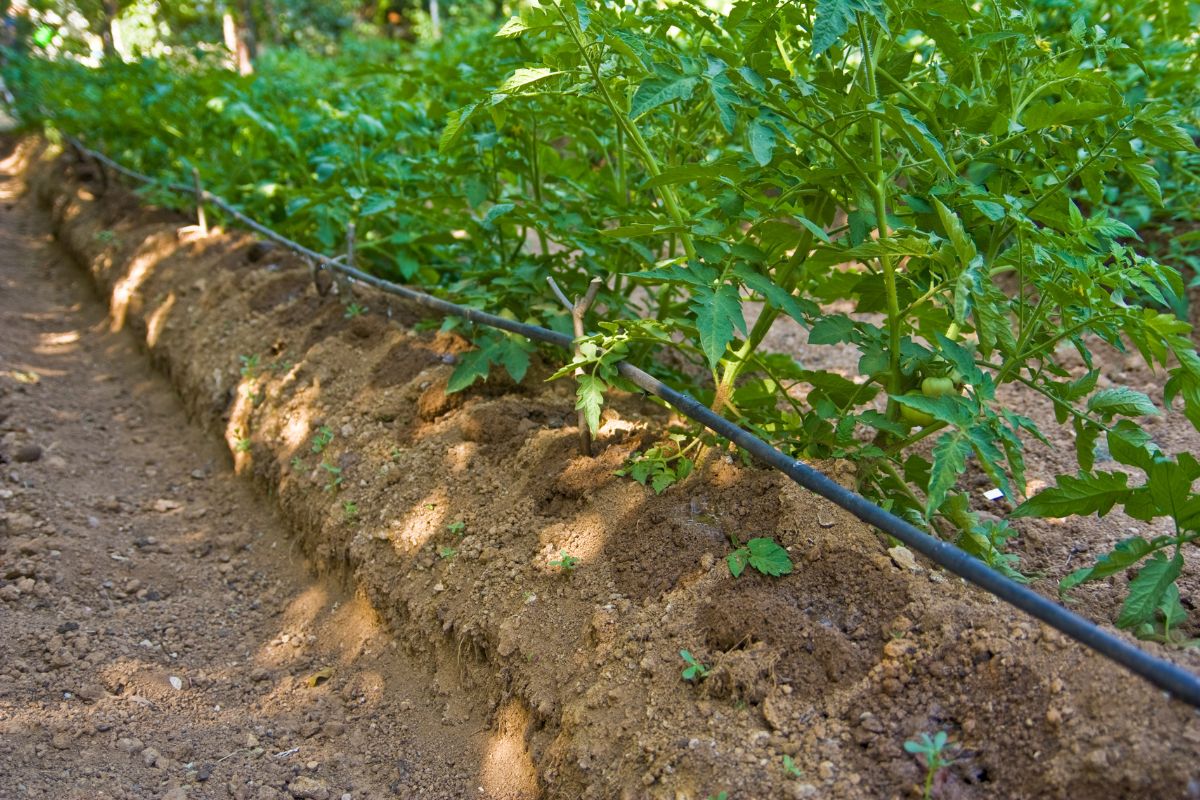
- Vegetables: Vegetables, particularly those with shallow roots like lettuce or green beans, are especially vulnerable to high summer temperatures. These crops benefit most from frequent, light irrigation. Subsurface drip systems—installed just five to ten centimetres below the surface—can cut evaporation dramatically while delivering water directly to the root zone where it’s most needed. Timing irrigation in the early morning or evening further increases its efficiency.
2. Boost Soil’s Water-Holding Capacity
Water efficiency does not begin with the irrigation system—it starts with the soil. Enhancing the soil’s ability to retain moisture is one of the most cost-effective and sustainable ways to stretch every drop of water.
- Organic mulching: A key practice is the use of organic mulch. Applying a layer—at least five centimetres thick—of straw, compost, or other biodegradable plant material creates a protective barrier over the soil. This helps regulate soil temperature, suppress weeds, and reduce evaporation by up to 70%. Crops like potatoes and outdoor-grown vegetables benefit greatly from this added protection during summer heat.
- Cover crops: Incorporating cover crops, such as legumes or buckwheat, between the rows of summer crops or after harvest improves both water infiltration and storage in the soil. As the cover crop residues break down, they enhance organic matter content, supporting better water retention for the following season and contributing to overall soil health.
- Hydrogels and composts: Where soils are especially light or prone to quick drying, soil conditioners like hydrogels or compost-enriched amendments have shown promising results. These materials absorb water and slowly release it as the surrounding soil dries—a useful strategy in lighter Mediterranean soils where traditional irrigation dissipates rapidly.
3. Monitor and Adapt in Real-Time
Knowing when your crops need water—and when they don’t—is essential to avoid over- or under-watering, particularly during erratic summer weather. This is where soil moisture monitoring tools such as tensiometers or digital capacitance probes offer valuable insight. Positioned at key depths (typically between 20 and 40 cm for most crops), they help farmers maintain optimal soil moisture levels—ideally between 60% and 70% of field capacity—throughout critical growth phases.
For tree crops and vines, where full-season watering isn't always necessary or feasible, Regulated Deficit Irrigation (RDI) offers a smart, water-saving strategy. By intentionally withholding water during less-sensitive development phases and resuming irrigation during fruit set or enlargement, growers can cut water use significantly—often by 15–25%—without compromising fruit quality. This method is especially useful during periods of restricted water availability or when complying with regional water use regulations.
Together, these practices are not only essential for navigating current drought stress but are also key building blocks in preparing for an increasingly variable climate across European agricultural zones.
Sustainable Practices for European Conditions
Catchment-Scale and “Nature-Based” Strategies
- Constructed wetlands: Use or create buffer zones and small constructed wetlands at field edges. These capture runoff, filter nutrients, and store water for reuse in dry spells.
- Drainage management: In northern regions, regulated drainage and shallow ditches help hold water during brief droughts. In peat or clay soils, keeping groundwater higher can cut both water demand and soil emissions.
- Field leveling and compartmentalization: Especially in heavier soils, slight regrading and low berms help catch rain and irrigation, reducing runoff and ensuring even distribution.
Promoting Long-Term Resilience
- Diversify crop choices: Mix heat- and drought-tolerant crops, consider new sowing/harvest windows to match shifting rainfall patterns.
- Reduce irrigation area: In chronically water-stressed regions, tightening the irrigated area (instead of expanding) avoids overburdening water reserves—a shift supported by researchers and climate models.
- Tackle food and farm waste: Reduce production and storage losses—every kilo saved means liters of water not wasted.
Irrigation and Water Management Innovations 2025
In recent years, the advancement and adoption of real-time sensing and digital tools have significantly transformed water management practices in European agriculture, making them highly relevant for farmers as we enter the late summer period.
Unlike previous decades where soil moisture estimations depended on manual checking, today's affordable real-time soil sensors—such as electronic probes and tensiometers—offer instant, accurate readings of moisture at various depths. These devices are now widely available at a much lower cost than before and are remarkably user-friendly. By placing these sensors at crucial root zones, farmers can continuously monitor when and where their soils are drying out, ensuring irrigation is only applied when the plants truly need it. This precision is essential in July and August, as many crops (especially maize, sunflower, and vegetables) reach key developmental and yield-determining stages during dynamic weather swings.
The technological revolution extends aboveground as well. Satellite and AI-driven platforms are becoming integral to irrigation management. These systems integrate live weather forecasts, crop-specific growth data, and satellite images that track changes in field evapotranspiration and vegetation health throughout the season. With artificial intelligence, these platforms interpret a farm's real-time status and historical records to deliver customized irrigation alerts directly to a farmer’s smartphone—alerting them exactly when and how much to irrigate for each block or plot. Such field-level advice is proving especially effective during abnormal summers like this one, allowing quick adaptation when weather deviates from historic trends.
Emerging alongside these advancements are mobile apps for predictive irrigation scheduling. These apps connect soil sensor data, upcoming rain predictions, and individual crop development stages, crafting an irrigation plan that is both responsive and resource-efficient. By preventing over- or under-watering, farmers can protect crop health, avoid waste, and comply with tightening regulatory standards—all while keeping operating costs in check.
Beyond monitoring and scheduling, innovative smart irrigation systems have raised water-use efficiency to unprecedented levels. Automated drip and precision spray systems deliver water directly to the root zone at calculated intervals, minimizing evaporation losses—the main risk during mid to late summer when temperatures peak across the EU. More sophisticated systems allow for segmented control, enabling farmers to adjust water flow rates by zone within large or variably sloped fields. This means water is matched to the unique needs of each crop section, saving both water and energy, an important aspect as drought conditions increasingly pinch farm budgets and local water sources.
Farmers are also adopting digital mapping tools and GPS-guided planning for ecological infrastructure such as buffer strips, bioswales, and restored wetlands. These features are not only crucial for storing and filtering water after heavy summer rains but also act as seasonal water reserves, improving farm resilience and reducing nutrient runoff into rivers and lakes.
The digitization doesn't stop at irrigation—it reaches into water recycling as well. In regions under intense summer water stress, particularly in southern Europe, on-farm water treatment systems are a rapidly growing practice. These small-scale facilities—ranging from modern membranes to constructed wetlands and polishing ponds—clean and recycle agricultural runoff or minimally-treated wastewater. The result: safe, reliable supplemental water for crops, even during drought periods when groundwater or river sources are restricted. European policy and investment now support such innovations, helping farmers offset scarcity with closed-loop systems that link efficiency, sustainability, and climate resilience.
Integrating these real-time and digital tools empowers farmers to make informed, timely decisions—prioritizing critical crop stages, meeting environmental obligations, and building flexibility into daily operations as climate risks accelerate. With support from ongoing research, pilot projects, and knowledge-sharing platforms, these innovations are driving a transformation in how European agriculture adapts to the urgent water management challenges of today and tomorrow
Practical Tips for July–August Action
- Inspect irrigation equipment weekly: Repair leaks, check filters and pressure, and recalibrate drippers and sprinklers.
- Water at dawn or dusk: This reduces evaporation and ensures more water reaches the plants.
- Rotate or pause irrigated plots: If water is scarce, temporarily shift irrigation to the most profitable or sensitive crops.
- Record and reflect: Use phone notes or simple logs to track which fields needed more/less water—this builds local knowledge for next year.
Policy and Funding Notes
- CAP and EU Water Resilience: Check new subsidy criteria—funding is increasingly tied to proven water efficiency, digital adoption, and soil/carbon stewardship.
- Community and knowledge networks: Join local or online farmer groups, extension programs, or demonstration projects to share experiences and strategies.
Conclusion
This mid-July, successfully navigating water stress means timing irrigations to crop priorities, tapping nature to make every drop count, and embracing digital tools for insight. By adopting these evidence-based strategies, European farmers can boost yields, protect soils, and become more resilient in the face of changing climates and market realities.
References
SR CAP and Water en (PDF) – European Union
Escalating Drought Threatens Europes Ecosystems and Agriculture en – European Union
FAO Knowledge Repository (PDF)
Sustainable Management of Water Resources in Agriculture G1ghc67c – Oecd
Further reading
Seasonal Climate Forecast & Agricultural Outlook for Europe: July–September 2025
Bactrocera zonata: Urgent Alert for Greek Farmers and the Wider Mediterranean
The impact of the July 2025 heatwave on crops across southern Europe
How EU farmers can overcome the 2025 Stone fruit shortage: Market tactics & orchard recovery steps
Summer Fertilization and Plant Protection Under High Temperatures: Essential Strategies for Farmers
Smart Harvesting & Market Moves for Mediterranean Watermelons in the 2025 EU Season
How to protect olive trees from heat and drought stress during the summer months
Mastering potato harvest in 2025: Pre-harvest protocols & post-harvest success for EU growers