



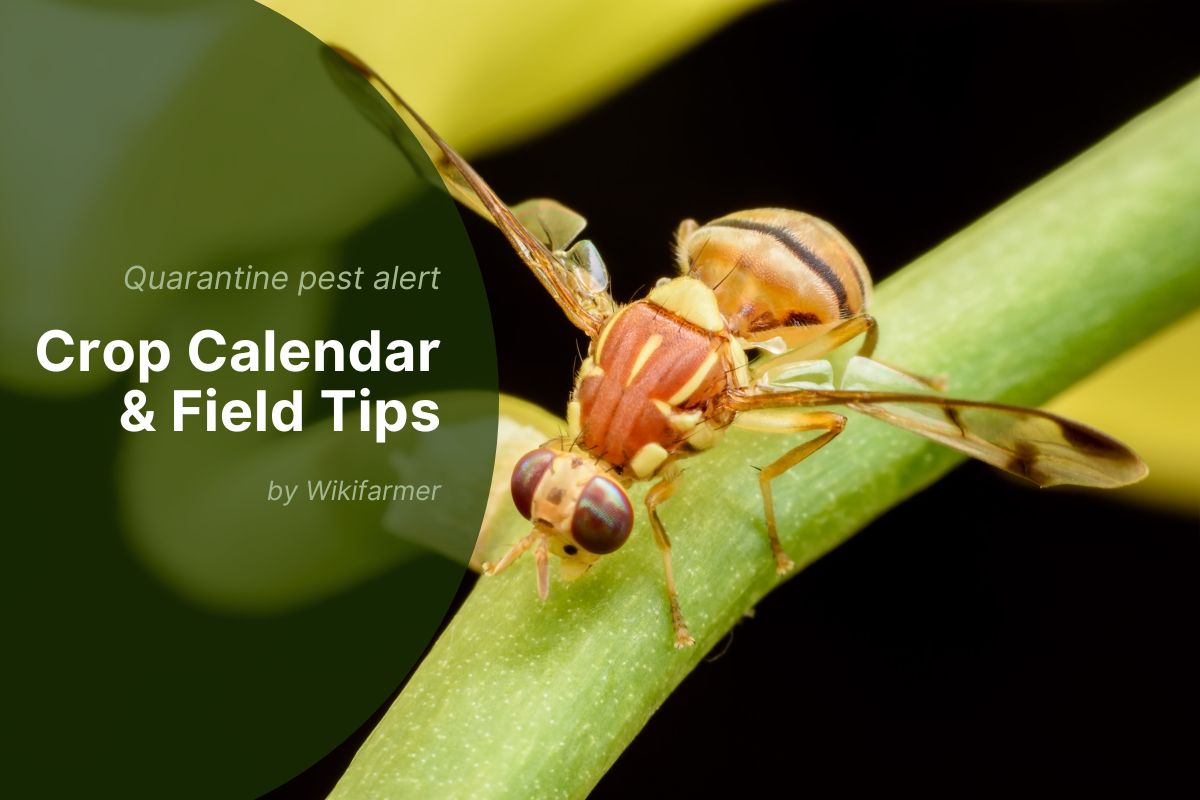
This article is issued to alert and inform Greek agricultural producers about the first official detection of the quarantine pest Bactrocera zonata (Saunders) (Tephritidae) in the Northern Athens region of Attica. The pest was captured in a pheromone trap during the annual survey program for harmful organisms, according to a recent notification by the Hellenic Ministry of Rural Development and Food (ΥΠΑΑΤ). This detection marks a significant development for Greece and the broader region, requiring immediate attention and coordinated action.
What Is Bactrocera zonata?
- Common name: Peach fruit fly
- Family: Tephritidae
- Origin: Native to South and Southeast Asia; now spreading into the Middle East, North Africa, and Southern Europe
- Host range: Attacks over 50 plant species, including peaches, nectarines, citrus, mango, guava, figs, pomegranate, cucurbits, and more
Why Is This Pest a Major Threat?
Severe crop damage: Infestation can cause up to 100% yield loss in susceptible fruits.
Economic impact:
- Yield Losses: Damage can reach 25–100% in some crops, with up to 40% yield reduction reported in mangoes and guavas in South Asia and Egypt.
- Quality Degradation: Infested fruits often develop gum exudates, scars, and internal rot, making them unmarketable.
- Export Restrictions: The presence of B. zonata triggers strict quarantine regulations, leading to costly eradication measures and loss of export markets. Economic losses in the Near East have been estimated at hundreds of millions of euros annually.
- Abandonment of Crops: Severe infestations have forced farmers in some regions to abandon fruit cultivation altogether
Rapid spread: The pest is highly mobile and can disperse through infested fruit and soil.
Climate adaptability: Capable of surviving Mediterranean winters and expanding its range due to climate change.
Current Situation in Greece
The detection in Northern Athens is the first confirmed appearance of Bactrocera zonata in mainland Greece. The pest was identified as part of the annual monitoring program using pheromone traps, highlighting the effectiveness of surveillance but also the urgent need for vigilance among producers, agronomists, and supply chain stakeholders.
Status in Other EU Regions
- Bactrocera zonata is classified as a Union quarantine pest and a priority pest in the EU.
- Since 2019, detections have occurred in Belgium, Greece, France, Italy, Cyprus, and Austria. In each case, intensive eradication measures were implemented, including trapping, removal of infested fruit, and movement restrictions. Some outbreaks have been eradicated, while others remain under active management.
- The pest is also established in outermost EU regions such as La Réunion (France).
- Southernmost EU regions are at highest risk for establishment, and ongoing climate change is expected to increase the threat.
Regional Alert: Neighboring Countries
- Neighboring countries in the Balkans, Eastern Mediterranean, and North Africa should remain on high alert.
- The pest has shown the ability to rapidly invade new areas, especially where suitable host plants and mild winters exist.
- International organizations and the EU have called for coordinated surveillance, rapid reporting, and strict quarantine measures to prevent further spread.
Spread and Invasion Risk
- Dispersal: The pest can fly long distances and is frequently spread through the movement of infested fruits and, less commonly, soil containing pupae.
- Climate Adaptability: While originally tropical, B. zonata can survive Mediterranean winters and is expected to expand its range by 15–20% by 2050 due to climate change.
Immediate Actions for Producers
Symptoms and Field Recognition
- Oviposition Sites: Small punctures or scars and gum exudation on the fruit surface.
- Larval Feeding: Internal decay, browning, and softening of fruit flesh.
- Premature Fruit Drop: Infested fruits often fall before ripening.
- Pupal Stage: Mature larvae exit the fruit and pupate in soil beneath host trees
Control and Management Strategies
1. Monitoring and Early Detection
- Pheromone Traps: Use of methyl eugenol-based traps (e.g., McPhail traps) for adult monitoring.
- Field Inspections: Regular examination of fruits for symptoms and larvae.
2. Cultural and Sanitation Measures
- Fruit Collection: Prompt removal and deep burial or destruction of fallen and infested fruits to break the life cycle.
- Crop Hygiene: Avoid leaving ripe fruits on trees or in the field after harvest.
3. Chemical and Biological Control
- Bait Sprays: Application of protein-based bait sprays mixed with insecticides (e.g., spinosad or malathion) to attract and kill adults.
- Male Annihilation Technique (MAT): Deployment of traps with methyl eugenol and insecticide to target male flies and reduce breeding populations.
- Biological Methods: Promotion of natural enemies and use of microbial baits are under research for sustainable management.
4. Quarantine and Regulatory Measures
- Strict Inspections: Enforcement of quarantine regulations for fruit imports from infested regions.
- Postharvest Treatments: Use of heat, cold, or irradiation treatments to disinfect fruits intended for export.
- Official Notification: Immediate reporting of suspicious cases to plant health authorities is mandatory in the EU and many other regions.
Conclusion
The detection of Bactrocera zonata in Greece is a critical warning for all Mediterranean and neighboring countries. Vigilant monitoring, prompt reporting, and strict adherence to control measures are essential to protect agricultural production and prevent the pest's further spread. Producers, agronomists, and exporters must work closely with authorities to safeguard crops and livelihoods.
This article is part of a coordinated effort to inform and mobilize the Greek agricultural community and neighboring countries following the first confirmed detection of Bactrocera zonata in Northern Athens. Stay alert, stay informed, and act swiftly to protect your crops.
References
Bactrocera zonata (peach fruit fly)
http://download.ceris.purdue.edu/file/1434
Nafa Ipc Manual Ipc Zonata Action Plan (PDF) – Iaea
https://www.opastpublishers.com/open-access-articles-pdfs/gut-microbiota-and-its-ecological-interactions-in-bactrocera-zonata-and-its-impact-on-food-security--agricultural-pest-m.pdf
Factsheet B Zonata No Images Rev24 (PDF) – Africamuseum
Bactrocera Zonata Πρώτη Διαπίστωση Στην Ελλάδα Ενημ – Wordpress