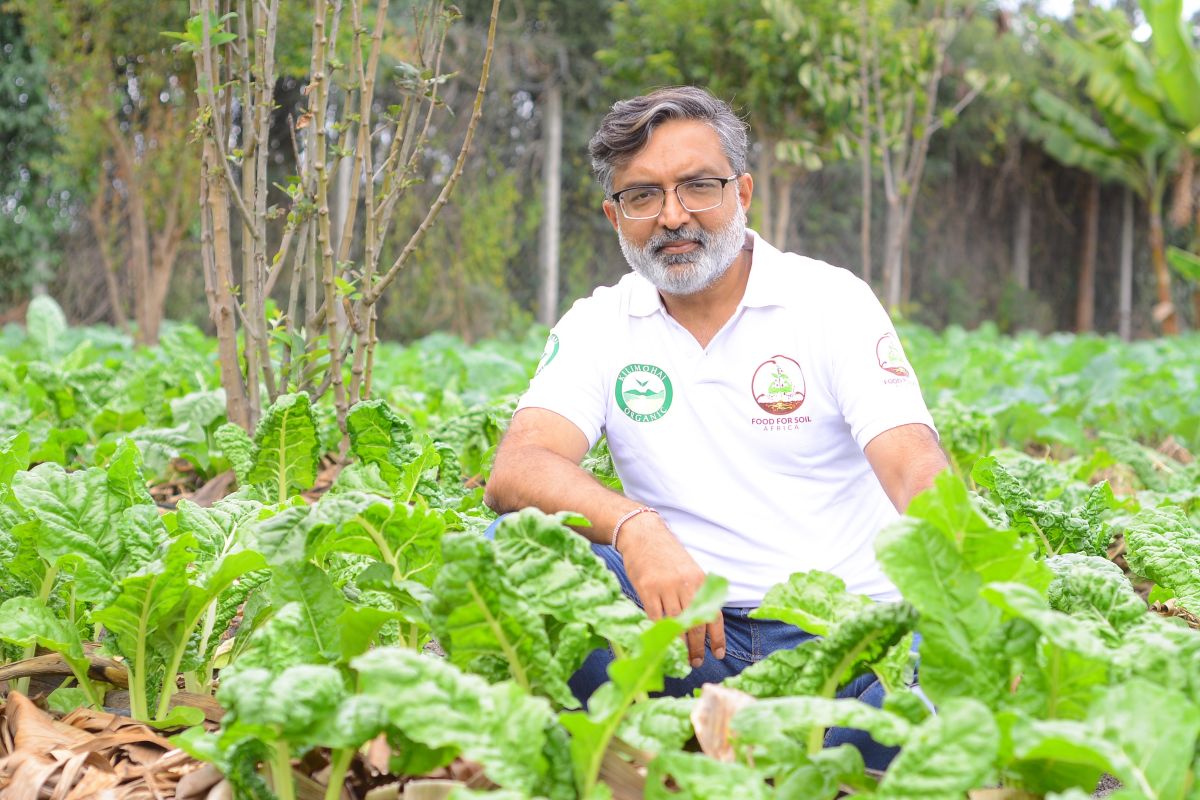
Kumar Sheth left behind corporate spreadsheets to get his hands dirty on Kenyan farms. Now, he's teaching smallholder farmers that the secret to better harvests starts with feeding the soil beneath their feet.
A stranger to farming
By his own admission, Kumar Sheth had no business entering agriculture.
Born in India and trained as an accountant, he moved to Kenya more than two decades ago to support his family. His world was balance sheets, not biology. “I had never watered a garden,” he says. “I had never even plucked a rose.”
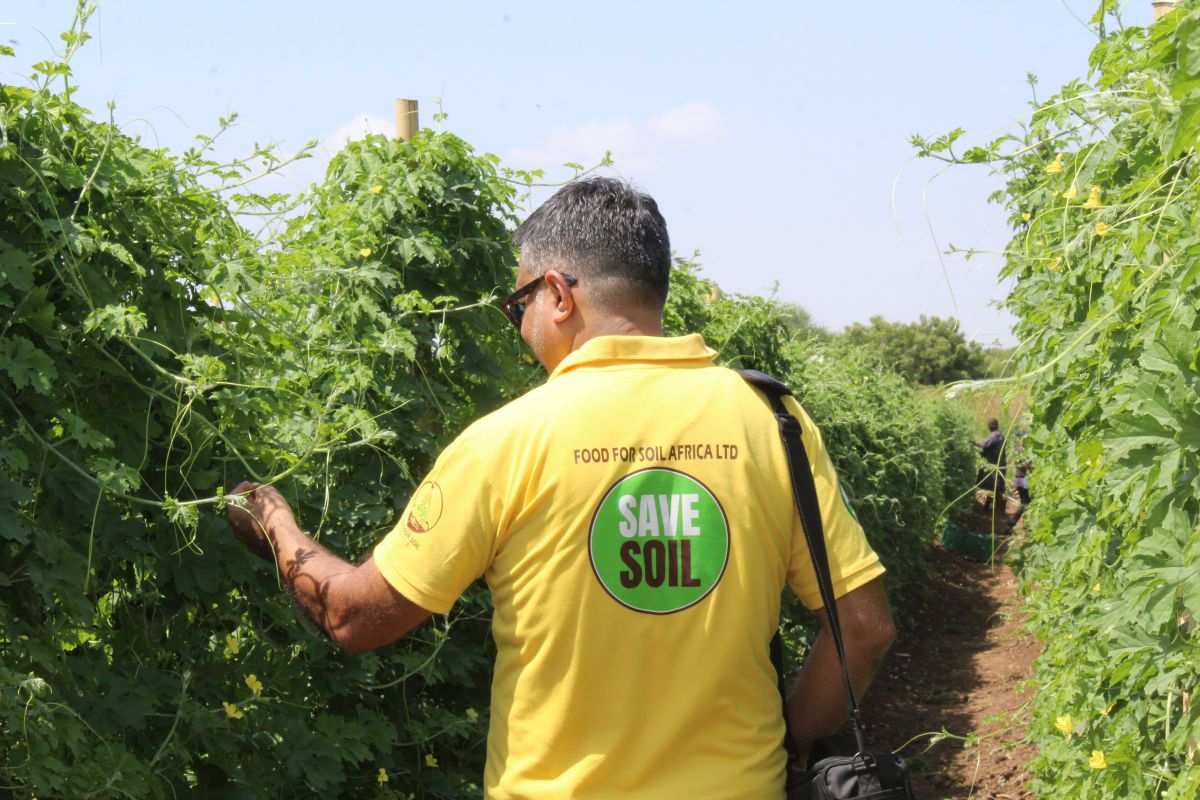
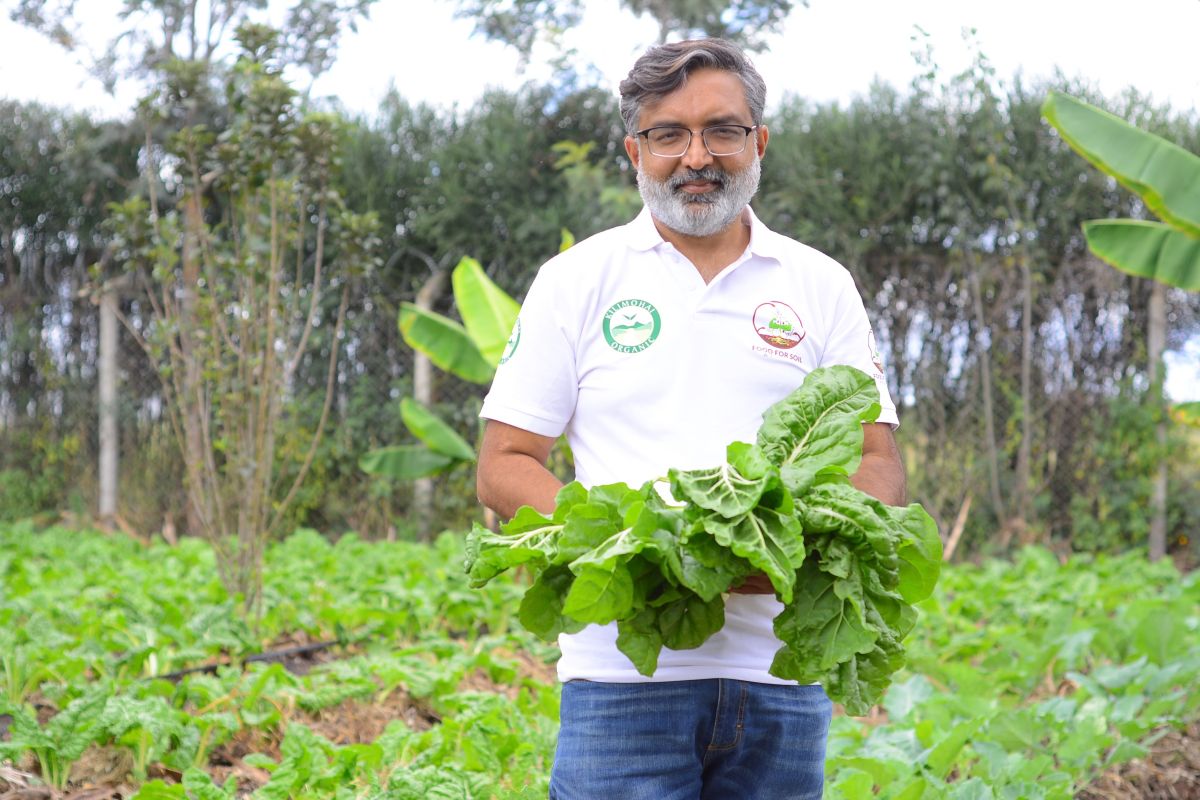
Today, that same man has walked more than 4,000 farms across Kenya, Uganda, Rwanda, and Ghana. He manufactures and distributes seven certified organic agricultural inputs, manages multiple farms, and has become a prominent voice advocating for soil-first agriculture.
His journey did not begin with a grand plan—but with a conversation.
The conversation that changed everything
The turning point came during a routine farm valuation visit. Sheth had been introduced to a farmer looking to export, and the two sat down to negotiate. The deal fell through, but something else took root.
“The old farmer started talking about soil nutrients, safe food, macro and micronutrients,” Sheth recalls. “He sent me some videos. I watched one, then another. I ended up watching a thousand.”
What followed was months of self-education — videos, research papers, and trips to meet agronomists and soil scientists. Sheth immersed himself in the biology of how microbes function, what depletes soil over time, and why the same land that once produced abundantly begins to fail. The more he learned, the more a single conviction took shape: most farmers were treating the symptoms of sick soil without ever asking what was making it sick in the first place.
Driven by this realization, he founded Food for Soil Africa Ltd, sourcing organic input ingredients from India and securing certification from Kenya’s regulatory bodies — KEPHIS and PCPB — as well as from KOAN (Kenya Organic Agriculture Network), all in preparation to transform how soil health is managed.
The hard entry into farming
“I thought it would be easy,” he says. “Then I realized it was not.”
Smallholder farmers, he discovered, had heard it all before. Company after company had arrived with a product that was going to solve everything — and rarely did. An agronomist would come, put fear into the farmer about pests and diseases, prescribe a spray schedule, and leave. The farmer spent money. The problem persisted. The mistrust accumulated.
Some farmers would listen politely, nod, and then change nothing. Some tried his products and then never paid him. “I have more than 150 farmers who never paid me,” he says, with a shrug.
The experience forced a fundamental rethink. Selling products alone would not work. Trust had to come first.
The philosophy of feeding the soil
At the heart of Sheth's work is a simple idea: soil is alive, and it needs to be fed — not just dosed with chemicals when something goes wrong.
Modern agriculture, he argues, often treats symptoms—pests, disease, declining yields—without addressing root causes. For Sheth, the answer lies in feeding the soil with organic matter, microbial life, and balanced nutrients. Inputs are secondary. The foundation is soil health.
His approach always begins with the farmer, not the farm. "I'm not here to sell you a product," he says. "I want to understand — how much did you actually make last season?" It is both an accountant's question and a farmer's reality check: a way of cutting through the noise to find out whether the land is actually working for the person who depends on it.
From advisor to farmer
Sheth eventually realized that advice alone was not enough. “Farmers don’t trust advice—they trust results.” So he became a farmer himself.
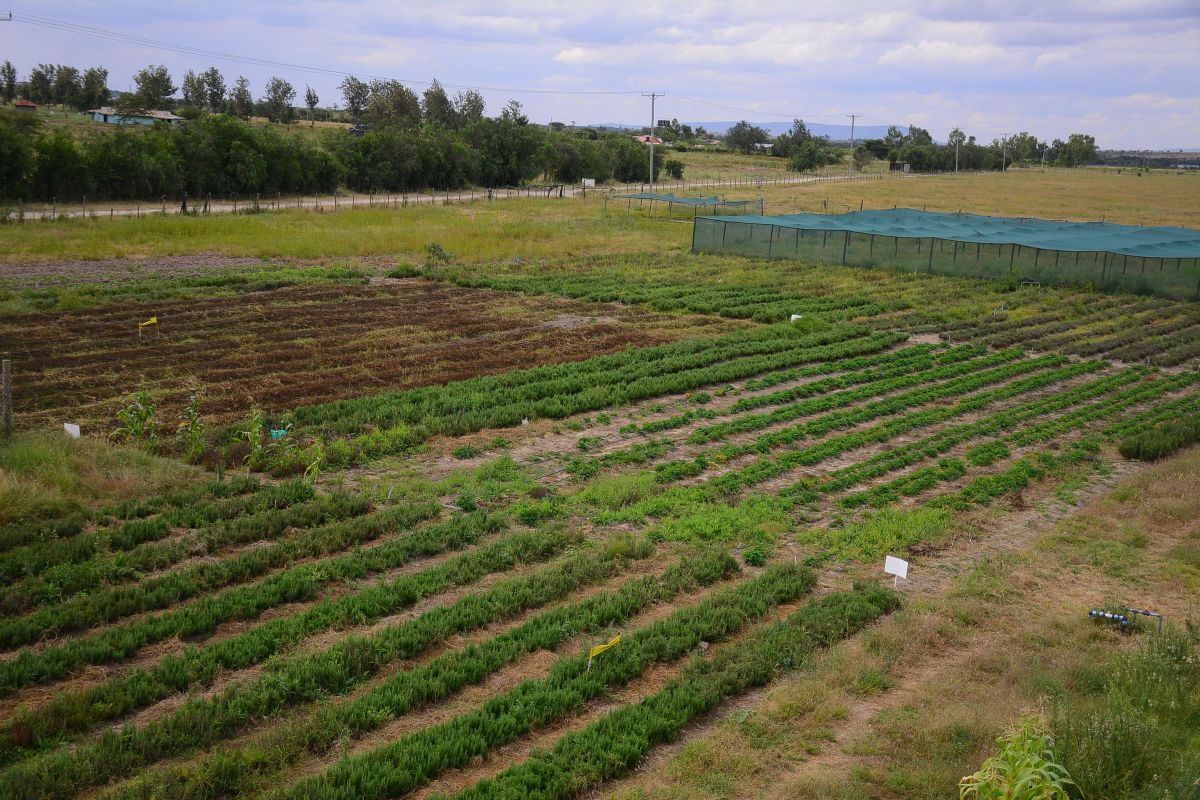
He leased a 16-acre plot in Tharaka Nithi County, a rainfed area with no guarantees, and planted green gram, cowpea, chickpea, and millets. It was, in his own words, full of ups and downs. “First, there was no rain, then flooding. Then crops were stolen by my own landlord,” he says. “Back to square one.”
But the goal was never perfection; it was proof. Today, Sheth operates multiple farms that function as live demonstrations. Farmers can see his methods in real conditions—not controlled trials. “Come and see,” he tells them. “It’s not just theory.”
Rethinking productivity: the multi-layer model
On Sheth’s farms, conventional monoculture gives way to diversity.
He practices multi-layer farming—stacking crops vertically like floors in a building. “If you have one storey, you earn from one. If you have three, you earn from all three,” he explains.
The ground layer grows onions, garlic, and ginger. Poles support passion fruit climbing in the middle layer. Above them, papaya trees develop. Each layer matures on a different timeline, meaning the farmer is harvesting something almost continuously — up to 6 crop cycles from a single piece of land over the course of a year.
The canopy created by this stacking does something else, too: it forms a natural microclimate. Water requirements drop by more than 70%. Weed pressure falls by as much as half. And the whole structure can be built cheaply — bamboo poles, shade netting, sometimes just grass — for under $3,000 per acre, compared to $150,000 or more for a conventional greenhouse.
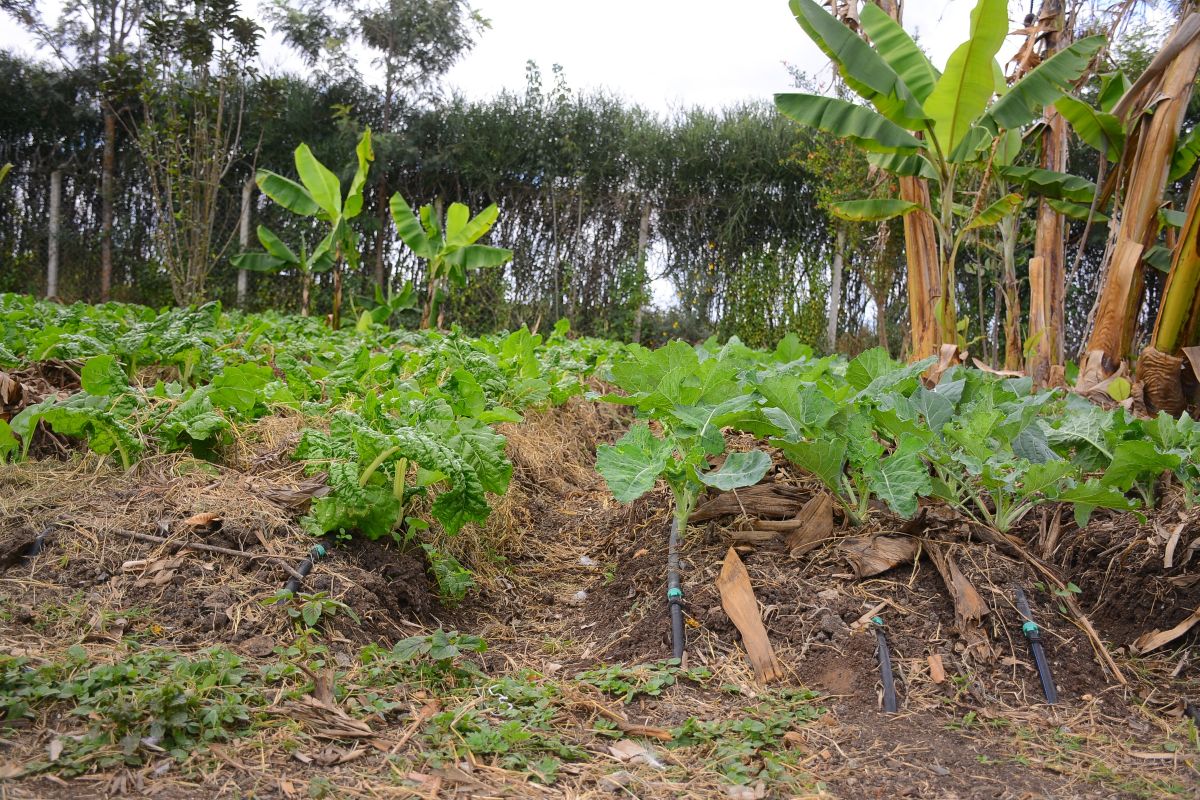
Beneath those layers, the soil is managed obsessively. Raised beds are built up with high-carbon compost, biochar, and layers of microbial life. "When you feed the beds properly," Sheth says, "even intensive cropping will not deplete them."
The economics farmers often overlook
Sheth's accounting background shapes how he sees every farming decision—and it is often the lens his farmer clients most need.
“The problem is that many farmers don’t track their costs,” he says. “They don’t know what they are spending or earning per square metre.”
Sheth once visited a woman named Chella in Eldama Ravine, who needed organic fertilizer for apples, pineapples, grapes, and oranges. He used what was freely available nearby: fresh cow manure from indigenous cattle, dry leaves and twigs from the farm, and overripe mangoes and banana offcuts from a market stall next door. On the road, he spotted charcoal transporters and asked for their dust, then collected sawdust from a local sawmill and wood ash from households burning firewood nearby. Using these ingredients, he produced a ton of nutrient-rich organic fertilizer for under $100—a fraction of the cost of a comparable commercial product.
“That’s where the difference is,” he says. “Not just farming—but understanding the economics behind it.”
Building a market that works
Production is only half the challenge. Markets are the other — and for smallholder farmers, often the more brutal one.
Across thousands of farm visits, Sheth has watched the same cycle repeat: a farmer plants a single crop across their entire plot. At harvest time, every neighbouring farmer harvests the same crop. Prices collapse. The farmer scrambles for a middleman, takes whatever is offered, and starts the cycle again.
His solution is a direct-to-consumer model he calls the family farmer approach. He connects with 200 to 300 urban households who want a reliable supply of fresh, organic produce and supplies them with fifteen to twenty different crops year-round, delivered twice a month. Stable supply for the consumer. Predictable income for the farmer. No middleman. No price collapse.
He tested the idea himself, selling mangoes door-to-door from his car. “People said I had gone crazy,” he says. “But sometimes you do what needs to be done.”
Soil is soil, everywhere
Last year, Seth was approached to participate in a podcast about organic agriculture. Without preparation, Sheth spoke about soil, farming, and his philosophy. The interview went viral, and his phone did not stop ringing.
Soon, farmers from all over began reaching out—and applying his methods. A farmer in the Caribbean followed Sheth's advice on making simple liquid inputs from green leaves, citrus, and sweet fruits—and grew the best lettuce of his life. A grower in Spain asked about struggling olive orchards.
“That’s when I realized,” he says, “soil is soil. Everywhere. The lessons are the same.”
A mission beyond farming
Sheth measures success not in revenue but in reach. "I want to help one million farmers," he says. “That’s my goal.”
He envisions operating across fifteen countries, integrating satellite-based soil monitoring, and eventually automating parts of the advisory process. But he is clear that the foundation of the work will always be personal.
He still travels 400 to 500 kilometres by motorbike to visit farms. He still sits, listens, and shares meals. “Not a single farmer has let me leave without food,” he says. “That hospitality and warmth—that is very fulfilling.”
Kumar Sheth's story is, at its core, about the gap between how farming is sold and how it actually works — and what happens when someone with no agricultural background, no inherited assumptions, and a very good eye for a spreadsheet decides to close that gap.
His advice to aspiring farmers: feed the soil that sustains your farm, and it will take care of itself.