


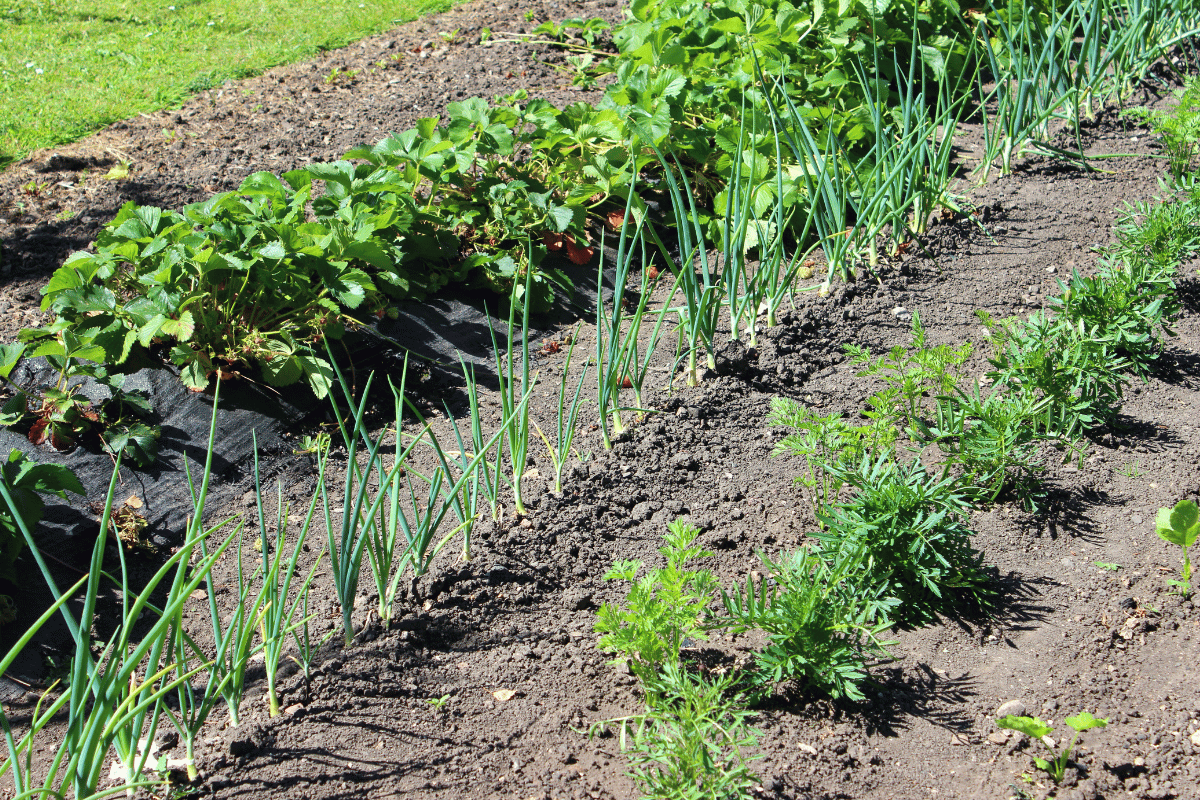
What is companion farming?
Companion farming (also known as companion cropping or companion planting) is an agricultural practice in which two or more crop species are grown together in proximity to benefit each other through ecological interactions. Unlike monocropping, companion farming aims to maximize resource use efficiency, enhance pest and disease resistance, improve soil fertility, and increase overall productivity. It is widely practiced in traditional and modern sustainable farming systems.
Principles of companion farming
Nutrient complementarity: Some crops fix or release nutrients that others can use. Leguminous companions such as beans, cowpeas, and field peas form symbiotic relationships with rhizobia bacteria, fixing atmospheric nitrogen that becomes available to neighboring crops. This biological nitrogen fixation contributes approximately 20-22 million tons of nitrogen annually worldwide, reducing dependence on synthetic fertilizers.
Pest and disease suppression: Certain crops repel or distract insect pests from the main crop. Aromatic plants like marigolds release compounds that naturally repel harmful insects such as aphids, nematodes, and whiteflies. These pest-resistant plants can act as trap crops, drawing pests away from valuable crops, or as repellent barriers that confuse pest navigation.
Microclimate improvement: Tall crops can provide shade or wind protection to sensitive crops. In intercropping systems, the vertical structure created by different plant heights optimizes light capture and creates beneficial microclimates for companion plants.
Soil health enhancement: Root exudates and organic matter from one crop can benefit soil microorganisms, improving conditions for neighboring crops. Cover crops and intercropping systems contribute organic matter that enhances soil structure, increases microbial biomass, and improves nutrient cycling.
Efficient space utilization: Different rooting depths and canopy structures allow crops to coexist without heavy competition. This spatial complementarity enables farmers to maximize productivity per unit area while maintaining ecosystem diversity.
Examples of companion farming
Maize, Beans, and Squash (Three Sisters)
The classic "Three Sisters" combination exemplifies optimal companion planting relationships. Maize (corn) provides structural support for climbing beans, eliminating the need for artificial trellises. Beans fix atmospheric nitrogen through their root nodules, enriching soil fertility for all three crops. Squash covers the ground with broad leaves, reducing weed growth and conserving soil moisture while creating a beneficial microclimate. This traditional system, practiced by Indigenous peoples of North America for thousands of years, demonstrates how companion crops can create a self-sustaining agricultural ecosystem.
When implementing the Three Sisters method, timing is crucial for success. Plant corn first, allowing it to establish 4-6 inches of height before introducing beans 2-3 weeks later. Squash should be planted last, approximately one week after bean emergence, to prevent large squash leaves from shading young corn and bean seedlings. This sequential planting ensures each crop reaches maturity without competing destructively with its companions.
Maize and Watermelon Intercropping
Farmers have successfully adopted maize-watermelon intercropping systems in Rwanda and other African regions with limited land availability. Maize is planted at 0.25 meters within rows and 1.0 meter between rows, while watermelon is positioned at 1.0 meter spacing between individual plants. The 'Sugar Baby' watermelon variety, which matures in 120 days, synchronizes well with maize harvest timing, allowing farmers to maximize land productivity while generating diverse income streams from the same field.
Maize-Vegetable Intercropping Systems
Research conducted by CIMMYT (International Maize and Wheat Improvement Center) across India, Bangladesh, and Bhutan demonstrates the effectiveness of wide-row maize intercropping with vegetables. Using 60-60 cm spacing in single rows or paired-row systems at 30-90 cm intervals, farmers plant short-duration vegetables like cabbage, spinach, or legumes between maize rows. This additive intercropping approach has resulted in doubled yields and increased household incomes while improving food security.
Mustard and Cabbage
Mustard functions as an effective trap crop, attracting pests such as diamondback moths away from valuable cabbage crops. The pungent compounds in mustard plants create a natural barrier that confuses pest navigation while protecting the main crop. After harvest, cabbage residues contribute organic matter to the soil, enriching conditions for subsequent mustard growth cycles and demonstrating the cyclical benefits of companion relationships.
Maize and Cowpea (India)
Maize provides vertical support and partial shade for climbing cowpea, reducing lodging. Cowpea, being a legume, fixes nitrogen and enriches the soil, benefiting maize. Both crops give marketable yields: maize grain and cowpea pods or fodder.
Chilli and Onion (India)
In Indian farming systems, chilli-onion companion planting addresses multiple agricultural challenges simultaneously. Chilli plants, susceptible to thrips and aphids, benefit from the pungent sulfur compounds released by onion plants that naturally deter these pests. Onion's shallow root system complements chilli's deeper rooting pattern, reducing competition while benefiting from the partial shade provided by taller chilli plants. This combination ensures continuous moisture retention and provides farmers with both spice and bulb crops from the same field space.
Spinach and Amaranthus (India)
This companion system optimizes temporal resource use through sequential harvesting. Fast-growing spinach provides early market returns while slower-maturing amaranthus utilizes the same space over an extended period. Amaranthus develops a deep root system that improves soil aeration and brings nutrients from deeper soil layers, benefiting shallow-rooted spinach in subsequent plantings. This approach ensures continuous leafy vegetable supply for market while maintaining soil health through diverse root architectures.
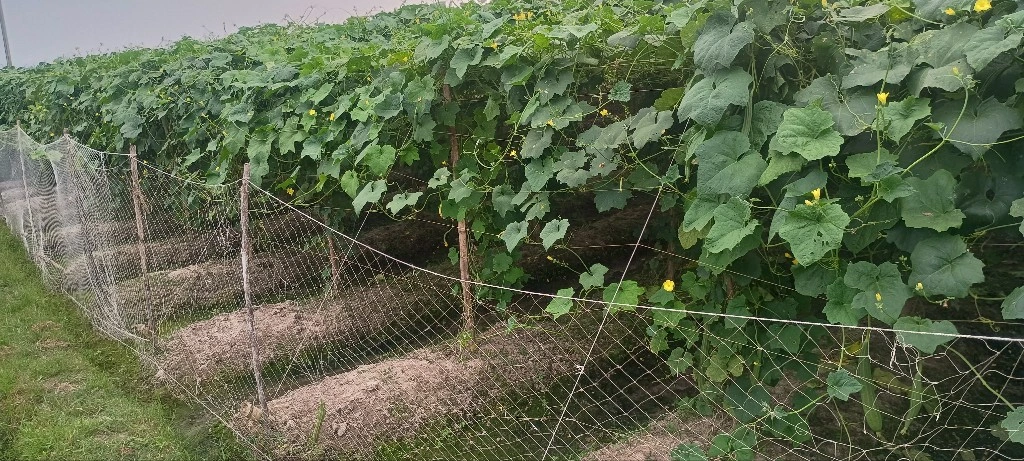
Ridge Gourd and Sponge Gourd (India)
This cucurbit companion system demonstrates pollinator synergy and space optimization. Ridge gourd flowers attract bees and other pollinators that subsequently improve sponge gourd fruit set, enhancing overall productivity. Sponge gourd provides additional ground cover that suppresses weed growth, creating favorable conditions for ridge gourd vine development. The staggered maturity of these crops extends harvest periods, providing farmers with continuous income from cucurbit production.
Benefits of companion farming
Nutrient efficiency: Legume-based companions significantly reduce external nitrogen fertilizer requirements through biological nitrogen fixation. Studies show that leguminous cover crops can contribute equivalent nitrogen levels to 50-150 kg/ha of synthetic fertilizer, depending on species and growing conditions. This natural nitrogen provision reduces input costs and minimizes environmental impacts associated with synthetic fertilizer production and application.
Pest management: Aromatic herbs, trap crops, and repellent plants substantially reduce reliance on chemical pesticides. Marigolds emit compounds that repel aphids, whiteflies, and nematodes, while attracting beneficial predatory insects like parasitic wasps and hoverflies. This biological pest control approach maintains ecosystem balance while protecting crop yields without chemical residue concerns.
Soil structure improvement: Companion systems increase organic matter accumulation and enhance microbial activity, improving soil structure and nutrient availability. Deep-rooted cover crops like ryegrass can increase soil structure and reduce compaction while diverse root systems contribute different organic compounds that support varied soil microbial communities.
Yield stability: Crop diversification inherent in companion farming reduces risks of complete crop failure from pests, diseases, or weather extremes. Strip-cropping systems, for example, can slow disease spread like potato blight, giving farmers additional time for management interventions. This risk distribution ensures more stable agricultural production across variable environmental conditions.
Economic returns: Farmers gain multiple harvests from the same land area, diversifying income sources and improving economic resilience. Intercropping systems can increase total productivity by 13-42% compared to monocultures while providing varied market opportunities throughout growing seasons. The economic benefits extend beyond yield increases to include reduced input costs for fertilizers and pesticides.
Biodiversity enhancement: Companion farming creates habitat diversity that supports beneficial insects, soil organisms, and overall ecosystem health. Polyculture systems support up to 30% more biodiversity than monocultures, fostering natural pest control and pollination services. This biodiversity bonus contributes to long-term agricultural sustainability and ecosystem resilience.
Challenges in the application of companion farming
Knowledge requirements: Successful companion farming requires an understanding of crop interactions, local ecology, and optimal timing sequences. Farmers must learn which plants complement each other and which combinations may compete destructively for resources. This knowledge often comes from local experience, traditional practices, and scientific research specific to regional growing conditions.
Resource competition: Competition for light, water, and nutrients may occur if crops are not properly matched in terms of spatial arrangement, timing, or complementary resource needs. Careful selection of compatible species and appropriate spacing is essential to minimize negative interactions while maximizing beneficial relationships.
Mechanization challenges: Equipment designed for monoculture farming may not easily accommodate diverse companion planting systems. However, modern approaches like strip-cropping can maintain mechanization efficiency while capturing companion planting benefits by using machinery-compatible strip widths.
Site-specific adaptation: Benefits of companion combinations are often location-specific and may not generalize across different climatic zones, soil types, or farming systems. Successful implementation requires adaptation to local conditions and may involve experimentation to identify optimal combinations for specific environments.
Management complexity: Coordinating planting, care, and harvesting schedules for multiple crops requires more sophisticated management than monoculture systems. This increased complexity can be challenging for farmers transitioning from conventional practices but often becomes manageable with experience and proper planning.
Despite these challenges, companion farming represents a powerful approach to sustainable agriculture that works with natural ecological principles to create productive, resilient farming systems. The extensive research and practical examples from Wikifarmer demonstrate that when properly implemented, companion farming can significantly enhance both productivity and sustainability while reducing external input dependencies.