
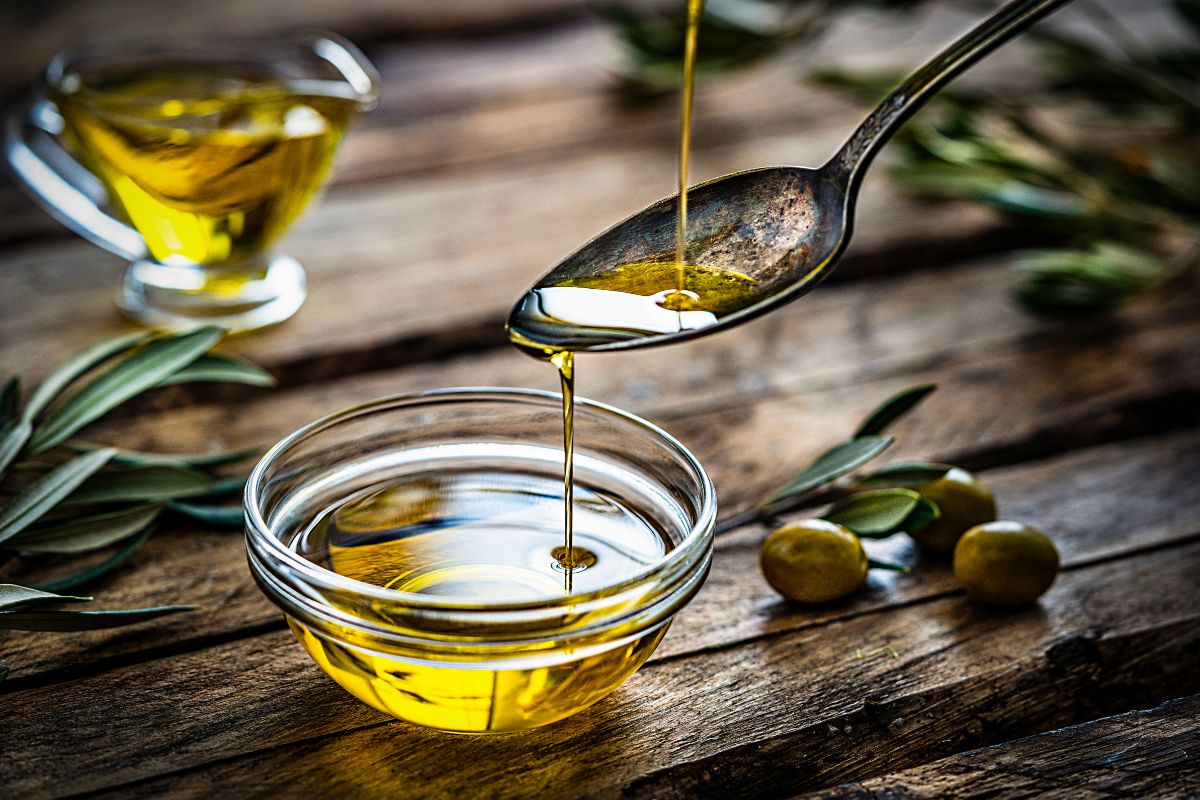
Extra virgin is a legal classification for the highest grade of olive oil, which it earns by passing three separate tests. To be called extra virgin, the oil must be extracted from olives by purely mechanical means, meet chemical limits, and pass a sensory panel. This means passing tests of its production method, chemistry, and taste, and only an oil that satisfies all three is extra virgin. It is one of the only food products in the world whose official grade is determined in part by a human tasting panel.
Production
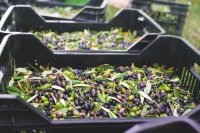
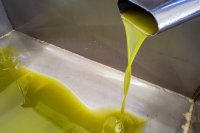
Extra virgin olive oil must be obtained from the fruit of the olive tree using only mechanical or physical processes, under temperature conditions that don't degrade it, with no treatment beyond washing, decanting, centrifuging and filtering.
That means absolutely no chemical solvents, no refining, and no heat-driven extraction. "Cold extracted" or "cold pressed" refers to extraction kept below about 27°C to maintain the flavour and antioxidants in the oil.
This is what separates it from lower grades of olive oil. Virgin olive oil is also mechanically extracted but fails the sensory or chemical requirements for extra-virgin status, whereas refined olive oil is chemically or thermally processed to remove defects.
Chemistry
A laboratory measures a set of parameters against fixed limits set by the International Olive Council and found in EU, Codex, USDA, and other standards.
|
Parameter |
Limit for extra virgin |
What it means |
|
Free acidity (oleic acid) |
≤ 0.8% |
Breakdown of the oil's fatty acids from bad fruit, damage or delay in harvesting (lower means fresher) |
|
Peroxide value |
≤ 20 meq O₂/kg |
Measures oxidation (the freshest oils are well below 10 meq O₂/kg) |
|
K232 (UV absorbance) |
≤ 2.50 |
Primary oxidation, often from over-ripe or mishandled olives |
|
K270 (UV absorbance) |
≤ 0.22 |
Secondary oxidation linked to rancidity (flags refined oil) |
|
Delta-K (ΔK) |
≤ 0.01 |
Detects blending with refined or lower-grade oils |
Laboratories also conduct authenticity checks to ensure extra-virgin oils are not adulterated. The fatty acid profile (55–83% oleic acid, 7.5–20% linoleic, under 1% linolenic), sterol composition, fatty acid ethyl esters, and pyropheophytins indicate poor quality fruit or fermentation before milling, excessive heat treatment, and ageing. Any anomalies here may suggest that the oil has been mixed with cheaper or older oils.
Polyphenols, the healthy antioxidants that give extra virgin oil its peppery taste, can be analyzed and certified, but are not part of the grade definition. A high polyphenol level signals a high-quality oil, but it is a separate quality marker, not one of the criteria that make an oil legally extra virgin.
Taste panel
A group of trained, IOC-recognized assessors taste olive oils and scores them. To qualify as extra virgin, the oil must have a median defect score of zero, meaning no perceptible faults such as rancid, fusty, musty or winey notes, and a median fruitiness above zero, meaning it must actually taste of olives.
An oil can pass every lab limit and still carry a sensory defect that a machine can't recognize, which is why a human panel is absolutely essential.
The problem with adulteration
Since extra virgin olive oil commands a premium, adulteration and mislabeling are common problems. A lot of oil is sold as extra virgin, but it fails to meet the standard.
Buyers should ask for a recent certificate of analysis showing the acidity, peroxide, and UV figures within extra-virgin limits, a passing panel result, check the harvest date, and look for recognized certification.
For high-volume sourcing, make quality documents a condition of the deal by building the certificate of analysis into the purchase contract, so the grade is verified before payment.