Food safety refers to the set of practices, standards, and regulations applied throughout the food supply chain, from primary agricultural production through processing, distribution, and consumption, to ensure that food does not cause harm when prepared and eaten according to its intended use (Codex Alimentarius, 2020). The discipline encompasses the prevention and control of biological, chemical, and physical hazards at every stage where food is grown, handled, stored, transported, or prepared.
For farmers, processors, and anyone working in the food supply chain, food safety is not an abstract regulatory requirement. It determines whether products reach consumers without causing illness, whether shipments clear customs inspections, and whether a farm or processing operation maintains its operating license.
What is food safety and why does it matter?
The World Health Organization (WHO) defines food safety as the assurance that food will not cause adverse health effects to the consumer when prepared or eaten according to its intended use. In practice, this means controlling hazards that can contaminate food at any point between the field and the plate.
Unsafe food containing harmful bacteria, viruses, parasites, or chemical substances can cause more than 200 distinct diseases in humans, ranging from acute diarrheal illness to chronic conditions including kidney failure, liver cancer, and neurological disorders (WHO, 2024).
Food safety and food security are closely connected. Access to sufficient quantities of food means little if that food is contaminated. In low- and middle-income countries, foodborne illness can trap communities in cycles of disease and malnutrition, particularly among children.
The global burden of foodborne disease
WHO's first comprehensive global estimates, published in 2015, found that 31 foodborne hazards caused approximately 600 million illnesses and 420,000 deaths worldwide in 2010. Those illnesses resulted in 33 million disability-adjusted life years (DALYs) lost. DALYs are a measure combining years of life lost to premature death and years lived with disability (WHO, 2015).
Children under five years old bear a disproportionate share of this burden. Although they represent 9% of the global population, they account for 30% of all foodborne disease deaths, approximately 125,000 deaths per year. The WHO African and South-East Asia regions carry the highest per-capita burden (WHO, 2015).
Diarrheal diseases alone are responsible for more than half of the global foodborne disease burden, causing an estimated 550 million illnesses and 230,000 deaths annually. The primary pathogens behind foodborne diarrhea include Norovirus, Campylobacter spp., non-typhoidal Salmonella, and pathogenic Escherichia coli (WHO, 2015).
In the United States, CDC estimates from 2019 data indicate that six major pathogens, including Campylobacter, Clostridium perfringens, invasive Listeria monocytogenes, norovirus, non-typhoidal Salmonella, and Shiga toxin-producing E. coli (STEC), caused approximately 9.9 million domestically acquired foodborne illnesses, 53,300 hospitalizations, and 931 deaths (CDC, 2025). Norovirus was the leading cause of illness (5.5 million cases), while Salmonella was the leading cause of death (238 deaths).
WHO is preparing updated global estimates covering 2000 to 2021 data, expected for publication in 2026, which will include additional hazards such as Cyclospora, rotavirus, aflatoxin M1, inorganic arsenic, cadmium, and lead (WHO, 2025).
The economic cost of unsafe food
The World Bank estimated in 2018 that unsafe food costs low- and middle-income economies approximately $110 billion per year in lost productivity and medical expenses. Of this total, $95.2 billion represents productivity losses and $15 billion represents treatment costs (World Bank, 2018).
In the United States, the Government Accountability Office (GAO) reported in 2025 that foodborne illness costs Americans an estimated $75 billion annually (in 2023 dollars) in medical care, lost productivity, and premature deaths. These figures include secondary chronic conditions that develop after the initial illness (GAO, 2025).
These economic estimates are likely conservative. They often exclude harder-to-quantify costs such as lost farm and company sales, foregone trade income, consumer avoidance of perishable but nutrient-rich foods, and the environmental burden of food waste.
Types of food safety hazards
Food safety hazards fall into four main categories: biological, chemical, physical, and allergens. Each type can enter the food supply at multiple points, from the field through processing, packaging, storage, and final preparation.
Biological hazards
Biological hazards include pathogenic bacteria, viruses, parasites, and fungi that can contaminate food and cause illness. Common bacterial pathogens include Salmonella, Campylobacter, Listeria monocytogenes, E. coli O157:H7, and Clostridium botulinum. Viruses such as norovirus and hepatitis A can spread through contaminated food or water. Parasites including Toxoplasma gondii, Trichinella, and Cryptosporidium are also significant foodborne hazards.
In agricultural settings, biological contamination often originates from animal feces in soil or irrigation water, improper composting of manure, wild animal access to crop fields, and cross-contamination during harvest and post-harvest handling. For livestock operations, understanding the risks of contamination is essential to preventing pathogen transfer from animals to meat, milk, and eggs.
Chemical hazards
Chemical hazards in food include pesticide residues, veterinary drug residues, heavy metals (lead, cadmium, mercury, arsenic), mycotoxins (aflatoxins, ochratoxin A, deoxynivalenol), dioxins, polychlorinated biphenyls (PCBs), and processing contaminants such as acrylamide.
For farmers, pesticide residues are a primary concern. The European Food Safety Authority (EFSA) reported that of 132,793 food samples tested across the EU in 2023, 3.1% of processed food samples were non-compliant with Maximum Residue Levels (MRLs), an increase from 2.3% in 2022 (EFSA, 2025). These findings demonstrate why adherence to approved application rates, pre-harvest intervals, and withdrawal periods is critical.
Mycotoxins are another major chemical hazard in agriculture. Aflatoxins produced by Aspergillus fungi on improperly stored grains, nuts, and dried fruits are classified as Group 1 carcinogens by the International Agency for Research on Cancer (IARC). The burden of aflatoxin-related disease is highest in sub-Saharan Africa, the Western Pacific, and South-East Asia.
Physical hazards
Physical hazards are foreign objects that can injure consumers when ingested. These include stones, glass fragments, metal shards from equipment, wood splinters, bone fragments, and plastic pieces. In agricultural settings, physical hazards commonly enter the food supply during harvest (soil, stones), processing (equipment parts, broken blades), and packaging (staples, packaging fragments).
Allergens
Food allergens are proteins that trigger abnormal immune responses in sensitive individuals. Reactions range from mild skin irritation to life-threatening anaphylaxis. The EU recognizes 14 major allergens requiring mandatory labeling, including cereals containing gluten, crustaceans, eggs, fish, peanuts, soybeans, milk, tree nuts, celery, mustard, sesame, sulphur dioxide, lupin, and mollusks.
For farmers growing allergenic crops or operating mixed-crop facilities, preventing cross-contact during harvest, storage, and transport is a food safety obligation.
Food safety at the farm level
Food safety begins in the field. Agricultural practices directly influence the biological, chemical, and physical safety of raw materials entering the food supply chain. Implementing Good Agricultural Practices (GAPs) at the farm level is the first line of defense against foodborne hazards.
Good Agricultural Practices (GAPs)
GAPs are a set of guidelines covering all aspects of on-farm production to ensure food is grown, harvested, and handled safely. They address site selection, soil management, water quality, fertilizer and pesticide use, worker hygiene, harvesting procedures, and post-harvest handling.
Key GAP elements for crop production include:
- Selecting fields with no recent history of flooding, chemical contamination, or proximity to concentrated animal feeding operations.
- Testing irrigation water for microbial contamination (particularly E. coli and Salmonella) at least annually, and more frequently for surface water sources.
- Applying properly composted manure. Compost must reach temperatures of 55 to 70°C for a minimum of 15 days in windrow systems, with at least five turnings, to eliminate pathogens (USDA NOP standards).
- Maintaining buffer zones between crop fields and livestock operations.
- Documenting all pesticide applications, including product name, application rate, date, and pre-harvest interval.
For animal agriculture, livestock and GAP protocols cover animal health management, feed safety, water quality, manure handling, and biosecurity measures to prevent pathogen spread within and between herds.
Soil and water quality management
Soil contamination with heavy metals, persistent organic pollutants, or pathogens poses direct risks to crop safety. Farmers should test soil regularly for heavy metals (particularly in areas near industrial activity, mining, or heavy traffic) and for biological contaminants where manure or biosolids have been applied.
Irrigation water quality is equally important. The 2018 romaine lettuce E. coli O157:H7 outbreak in the United States, which caused 62 reported illnesses and 25 hospitalizations, was traced to contamination of an on-farm water reservoir (CDC/FDA, 2018). Surface water sources (rivers, ponds, canals) carry higher microbial risk than groundwater and require more frequent testing.
Safe composting practices are essential when using organic amendments. Raw manure applied too close to harvest can introduce Salmonella, E. coli, and Cryptosporidium into the food supply. Most food safety standards require a minimum 90 to 120 day interval between raw manure application and harvest, depending on whether the edible portion contacts the soil.
Pesticide residue control and Maximum Residue Levels
Pesticide residues on food crops are regulated through Maximum Residue Levels (MRLs), the highest concentration of a pesticide residue legally permitted in or on food. In the EU, MRLs are established under Regulation (EC) No 396/2005, with EFSA evaluating the safety of each proposed limit for all consumer groups, including children and vegetarians.
The EU operates a coordinated multiannual monitoring programme. Under Implementing Regulation (EU) 2025/854, Member States will sample and analyze food products for pesticide residues across 2026, 2027, and 2028 to verify compliance.
Farmers can minimize residue exceedances by:
- Using only approved pesticides at label-specified rates.
- Strictly observing pre-harvest intervals (PHIs), the mandatory waiting period between the last pesticide application and harvest.
- Considering biopesticides and integrated pest management (IPM) approaches to reduce reliance on synthetic chemicals.
- Maintaining detailed spray records for traceability and audit purposes.
- Adopting organic farming methods, which eliminate synthetic pesticide use entirely.
Personal hygiene for farm workers
Workers who handle food crops or livestock products can transfer pathogens directly to food through contaminated hands, clothing, or equipment. Personal hygiene and GAP protocols require:
- Handwashing with soap and clean water before handling crops, after using the toilet, and after contact with animals or waste.
- Access to clean, well-maintained toilet and handwashing facilities in fields and packing areas.
- Training all workers on hygiene practices in a language they understand.
- Excluding visibly ill workers from food handling tasks.
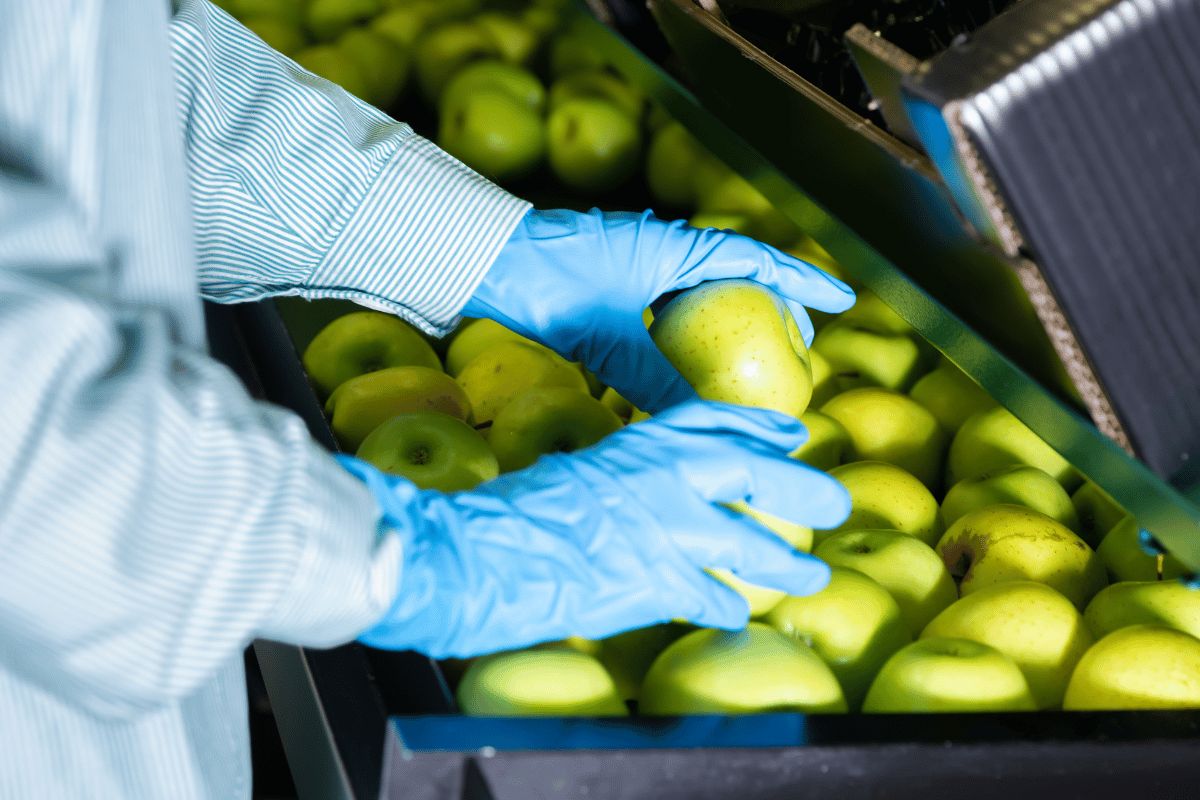
- Using clean gloves and tools during harvest and packing.
Post-harvest handling and storage
Improper handling after harvest is a leading cause of food contamination and spoilage. Temperature abuse, inadequate cleaning, and poor storage conditions allow pathogens to multiply and quality to deteriorate. Proper food supply chain storage and transportation practices are essential for maintaining food safety from the farm gate to the consumer.
Temperature control and the danger zone
Bacteria that cause foodborne illness multiply most rapidly between 5°C (41°F) and 60°C (140°F). This range is known as the "temperature danger zone." Perishable foods should spend as little time as possible in this range.
Cold chain management requires:
- Pre-cooling harvested produce as quickly as possible (hydrocooling, forced-air cooling, or vacuum cooling depending on the commodity).
- Maintaining refrigerated storage at or below 4°C (39°F) for perishable products.
- Keeping frozen foods at -18°C (0°F) or below.
- Using calibrated thermometers to monitor storage temperatures continuously.
- Ensuring refrigerated transport vehicles are pre-cooled before loading.
Hot foods in processing or foodservice operations must be kept above 60°C (140°F). Reheating should reach a minimum internal temperature of 74°C (165°F).
Cleaning and sanitation protocols
All surfaces, equipment, and containers that contact food must be cleaned and sanitized regularly. Effective sanitation programs follow the sequence: rinse (remove visible debris), wash (apply detergent), rinse (remove detergent), sanitize (apply approved sanitizer at correct concentration and contact time), and air dry.
Common sanitizers in food operations include chlorine solutions (100 to 200 ppm for food contact surfaces), quaternary ammonium compounds, peroxyacetic acid, and ozone. The choice of sanitizer depends on the surface material, target organisms, water hardness, organic load, and regulatory requirements.
Proper storage techniques
Correct storage practices prevent cross-contamination and spoilage:
- Store raw meat, poultry, and seafood separately from ready-to-eat foods. In refrigerators, place raw animal products on lower shelves to prevent drip contamination.
- Follow First-In, First-Out (FIFO) inventory rotation, meaning older stock is used before newer stock.
- Store dry goods in clean, dry, well-ventilated areas at least 15 cm off the floor and away from walls.
- Monitor grain moisture content to prevent mold growth and mycotoxin production. Most grains should be stored at or below 14% moisture content.
- Check storage temperatures daily and maintain written records.
Food safety management systems
Systematic approaches to food safety, rather than relying on end-product testing alone, provide more reliable protection against hazards. Modern food safety management systems are preventive, risk-based, and documented.
Hazard Analysis and Critical Control Points (HACCP)
HACCP is the internationally recognized preventive food safety system. Adopted by the Codex Alimentarius Commission and mandatory in most countries for food processing operations, HACCP identifies potential hazards at each stage of production and establishes critical control points (CCPs) where those hazards can be prevented, eliminated, or reduced to safe levels.
The seven HACCP principles are:
- Conduct a hazard analysis to identify all biological, chemical, and physical hazards associated with each process step.
- Determine Critical Control Points (CCPs), the points in the process where control is essential.
- Establish critical limits by setting measurable boundaries (e.g., minimum cooking temperature of 74°C for poultry).
- Establish monitoring procedures that define how, when, and by whom each CCP will be monitored.
- Establish corrective actions that specify what to do when monitoring indicates a CCP is not under control.
- Establish verification procedures to confirm the HACCP system is working as intended.
- Establish record-keeping and documentation by maintaining written records of all monitoring, corrective actions, and verification activities.
HACCP is built on a foundation of prerequisite programs including GMPs, sanitation standard operating procedures (SSOPs), pest control, equipment maintenance, and worker training.
Good Manufacturing Practices (GMPs)
GMPs are the baseline hygienic and operational requirements for food manufacturing and processing facilities. They cover facility design and maintenance, equipment standards, personnel hygiene, process controls, and record-keeping. GMPs create the conditions under which a HACCP system can function effectively.
The role of traceability
Traceability, the ability to track food products forward and backward through the supply chain, is essential for effective food safety management. When a contamination event occurs, traceability allows rapid identification and removal of affected products, limiting the scope of illness and recall costs.
EU General Food Law (Regulation (EC) No 178/2002) requires all food businesses to be able to identify their immediate suppliers and customers under the "one step back, one step forward" principle. The US Food Safety Modernization Act (FSMA) has introduced additional traceability record-keeping requirements for high-risk foods.
Key food safety regulations worldwide
Food safety regulation varies by jurisdiction but shares common principles: prevention over reaction, science-based risk assessment, and accountability throughout the supply chain.
Codex Alimentarius
The Codex Alimentarius Commission, established jointly by the FAO and WHO in 1963, develops harmonized international food standards, guidelines, and codes of practice. Codex standards serve as reference points for the World Trade Organization in resolving trade disputes related to food safety. The General Principles of Food Hygiene (CXC 1-1969, revised 2020) provide the foundation for national food safety regulations worldwide.
European Union regulations
The EU food safety framework is built on several key regulations:
- Regulation (EC) No 178/2002 (General Food Law) establishes the principles of risk analysis, traceability, and the precautionary principle. It created the European Food Safety Authority (EFSA) and the Rapid Alert System for Food and Feed (RASFF).
- Regulation (EC) No 852/2004 sets general hygiene requirements for all food businesses.
- Regulation (EC) No 853/2004 establishes specific hygiene rules for food of animal origin.
- Regulation (EC) No 396/2005 sets MRLs for pesticide residues in food and feed.
- Regulation (EC) No 1107/2009 governs the authorization of plant protection products.
United States federal oversight
In the US, food safety oversight is shared among multiple agencies. The FDA regulates approximately 80% of the food supply (all foods except meat, poultry, and some egg products), while the USDA's Food Safety and Inspection Service (FSIS) oversees meat, poultry, and processed egg products. The CDC monitors and investigates foodborne disease outbreaks. At least 30 federal laws govern food safety, administered collectively by 15 federal agencies (GAO, 2025).
The Food Safety Modernization Act (FSMA), signed into law in 2011, shifted US food safety regulation from reactive response to preventive controls. FSMA requires food facilities to implement written food safety plans based on hazard analysis and preventive controls.
Climate change and emerging food safety risks
Climate change is altering the geographic and seasonal patterns of foodborne pathogens. Rising temperatures expand the range of pathogens such as Vibrio species in seafood and Salmonella in poultry and eggs. Changes in rainfall patterns increase the risk of agricultural water contamination through flooding and runoff.
Mycotoxin contamination in cereals is expected to intensify as changing temperature and humidity conditions favor toxigenic mold growth. Aflatoxin contamination, previously concentrated in tropical and subtropical regions, is now appearing more frequently in southern European crops (EFSA, 2020).
Extreme weather events such as droughts, floods, and hurricanes disrupt cold chains, damage food storage infrastructure, and contaminate water supplies. The WHO Global Strategy for Food Safety 2022 to 2030 identifies climate change as a priority area requiring more adaptive surveillance systems capable of responding to emerging threats.
For farmers, adapting to these risks means adjusting planting schedules, improving water management infrastructure, adopting climate-resilient crop varieties, and investing in improved post-harvest storage to prevent mycotoxin accumulation.
Practical food safety tips for consumers
While food safety responsibilities are shared across the supply chain, consumers play a critical role in the final stages of food handling. The four core principles of consumer food safety, widely promoted by the FDA and WHO, are:
Clean: Wash hands with soap and water for at least 20 seconds before and after handling food. Wash cutting boards, utensils, and countertops after preparing each food item.
Separate: Keep raw meat, poultry, and seafood away from ready-to-eat foods. Use separate cutting boards for raw animal products and fresh produce.
Cook: Use a food thermometer to verify safe internal temperatures. Whole poultry should reach 74°C (165°F); ground meat 71°C (160°F); steaks, chops, and roasts 63°C (145°F) with a three-minute rest time.
Chill: Refrigerate perishable foods within two hours (within one hour if the ambient temperature exceeds 32°C / 90°F). Keep refrigerators at or below 4°C (40°F).
Additional consumer practices include checking "use by" dates before consuming perishable products, avoiding cross-contamination by never washing raw poultry (which spreads bacteria to surrounding surfaces), and monitoring food safety recall alerts from national authorities.
Frequently asked questions
What are the 5 basic food safety rules? The WHO identifies five keys to safer food: keep clean, separate raw and cooked, cook thoroughly, keep food at safe temperatures, and use safe water and raw materials.
What is the temperature danger zone? The temperature danger zone is the range between 5°C (41°F) and 60°C (140°F), within which bacteria that cause foodborne illness multiply most rapidly. Perishable food should not remain in this range for more than two hours.
What is HACCP and who needs it? HACCP (Hazard Analysis and Critical Control Points) is a systematic approach to identifying and controlling food safety hazards. It is mandatory for food processing businesses in the EU, the US, and most other jurisdictions. Primary producers are encouraged to apply HACCP principles through GAPs.
How do pesticide residues affect food safety? Pesticide residues on food can pose health risks if they exceed established safety limits. Regulatory authorities set Maximum Residue Levels (MRLs) based on toxicological studies and expected agricultural use patterns. The EU tests over 130,000 food samples annually for pesticide residues under its coordinated monitoring programme.
What is the difference between food safety and food quality? Food safety refers to preventing hazards that could cause illness or injury. Food quality refers to attributes such as taste, appearance, nutritional value, and freshness. A food product can be safe but low quality (e.g., bruised fruit), or high quality in appearance but unsafe (e.g., visually perfect produce with excessive pesticide residues).
References
- Codex Alimentarius Commission. (2020). General Principles of Food Hygiene CXC 1-1969. FAO/WHO.
- World Health Organization. (2015). WHO estimates of the global burden of foodborne diseases. WHO.
- World Health Organization. (2024). Food safety fact sheet. WHO.
- World Bank. (2018). The Safe Food Imperative: Accelerating Progress in Low- and Middle-Income Countries. World Bank Group.
- U.S. Government Accountability Office. (2025). Food Safety: Status of Foodborne Illness in the U.S. GAO-25-107606.
- CDC. (2025). Foodborne Illness Acquired in the United States, Major Pathogens, 2019. Emerging Infectious Diseases, 31(4).
- European Food Safety Authority. (2025). The 2023 European Union report on pesticide residues in food. EFSA Journal.
- European Food Safety Authority. (2024). The 2022 European Union report on pesticide residues in food. EFSA Journal.
- Grace, D. (2023). Burden of foodborne disease in low-income and middle-income countries and opportunities for scaling food safety interventions. Food Security.