

Bulk olive oil is bought and sold by weight, in metric tonnes, and shipped in the following main formats: drums, IBC totes, flexitanks, ISO tank containers, and road tankers. The right option depends on the quantity of oil being transported.
This guide explains each format, how bulk oil is traded, and how to keep the oil in optimal condition throughout the process.
How bulk olive oil is measured: tonnes vs. litres
Olive oil is traded by weight, but shipped and stored by volume. It has a density of about 0.916 kg per litre, which means:
- 1 tonne ≈ 1,092 litres
- 1,000 litres ≈ 916 kg
- A 200-litre drum holds about 183 kg
- A 1,000-litre IBC holds about 916 kg
- A full flexitank (24,000 litres) holds about 22 tonnes
Flexitanks are especially important in bulk international trade. One 20-foot container with a flexitank can carry about 21–22 tonnes of olive oil.
The main bulk formats
Drums
Steel drums of about 200 litres, with a food-grade interior lining, are the entry point to bulk buying. They palletize neatly, suit smaller and trial orders, and allow a buyer to split a purchase across several oils or grades.
The downsides are cost and protection. Per litre, drums are the most expensive mode of transporting oil. They add tare weight, and every drum is an additional seam exposed to oxygen and light.
They are used for smaller volumes or when shipping multiple products.
IBC totes
An Intermediate Bulk Container (IBC) is a food-grade tank of roughly 1,000 litres housed in a steel cage. IBCs are commonly used for mid-sized orders.
They are reusable, stackable, and easy to handle with a forklift or pallet jack, convenient for regional distribution and for buyers who draw down stock gradually. They carry more per unit than drums and require less handling.
The downside is that they still cost more per litre than a full-container flexitank and, if reused, require cleaning and return logistics.
Flexitanks
A flexitank is a large, single-use bag made of food-grade, multi-layer polyethylene that fits inside a standard 20-foot shipping container, making the container into a single bulk tank. It is used for long-haul olive oil exports due to cost efficiency.
A flexitank carries more oil per container than drums or IBCs. It is more cost-efficient than drums and IBC totes, as it eliminates the tare weight and handling associated with intermediate packaging.
Food-grade flexitanks for oil are built with an anti-oxygen (EVOH-type) barrier that slows oxygen entry, the main driver of oxidation and rancidity in transit, and thermal liners are available to reduce temperature change on long routes.
Filling and unloading are done by pump and usually take about half an hour, with anti-suction valves to prevent leaks and residual product left in the tank.
The downside is that flexitanks are single-use and cannot be divided into multiple shipments across loads, making them most cost-efficient for full-container loads.
ISO tank containers
An ISO tank is a reusable stainless-steel tank built to standard container dimensions. It holds a volume similar to a flexitank but offers features a flexitank does not, including active temperature control and a fully inert, cleanable stainless steel interior. This makes it perfect for premium and certified oils on established trade routes.
The downsides are that ISO tanks are more expensive to lease, require repositioning after use, and can incur demurrage charges.
Road tankers
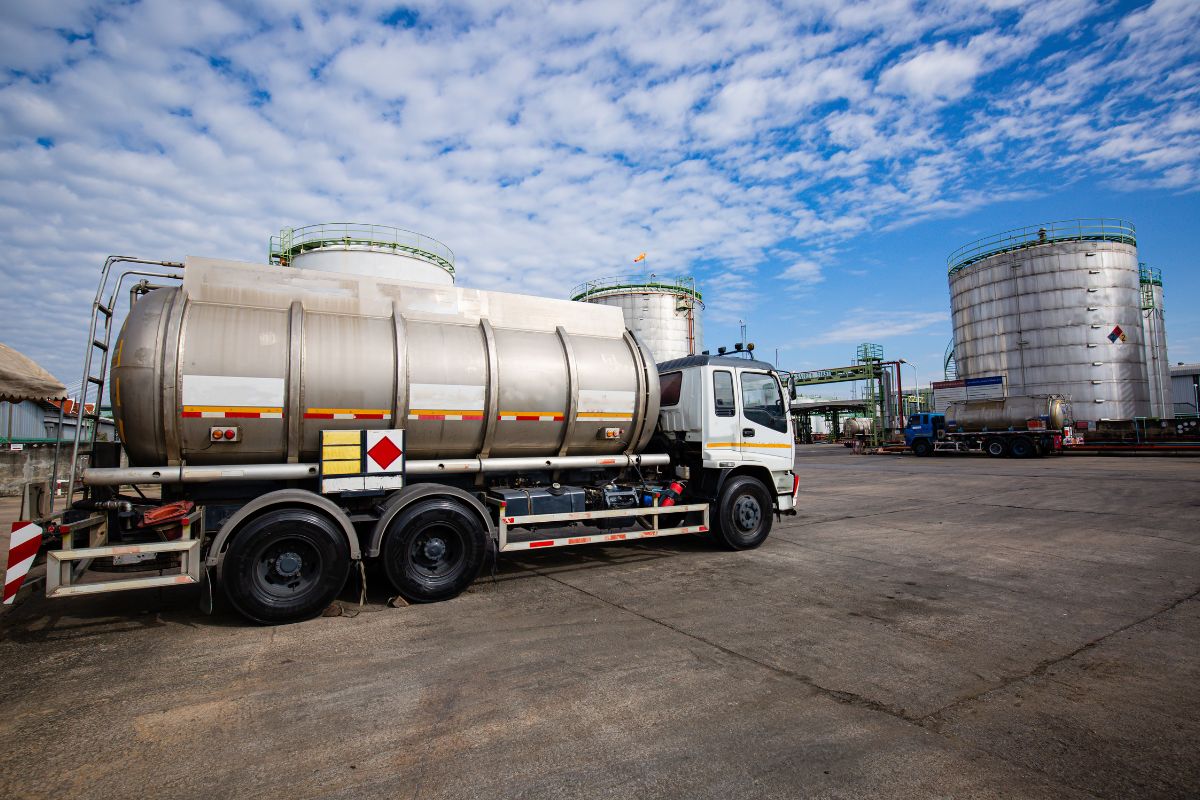
For transport within and between producing regions, like mill to refiner, refiner to bottler, or supplier to buyer, olive oil is placed in stainless-steel road tankers of 20 to 30 tonnes. This is the format used for most large domestic contracts and comes before export packing.
How to choose the right format
To choose the right transportation format for your olive oil, match it to the volume and value.
If you are buying a few hundred kilos, go with drums. If it is mid-size, recurring volumes for regional distribution, IBCs are your best bet. If you are importing full containers and trying to optimize cost per litre, a flexitank with an anti-oxygen barrier should work. If you want to transport premium or certified oil that needs temperature control, the best option is an ISO tank. When supplying bulk domestically between mills and bottlers, a road tanker is most useful. For most international olive oil buyers, flexitanks are the most common.
How bulk olive oil is sold and traded
For a bulk olive oil deal, these are needed:
Grade and specification: Olive oil is categorized by grade (extra-virgin, virgin, lampante, refined, or olive-pomace oil). Each grade includes a certificate of analysis, which covers free acidity, peroxide value, the UV absorbance figures (K232 and K270), and, for extra virgin, a passing organoleptic (taste-panel) assessment. Price tracks grade and origin closely.
Incoterms: Bulk olive oil is quoted under standard trade terms such as EXW, FOB, CIF, or DAP, which determine where responsibility and cost pass from seller to buyer. Always confirm which Incoterm a price refers to before comparing quotes.
Minimum order quantity (MOQ): MOQs usually align with packaging. A pallet of drums or IBCs at the low end, and a full container (around 22 tonnes) for flexitank and ISO-tank pricing.
Olive oil's shelf life is measured from bottling, not harvest, so shipping in bulk and bottling at the destination means the oil's shelf life begins in the market where it will be sold.
What is the cheapest way to ship olive oil in bulk?
A flexitank is usually the cheapest option per litre for full-container volumes, as it removes the weight and handling of intermediate packaging. It also reduces breakage and shipping weight, allows local labelling and branding, and is the standard model for private-label production.
Keeping bulk oil in extra virgin condition
Shipping olive oil in bulk is more cost-effective, but it can pose a risk to quality. Extra virgin olive oil mishandled during transit can be exposed to heat and oxygen, increasing free fatty acids, oxidizing the oil, and causing off-flavours.
Make sure to:
● Limit oxygen: Use food-grade containers with an anti-oxidation barrier, and for bulk storage, keep tanks topped up or blanketed with an inert gas to minimize headspace exposed to the oil.
● Control temperature: Specify thermal protection and choose an ISO tank when active temperature control is essential.
● Block light and maintain cleanliness: Bulk oil should travel in opaque, food-grade systems with a documented cleaning history to eliminate the risk of cross-contamination.